

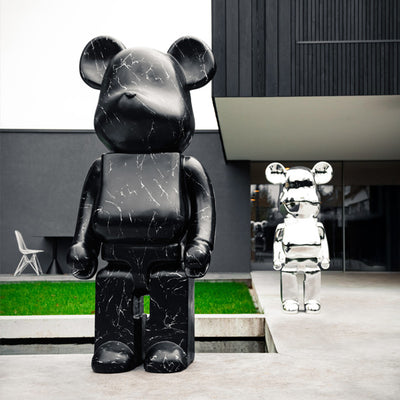

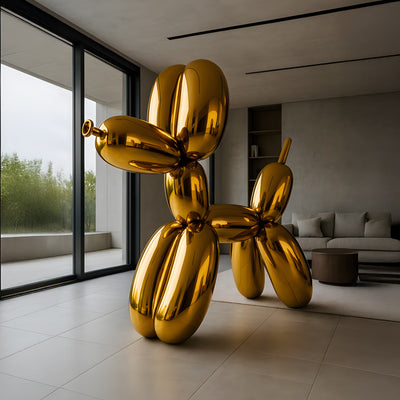









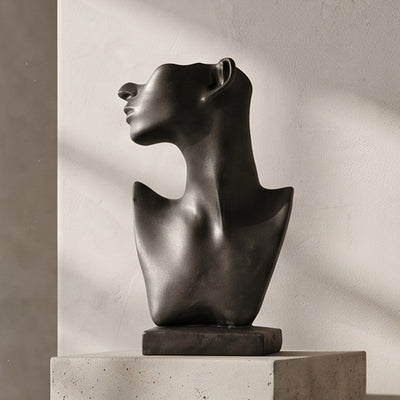

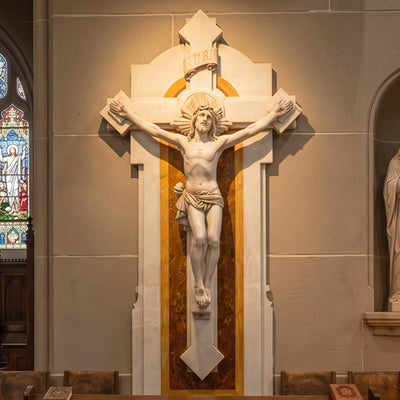








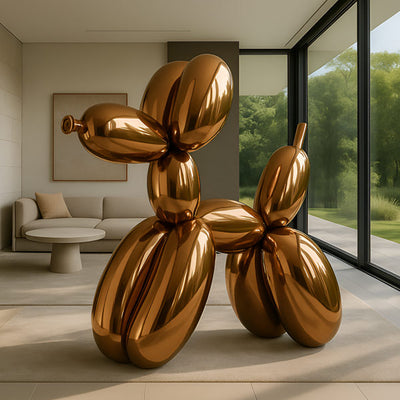

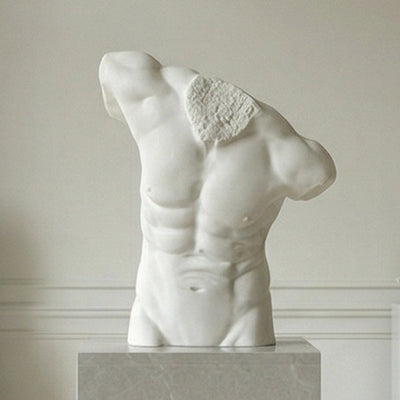
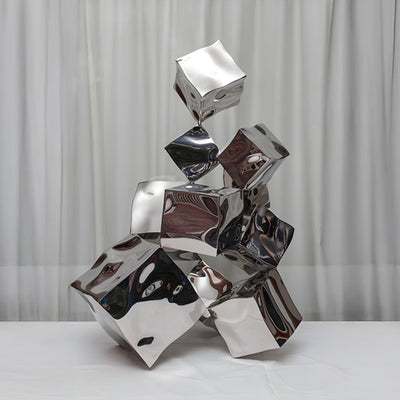


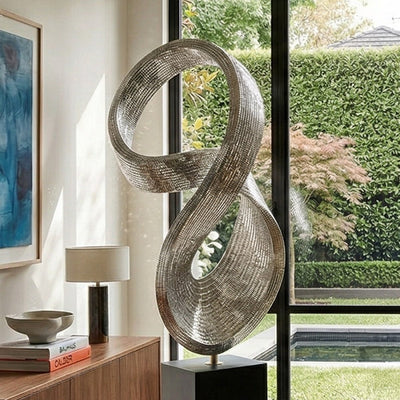
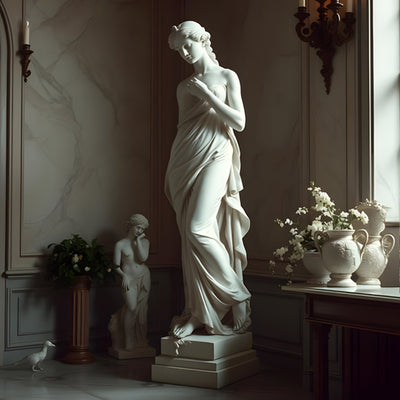
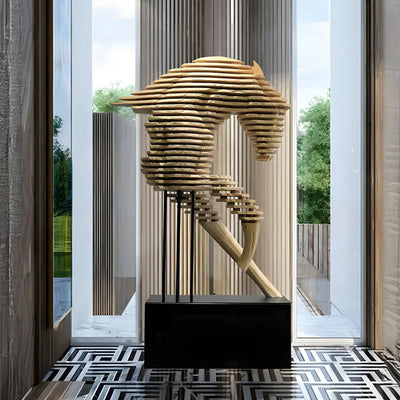
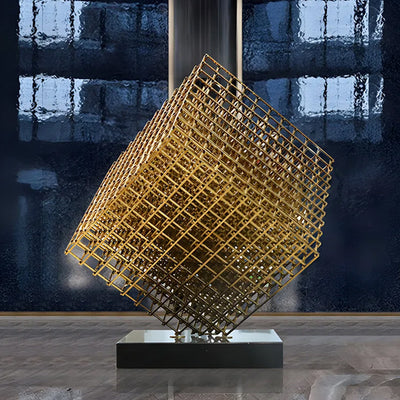





























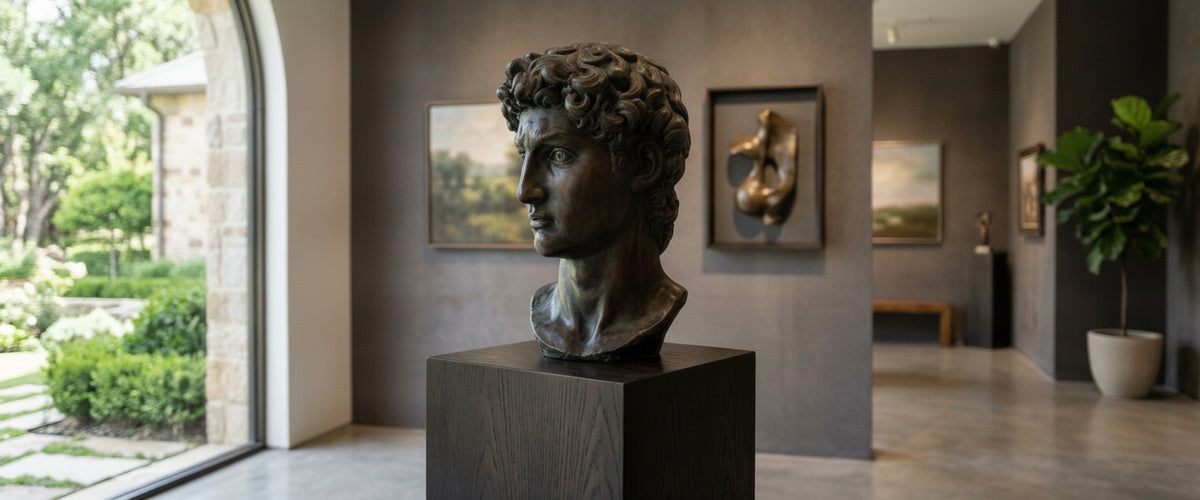

A bronze can cross an ocean in a crate, clear customs and squeeze into a freight elevator without a scratch, then wobble the first time a guest leans on the plinth beneath it. That is the quiet risk with sculpture for large indoor spaces: the pedestal gets treated as furniture, chosen late and judged by looks. This guide shows how to choose large indoor pedestals for sculpture that hold the piece up. It covers height, footprint, ballast, concealed steel anchoring, finish and timing. At Giant Sculptures we treat the base as part of the structure, because that is exactly what it is.
Planning sculpture for large indoor rooms and want to see the full range? Browse our Large Bronze Sculptures collection for every available finish, size, and configuration.

At a Glance
Height: set it from where the viewer's eye should land on the sculpture, not from the ceiling.
Footprint: heavy, top-weighted pieces need a wider base than most stock plinths offer.
Construction: a veneered box with internal ballast is often more stable than a solid timber column.
Anchoring: a concealed steel plate stops tipping without drilling a visible fixing into the floor.
Finish: match the wood tone to the floor so the pedestal recedes and the sculpture leads.
Timing: with any sculpture for large indoor settings, design the plinth alongside the commission, not after delivery.
Set the Height by the Eye Line, Never the Ceiling
The most common mistake we see with sculpture for large indoor rooms is a client measuring a 14-foot ceiling and assuming the piece needs a tall pedestal to fill it. Volume above a piece gives it breathing room; leave it alone. The right height comes from the sculpture itself: where is the face, the gesture, the point of tension? For a bust or a seated figure, that feature usually wants to sit near standing eye level, roughly 5 to 5.5 feet (1.5 to 1.7 m) from the floor. For an abstract form, the high point often looks better just below eye level so the viewer reads the whole silhouette.
Then check the approach. A plinth in a Napa tasting room may be seen first from a doorway 30 feet away, and sculptures for large indoor spaces like that need to read at distance as well as up close. Mock it up with cardboard boxes before anyone cuts timber. It takes an hour and saves a remake.

Footprint Against Height: Keeping a Heavy Bronze Upright
Stability depends on where the weight sits as much as on how much there is. A bronze torso that is heavy at the shoulders and narrow at the hip carries its center of gravity high, and every inch of pedestal height lifts it further. Our studio rule of thumb is to keep the pedestal footprint at least a third of its height, then widen it again for top-heavy pieces or anywhere people will brush past, such as hotel lobbies or family homes. That rule matters most with heavy sculpture for large indoor venues.
It also matters what the pedestal stands on. A thick rug or a sprung timber floor lets a tall plinth rock in a way a polished concrete slab never will. In seismic regions such as California, treat the plinth as nonstructural equipment that needs restraint; FEMA's earthquake guidance is a sensible starting point for the conversation with your contractor.
Solid Hardwood or Veneered Box: Why the Lighter-Looking Plinth Is Often Safer
Buyers often ask for solid oak because it sounds substantial. In large indoor wood pedestals for sculpture, solid timber has two problems. It moves with seasonal humidity, which can open joints and twist a tall column out of true; the USDA Forest Products Laboratory Wood Handbook sets out how much dimensional change to expect. And its weight is spread evenly up the column, which does nothing for a high center of gravity.
Under heavy sculpture for large indoor rooms, a well-built veneered box on a stable core behaves differently. It stays flat, takes a fine finish, and leaves a hollow you can ballast low down with steel or concrete. The result looks lighter and stands firmer. Solid hardwood still earns its place on low, broad plinths where movement is less critical and the grain is part of the appeal.
A Hidden Steel Plate Anchors a Tall Plinth Without Scarring the Floor
For anything tall or valuable, and for most sculpture for large indoor public spaces, we fit a steel base plate inside the plinth, recessed so it is invisible once installed. The plate can be fixed to the slab through a small number of discreet points or, when a client in a Manhattan co-op is not permitted to drill, bolted to a larger spreader plate that distributes the load across the floor. The sculpture itself is then pinned or bolted through the top of the pedestal into the same steel frame, so piece and plinth act as one unit.
One practical warning: agree fixing positions with whoever laid the floor. Underfloor heating pipes, membranes and buried conduit are the usual hazards, and discovering them on install day means redesigning the plate on site.

Oak, Ebonized or Painted: Match the Pedestal to the Floor, Not the Sculpture
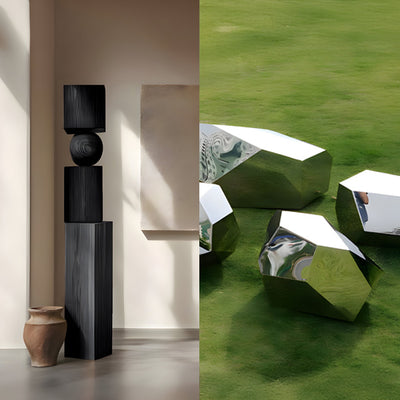
A pedestal that matches a dark bronze tends to merge with it into one heavy block. Match it to the floor or the surrounding joinery instead, and the plinth recedes while the sculpture sits forward. Pale oak suits limestone and light timber floors. Ebonized oak or walnut works on dark stone and polished concrete. Painted lacquer, color-matched to the walls or joinery, is the quietest option of all when you are showing sculpture for large indoor gallery-style rooms.
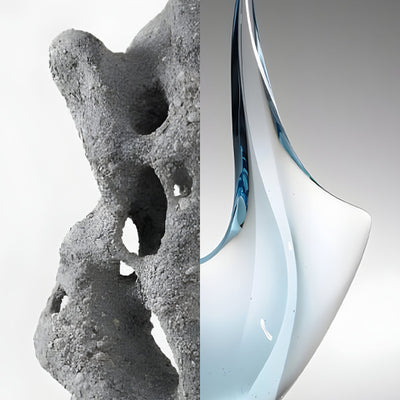
Base tone changes the read of a piece more than most buyers expect. On a light, translucent form, a deep timber base like the one beneath the Clear Rust Fleck Sloping Hill Rock Resin Sculpture on Dark Wood Base - 57cm anchors the composition without competing for attention. Where a taller composition needs mass and permanence rather than warmth, a black marble plinth such as the one under the Clear Arched Strata Rock Resin Sculpture on Black Marble Pedestal - 111cm is closer to the right material language than any timber finish.
And where the room calls for something more contemporary than oak or lacquer, a lit resin plinth such as the Clear Crackle Lit Resin Block Pedestal - 85cm turns the base into a soft light source. It is better suited to lighter, display-scale pieces than to a heavy bronze, which still wants the ballast and steel described above.
Choosing Large Indoor Pedestals for Sculpture: A Buyer's Checklist
Have you set the height from the sculpture's focal point and tested it with a mock-up?
Is the footprint wide enough for the weight distribution, not just the total weight?
Do you know the floor build-up, including heating, membranes and acoustic layers?
Is there internal ballast and a concealed steel plate for tall or top-heavy work?
Will the finish relate to the floor and joinery rather than the sculpture?
Can the plinth for your sculpture for large indoor spaces be lifted and moved, or will it need to be dismantled?

Why a Pedestal Designed Alongside the Commission Beats One Bought After Delivery
When the plinth is designed with the sculpture, the fixing points are cast or fabricated into the base of the bronze, the steel frame is sized to the real weight, and the proportions are drawn together on the same sheet. Bought afterward, the pedestal is a compromise: drilled to suit, ballasted by guesswork, and often a few inches too tall or too narrow. For bespoke sculpture for large indoor projects, we include the pedestal in the early drawings. Cost depends on material, scale, engineering, installation and finish, so we quote each project individually.
If you are still choosing sculpture for large indoor rooms, explore our indoor sculptures collection with the space in mind, then bring us the floor plan. The plinth conversation is far easier at that stage than after the crate arrives.
For wider placement ideas on sculptures for large indoor settings, Large Indoor Pedestals for Sculpture: Why Most Plinths Are Sized Wrong is useful companion reading before finalizing the setting and sightlines.