








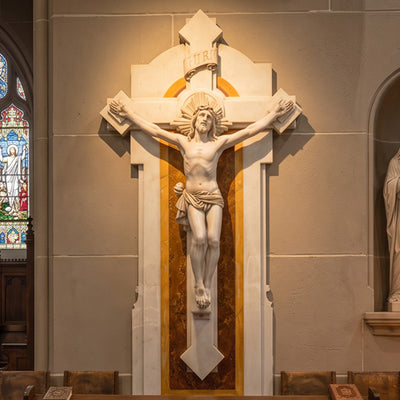
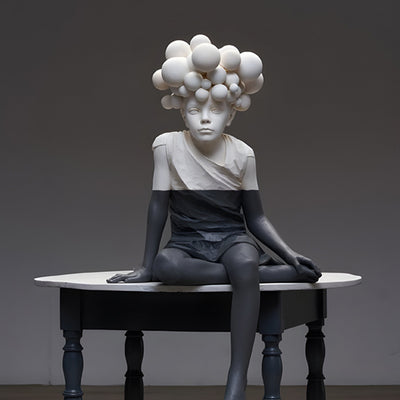
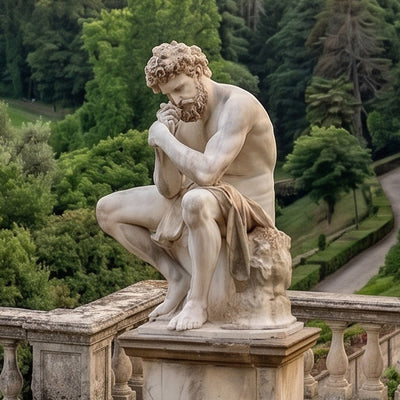
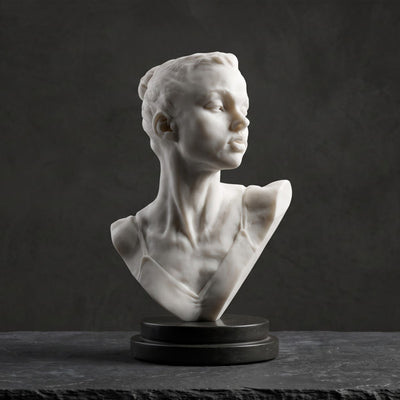


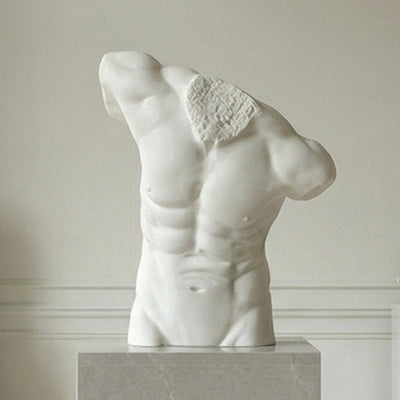
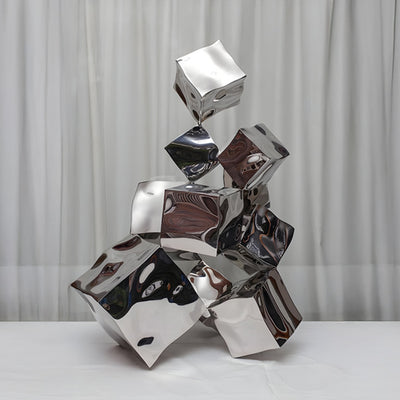


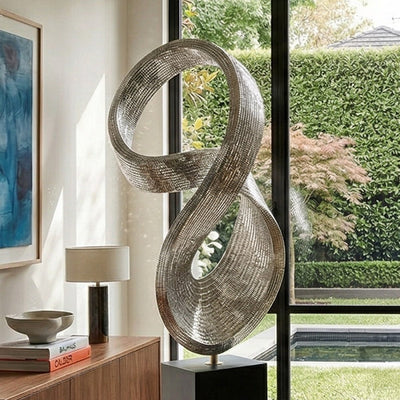
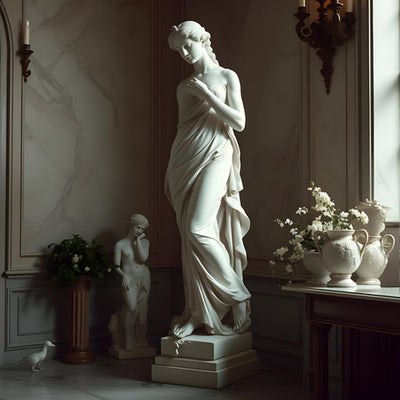
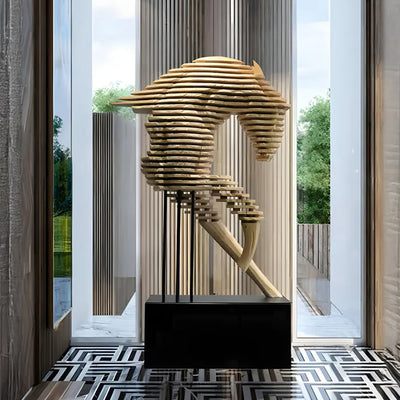
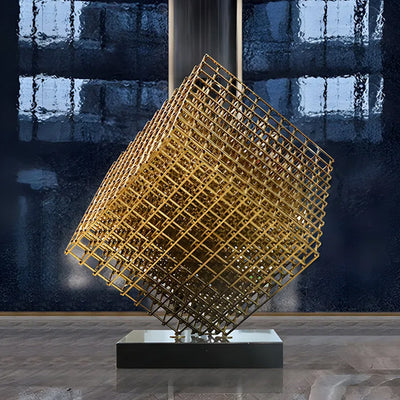
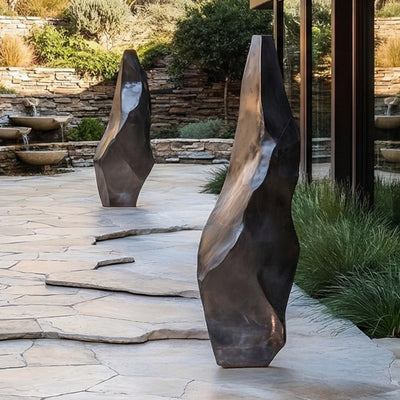













The conversation around the Trump rose garden statues has done something useful for anyone shopping for outdoor figures: it put placement back on the table. People are looking at photographs and asking the right question, which is not "do I like the statue" but "does the statue work where it stands". That gap between a good object and a good placement is where most garden statue decisions are won or lost, and it is the part buyers tend to skip.
Looking for the full range in this category? Browse our Garden Statues collection for every available finish, size, and configuration.
At our studio we field this every week. A client falls for a piece, ships it, sets it down, and the figure that looked heroic in the catalog suddenly looks stranded on the lawn. The sculpture did not change. The sightlines, the pedestal, the backdrop and the light did all the work, and nobody planned for them. The Trump rose garden statues made that lesson public.
Formal, symmetrical settings demand a great deal of the figures placed inside them.

Trump Rose Garden Statues: The Quick Answer for Buyers
Scale is relative, not absolute. A figure reads as large or small against what surrounds it, not by its raw height.
Pedestal height changes the whole message. Eye level feels intimate. Above eye level feels formal and commemorative.
Outdoor placement needs a backdrop that contrasts with the material, or the piece disappears into planting.
Light moves. A statue that glows at 10am can go flat and shapeless by mid-afternoon.
Material and finish decide longevity. Bronze, stone and marble behave very differently outdoors from concrete garden statues.

What the Trump Rose Garden Statues Show About Reading a Space
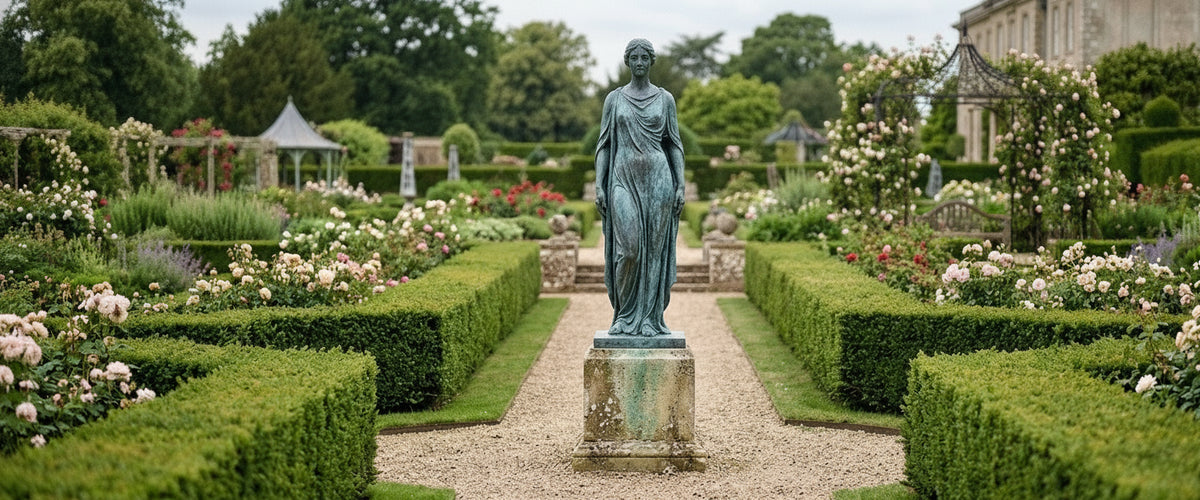
Set aside the politics, which we have no interest in here. What these White House figures show as a design case is how much a formal, symmetrical setting demands of the pieces placed inside it. A rose garden is an ordered space: clipped lines, repeated planting, strong axes. Drop figures into that and they either reinforce the geometry or fight it. The rose garden statues at the center of the story either belong to that geometry or they do not.
The same problem lands in private commissions. A statue garden that works is one where every figure has a reason to stand where it stands, usually a sightline. You should be able to trace a clear view from a door, a path junction, or a seating area to the piece. If the figure is not the resolution of a view, it reads as clutter no matter how good the carving is.

Scale, Sightlines and Pedestal Height
Scale is the choice buyers get wrong most. A 6 ft (183 cm) figure sounds substantial until it stands in front of a 30 ft (9 m) hedge or beside a large house, where it shrinks to a garden ornament. The fix is not always a bigger statue. Sometimes it is a closer viewing position or a tighter enclosure that gives the figure something to dominate.
Sightlines are your planning tool. Walk the approach the way a visitor will. Where does the eye naturally stop? That stopping point is where a figure earns its keep. For larger grounds, a monumental piece can hold a long view where a modest one would vanish. To anchor an axis across a wide lawn, a piece with the presence of the Monumental Contemporary Surrealist Elephant and Trumpeting Rider Bronze Sculpture - 600cm reads at estate scale, where a modest figure would simply disappear.
Pedestal height then sets the tone. Raise a figure above eye level and it becomes commemorative and slightly remote, which is right for a formal terrace or a civic-feeling entrance. Bring it to eye level and it turns conversational, which suits a courtyard or a reading corner. The rose garden statues everyone photographed sit high enough to feel official, and that height is a deliberate signal. A common mistake is defaulting to a tall plinth because it looks grand in a drawing, then finding the finished piece feels cold and unapproachable in a domestic garden.
Pedestal height and sightlines decide whether a figure feels intimate or commemorative.

Indoor Versus Outdoor Placement: When Each Wins
For wider placement ideas, Bronze Garden Statues: How to Choose a Piece That Earns Its Spot is useful companion reading before finalizing the setting and sightlines.
Not every figure belongs outside. Marble in particular is happier under cover in many climates; polished and carved surfaces are vulnerable to freeze-thaw cycles and acidic rain, which is why conservation bodies stress managing moisture and pollutants for stone kept outdoors (the National Park Service guidance on caring for outdoor sculpture is a sober read on this). Indoors, a marble figure holds crisp detail for generations with almost no intervention.
Outdoors, bronze and Corten are the workhorses. Bronze develops a patina that most owners come to prize, and it tolerates weather that would slowly eat softer materials. Where the setting is open ground that a figure needs to live in through every season, a multi-figure bronze such as the Monumental Trumpeting Elephant Herd Bronze Sculpture - 330cm is closer to the right choice than anything meant for a sheltered hall. The Trump rose garden statues, sited outdoors, would face the same test.
Concrete garden statues sit at the other end. They are inexpensive and readily available, which is why so many suburban gardens have them, but cast concrete is porous, chips at edges, and can spall as trapped water freezes. For a small ornament that is fine. For a piece meant to define a garden for decades, concrete rarely repays the space it occupies, and it almost never carries fine detail the way bronze or stone does.
Light, Backdrop and Contrast
Light is the variable buyers forget to test. A figure lit from the side at a low angle shows its modeling; the same figure under flat noon light or backlit against a bright sky flattens into a silhouette. Before you commit a position, watch the spot across a full day. Morning and late-afternoon raking light usually flatter three-dimensional form best. The rose garden statues in the news read very differently depending on the hour they were shot.
Backdrop decides whether the piece is even visible. A dark bronze in front of dense evergreen planting can vanish. Give it a lighter wall, a gap of sky, or a pale gravel surround and it reads instantly. Pale stone or marble wants the reverse: a darker hedge or a shaded recess so the figure lifts forward. Contrast is the quiet mechanism behind every well-placed statue, and it costs nothing to plan.
Placement Mistakes We See in Commissions
These come up again and again when clients send us site photos:
Center-of-lawn syndrome. A figure marooned in open grass with nothing to relate to. Anchor it to a path, a wall, an axis or a planting bed.
Wrong scale for the enclosure. A small figure in a vast space, or a monumental one crammed into a courtyard it cannot breathe in.
Plinth by default. Reaching for a tall pedestal when the piece wanted intimacy at eye level.
Ignoring the sun. Placing for the plan view rather than for how light will actually model the form.
Material mismatched to climate. Delicate marble left exposed where hard frosts will find every fine edge.
Commissioning a Garden Statue That Holds Its Place
When we work on a bespoke piece at Giant Sculptures, placement is part of the brief from the first conversation, not an afterthought once it ships. We ask for site photos, the approach routes, the height of surrounding planting and walls, and how the space is used through the day. That tells us the scale, the finish and the pedestal before a single figure is modeled. The lesson the Trump rose garden statues put on display is the same one we build into every commission.
Whether you want classical figures, a contemporary form, garden fairy statues for a woodland corner, or a monumental animal to hold a long view, the same logic applies. Decide the sightline first, then the scale, then the material for your climate, then the light. Get those in order and the statue looks inevitable. Skip them and even fine work looks lost. As the debate over the Trump rose garden statues reminds us, even the most talked-about figures live or die by their placement. If you are weighing options, tell us the setting and we will advise on scale and material and provide a tailored quote; budget depends on size, material, complexity, engineering, installation and finishing, so a real figure only makes sense against a real brief.