






































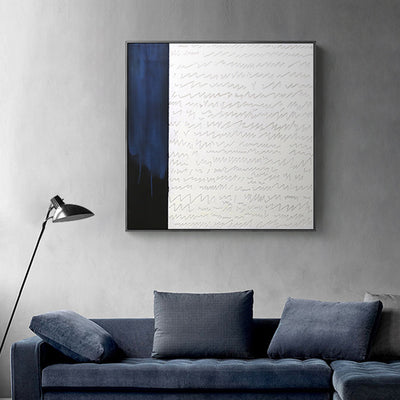

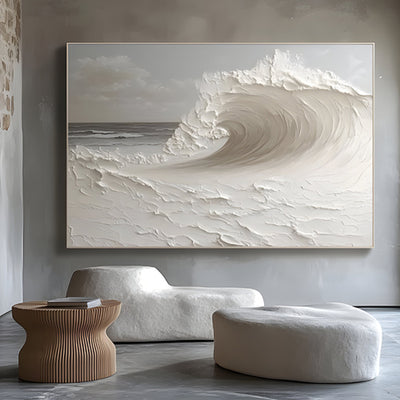

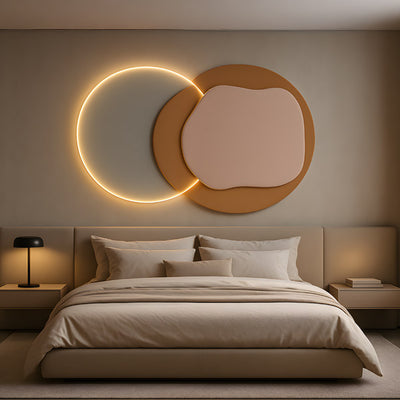
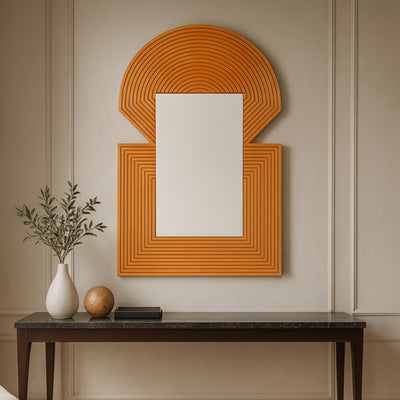
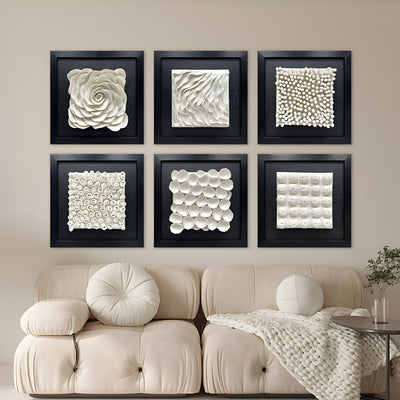
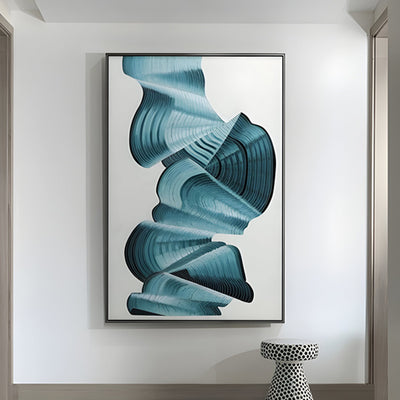
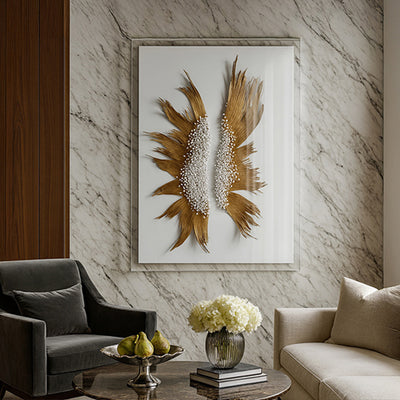
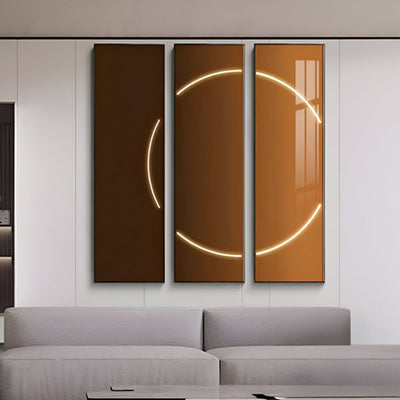
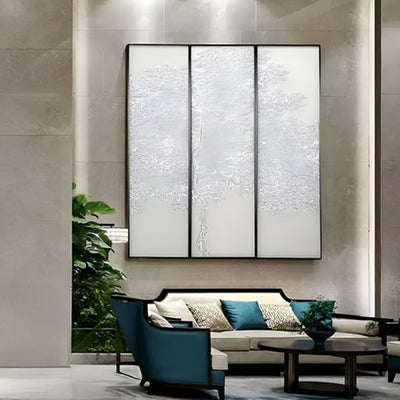
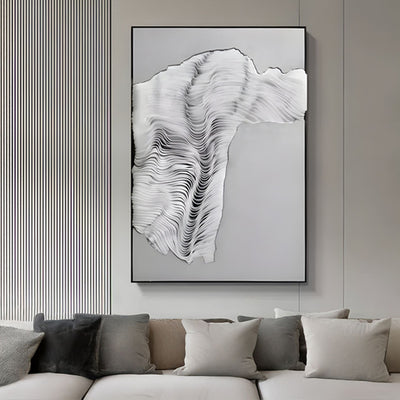













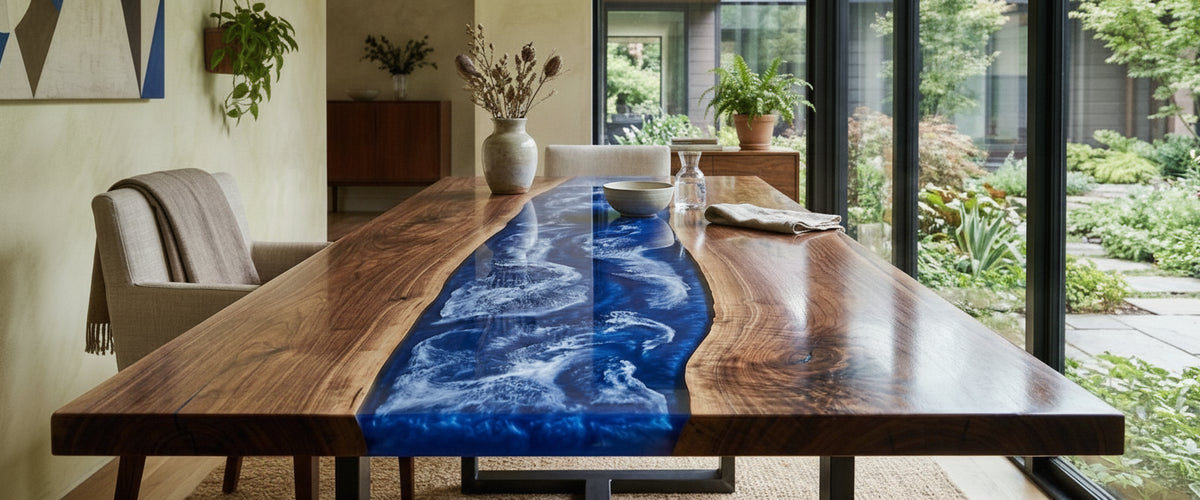

The first thing to go on a blue snow resin table is rarely the blue. It is the snow. After a few years near a bright window, that crisp white drift can turn the color of old piano keys while the ocean layer beneath it looks almost untouched. Blue snow resin art, where white pigment is floated across a deep blue base to suggest sea foam, frost or a winter river, is one of the most requested looks in resin furniture art. It is also one of the most misunderstood. At Giant Sculptures most of our work is bronze, stainless steel and stone, but we also commission and supply resin pieces, and the same rule holds for all of them: learn how the material ages before you fall for how it looks on delivery day.

Key Takeaways
The white layer shows age first. The epoxy around it yellows, and white has nothing to hide behind.
Snow forms in a narrow viscosity window. Too much heat during the cure and crisp flakes soften into cloud.
A dining table, a console and a wall panel need different resin systems and topcoats, even with an identical color brief.
Ask about pigment, pour depth per layer and UV protection before you approve a design.
Anatomy of a Blue Snow Resin Art Pour
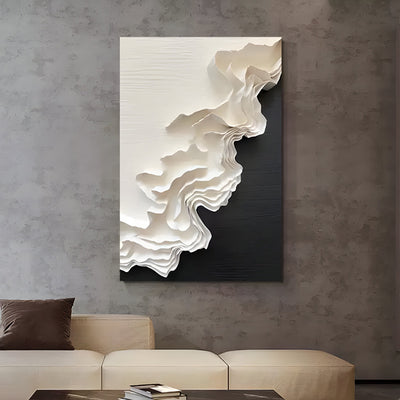
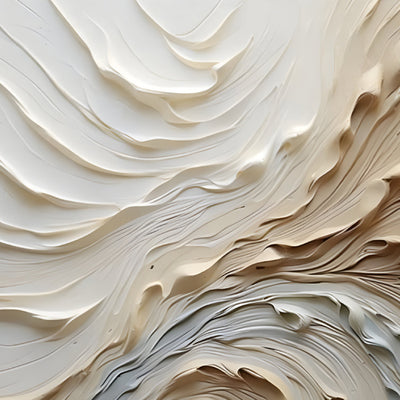
A typical pour has three parts. First comes the depth layer: tinted epoxy, usually a phthalo or ultramarine blue, graded from near-black at the deepest point to clear at the edge. Then the snow: titanium dioxide white thinned into a small batch of resin and dragged, dripped or blown across the surface while the blue is still at its gel stage. Some makers add a touch of alcohol or a pass of a heat gun to break the white into cells, the lacy pattern that reads as foam. Last, a clear flood coat locks everything under a level, glossy skin.
Heat or alcohol breaks the white into cells, the lacy pattern that reads as sea foam.
In resin art handmade furniture, the snow is laid by hand in a matter of minutes. That is why no two tables match, and why a sample photo is a guide rather than a promise. Scale matters too. Foam detail that feels delicate at wall-relief size, around 40 cm (about 16 inches) on a piece such as the Ocean Blue Resin Splash & Character Wall Relief - 40cm, needs a much bolder hand when it is stretched across an 8-foot (2.4 m) tabletop, or it disappears into speckle.

Why the White Yellows Before the Blue Fades
Most epoxies cured with amine hardeners slowly yellow under UV light and, more gently, with age alone. Titanium dioxide itself is very stable; what changes is the resin carrying it. Over a saturated blue, a faint yellow cast barely registers, or nudges the color a shade toward teal. Over white, it shows as cream and then ivory.
The blue holds; the white drifts toward cream as the epoxy around it yellows.
A common failure looks like this: a console stands about six feet (1.8 m) from a west-facing window, and within a few summers the snow has warmed visibly while the blue river looks exactly as it did in the crate. The fix is a UV-stabilized resin, an aliphatic polyurethane topcoat and a different spot in the room. Coating manufacturers test lightfastness with accelerated weathering protocols such as ASTM G154. Ask whether the system on your blue snow resin art has been through that kind of testing, and treat an unqualified "UV resistant" label with suspicion.
Pour Thickness and Cure Heat: Snow or Cloud
Deep-pour casting resins are built to go down thick, often 1 to 2 inches (2.5 to 5 cm) per layer, while tabletop coating epoxies are designed for roughly 1/8 inch (3 mm). Every epoxy gives off heat as it cures, and more mass means more heat. That heat thins the resin before it sets, and thinner resin lets white pigment sink and spread. Thin pour near the surface: sharp snow. Thick pour: a soft, submerged cloud.
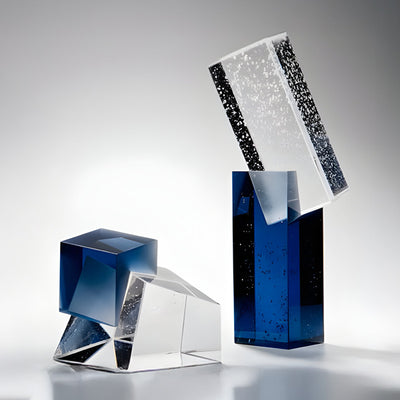
In blue snow resin art neither result is wrong, but you should choose one on purpose. A test panel poured too deep on a warm afternoon can slump from a clean frost line to milky fog before it gels. Where clarity rather than snow is the brief, a cast piece such as the Teal Crystal Clear Resin Iceberg Sculpture is the opposite discipline: the maker builds slowly in controlled layers so nothing has the chance to cloud.

Dining Table, Console, Wall Panel: Three Different Workloads
Dining Table
The hardest job by far. Plates, cutlery, spilled wine and cleaning sprays all attack the surface, and standard epoxy softens under heat, so a hot dish straight from the oven can leave a ring. For blue snow custom furniture resin art at dining scale, insist on a hard topcoat sample you can scratch and stain yourself, ask about the moisture content of any timber slabs, and plan delivery around the weight. Thick river tables are heavier than they look, which matters for stairs in a Manhattan walk-up.
Console
Low wear, high display. Consoles live in hallways and entrances, often in raking daylight, so UV is the main enemy rather than abrasion. A restrained snow pattern suits the format, and placement is your cheapest protection.
Wall Panel
No cutlery, no heat, and a vertical face that catches less direct sun. Wall panels can carry bolder cloud effects and heavier white, though the fixings must be specified for the panel weight. If a sunny wall makes a large field of white feel risky, a mixed-media piece such as the Blue & Grey Circular Lighthouse Silhouette Resin & Metal Wall Art - 71cm keeps the coastal mood while sharing the visual weight with metal. The wall sculptures collection is a good place to judge how resin and metal hold a wall at different sizes.

Questions to Put to a Maker Before You Commission
Which white? Titanium dioxide paste gives dense, opaque snow; mica powders add shimmer but read less like frost.
Which resin system? Ask for the product type and whether it contains UV stabilizers.
How many layers, and how deep each? This tells you whether to expect crisp snow or cloud.
What topcoat? Epoxy flood coat, polyurethane or another clearcoat, and how scratches are polished out later.
Can I see an aged sample? A panel that has sat in sun for months is worth more than any render.
Weight, fixings and access? Confirm before production, not on delivery day.
Budget for blue snow resin art depends on material, scale, complexity, engineering, installation and finishing, so request a tailored quote once these answers are on paper.
Where Resin Fits in a Long-Term Collection
Resin is an indoor material. For a garden in Napa or a terrace in the Hamptons, the blue snow palette is better translated into patinated bronze or color-finished stainless steel, which we commission regularly. Indoors, well-specified blue snow resin art earns its place, and the resin art collection spans the range of depth and translucency possible. If you want a bespoke piece, Giant Sculptures can brief the pour, the topcoat and the placement together, so the snow still looks like snow years from now.
For wider placement ideas, Resin Art Furniture That Carries Weight: What the Underside Tells You is useful companion reading before finalising the setting and sightlines.