
Balloon dog sculptures have become a recognised feature of contemporary interior design. What began as a playful balloon animal has developed into a structured decorative object that bridges art and styling. Today, these sculptural pieces appear in modern homes, creative studios, landscaped gardens and commercial spaces where personality and polish matter equally.
This guide explores the subject from an educational perspective. We will look closely at materials, finishes, scale, styling principles and practical considerations. Understanding these elements ensures that when you introduce one into your space, the result feels balanced, intentional and visually coherent.

What Are Balloon Dog Sculptures?
Balloon dog sculptures are solid three-dimensional pieces crafted to resemble twisted balloon animals. Although they mimic the soft curves of latex balloons, they are constructed from durable materials such as resin, stainless steel, aluminium or fibreglass.
Their appeal lies in contrast. They appear light and inflatable, yet they are structured and weight-bearing. The rounded segments reflect light smoothly, emphasising shape and proportion.
Over time, these sculptural forms have evolved beyond novelty décor. They now function as accents, focal points and conversation pieces in contemporary interiors. Their recognisable silhouette makes them accessible, while their material quality elevates them into refined design objects.

Materials Used in Balloon Dog Sculptures
Material choice significantly affects durability, placement and finish, particularly when selecting balloon dog sculptures for different environments. Not every piece is constructed the same way, and understanding composition helps determine suitability for your interior or outdoor space.
Resin Construction
Resin versions are especially popular for indoor settings. This material allows for detailed moulding and smooth finishes, making it ideal for high-gloss colour applications.
Resin pieces typically offer:
Lightweight handling
Vibrant lacquered finishes
Smooth curvature
Affordability compared to metal
Because of their lighter structure, they work well on shelves, side tables and office desks where weight needs to be minimal.
Stainless Steel and Metal
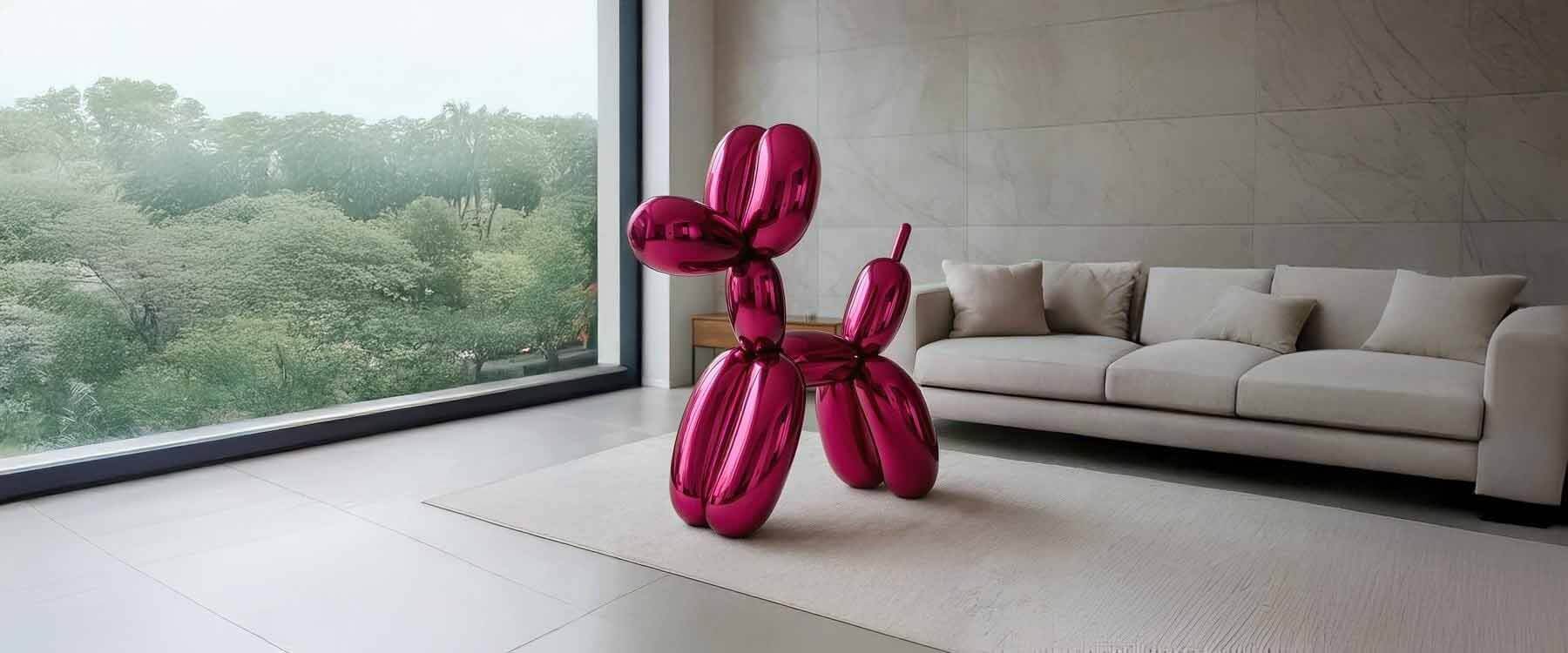
Metal variations provide a more architectural presence. Stainless steel options, particularly mirror-polished designs, reflect surrounding colours and natural light, enhancing visual depth.
These pieces are:
Durable and structurally strong
Resistant to corrosion when properly treated
Suitable for indoor and outdoor placement
Visually striking in minimalist spaces
The reflective surface introduces movement into otherwise static interiors, making them strong focal points.
Fibreglass for Larger Installations
For larger designs, fibreglass offers stability without excessive weight. This material is commonly used in commercial settings or landscaped gardens where scale and resilience are important.
The Role of Scale in Interior Balance
Scale determines how balloon dog sculptures influence a room. A well-proportioned piece enhances the environment, while an oversized or undersized sculpture may disrupt visual balance.
In compact interiors, smaller decorative objects help maintain harmony. In design schemes where furnishings are modest and thoughtfully arranged similar in scale to environments suited for small balloon dog sculptures a compact sculpture adds character without overwhelming surfaces.
Mid-sized spaces benefit from moderate proportions. A sculpture placed on a console or coffee table should align visually with surrounding elements. The goal is cohesion rather than dominance.
Larger interiors allow for more substantial pieces. In open-plan layouts with generous floor space, a bold design can act as an anchor point. Proper measurement and visual planning ensure the sculpture complements rather than crowds the room.

Finishes and Surface Variations
The finish of balloon dog sculptures influences how they interact with light and texture within a space.
Gloss Finishes
High-gloss lacquer enhances the illusion of inflated material. Light travels smoothly across the surface, highlighting each rounded segment. Bold colours such as red, gold and cobalt remain common choices in contemporary interiors.
Mirror-Polished Chrome
Chrome variations create dynamic reflections. Their surfaces shift depending on lighting conditions and nearby colours. In modern homes with clean architectural lines, this finish adds depth and dimension.
Matte and Subtle Tones
Matte finishes soften the overall appearance. They reduce glare and create a calmer presence, particularly suitable for neutral or Scandinavian-inspired interiors.
Selecting the right finish depends on lighting, wall colour and surrounding materials to ensure visual harmony.
Styling Balloon Dog Sculptures in Different Rooms
Thoughtful placement enhances the visual impact of balloon dog sculptures within any interior or outdoor setting.
Living Areas
In living rooms, positioning near natural light enhances curvature and finish. Avoid overcrowding decorative surfaces. Allow sufficient breathing space to preserve the silhouette and ensure the form remains clearly defined.
Workspaces and Studios
Smaller designs can add personality to professional environments. In offices that balance functionality with style much like thoughtfully arranged spaces inspired by medium balloon dog sculptures moderate proportions maintain professionalism while introducing visual interest.
Outdoor Settings
For gardens or terraces, weather-resistant materials are essential. Stainless steel and treated composites perform well outdoors. Placing sculptures among greenery creates contrast between organic forms and polished surfaces.
In expansive properties with landscaped areas comparable in scale to homes accommodating large ballon dog sculptures, larger outdoor pieces provide structure and strong focal definition.

Why Balloon Dog Sculptures Continue to Appeal
Balloon dog sculptures remain relevant because they merge playful form with modern restraint. Their curved silhouettes soften linear interiors, while their material finishes contribute to a refined aesthetic.
They offer:
Recognisable design language
Sculptural presence without complexity
Compatibility across décor styles
A balance of humour and sophistication
Unlike heavily ornate decorative objects, they maintain simplicity. Their shape alone carries visual weight, making them adaptable to evolving interior trends.
Care and Maintenance Considerations
Maintaining balloon dog sculptures properly preserves both their appearance and structural integrity over time.
Resin surfaces require gentle dusting with a soft cloth. Avoid abrasive cleaners that may dull gloss finishes or damage protective coatings.
Metal sculptures benefit from occasional polishing to maintain their reflective quality. Outdoor pieces should be cleaned periodically to remove environmental residue and prevent surface wear.
Proper care ensures longevity and keeps each piece looking refined and well-presented within your space.

Selecting the Right Balloon Dog Sculptures for Your Space
Before choosing Balloon Dog Sculptures, assess the following:
Room dimensions
Lighting conditions
Material durability
Surface stability
Colour harmony
Long-term adaptability
Measure intended placement areas carefully. Consider how natural and artificial light will interact with the chosen finish. A reflective surface may appear dramatically different in low light compared with bright daylight.
Neutral tones often provide flexibility as interior styles evolve, while bold colours create stronger immediate impact.

Conclusion: Structured Playfulness in Modern Interiors
Balloon dog sculptures combine artistic expression with decorative clarity. Their smooth curvature contrasts with angular architecture, and their material diversity allows them to suit a wide range of environments.
By understanding composition, scale, finish and placement, you can integrate them thoughtfully into your home or outdoor setting. When chosen with care, they become more than decorative objects they act as sculptural anchors that shape atmosphere and visual flow.
Explore the collection to discover finishes, proportions and styling options that complement your interior vision and elevate your overall design aesthetic.