

































































































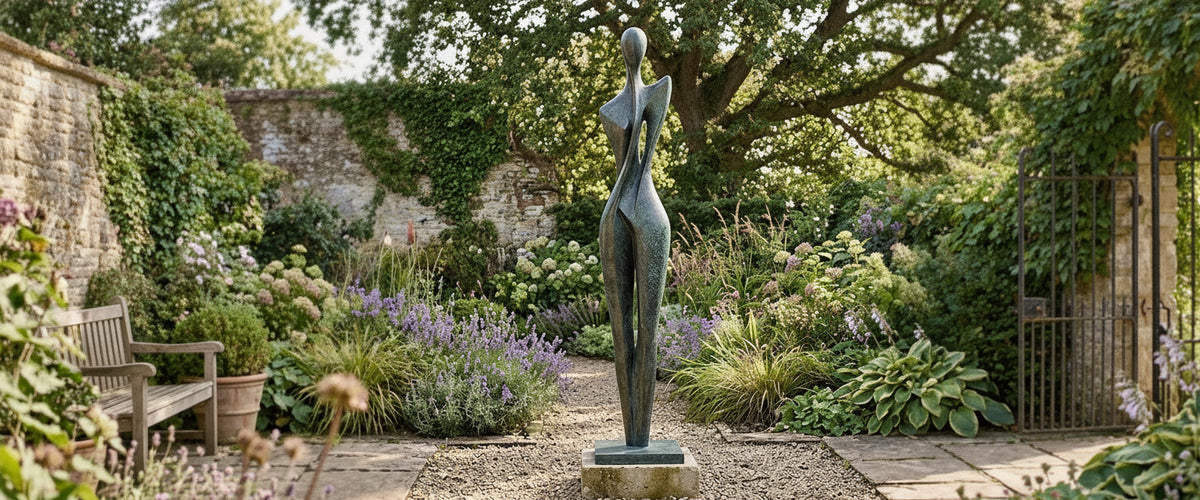

A sculpture that looked commanding in the studio can shrink to an afterthought once it is home. The piece did not change; the room did. Most disappointment with work from contemporary sculpture artists comes down to placement, not the object itself, and placement is the one thing you fully control after you buy. Get the scale, sightline, and light right and a mid-size bronze holds a double-height hallway. Get them wrong and a genuinely good piece looks like it wandered in and got lost.
Looking for the full range in this category? Browse our Jirayu Tantrakul - Contemporary Sculptures collection for every available finish, size, and configuration. It gathers work from several contemporary sculpture artists in one place.
We have shipped enough commissions to see the same handful of decisions make or break a room. Below is how we think about it in the studio, and how to avoid the errors we spot most often when buyers bring home work from contemporary sculpture artists.
Placement, not the object, decides whether a piece lands.

Key Takeaways
Scale beats price. A well-sized piece in the right spot outperforms a larger, more expensive one crammed into a tight corner.
Sightlines decide impact. Where a piece is first seen, and from how far, matters more than the exact square footage of the room.
Pedestal height is a design choice, not an afterthought. It changes whether a work reads as intimate or monumental.
Light and backdrop create contrast. A dark bronze against a dark wall vanishes; the same piece against pale stone reads sharply.
Material follows environment. Bronze, stainless steel, Corten, and stone each behave differently outdoors, so choose for the setting, not just the look.

What Work From Contemporary Sculpture Artists Looks Like in Real Rooms
The field of modern sculpture is wide, running from stripped-back figurative bronze to fully abstract metalwork. One concern runs through much of the work made by contemporary sculpture artists: the relationship between form and negative space. The gaps a piece carves out of the air often matter as much as the solid mass. That is worth remembering before you place anything, because negative space needs room to breathe.
In a great room with 14-foot (4.3 m) ceilings and glass on two sides, a slender vertical piece earns its keep. Something like a Large Contemporary Violinist Bronze Sculpture - 220cm (about 7 feet 3 inches) draws the eye up and gives a tall volume a human anchor. Drop that same figure into a low-ceilinged den and it feels penned in.
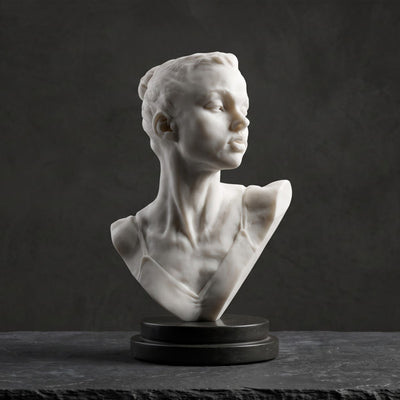
Smaller heads and busts work the opposite way. A Contemporary Boar Head Bronze Sculpture - 45cm (roughly 18 inches) reads beautifully on a console in an entry hall or a study, where you meet it at close range and can register the surface work. Put it on the floor of a big open plan space and it simply disappears. Many contemporary sculpture artists build these pieces to reward being placed at the distance they were made to be seen from.

Scale, Sightlines, and Pedestal Height
Three numbers govern how a piece reads: the height of the sculpture, the height of its base, and the distance of the first clear view. Designers obsess over the first and ignore the other two, which is backwards.
Start with the approach. Walk the route a guest takes and find the point where the piece first comes into full view. That distance sets the scale you need. A rule we use: the taller the ceiling and the longer the approach, the more mass the work can carry without feeling heavy. In a compressed space, a smaller piece with a strong silhouette does more than a big one that fills the frame and leaves no air.
Pedestal height sets whether a figure reads as a peer or a monument.
Pedestal height is the quiet lever. Raise a figurative bronze so its focal point sits near eye level and it reads as a peer, present and conversational. Lift it higher and it turns monumental and slightly removed, which suits a lobby or a stair landing. Set it low and viewers look down on it, which flattens most upright forms. For abstract work with a strong horizontal, a low plinth can be exactly right; for a standing figure it rarely is.
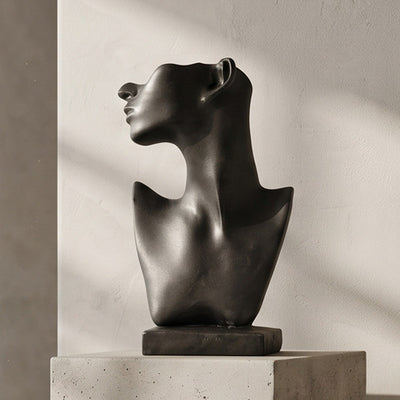
One studio note from a recent commission: the client wanted a headless figure in a gallery hallway. The space called for a stripped human presence rather than an intact figure, so a piece such as the Large Contemporary Headless Figure Bronze Sculpture - 220cm was closer to the right design language, the kind of form contemporary sculpture artists use to suggest more by showing less. We set it on a 12-inch (30 cm) plinth so the torso met the eye at the top of the stairs. That single decision, made on site rather than on paper, was what made the piece feel deliberate rather than dropped.

Indoor Versus Outdoor: When Each Wins
Indoors, you control everything. Light is steady, the backdrop is fixed, and viewing distance is short, so surface detail and finish carry the piece. A Large Contemporary Girl with Bird Bronze Sculpture - 130cm (about 4 feet 3 inches) rewards this kind of close, controlled setting, where the patina and the interplay of figure and bird read clearly. This is a good showcase for what contemporary sculpture artists can do with a fine finish.
Outdoors, the piece has to compete with sky, planting, and weather, and it has to hold up over decades. This is where material choice stops being cosmetic. Bronze develops a stable patina over time and is the traditional choice for garden figures; stainless steel throws light and suits modern architecture; Corten weathers to a warm rust skin that reads well against green planting and stone. The American Institute for Conservation has good background on how metals age and why maintenance regimes differ (culturalheritage.org).
Outdoor placement also wants a longer viewing distance. A Contemporary Upright Dolphin Bronze Sculpture - 170cm (about 5 feet 7 inches) works as a terminal point at the end of a lawn or a pool axis, seen from across the space, where its vertical line stands out against open sky. That same piece two feet from a fence loses all its drama.

Light, Backdrop, and Contrast
Contrast is what makes a sculpture legible. A dark bronze against a dark paneled wall reads as a shadow; move it in front of pale plaster or a limestone surround and the silhouette snaps into focus. Before you commit to a spot, hold a large sheet of the wall color behind the piece and step back to the first viewing point.
Light does the rest. Raking light from the side crosses the surface and shows every plane and tool mark; flat frontal light kills that texture. Outdoors, watch where the sun sits at the hours you actually use the garden. A piece that glows at golden hour can look dead at noon. For the surface modeling that contemporary sculpture artists rely on, side light is your friend and overhead midday sun is your enemy.
Indoors, a single adjustable spot beats a wash of ambient light every time. Aim it to graze the surface at roughly 30 to 45 degrees and you get depth. Point it straight on and you flatten the whole thing.

Common Placement Mistakes We See in Commissions
For wider placement ideas, How to Place Work by Contemporary Abstract Sculpture Artists so It Actually Lands is useful companion reading before finalising the setting and sightlines.
Buying to fill a space rather than to be seen. A piece pressed into a corner to "use" the corner never performs. Sculpture needs a viewing distance, not just a footprint.
Ignoring the pedestal. The right base height can move a work from awkward to authoritative. Budget for it and decide it on site.
Matching finish to backdrop. Dark on dark, or light polished steel against a bright white wall in full sun, erases the form. Aim for contrast.
Under-scaling outdoors. Open sky and planting swallow mass. A piece that feels big in the studio often reads small on a lawn, so size up for exterior settings.
Forgetting the route. Place for the walk-up, not just the finished view from the sofa. The first glimpse sets the impression, and it is where work from contemporary sculpture artists earns its keep.

Choosing and Commissioning: A Quick Buyer Checklist
Identify the first clear viewing point and measure the distance to it.
Measure ceiling height indoors, or note the open horizon outdoors, and size the piece to the volume.
Decide the focal-point height and work out the pedestal from there.
Choose material for the environment: bronze and stone for classic garden longevity, stainless for reflective modern settings, Corten for a weathered warmth against planting.
Test the backdrop and light before you fix anything.
For anything unusual in scale or site, ask about a bespoke commission so the piece is engineered for the exact spot.
Budget on a bespoke piece depends on material, scale, complexity, engineering, installation, and finishing, so the honest answer is to request a tailored quote rather than work to a guessed figure. If you are exploring options from contemporary sculpture artists, our contemporary and modern sculptures collection is a good place to see the range of forms and finishes, including plenty of contemporary bronze sculpture, and the bronze figures and statues collection shows how figurative work translates across sizes.
Placement is not decoration; it is half the work. The best contemporary sculpture artists make the object; where you put it decides whether anyone actually sees it.