











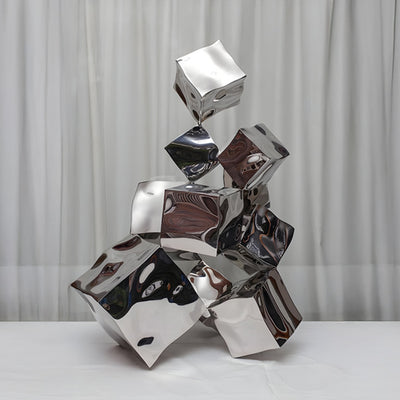


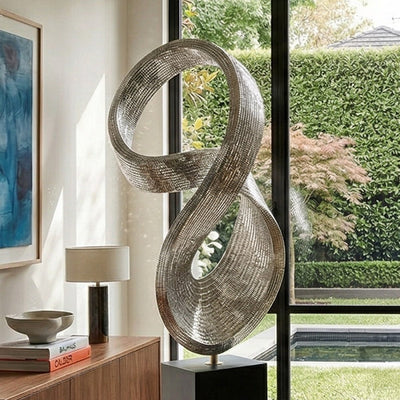
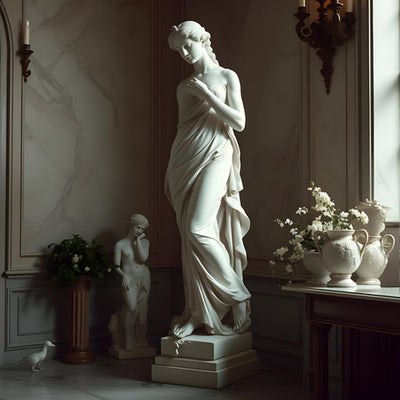
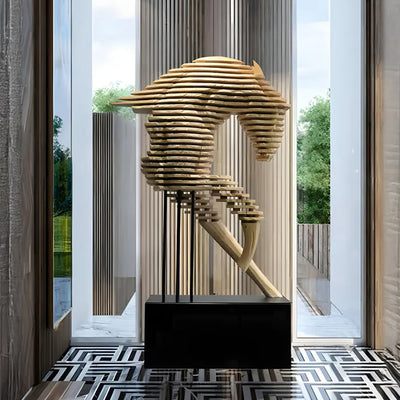
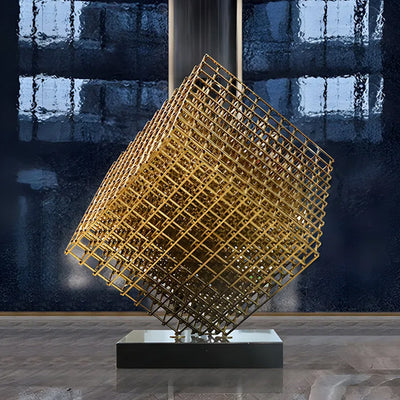














A single abstract form can hold a room or fall flat in it, and the difference is almost never the sculpture. It is placement. We have shipped pieces by contemporary abstract sculpture artists to homes in the Hamptons and open-plan lofts in NYC, and the same bronze that looked commanding in one setting looked lost in another simply because of where it sat, how tall the base was, and what stood behind it.
This is the part buyers underestimate. You choose the piece by contemporary abstract sculpture artists with your heart, then you have to make it work with your eyes. Below is how we think about that in the studio, from sightlines to backdrops to the errors we quietly correct on commissions.

Key Takeaways
- Scale is relative. A 5 ft (152 cm) figure reads as intimate in a double-height hall and monumental in a small courtyard.
- Pedestal height changes meaning. Raise a piece and it becomes ceremonial; set it low and it becomes approachable.
- Indoors rewards detail; outdoors rewards silhouette. Choose the piece for how it will actually be seen.
- Backdrop and contrast decide impact more than the sculpture's own color.
- Most placement mistakes are fixable at the planning stage and painful to fix afterward.

What Abstract Contemporary Sculpture Looks Like in Real Rooms and Gardens
Abstract contemporary sculpture behaves differently from figurative work because there is no obvious front. A reclining nude tells you where to stand. A pared-back torso or a cluster of forms invites you to circle it, which means placement has to earn its keep from several angles at once. This is where the best contemporary abstract sculpture artists build in reward from every side.
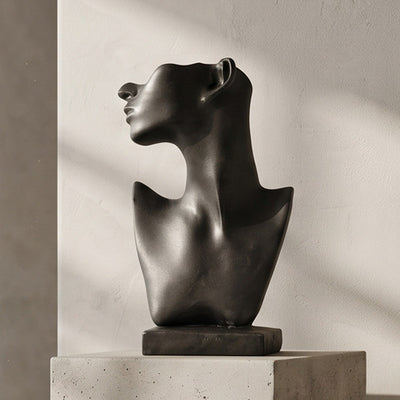
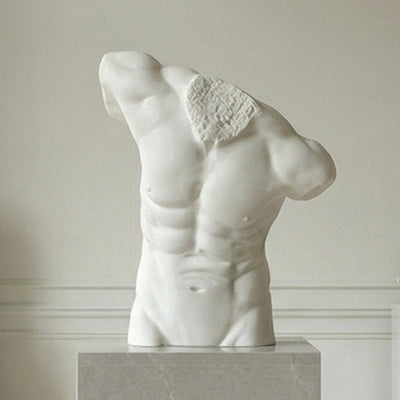
Indoors, this plays out in living spaces where a piece anchors a sightline from the entrance or terminates a hallway. Something like a Contemporary Abstract Female Torso Bronze Sculpture - 70cm sits comfortably on a console or a low plinth, close enough to read the surface: the tool marks, the patina, the way the metal catches raking light from a nearby window. At that distance, texture is the story.
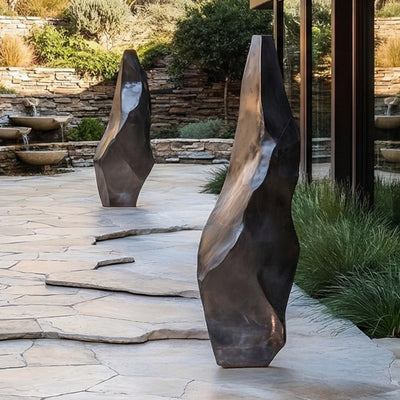
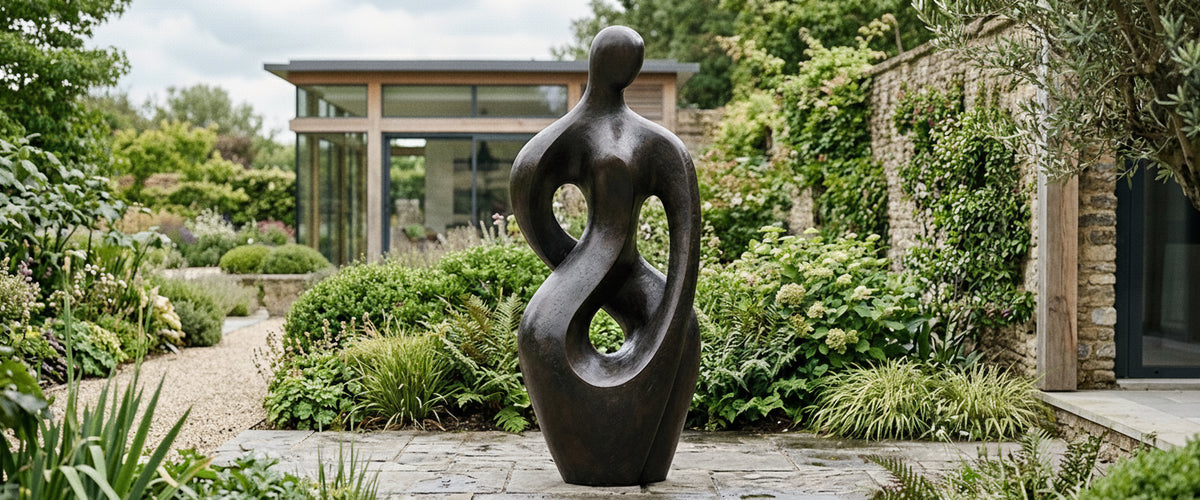
Outdoors, the same logic inverts. In a garden in Napa or a lawn in Aspen, you are reading the piece against sky, hedge, or stone from 30 or 40 ft away before you ever walk up to it. Silhouette wins. That is why larger reclining and figure works by contemporary abstract sculpture artists, such as a Large Contemporary Abstract Reclining Figure Bronze Sculpture - 120cm, hold their own on open ground where a smaller, detail-driven piece would simply disappear.

Scale, Sightlines, and Pedestal Height
Scale is the first decision and the one people get wrong most often. Buyers measure the sculpture and forget to measure the space around it. A piece needs breathing room proportional to its mass; crowd it and the eye never settles.
A working rule we use: give a freestanding sculpture a clear zone roughly one to one and a half times its height on its main viewing side. A 6 ft (183 cm) figure wants around 9 ft (274 cm) of open approach to be read properly. In a grand entry that is easy. In a courtyard hemmed by walls, you either scale down or commit to the piece dominating the space on purpose.
Pedestal height quietly rewrites the whole reading. Raise a work to eye level or above and it turns formal, monumental, slightly removed. Drop the base so the piece meets you at chest or waist height and it becomes something you relate to as a body in the room. With a Monumental Contemporary Abstract Female Figure Bronze Sculpture - 220cm, the ground itself is the pedestal; adding height would push it out of human scale entirely. For smaller works, the plinth is a design decision as important as the sculpture, and the best contemporary abstract sculpture artists treat the base as part of a bespoke commission so proportions stay honest.
Sightlines Come Before Furniture
Plan the sculpture into the sightline before you arrange seating, not after. The strongest placements terminate a natural line of travel: the view from the front door, the axis down a hallway, the focal point framed by a window from the garden path. If you place the piece where furniture happens to leave a gap, you get a gap with a sculpture in it.

Indoor Versus Outdoor Placement: When Each Wins
For wider placement ideas, How to Place Contemporary Abstract Sculpture so It Actually Works is useful companion reading before finalizing the setting and sightlines.
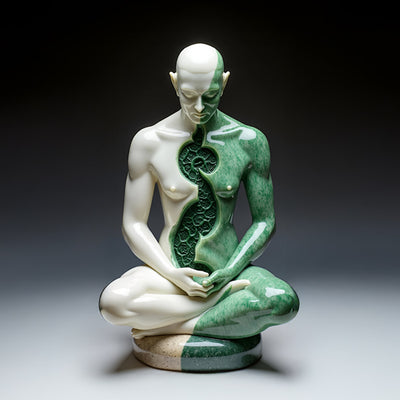
Indoors gives you control. Stable temperature, no wind load, no salt or freeze cycles, and lighting you can direct. It rewards pieces where surface and detail matter, and it protects more delicate finishes. Contemporary abstract ceramic sculpture, for instance, lives comfortably inside where it will not face frost, whereas outdoor exposure demands materials chosen for it. Contemporary abstract sculpture artists working in fired clay tend to design for interiors first.
Outdoors is more demanding and, done right, more rewarding. Bronze is the workhorse here; a properly patinated and waxed bronze can stand in weather for generations, which is why so much public and garden sculpture uses it. The Smithsonian's conservation guidance is clear that outdoor bronze needs periodic maintenance to protect the patina, not a one-time seal and forget. Corten steel and stone are the other honest outdoor choices, each aging in its own way. A Large Contemporary Abstract Raindrop Cluster Sculpture - 250cm is the kind of piece built to read across a wide lawn and take the weather while doing it.
When does outdoor win outright? When the piece needs distance and sky to breathe, when it marks an arrival, or when a garden has a strong axis begging for a terminus. Indoor wins when you want intimacy, when the finish is delicate, or when the sculpture is meant to be lived beside rather than admired from afar. Either way, the contemporary abstract sculpture artists we work with think about the setting long before the material is locked.

Light, Backdrop, and Contrast
Light is the cheapest tool you have and the most wasted. Flat, even lighting kills three-dimensional form; it flattens the very thing that makes a sculpture worth owning. You want directional light that rakes across the surface and throws shadow into the recesses. Indoors, a single angled spot or wash does more than a whole ceiling grid. Outdoors, the low sun of morning and late afternoon models a piece beautifully, so orient the main viewing side to catch it.
Backdrop decides whether the silhouette reads at all. A dark bronze against a dark hedge vanishes; the same bronze against a pale rendered wall or open sky snaps into focus. Contrast is the mechanism. Before placing any work by contemporary abstract sculpture artists, ask what sits behind it from the primary viewing point, and whether that background helps or fights the form.
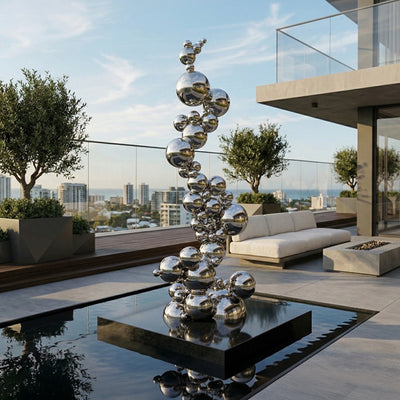
Reflective and pale materials flip the rule. A polished stainless or light stone form needs a busier, darker backdrop to stop it washing out. Contemporary abstract stone sculpture in particular can lose all definition against a bright sky, so we often set stone works where a wall, planting, or slope gives the eye something to push against.

Common Placement Mistakes We See on Commissions
These come up again and again with buyers of contemporary abstract sculpture artists, and every one is easier to solve before delivery than after.
- Undersizing for the space. A piece that looked large in the studio shrinks outdoors. When in doubt, size up. This is the single most common regret we hear.
- Centering by default. Dead-center placement often reads as timid. An off-axis position, aligned to a sightline, usually has more tension and life.
- Ignoring the back. Abstract work gets viewed in the round. If the piece has a weak angle, plan so that angle faces away from the main approach.
- Fighting the backdrop. Dark on dark, pale on bright. Fix the background or move the piece.
- Skipping the base engineering outdoors. A tall bronze needs an anchored foundation to handle wind load and stay level over years. We design for this; retrofitting it is expensive.
- Lighting the wall instead of the work. Aim light at the sculpture, from an angle, not as ambient fill.
How Giant Sculptures Helps You Get It Right
We are a bespoke sculpture supplier working mainly in bronze, stainless steel, Corten, stone, and marble, and we ship large-scale work worldwide. That scale focus is the point: the bigger and heavier the piece, the less room there is for a placement guess. On commissions we talk through sightlines, base height, foundation, and viewing angles before anything is cast or carved, and we can adjust proportion, patina, or finish so a work by our contemporary abstract sculpture artists suits the exact spot it is heading to. Whether the reference is cosmoliving contemporary abstract sculpture or canadian contemporary abstract sculpture, the placement method is the same.
If you are still choosing rather than placing, browse the abstract sculptures collection to see the range of forms and scales from our contemporary abstract sculpture artists, or the wider contemporary and modern sculptures for pieces that suit clean, current interiors and gardens. Whether you land on a stock design or commission something new, the placement thinking above is what turns a good sculpture into one that owns its space.
Budget for a large sculpture depends on material, scale, complexity, engineering, installation, and finishing, so the honest answer is to request a tailored quote for the specific piece and site rather than work from a guessed range. We are happy to advise on both the object and where the work by contemporary abstract sculpture artists should stand.