





































































































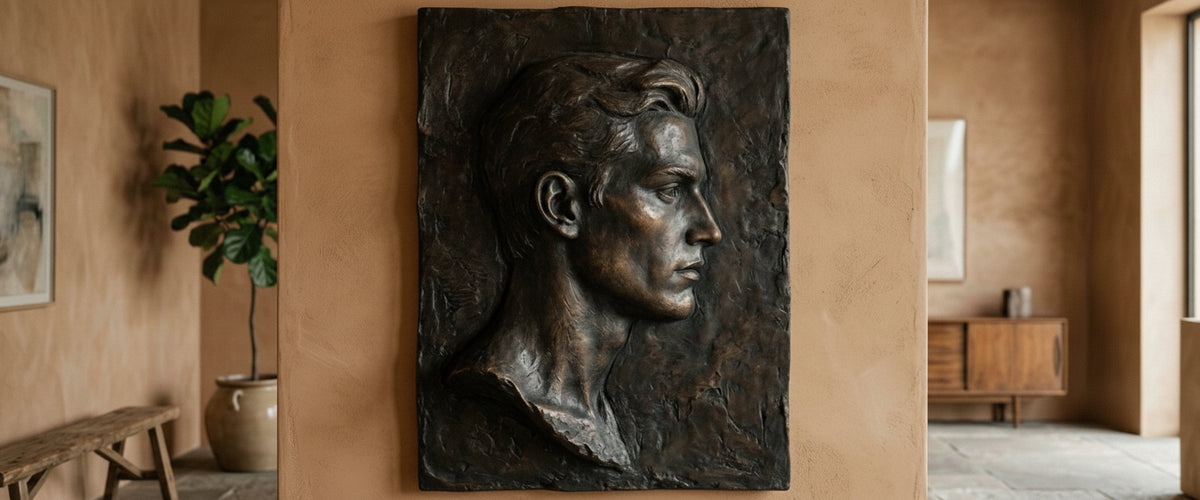

A contemporary wall sculpture can either anchor an entire room or disappear into the drywall behind it, and the deciding factor is rarely the piece itself. It is where the piece lands. We have shipped bronze reliefs to double-height entryways in Dallas and to narrow gallery hallways in Manhattan apartments, and the same contemporary wall sculpture behaves completely differently depending on the wall, the light, and the distance people view it from. Get the placement right and a single relief does the work of a whole gallery wall.
This is a buyer's guide to that decision. Not what to buy in the abstract, but where and how to hang a contemporary wall sculpture so it reads with the presence you paid for.

Key Takeaways
- Scale first. A contemporary wall sculpture should own its wall, not apologize for it. Undersized is the most common and most expensive mistake.
- Sightline height matters more than a fixed rule. The primary viewing distance decides the center height, not a generic 57-inch gallery number.
- Backdrop and light do half the work. Raking light and a contrasting wall tone can double the perceived depth of a relief.
- Outdoor placement changes the material conversation. Bronze, stainless steel and Corten behave differently on an exterior wall than a plaster interior.
- Bespoke removes the compromise. When a wall is genuinely unusual, commissioning a contemporary wall sculpture to fit is often cheaper than reworking the room around a stock size.

What a Contemporary Wall Sculpture Actually Looks Like in a Real Room
Contemporary sculptures on a wall span a wide range, and the term covers more ground than people expect. At one end you have abstract metalwork with clean planes and controlled shadow. At the other, figurative bronze relief that reads almost like a frozen moment pressed out of the surface. For a large wall that needs a figurative anchor without theatrics, Large Contemporary Emerging Male Profile Bronze Relief - 160cm at roughly 63 inches (160 cm) works because it is figurative but restrained; the form emerges from the wall rather than sitting flat against it, so it holds a large surface without shouting.
In a California living room with tall glazing and pale walls, that same contemporary wall sculpture reads as sculptural and calm. Drop it into a paneled study with warm timber and it becomes moody and architectural. The object does not change. The room's contribution does.
Outdoor settings shift the register again. On a poured-concrete garden wall in Napa or a stone boundary wall in the Hamptons, a bronze or Corten relief picks up directional sun through the day and animates in a way an interior wall never quite delivers. Contemporary bronze sculpture especially rewards outdoor light, because the patina and the raised form catch and lose the sun as it moves.

Scale, Sightlines and Height: The Choices That Change How a Piece Reads
Most placement failures start with scale. Buyers measure the contemporary wall sculpture and forget to measure the wall it has to hold. A rough working rule: a wall-mounted piece should occupy somewhere between one half and two thirds of the visual width of the wall or the furniture grouping it sits above. Go smaller and the work looks like a sample the installers left behind.
Height is the second lever, and the standard gallery advice of centering at 57 inches (145 cm) is a starting point, not a law. That number assumes a viewer standing and moving through a gallery. In a room where people are mostly seated, a sofa lounge in Aspen, a dining space, a reception seating area, you want the center of the piece lower so it meets a seated eye line. In a double-height foyer viewed from a staircase, you often want it higher and larger, because the primary sightline is diagonal and from distance.
Think about the three main ways people will actually see the contemporary wall sculpture: on approach, at rest, and in passing. Set the height for whichever of those matters most, then check the other two do not fight it.

Indoor Versus Outdoor Placement: When Each Wins
For wider placement ideas, Contemporary Metal Wall Art: How to Place It so It Actually Lands is useful companion reading before finalizing the setting and sightlines.
Indoors, a contemporary wall sculpture is a controlled object. Stable light, stable temperature, and a backdrop you can paint to taste. This is where fine surface detail and delicate patina earn their keep, because nothing is weathering them. Relief work with subtle tonal shifts shows best on an interior wall where you can light it deliberately. Where the interior calls for classical weight rather than contemporary reduction, a piece such as the Classical Figural Torso Wall Sconce Bronze Sculpture - 90cm at 90cm carries detail that only reads properly under controlled interior light.
Outdoors, the piece becomes part of the architecture and the weather. Material choice stops being cosmetic and becomes structural. Bronze develops a living patina over years of exposure; the process is well documented by conservators, and a stable protective patina is part of why bronze has survived outdoors for centuries (Smithsonian guidance on caring for outdoor bronze is a good primer). Stainless steel and Corten each bring their own logic: stainless stays bright and reflective, Corten settles into a warm rust-toned skin that suits stone and planting.
An outdoor contemporary wall sculpture wins when you have a strong architectural wall, generous viewing distance, and light you want to use. Indoor wins when detail, control, and a specific mood matter more than scale drama. If you are torn, we usually ask one question: where will people stop and look? That is the wall.
Light, Backdrop and Contrast: The Details That Decide Impact
Relief work lives on shadow. Flat, even lighting kills it. What you want is raking light, a source set to one side so it grazes across the surface and throws the raised areas into relief. A single well-aimed spot at roughly a 30-degree angle does more for a bronze relief than a whole ceiling of downlights.
Backdrop tone is the other half. A dark bronze on a dark wall reads as texture and mood; the same bronze on a pale plaster wall reads as sharp silhouette and line. Neither is wrong. Decide which you want before you paint. For a reflective stainless or polished contemporary wall sculpture, a plain matte backdrop stops the room clutter from bouncing back at the viewer.
One focus of many contemporary sculptures is exactly this interplay of surface and light rather than narrative detail, which is why placement of a contemporary wall sculpture is not decoration; it is part of the artwork. A subtlety in the modeling or a gradient in the patina can be lost under bad light and fully alive under good light.
Common Placement Mistakes We See in Commissions
These are the ones that come up again and again, and every one of them is avoidable.
- Buying for the tape measure, not the sightline. A piece that measures correctly for the wall can still sit wrong for how people move through the space. Walk the room before you commit.
- Hanging too high. The single most common error. When in doubt, drop it a few inches. A piece that meets the eye reads as considered; a piece floating near the ceiling reads as an accident.
- Ignoring the fixing. A substantial bronze or metal relief has real weight. A Contemporary Horse Head Bronze Relief - 100cm at around 39 inches (100 cm) needs a fixing rated well beyond the piece's weight, into structure, not just plasterboard. We advise on mounting for every contemporary wall sculpture we make, but the wall behind still has to be up to the job.
- Fighting the backdrop. Busy wallpaper or a heavily textured stone wall competes with a detailed relief. Let one of them be the quiet one.
- Forgetting the second viewpoint. Outdoors especially, people see a wall piece from more than one path. Check it reads from the approach as well as up close.
When to Commission Rather Than Buy off the Shelf
A stock contemporary wall sculpture works beautifully when the wall is generous and conventional. Bespoke earns its place when the wall is not. If you have an unusual span, a specific patina you want matched to existing metalwork, or a subject that means something to the space, commissioning a contemporary wall sculpture to fit is often the more efficient route. Reworking a room to accommodate a stock size can cost more than making the piece the right size in the first place.
As a bespoke sculpture supplier, Giant Sculptures builds large-scale wall pieces in bronze, stainless steel and Corten to specified dimensions, and works from a client's brief on subject, finish and mounting. Contemporary sculpture artists and studios approach relief differently; some chase realism, others reduce form to essential planes. If you have a direction in mind, bring reference images early. It shortens everything.
If you want to see the range before deciding, our Bronze Wall Art collection is the clearest starting point for figurative and relief work, while the broader Metal Wall Art collection covers more abstract and reflective options for contemporary interiors and exteriors.
A Quick Placement Checklist Before You Fix Anything
- Measure the wall and the furniture grouping, then size the contemporary wall sculpture to fill roughly half to two thirds of it.
- Identify the primary sightline: standing, seated, or diagonal from distance.
- Set center height to that sightline, not a generic gallery number.
- Plan one raking light source before you hang.
- Choose backdrop tone for contrast or mood, deliberately.
- Confirm the fixing goes into structure and is rated well above the piece's weight.
- Outdoors, match the material to exposure and check the sculpture from every approach path.
Placement is the cheapest upgrade you will ever make to a contemporary wall sculpture, because it costs nothing but attention. Get the scale, the sightline and the light right and even a restrained relief holds a room. Get them wrong and the finest bronze in the world looks like it wandered in by accident.