

































































































Every commission conversation opens with the same question, and it is the one question no honest studio can answer in a single line. Typed into a search bar it usually arrives compressed to three words: sculpture commission cost. Spelled out properly: how much does it cost to commission a sculpture? A 6 ft (1.8 m) bronze figure and a 6 ft stainless steel abstract can sit a long way apart on price, and two bronzes of identical height can differ again depending on wall thickness, pose, patina and how many people it takes to lift the finished piece onto its base. A sculpture commission cost is real and knowable. The number just gets built rather than looked up.

At a Glance: What Actually Drives the Quote
Material sets the floor. Bronze, marble and mirror-polished stainless sit above Corten and fabricated steel for the same silhouette.
Scale moves cost non-linearly. Weight, wall thickness and internal armature climb faster than height does.
Complexity matters more than size on figurative work. Outstretched limbs, drapery, fur and multiple figures all add mould sections.
Pattern and mould work is a real cost you never see in the finished piece.
Engineering, crating and craning sit outside the studio quote, and leaving them out is the fastest way to misjudge a sculpture commission cost.
Material Sets the Floor Long Before Scale Enters the Conversation
Choose the material first and half the budget question resolves itself. Cast bronze carries the raw metal cost, the foundry labor, the chasing and the patina, and it holds value outdoors for generations with light care. Hand-carved marble is priced by block, by hardness and by carving hours, and a single flaw discovered mid-carve can restart a section. Mirror-polished stainless steel looks simple and is not; the polishing stage on a large curved form can run longer than the fabrication that preceded it. Corten weathering steel is usually the most economical route to genuine scale, which is why it shows up so often when the sculpture commission cost for a large public space or a private estate has to stay inside a fixed budget.
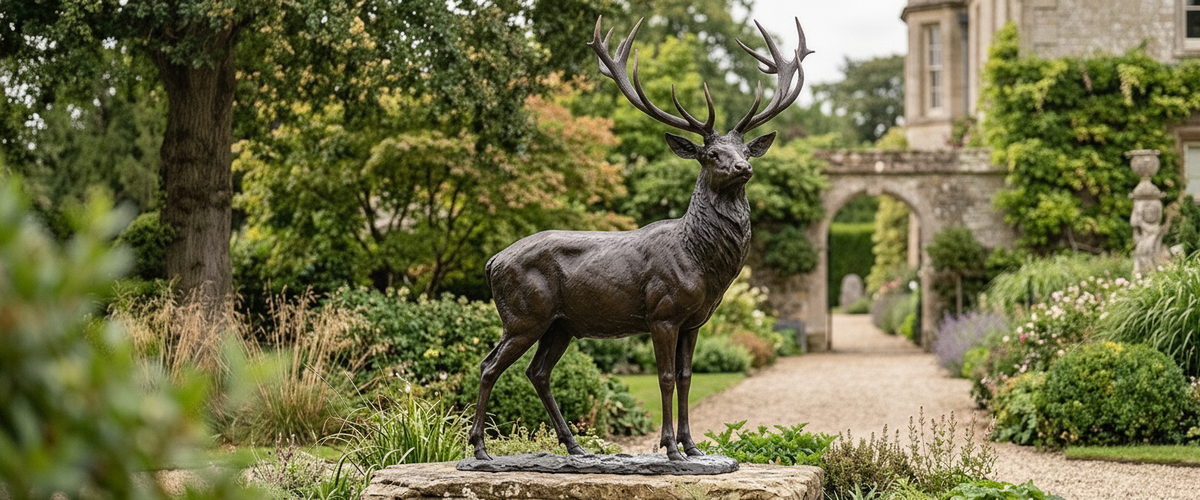
Our bronze figures and statues make a useful calibration exercise. Compare a standing single figure with a group composition at the same height, and the difference in undercuts, limb positions and mould sections is exactly what shifts the sculpture commission cost in bronze, and exactly what you will see reflected in a bespoke quote.
Doubling the Height Rarely Doubles the Price: It Can Triple It
Going from a 3 ft (0.9 m) piece to a 6 ft piece does not double anything except the tape measure, and it certainly does not double the sculpture commission cost. Surface area rises with the square of the increase, and volume and weight rise with the cube. A hollow bronze at monumental scale needs thicker walls, a stainless internal armature and often a welded internal frame to stop the form flexing during handling.
There is a genuine step change, and it tends to land somewhere past 8 to 10 ft (2.4 to 3 m). Beyond that, pieces are usually cast or fabricated in sections, assembled, welded, blended and re-patinated on site or in the yard. Add wind loading calculations and a foundation specification and you have crossed from sculpture into structure. That threshold is where sculpture commission costs can jump sharply. It is worth knowing before you fall in love with a height.
Maquette, Mould and Pattern Work: Paying for Stages You Will Never See
Every sculpture commission starts with drawings, then a scale maquette, then a full-size clay or digitally milled pattern, and each of those stages takes a slice of the sculpture commission cost. Each one exists so that the expensive stage after it goes right. Approving a maquette is the cheapest moment to change a head angle; approving a wax after mould-making is a much costlier one.
Mould work is invisible in the finished object and unavoidable in the price. A complex figurative form may need dozens of separate mould sections, each cut, keyed and cast. The lost-wax process behind most fine art bronze has barely changed in centuries, and Tate's explanation of lost-wax casting is a good primer on why those steps cannot be skipped. When a search as blunt as sculpture commission cost returns a figure that feels high for the visible object, this hidden preparatory work is usually where the gap sits.

Foundry Hours Versus Studio Hours on a Genuine One-Off
An edition spreads mould and pattern costs across several casts. A true one-off carries all of it alone. That is the single biggest reason a unique sculpture commission costs more than a numbered cast of similar scale, and it is worth deciding early which you actually want.
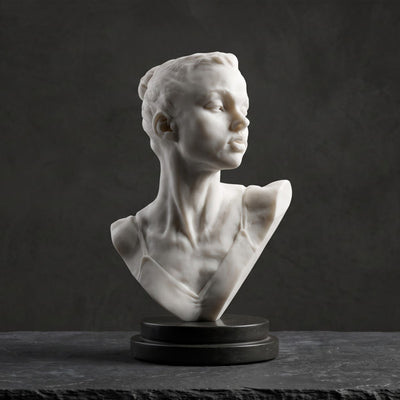
Then there are the hours nobody photographs. Chasing weld lines out of a bronze surface, sharpening detail lost in the pour, building a patina in layers with heat and chemistry until the color reads correctly at 30 feet and at arm's length. On a large bronze, finishing can consume as many hours as casting, which is a larger share of the sculpture commission cost than most buyers expect. Detail-heavy small work carries the same logic in miniature; the modeling time on the pieces in our bronze busts and heads range is concentrated in the face, where a millimeter changes the likeness.
Engineering, Crating and Craning: The Line Items Buyers Forget
We shipped a pair of large bronze animals to a ranch entrance in Texas where the client had budgeted beautifully for the sculpture commission cost and not at all for the day it arrived. The crane hire, the traffic management and the engineered concrete pads were a genuine surprise. Plan for them from the first conversation.
Budget lines to raise with your studio early:
Structural fixing: foundation pad, anchor bolts, hidden stainless dowels or a full engineered base plate.
Plinth: stone, cast concrete or steel, quoted separately in most cases.
Crating: bespoke timber crates and internal bracing for sea or air freight.
Access: crane or telehandler, spreader beams, rigging, site protection.
Permits and sign-off: HOA approval, planning consent, wind loading certification for exposed sites.
Aftercare: annual wax on bronze, rinsing schedules for coastal salt exposure.
Coastal and mountain sites deserve extra thought before you commit, because exposure changes the sculpture commission cost for either setting and how much aftercare the piece will need. A polished stainless piece in Aspen faces freeze-thaw and UV; the same piece in the Hamptons faces salt aerosol year-round. Both are solvable at the specification stage and awkward to fix later.

Staged Payments and Where Commission Budgets Quietly Slip
Most bespoke sculpture commissions run on staged payments tied to milestones: design and maquette, pattern approval, casting or fabrication, finishing, then delivery and installation. Nobody hands over the full sculpture commission cost in one lump. That structure protects both sides, and it gives you natural decision points.
Budgets slip in two predictable places. The first is late-stage change requests, when a pose or a patina tone is revised after the mould exists. The second is scope creep in the surroundings: a bigger plinth, then lighting, then a paved approach. The International Sculpture Center is a useful place to read more broadly on how commissioning practice works across the field. Our advice is simpler. Fix the brief hard at maquette stage, name your site constraints on day one, and ask for the sculpture commission cost and the installation cost in the same document.
Because scale, material, complexity, engineering and finishing all move independently, published price bands are close to meaningless for bespoke work. If you want a real answer behind the phrase sculpture commission cost, send Giant Sculptures your site photographs, your intended height, your material preference and your access limitations, and ask for a tailored quote. Buyers who have not settled on a subject often start by browsing something like our bronze horse statues to test how scale and pose read in a real setting, then move into commissioning a sculpture from there.
For wider placement ideas, The Figure Sculpture Commission Decisions You Cannot Undo Later is useful companion reading before you finalize the setting and sightlines, and before you sign off on a sculpture commission cost at that scale.