



























































































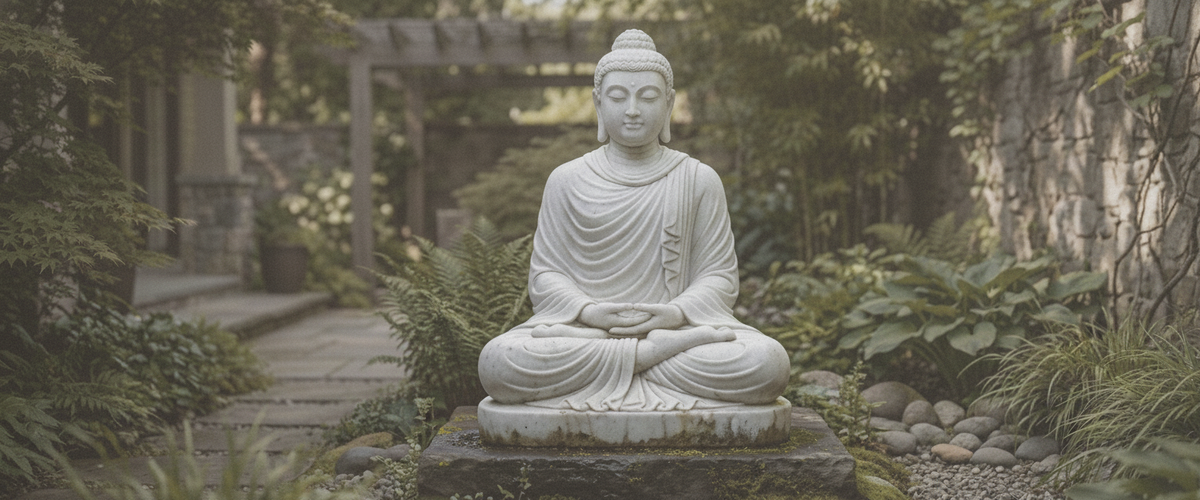

Two summers. That is roughly how long white stone lasts in a damp, shaded corner before the green film reads from thirty feet away. Buyers planning a marble Buddha statue garden centerpiece almost always focus on the face, the mudra, the quality of the robe folds. Very few ask which way the piece will be facing at nine in the morning in February. That single question shapes how the sculpture looks in year five more than anything printed on a spec sheet.

Key Takeaways Before You Buy
Shade plus still air equals algae. North-facing corners under dense planting are the worst possible spot for a white marble Buddha statue garden piece.
Form controls water. Reclining and seated figures with deep laps and horizontal shoulders hold rainwater; a head or bust sheds it fast.
The plinth fails before the figure does. Ground contact, standing water and freeze cycles attack the base first.
Clean gently or not at all. Acid, bleach and pressure washers do permanent damage to a calcite surface.
Sealants are a maintenance choice, not a fix. The wrong one traps moisture inside a garden marble Buddha statue.
Why Shade and Damp Turn White Marble Green Within Two Seasons
Marble is calcite. It is porous enough to hold a film of moisture at the surface, and that film is all algae, lichen and moss need to colonize. Add low light, poor airflow and leaf litter dropping organic food onto the stone, and biological growth establishes quickly. Put a marble Buddha statue garden centerpiece in that combination and the clock starts running from the first wet autumn. Conservation guidance from bodies such as the American Institute for Conservation consistently points at moisture management as the first line of defense for outdoor stone, well ahead of any product you can buy in a bottle.
Still, shaded air is where the green film starts.
The green itself is mostly cosmetic in the first year. What follows is not. Lichen roots into the surface, and once you scrub it off you find the polish gone underneath, leaving a chalky matte patch that never quite matches the rest. A badly sited marble Buddha statue garden feature cannot be reset to showroom condition after five years. It can only be stabilized and enjoyed as an aged piece.
Seated, Reclining or Head Only: Which Form Collects the Most Water
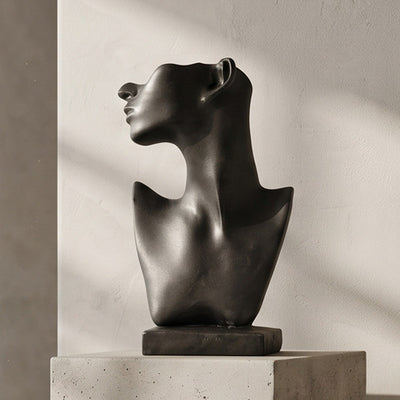
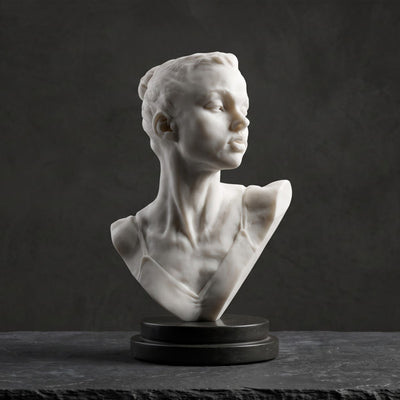
Pose is drainage, and it decides how a marble Buddha statue garden centerpiece ages. A reclining Buddha presents the largest horizontal area of any common form, and the long upper surface holds water and debris along its entire length. A seated meditation figure is next: the lap, the crossed hands and the shoulder line all become shallow trays. A Buddha head, by contrast, sheds water down curved surfaces almost immediately, which is why heads and busts survive damp climates far better than full figures, and why marble busts and torsos are worth considering for a site you already know stays wet.
The same physics plays out across every carved subject in stone. Tight, deeply undercut detail of the kind found on the Coiled Dragon White Marble Garden Statue - 180cm (about 5 ft 11 in) will hold pine needles and grit for months, while a lower, smoother silhouette closer to the Resting Swan White Marble Garden Statue - 150cm (roughly 4 ft 11 in) drains predictably after every shower. When clients ask which form to commission for a wet site, we steer a marble Buddha statue garden project toward a head, a bust or a seated figure on a raised, well-drained plinth rather than a reclining piece lying close to wet ground.

Morning Sun and Airflow Slow the Algae Down
Overnight condensation is the daily enemy. Stone that dries by mid-morning stays clean for years; stone that stays wet until noon does not. East and southeast exposure gives you early sun that burns the dew off. Just as important is air movement. A Buddha tucked into a hedge alcove sits in a pocket of still, humid air, even in an otherwise sunny garden. Early light and moving air will do more for a marble Buddha statue garden than any sealer or cleaner you can apply afterwards.
An open lawn edge with morning light keeps the stone dry by mid-morning.
We shipped a marble Buddha statue garden commission to a Hudson Valley property where the client had already poured a base under a mature maple. We asked for the base to be moved twenty feet into an open lawn edge with morning light. Their neighbor kept a similar piece under tree cover; three years on, the difference in the two stones is obvious without walking closer. Clearance matters too. Leave breathing room behind the sculpture rather than pushing it flush against a wall or dense planting, and keep it lifted clear of splash-back from lawn and gravel.
Frost at the Base, and What Three Winters Do to an Unsealed Plinth
Ground level is where a marble Buddha statue garden install usually fails first. Water wicks upward from soil into an unsealed plinth, freezes, expands, and lifts flakes off the stone. Three winters of that in Colorado or the Northeast can spall the base while the upper figure still looks sound. The cure is drainage and separation: a compacted, free-draining pad, a plinth sitting proud of the soil line, and no bed of moss or mulch banked against the base.
Large marble pieces are heavy enough that repositioning later means machinery, so get the foundation under a marble Buddha statue garden centerpiece right the first time. A seated figure carrying the mass of the Seated Angel With Roses Marble Garden Statue - 170cm (around 5 ft 7 in) needs a properly engineered pad, not paving slabs laid on sand, and the same is true of any Buddha at that scale. Our commissions team specifies fixings and base details with the site conditions in mind, and that conversation should happen before carving starts, not after delivery.
Cleaning a Marble Buddha Without Acid, Bleach or a Pressure Washer
Most of the damage we see on a marble Buddha statue garden piece was done by the owner with good intentions. Marble dissolves in acid. That rules out vinegar, citrus cleaners, most patio products and every descaler in the garage. Bleach kills growth but leaves salts in the pores and can yellow the stone. Pressure washers erode soft carving and force water deep into the block. Work slowly instead:
Dry brush loose debris with a soft natural bristle brush, working top to bottom.
Rinse with plain clean water and let the surface soak briefly.
Wash with a pH-neutral, non-ionic detergent and a soft brush, small area at a time.
Rinse thoroughly so no residue is left in the undercuts or lettering.
For lichen, use a proprietary biocide made for stone, applied per instructions, then leave it to work over weeks rather than scrubbing.
Blot standing water out of the lap, hands and any recesses; do not leave puddles to sit.
Inspect the base and joints once a year and clear anything banked against the stone.
Twice a year is enough for most marble Buddha statue garden settings. Conservation guidance on outdoor stone, including public advice on masonry care, favors the gentlest effective method repeated often over an aggressive clean every few years.
Sealants: What They Actually Buy You, and Where They Trap Moisture
A breathable impregnating sealer reduces water uptake and makes dirt easier to lift. It does not stop biological growth on its own, and it wears unevenly on exposed faces, so expect reapplication on a cycle. Film-forming or glossy coatings are the real risk: they look sharp for one season, then trap moisture behind the film, cloud, and peel in patches that are far uglier than the green they replaced. If you seal a marble Buddha statue garden piece, seal the plinth and the base as carefully as the figure, since that is where water enters.

Choosing a Marble Buddha Statue Garden Centerpiece You Can Live With
Decision criteria worth settling before you commission:
Climate: hard freeze-thaw regions favor heads, busts and compact seated forms over sprawling reclining pieces.
Exposure: if the only spot available for a marble Buddha statue for garden display is shaded and still, consider bronze instead. Our bronze Buddha statues and Buddha heads patinate rather than stain, and they read well in low light.
Scale: a figure that looks generous in a studio can vanish in a half-acre lawn. Sight lines and viewing distance set the height, not the room in the truck.
Stone color: gray and veined marbles disguise weathering far better than bright white.
Maintenance appetite: be honest about whether anyone will actually clean the marble Buddha statue garden centerpiece twice a year.
Budget depends on material, size, carving complexity, base engineering, finishing and installation, so a tailored quote is the only sensible answer for a marble Buddha statue garden commission. If you are comparing forms, browsing garden statues and large garden statues alongside the Buddha collections gives a useful sense of how mass behaves outdoors.
When to Stop Fighting It and Let the Weathering Read as Age
There is a point where chasing perfect white becomes counterproductive. Every aggressive clean takes a little surface with it. A softly gray Buddha with lichen in the deep folds and clean, legible features looks intentional; a blotchy piece scrubbed back in patches looks neglected. The workable compromise most of our clients land on: keep the face, hands and upper surfaces clean, let the base and the shaded rear develop patina, and stop there. Marble ages honestly if you let it, and we would rather commission a marble Buddha statue garden piece that will still hold its presence in twenty years than one that looks flawless for two.
For wider placement ideas, Marble Garden Statues: What Winter Really Does to White Stone is useful companion reading before finalizing the setting and sightlines for your marble Buddha statue garden.