




























































































Most cracked wood sculptures we see were never dropped, knocked or neglected. They were heated. If you want to care for wood sculpture properly, stop thinking about polish and start thinking about air, because the calendar does far more damage than careless hands. Here is the routine we give clients, organized by season, so you know what to watch and when.

At a Glance
Target humidity: roughly 45 to 55 percent relative humidity, held as steadily as possible.
Riskiest moment: the first week the heating comes on in fall.
Cleaning: dry dusting most of the year, a thin paste wax once or twice annually.
Most common mistake: feeding the wood extra oil. It builds a sticky film and traps grime.
Garden pieces: acclimatize them over days before they live indoors.
Wood Keeps Moving After the Carver Stops
Timber is hygroscopic. It takes on and gives up moisture to match the air around it, swelling and shrinking as it goes, and it moves more across the grain than along it. The USDA Forest Products Laboratory Wood Handbook sets out how much different species shrink as they dry. For a sculpture, that matters because the outer surface dries faster than the core. The skin shrinks over a core that has not caught up yet, and the tension releases as a check.
Good wood sculpture care is mostly about slowing that change down. The species, the finish and the seasoning all help, but none of them will save a piece moved straight from a humid shipping crate into a radiator-dry living room.

October: The Riskiest Week of the Year
When forced-air heating kicks on in a Chicago brownstone or a Denver condo, indoor humidity can fall sharply within days. A typical case: a carved walnut form sitting about three feet (roughly 90 cm) from a floor vent opens a fine check along its base in the first week the furnace runs. Moving it to an interior wall and adding a humidifier usually stops the problem before it spreads.
If you do only one thing to care for wood sculpture this fall, do it before you turn the heat on: move wood pieces away from vents, fireplaces and sunny glazing. Then put an inexpensive digital hygrometer next to the sculpture, not across the room, because conditions at the plinth are what count.
Read humidity at the plinth, not across the room.
Midwinter: Holding 45 to 55 Percent Without a Museum Budget
Museums run expensive climate systems, yet a single good room humidifier and a hygrometer get most homes into a sensible range. The Canadian Conservation Institute stresses that rapid swings do more harm than a slightly imperfect but stable level, which is good news for owners. Through the coldest months, aim for steadiness. A room that drifts gently between 45 and 50 percent is far kinder than one that bounces from 30 to 60.
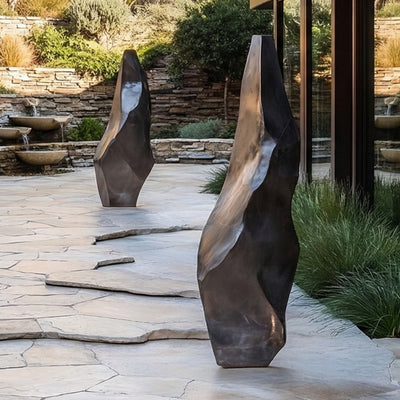
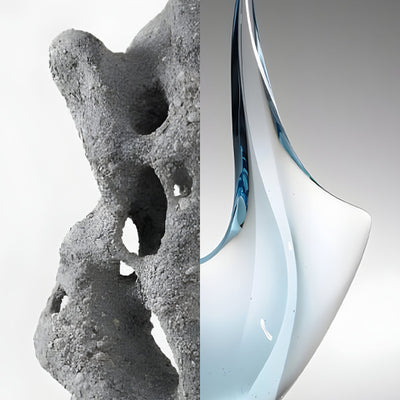
Mixed-material pieces need the same attention, and it is usually the timber that reacts first. On a cast resin form set on a solid plinth, such as the Clear Rust Fleck Sloping Hill Rock Resin Sculpture on Dark Wood Base - 57cm, the upper form shrugs off a dry winter while the base is what moves, so keep it off heated floors and out of afternoon sun.
Spring: Checks That Close Versus Splits That Need the Studio
As humidity climbs again, many hairline checks narrow or vanish. Leave those alone; filling them in winter locks in stress and can cause new cracks nearby. Photograph any crack with a coin beside it in January, then compare in April.
Call a conservator or the studio if a crack has widened since winter, runs through a joint, reaches a thin projecting element such as a wing or limb, or you can slide a business card into it. Those are structural, and amateur glue repairs usually make professional work harder and costlier.

Summer: Wax, Dust and the Oil Trap
Summer is maintenance season, and the calmest stretch of the year for surface work. Dust weekly with a soft natural-bristle brush or a dry microfiber cloth, working with the grain. Once or twice a year, apply a very thin coat of microcrystalline or good-quality paste wax, let it haze, then buff.
Dry dusting with the grain does most of the work.
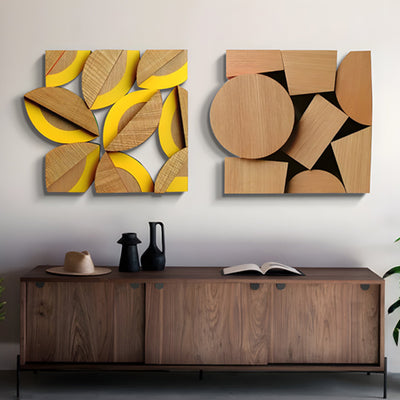
Resist the urge to oil. Owners often assume dry-looking wood is thirsty, but surface oil does nothing for internal moisture. Applied repeatedly, linseed and similar oils build up into a tacky film that grabs dust and darkens unevenly over the years. The same restraint applies to bases: a solid wood plinth like the one beneath the Clear Yellow Leaf Twin-Lobed Rock Resin Sculpture on Solid Wood Base - 45cm, a tabletop piece about 18 inches (45 cm) tall, wants a whisper of wax, not a weekly soak.
Autumn: Bringing a Garden Piece Indoors
A wooden piece that spent summer on a covered porch in the Hamptons or a Napa terrace has absorbed a lot of moisture. Carry it straight into a heated room and the outer layer starts drying within hours while the core stays damp. This is where most outdoor wood cracks happen.
Stage the move instead, because a gradual transition is the most important way to care for wood sculpture that spends part of the year outdoors. Give it a few days in a garage, mudroom or unheated sunroom, then bring it into the main house and keep it away from heat sources for its first weeks back. Check it with the coin photo method before you relax.

How to Care for Wood Sculpture: The Owner's Checklist
If you are buying or commissioning, these questions decide how much care a piece will need over decades of ownership:
Species and seasoning: ask how long the timber was dried and whether it was kiln or air dried.
Finish: wax and penetrating finishes are easy to refresh; heavy lacquers are hard to repair when they crack.
Placement: confirm the spot is away from vents, fireplaces and direct sun before the piece arrives.
Indoor or outdoor: for year-round exposure, consider bronze, Corten or stainless steel for the main form, with wood reserved for sheltered settings.
Tools: budget for a hygrometer and a humidifier as part of the purchase.
When we develop a bespoke commission at Giant Sculptures, we talk through the destination room and climate early, because a coastal Florida home and a high-desert Arizona house ask very different things of the same block of timber. Explore our wood sculptures collection for forms and finishes, or ask us for a tailored quote that accounts for scale, species and installation.
Learning to care for wood sculpture takes one season of attention and a couple of small tools. After that, the routine becomes habit, and the piece keeps the surface and line its maker intended.
For wider placement ideas, Large Wooden Sculptures for the Garden: Why Placement Starts Below Ground is useful companion reading before finalising the setting and sightlines.