



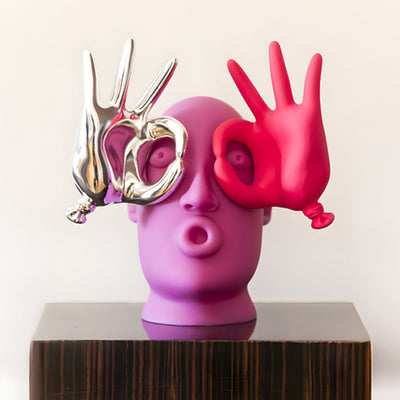


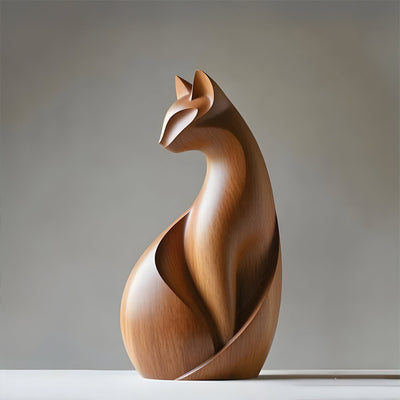
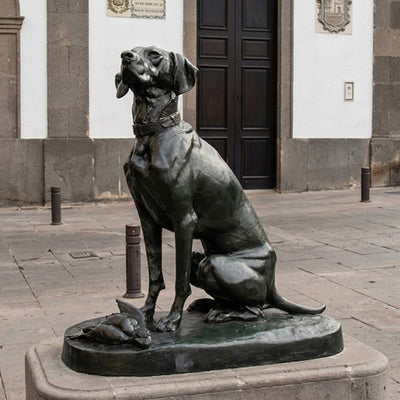


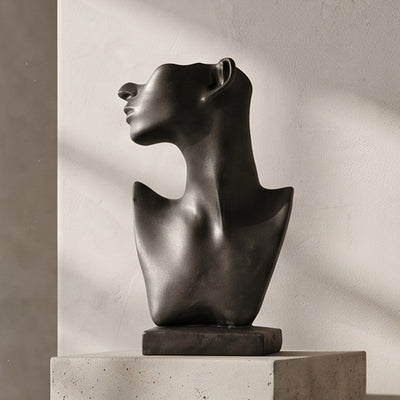



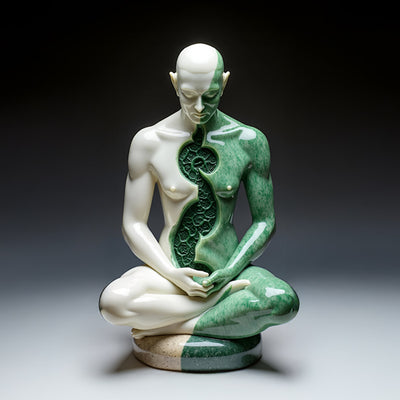
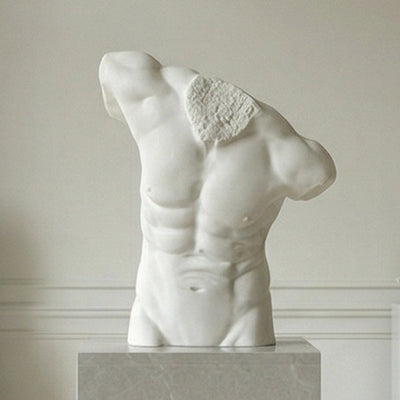
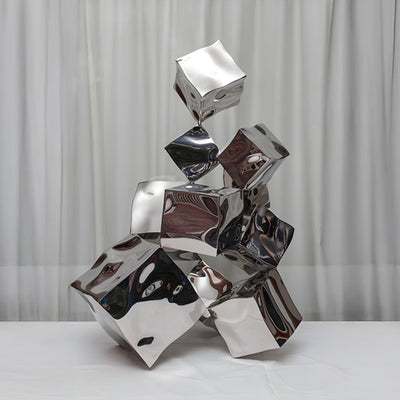


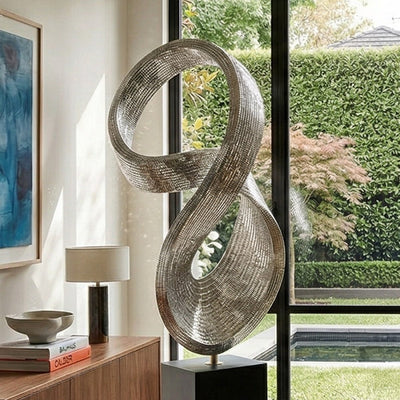
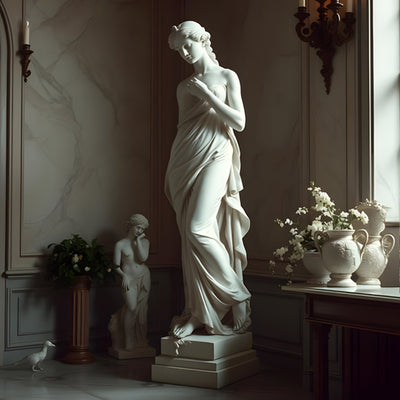
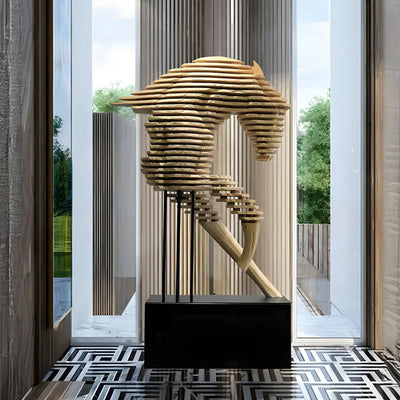
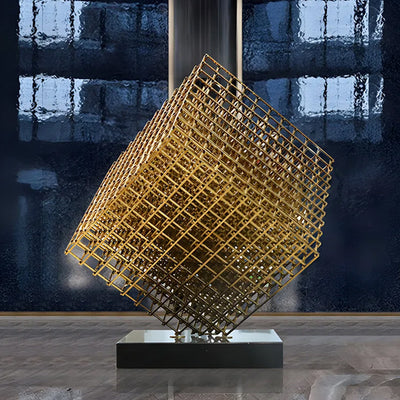
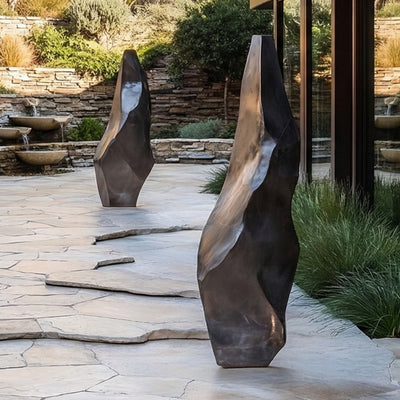













Take the face off a figure, then the hands, then the feet, and something odd happens: people still know it is a person. An abstract figure sculpture works in the gap between what the sculptor removes and what the viewer fills back in. Get the balance right and a few curves read as a dancer mid-turn. Get it wrong and you have bought a costly shape that nobody can place. For buyers, the real question is how much body the piece needs to keep, and which material and setting will protect that decision for decades.

Quick Answer
An abstract figure sculpture simplifies, stretches or breaks up the human body but keeps enough posture to read as human.
Weight and pose survive abstraction far longer than faces or anatomy.
Bronze favors flowing gesture. Stone, stainless steel and Corten pull the body toward planes and geometry.
Plinth height and viewing angle can rescue or flatten a simplified form.
On a commission, the clay maquette is where you settle how much figure stays.
Why a Hip Reads as Human Before a Face Does
Contrapposto, the shift of weight onto one leg that tilts the hips against the shoulders, has been the sculptor's shorthand for life since classical Greece. It still does the heavy lifting in any abstract figure sculpture. A figurative abstract sculpture can lose its features entirely, and that single diagonal through the torso will still tell the eye a body is standing there, resting or about to move.
Anyone who has watched a figure take shape in a studio will recognize the effect. A rough armature, no head yet, barely more than wire and a wedge of clay at the hip, and people walking past start calling it "she." The gesture arrives before the anatomy, and it is the part that has to survive whatever simplification follows.
Elongated, Fragmented, Faceted: How Much Body Each Can Lose
Most abstract figure art sculpture falls into one of three approaches, and each tolerates a different amount of loss.
Elongated
Stretching is the most forgiving route into an abstract figure sculpture. You can drop nearly all anatomical detail as long as the line of the spine and the lean of the shoulders stay intact. A figure reduced to little more than a twisting ribbon can still read instantly as someone walking into weather, provided the forward pitch of the upper body survives.
Fragmented
Breaking the body into separate masses with voids between them asks more of the viewer. The connective tissue can go, but the anchor points cannot: a knee, a shoulder, the weight of a head. Henry Moore built a career on this, opening holes through reclining figures so that landscape and body traded places, an approach the Henry Moore Foundation traces back to his study of stone and natural forms.
Faceted
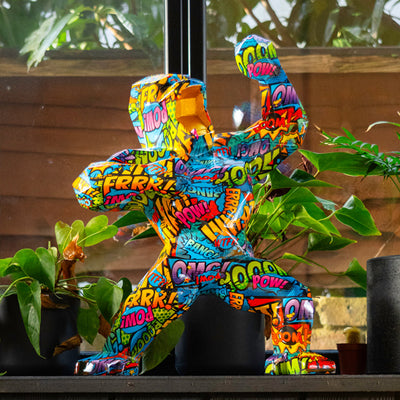
Cutting the body into flat planes tolerates the least loss of any abstract figure sculpture approach. Without curves to carry gesture, the silhouette and the pose have to be nearly literal, or the piece collapses into a crystal.

Material Pushes the Gesture One Way or the Other
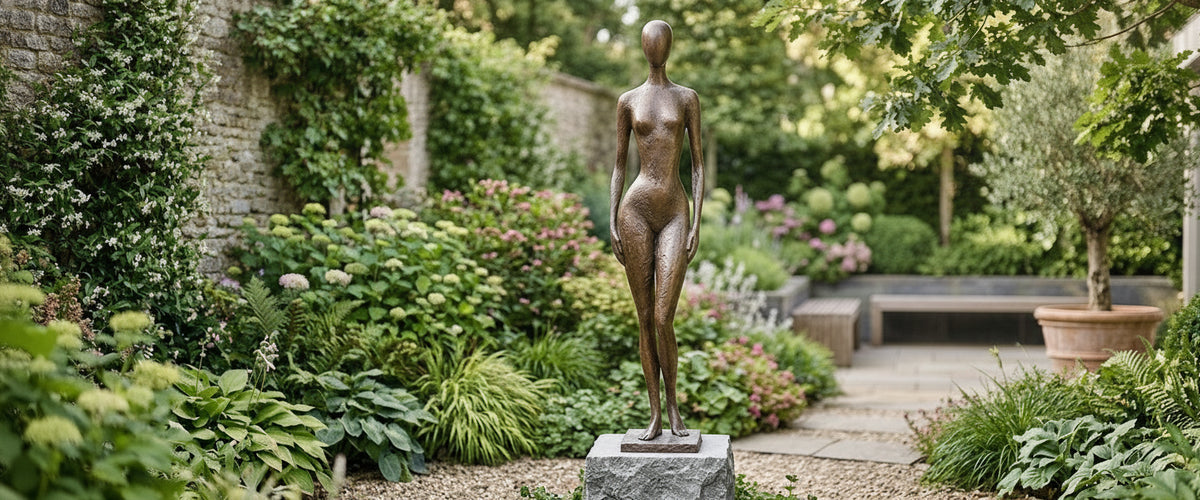
Bronze is cast from a clay or wax original, so it keeps the sculptor's hand: the drag of a thumb, a soft transition from waist to hip. That makes it the natural partner for elongated, fluid abstract figure sculptures, which is why so much of our bronze abstract sculpture leans toward movement.
Stone is carved away, never built up, and that subtractive logic nudges an abstract figure sculpture toward compact, closed masses. Stainless steel and Corten are usually fabricated from sheet and plate, so welded seams and crisp planes pull the figure toward geometry. Neither tendency is wrong. The mistake is pairing a material with an approach it fights, such as asking welded plate to carry a soft, melting gesture it can only approximate in folds and seams.
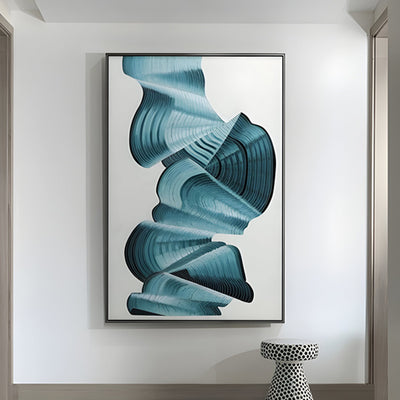
For interiors, cast resin offers color and translucency metal cannot. On a console or shelf, where a turning body is meant to catch light rather than weather, a tinted resin piece such as the Blue Dancing Figure Resin Sculpture - 69cm suits the setting far better than a bronze built for a windswept terrace.
The Tipping Point Where a Figurative Abstract Sculpture Becomes Pure Form
Every abstract human figure sculpture has a point past which it stops being a figure. Our working test: if you cannot tell which way it faces, it has crossed over. The Tate's note on figurative art frames the same boundary as art that keeps a clear link to the real world.
Crossing that line is a legitimate choice. Where a space needs the vertical presence of a standing person without a readable body, a column of rhythm such as the Frosted Fluted & Stepped Resin Abstract Sculpture - 233cm, at about 7.6 feet (233 cm), is closer to the right design language than an abstract figure sculpture pared back too far. Decide early whether you want a body or a rhythm, because a piece stranded halfway rarely satisfies either brief.
Plinth Height and Viewing Angle
An abstract figure sculpture depends on its silhouette, and silhouette changes with the eye. A common failure: a bronze figure set on a low base in a lawn below a house or terrace. Seen from above, the viewer looks down onto the shoulders and the whole gesture compresses into a lump. Raise the plinth so the hip and shoulder line sits near eye level from the main viewpoint, and the figure comes back to life.
Treat that as a rule of thumb. Life-size pieces want their key diagonal close to eye level. Smaller tabletop figures under about 3 feet (90 cm) need lifting so they are not read from directly above; a piece around 30 inches (77 cm) tall, such as the Aqua Blue Windblown Figure Resin Sculpture - 77cm, keeps its forward lean far better on a raised sideboard or pedestal than on a low coffee table. Faceted work usually has a best side, so fix its orientation to the main approach path before the base is poured.

Buying an Abstract Figure Sculpture: Decision Checklist
Before committing to an abstract figure sculpture, run through these points with your designer or landscape architect:
Gesture: Name the one movement the piece must keep, whether a lean, a turn or a reach.
Approach: Choose elongated, fragmented or faceted to suit how literal you want the body.
Material: Match bronze to fluid forms and steel or stone to geometric ones. Check outdoor suitability.
Viewpoint: Map where people will first see it and from what height.
Base: Budget for plinth height and foundations at the outset, not as an afterthought.
Ownership: Ask how patina, weathering or polish will change the reading of the form over time.
Agree the Figure at the Clay Maquette Stage
On a bespoke commission, a clay abstract figure sculpture comes first as a small maquette, and this is the cheapest moment to change your mind. Sculptor and client can push the hip further, shave off a forearm or close a void in an afternoon. Once the full-scale form is enlarged and molded, every change costs real time and money.
We encourage clients to photograph the maquette for their abstract figure sculpture in its intended spot, held at the right height, before approving it. Giant Sculptures then develops the piece in bronze, stainless steel, Corten or stone, with cost shaped by material, scale, complexity, engineering, installation and finishing, so a tailored quote is always the honest starting point. Browse our figurative sculptures and abstract sculptures to see where your own piece might sit on that line.
For wider placement ideas, How Much Does a Bronze Dragon Statue Weigh? Where the Pounds Really Hide is useful companion reading before finalizing the setting and sightlines.