





































































































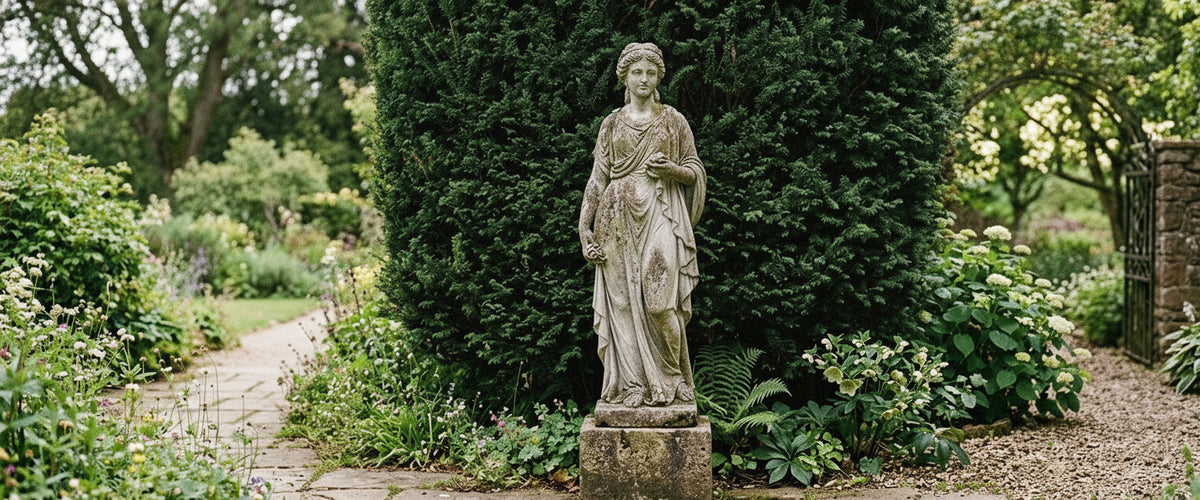

A cheap concrete figure looks fine on delivery day and rough by its second winter. That is the trap most buyers fall into when a concrete garden statues sale lands in their inbox. The photography is flattering, the price is tempting, and the fine print about frost, hollow casting, and surface sealing is nowhere to be found. Cast concrete can be a genuinely good outdoor material when it is made well and placed with intention. It can also crumble at the edges within a couple of seasons if it was poured thin and left unsealed.
Looking for the full range in this category? Browse our Bronze Garden Statues collection for every available finish, size, and configuration.
This guide is written from the point of view of a studio that ships large sculpture worldwide. We work in bronze, stainless steel, Corten, stone, and marble every week, so we look at cast concrete honestly: where it earns its place in a garden, where it lets people down, and how to tell the difference before you pay at any concrete garden statues sale.

Key Takeaways for a Concrete Garden Statues Sale
Not all concrete is equal. Dense, reinforced, sealed castings survive; thin decorative pours chip and spall.
Weight is a clue. A hollow, feather-light piece will move in wind and weather faster than a solid one.
Scale changes everything. A statue that reads well in a small courtyard can vanish on a large lawn. Size up more than you think.
Sealing and drainage matter more than the sticker price. Standing water and freeze-thaw cycles are what actually destroy the material.
If you want a true centerpiece, weigh concrete against cast stone, bronze, or carved marble before buying on price alone at any concrete garden statues sale.

What Concrete Garden Statues for Sale Really Means, and Who It Suits
When you see concrete garden statues for sale advertised, you are usually looking at pieces cast from a mold rather than carved by hand. Molded production keeps the price down and makes classical forms (urns, cherubs, animals, draped figures) widely available. For a buyer filling a mid-sized garden with a few accent pieces, that value is real, and a concrete garden statues sale is often the first place they look.
Cast concrete suits the gardener who wants presence without a large commission budget, and who is comfortable doing a little upkeep. It works well in traditional and cottage-style planting, on gravel courtyards, and tucked into borders where a weathered, aged look is welcome. A concrete garden statue sale suits people who like the idea of a statue softening over time rather than staying pristine.
It suits less well anyone who wants a permanent, low-maintenance focal point at serious scale. A ten-foot figure on a Hamptons lawn or a sculptural statement at the entrance to a Napa estate is a different brief. That is where engineered metal or natural stone starts to make more sense, and we will come back to that.

How to Compare Options Before Buying
Price is the loudest signal in any concrete garden statues sale, but it is the least useful one on its own. Use these criteria instead.
Density and reinforcement
Ask what the piece is cast from. Good garden concrete uses a dense mix, often with fiber or steel reinforcement in larger pieces, so it resists cracking. A statue that feels suspiciously light for its size is usually hollow and thin-walled, which is where frost damage begins.
Surface quality
Look closely at edges, fingers, folds, and facial detail. Cheap molds and rushed pours leave air pockets (small craters called bugholes), soft detail, and visible seam lines. Crisp detail survives weathering better and simply looks more expensive from across a garden.
Sealing and finish
Unsealed concrete drinks water. In cold climates that water freezes, expands, and flakes the surface off in a process conservators call spalling. The US National Park Service Preservation Brief on historic concrete is blunt about how moisture and freeze-thaw cycling drive that decay. A quality piece from a concrete garden statues sale should arrive sealed, or come with a clear recommendation on which breathable masonry sealer to apply and how often.
Base and stability
A tall statue needs a wide, heavy base or a fixing point. Wind load on a light figure is a real problem; we have seen customers lose ornaments to a single storm because nothing anchored them.

Materials, Finishes, and Scale Decisions
Concrete comes in more variety than most sales let on. A smooth gray finish reads modern and architectural. A tinted or antiqued finish mimics aged stone and suits period gardens. Some casters add a stone aggregate to create cast stone, which is denser and closer in look to real limestone.
Scale is where buyers make the most expensive mistake at a concrete garden statues sale. Garden air is generous; it swallows objects. A two-foot statue that looks substantial indoors can disappear against a mature hedge. As a rule, when you are unsure between two sizes outdoors, choose the larger. A confident piece at the right scale is what separates a designed garden from a decorated one.
If you are weighing concrete against alternatives, this is the honest comparison. The cast material is affordable and widely stocked but needs sealing and eventually shows its age. Cast stone holds detail longer. Bronze weathers to a living patina and lasts generations outdoors; you can see how that reads at scale across our bronze sculptures. Stainless steel and Corten suit contemporary schemes and stand up to weather with almost no fuss, which is why designers reach for our stainless steel sculptures for large modern gardens. For a carved, timeless focal point, natural stone and marble sit at the top of the range in our marble sculptures.
Where to Place Garden Statues for the Strongest Impact
For wider placement ideas, A Statue of Garden Done Right: Scale, Sightlines and Placement is useful companion reading before finalizing the setting and sightlines.
Placement is free, and it does more for a statue than any finish. A few reliable moves:
End of a sightline. Put the piece at the far end of a path, a lawn, or a formal axis so the eye is drawn to it. This is the single most effective placement in classical garden design.
Against a quiet backdrop. A dark yew hedge, a rendered wall, or dense evergreen planting makes a pale statue read cleanly. A busy border behind it turns the piece to visual noise.
Raised on a plinth. Lifting a figure onto a pedestal restores the presence that open ground steals, and improves drainage under the base.
Framed by a threshold. A pair flanking steps or a gateway creates a sense of arrival. Symmetry works hard in front gardens from Connecticut to Texas.
One studio lesson worth passing on: check the viewing angle at the time you actually use the garden. A face that reads warmly in morning light can fall into flat shadow by evening, when you are out there with a drink in hand. Walk the position before you fix anything, even a bargain from a concrete garden statues sale.
Budget, Commissioning, and Delivery Considerations
Buyers always want a number, and we will not invent one. What a piece costs depends on material, scale, complexity, the engineering behind it, finishing, and installation. A small molded ornament from a concrete garden statues sale and a life-size commissioned bronze are not in the same conversation, and pretending they are helps nobody. The right approach is to fix your placement and desired scale first, then request a tailored quote for the materials you are actually choosing between.
Delivery is where large sculpture gets serious. Concrete is heavy, and heavier again at scale. A substantial piece may need palletized freight, a lift-assisted delivery, and a firm, level base prepared in advance. For anything large or fragile, ask how it is crated, whether installation is included, and what access the delivery team needs. We handle crating and worldwide shipping for pieces that weigh hundreds of pounds (well over 100 kg), and the questions we ask up front are the ones that prevent a damaged corner or a stranded pallet on delivery day.
How Giant Sculptures Helps With Bespoke Garden Projects
Giant Sculptures is a bespoke sculpture supplier built around large-scale, durable work. If a concrete garden statues sale has shown you the look you want but not the longevity, commissioning is the route to a piece that holds up. We work with designers, landscape architects, collectors, and venue owners to build sculpture to a specific pose, size, and material, then engineer it for the weather and the site.
A typical bespoke path looks like this: we agree the concept and scale, prepare drawings or a maquette, confirm the material and finish, then fabricate, finish, and ship with the right fixings for your ground conditions. For an outdoor centerpiece meant to last decades, we will usually steer you toward bronze, stone, marble, or engineered metalwork over decorative castings, and explain exactly why for your climate. Browse the full range across our garden sculptures to see the scale and finishes that translate best outdoors.
A Quick Pre-Purchase Checklist
Confirm the casting is dense and, at size, reinforced.
Check edges and detail up close in the listing photos.
Confirm the piece is sealed, or plan to seal it before winter.
Size up if you are torn between two heights outdoors.
Prepare a level, draining base or plinth.
Ask about crating, freight, and installation for anything large.
Compare the lifetime cost against stone or bronze before deciding on price alone at a concrete garden statues sale.
Buy on quality and placement, not on the discount, and even a modest concrete garden statue sale piece earns its spot. Ask for more, and that is exactly the point where a commission starts to make sense.