

















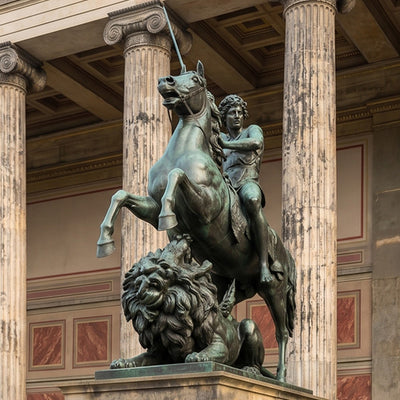






























































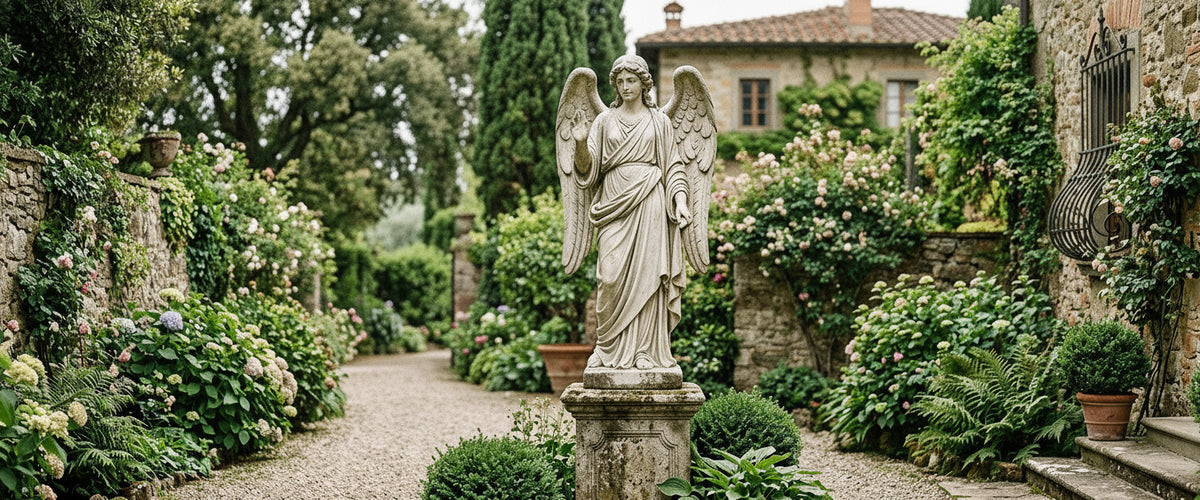

Most disappointing garden statues are not bad sculptures. They are good sculptures put in the wrong spot. We have watched a beautifully cast bronze angel disappear into a busy border because it was set three feet too low, and we have seen a modest marble figure command an entire courtyard because someone got the sightlines right. A statue of garden is a placement problem first and a shopping problem second, and the buyers who understand that order end up far happier with what they own.
This piece is about the decisions that change how a statue of garden reads once it is in the ground: where it sits, how tall it stands, what it has behind it, and how light hits it across the day. Get those right and a single piece can carry a whole space.

Key Takeaways for Placing a Statue of Garden
Scale to the viewing distance, not the plot. A figure read from 40 feet (12 m) away needs to be taller than one you pass at arm's length.
Pedestal height controls the eyeline. Lifting a piece even 12 to 18 inches (30 to 45 cm) can change whether it commands or hides.
Backdrop is half the work. A pale marble figure needs a darker, simpler background to read; a dark bronze needs light behind it.
Material decides longevity outdoors. Bronze, marble, stone and Corten earn their place in weather; soft cast concrete and resin do not last the same way.
Budget depends on material, scale, engineering and finishing, so request a tailored commission quote rather than guessing from a category price.

What a Statue of Garden Actually Looks Like in Different Settings
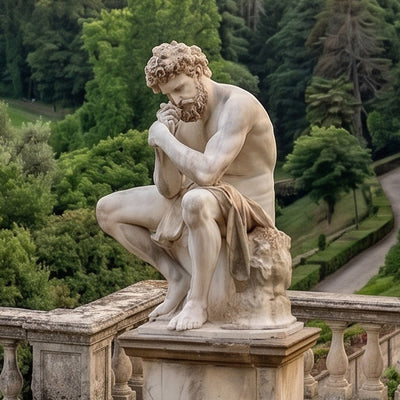
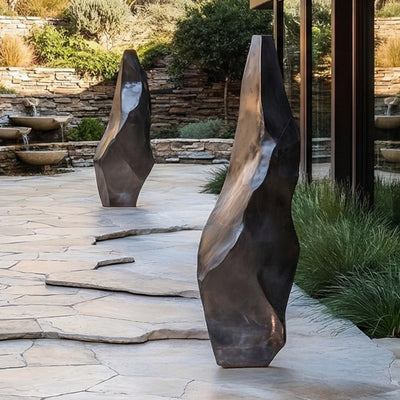
The same statue of garden behaves differently depending on where you stand to look at it. In a tight courtyard, a piece works at close range; you see surface, tool marks, the way a golden patina shifts in the corner of a fold. That favors detail and finer carving. A large lawn or a long entrance drive is the opposite. You read the silhouette from distance, so pose and outline matter more than fine surface work, and the piece has to be physically bigger to hold the space. This is where many people searching for garden statues near me hit a wall, because local stores rarely stock the size a long sightline demands.
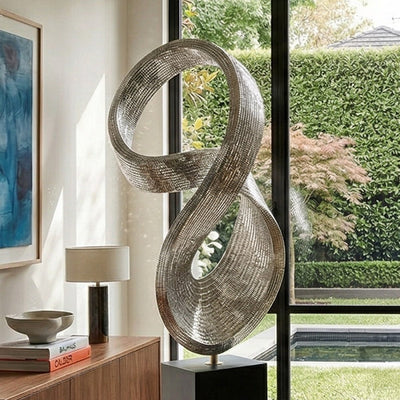
Indoors, the same style of figure can move into an atrium, a stair turn, or a double-height entry hall. There the controlled light and clean walls do flattering work, and a 160 to 180 cm marble figure that would feel small on a wide lawn suddenly feels generous. We keep a running note from commissions: clients almost always underestimate how much air a piece needs around it indoors and overestimate how big it needs to be outdoors. Both errors are fixable before casting.

Scale, Sightlines and Pedestal Height
Start with the main viewing line. Walk to the spot where people will most often see the statue of garden (the patio doors, the end of a path, the top of the drive) and measure that distance. As a rough working rule, a piece you view from across a large plot wants to stand somewhere between life-size and over-life-size to keep presence. For a setting read from far back, where a smaller figure would shrink into the planting, something at the scale of the Monumental Contemporary Winged Angel Bronze Sculpture - 300cm earns its full 300cm precisely because it is meant to dominate a long sightline.
Pedestal height is the lever most people forget. A statue of garden set flat on the ground reads as part of the border. Lift it onto a plinth and you signal that it is the subject, not the scenery. For a standing figure, aim to bring the visual center (often the chest or face) toward the natural eyeline of someone approaching. For a kneeling or seated piece such as the Large Classical Kneeling Angel Bronze Sculpture (Golden Patina) - 200cm, the math changes; the form is lower and wider, so a taller base often helps it hold its ground. Among angel garden statues this lower, wider posture is common, so plan the base accordingly.
One hard-won lesson: always check the view from inside the house, not just from the garden. A statue of garden can be perfectly framed when you stand beside it and completely lost behind a hedge when seen from the kitchen window, which is where most owners actually look at it every day.

Indoor Versus Outdoor: When Each Wins
Outdoor placement wins when you want the statue of garden to anchor a space and interact with weather and seasons. Bronze develops and holds patina, marble takes on a soft outdoor character, and the changing light across a day gives a piece life that a static indoor spot cannot. The cost is exposure: freeze-thaw, pollution, sprinkler spray and tree sap all act on the surface over years, so material choice and base detailing matter.
Indoor placement wins for finer, more fragile, or highly detailed work, and for pieces you want to experience up close in controlled light. An entry hall or gallery wall lets carving and patina read at full resolution without weathering. If you are torn, the deciding question is simple: do you want the sculpture to be a destination you walk to, or a presence you live alongside? Destinations usually want to be outdoors; companions often belong inside.

Light, Backdrop and Contrast
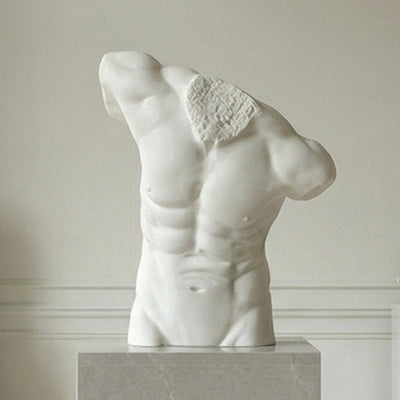
A statue of garden only reads when it separates from what is behind it. Pale marble vanishes against a pale rendered wall and sings against dark yew, weathered brick or a deep planted hedge. Dark bronze does the reverse; it wants light or sky behind it, which is why bronze figures often look strongest silhouetted against an open lawn or set where late sun rakes across them. Before you commit, hold a large piece of card the rough size and color of the sculpture in the spot and check it from your main viewing line at morning and evening.
Light direction matters as much as backdrop. Side light from a low morning or evening sun models form and brings out depth; flat midday light from overhead flattens everything. For the night view, a single low spotlight angled across the piece does far more than a flood pointed straight at it. The U.S. National Park Service notes that even modest, well-aimed lighting protects the night sky while doing the work, which is a useful reminder that more lumens is not the goal. (nps.gov)

Common Placement Mistakes We See
For wider placement ideas, Angel Statues for the Garden: A Placement Guide for Serious Buyers is useful companion reading before finalising the setting and sightlines.
Setting the piece too low. Ground-level placement turns a statue of garden into part of the border. Lift it.
Busy backdrop. A crowded mixed border behind a detailed figure cancels the silhouette. Give it a calm, darker or simpler background.
Wrong size for distance. An 80 cm cherub is lovely beside a bench and lost on a 50-foot lawn. A close-range piece like the Cherub V3 Angel Marble Outdoor Sculpture - 80cm belongs near a seating area or a doorway, not as a distant focal point. The same logic applies to garden fairy statues, which reward close viewing and get swallowed at distance.
No foundation. A heavy stone or marble figure needs a proper footing. A 180 cm marble angel can weigh several hundred pounds; set it on bare soil and it will lean within a season.
Ignoring the approach. People see sculpture while moving. Place it so the best angle meets them as they walk toward it, not after they have passed.
If you are choosing classical or devotional figures, the angel category is worth browsing as a starting point for pose and proportion; a single upright statue of garden can hold a formal axis or terminate a path well. Formal, symmetrical schemes, the kind that drove curiosity about the Trump Rose Garden statues debate, almost always lean on this trick of one figure closing an axis.

Buyer Decision Checklist
Confirm the main viewing line and distance. Everything else follows from this.
Pick the material for the conditions. Bronze and marble for the long term outdoors; stone and Corten for weather-forward statement work.
Set the pedestal height to the eyeline, adjusting up for low, seated or kneeling forms.
Test the backdrop and contrast with a card mock-up at morning and evening.
Plan the foundation and access for the real weight before delivery day.
Brief the commission early if stock pieces do not fit your scale or site.

Material and Longevity, in Brief
Garden statues are made from a range of materials, and the choice drives how long the piece survives outdoors. Bronze is a copper alloy that develops a protective patina and lasts generations with light care; marble is carved stone that ages gracefully but wants protection from harsh freeze-thaw and acidic runoff. Concrete garden statues and resin pieces are cheaper to produce and common at the budget end, but they chalk, crack and fade faster, which is why we steer a durable, large-scale statue of garden toward bronze, marble, natural stone and engineered metalwork instead. If you want large garden statues cheap, be honest about that trade-off: low price usually means a shorter outdoor life. The American Institute for Conservation has useful background on how outdoor sculpture weathers and why material and maintenance decide its lifespan. (culturalheritage.org)
Giant Sculptures works as a bespoke sculpture supplier for exactly these situations: large-scale, site-specific pieces where scale, material and engineering all have to line up. If a catalog figure is close but not quite right for your sightlines, a commission lets us adjust the height, pose, base and finish of your statue of garden so it reads correctly from the view that matters to you.
Where to Start Browsing
If you want to see how scale and material change the feel of a statue of garden, the large garden statues collection is the right place to compare presence at size, while the broader garden statues range covers smaller, close-range pieces for terraces and seating areas. For weather-forward bronze that holds patina over decades, look at the bronze garden statues selection.