












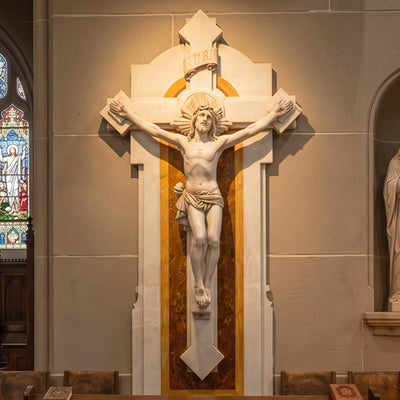

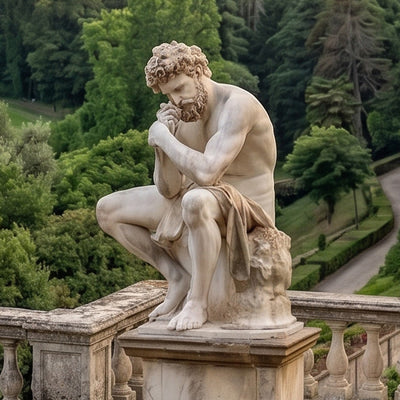
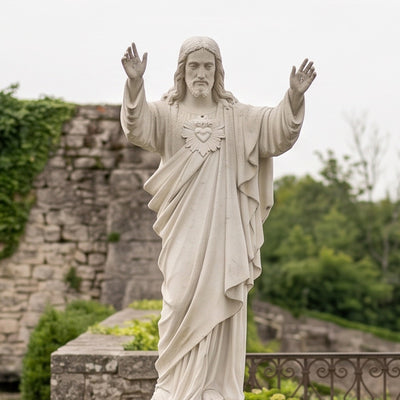




































Most of the damage we see on a religious statue happens in a single season, usually at the hands of an owner who loved it and put it in the wrong place. A painted wooden saint gets carried out to the garden. A 1950s plaster Madonna goes on a porch rail in Houston. Both look fine in May and are flaking by October. The material of a religious statue decides where it can live, how it should be cleaned, and whether a damaged piece should be repainted or left alone.

At a Glance
Painted wood: indoors only. The paint layer is often the most valuable part.
Chalkware (plaster): collectible and fragile. Never put it outdoors.
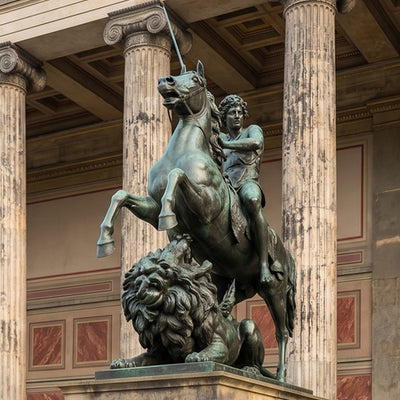
Stone and cast stone: proven outdoors for centuries and weathers gradually.
Concrete and resin: practical, honest choices for lawns and gardens.
Bronze: the longest-lived option for a commissioned outdoor figure.
Wooden Religious Statues: The Paint Is the Artwork
For much of the Middle Ages, carved and painted wood was the standard material for devotional figures in northern European churches. Late medieval workshops split the labor. One hand carved limewood or oak, and another applied gesso, gilding and color. Museums such as the Victoria and Albert Museum hold polychrome figures whose painted surface conservators treat as the primary artwork, with the carving as its support.
On polychrome wood, the gilding and paint layers often carry more value than the carving beneath them.
That matters if you own wooden religious statues today. Wood moves with humidity and paint does not, so every swing in the air puts stress on the bond between them. Keep these pieces away from radiators, exterior doors and sunny windows. Dust them with a soft, dry brush. Water, polish and household sprays do lasting harm.

Vintage Chalkware Religious Statues: What Collectors Look For
Chalkware is cast plaster, painted and usually finished with a thin varnish. In the mid-twentieth century it sold in enormous numbers through parish shops, mail-order catalogs and fairground stalls, and it was cheap. Vintage chalkware religious statues now have a steady collector following, especially pieces with original paint, intact fingers and a legible maker's mark on the base. Condition drives value. A repainted figure is worth far less than a worn original.
Why Chalkware and Painted Wood Fail Outdoors
Plaster is gypsum, and gypsum slowly dissolves in water. One wet winter on a lawn softens the surface, freeze-thaw cycles open cracks, and the paint lifts in sheets. Painted wood fails differently but almost as quickly. Moisture swells the timber under the gesso, and the color pops off. Even a short move is enough: a carved Madonna taken from a hallway to a covered porch for a family gathering can show blistered gilding along the hem after a few humid weeks. A covered porch is still outdoors.
What Churchyards Teach About Outdoor Religious Statues
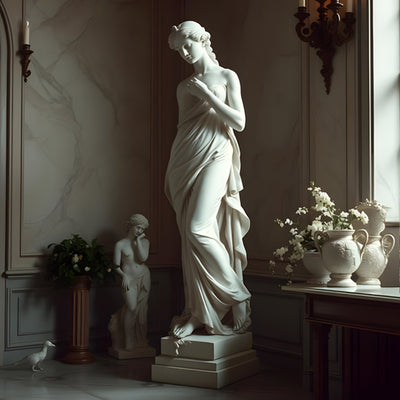
Walk through any old churchyard and you can read stone performance like a report card. Dense granite holds carved lettering for centuries. Marble slowly loses crisp detail to acid rain. Softer limestones and sandstones erode first at the exposed edges: noses, fingertips and drapery folds. Historic England's technical advice on masonry makes a point that applies to garden sculpture too. Aggressive cleaning often does more damage than the weather.
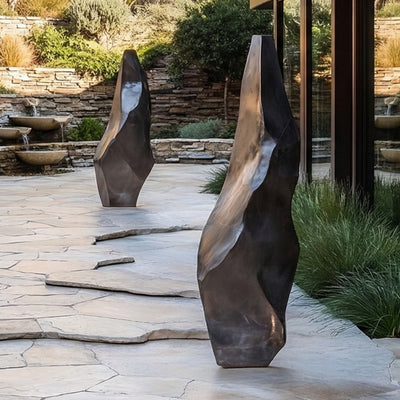
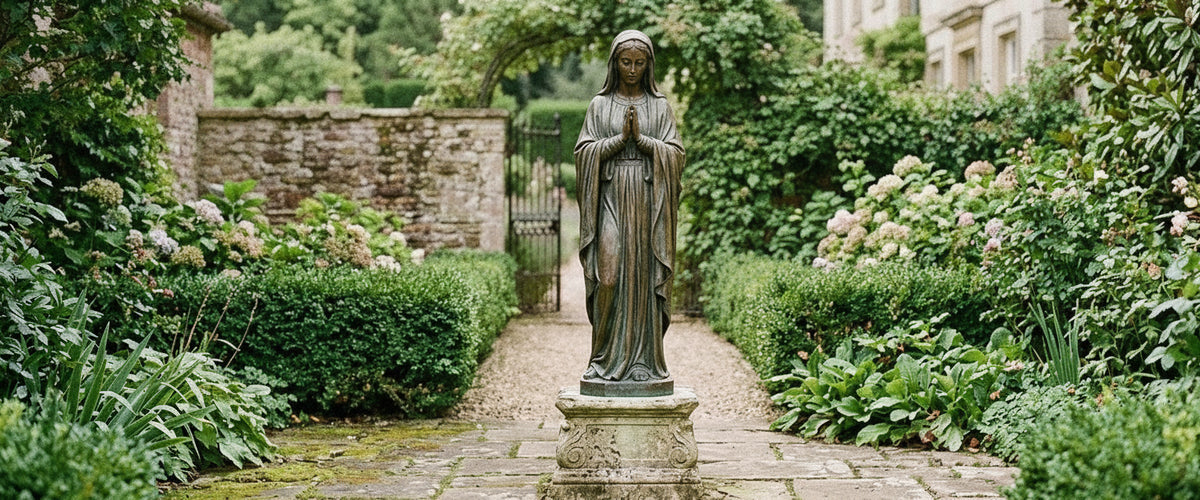
For outdoor religious statues, specify dense stone or bronze if the face and hands carry fine detail. Set the figure on a raised plinth so the base does not wick ground water. Treat a soft green bloom as ordinary weathering. Cast stone, which is molded reconstituted stone, behaves much like natural limestone and works well for figures viewed from a few yards away.
A raised plinth keeps the base clear of ground water and lifts the figure toward the main viewing point.

Concrete and Resin Religious Lawn Statues
Religious lawn statues are often dismissed as lesser objects. We disagree. A well-cast concrete figure on a level pad can sit through decades of Midwestern winters. A UV-stable resin piece weighs a fraction of the equivalent stone, which matters on a roof terrace or soft ground. The honest test is whether the figure was designed for its material. Look for thick walls, sealed bases, drainage holes in hollow resin and exterior-rated paint. Anchor anything taller than about 3 feet (0.9 m). In our experience, wind and curious dogs topple more lawn figures than frost does.
Paint Loss on an Old Saint: Conserve or Repaint?
The instinct is to repaint. Resist it if the religious statue is old, hand-carved or carries family history. Overpaint hides the original layers, and removing it later almost always takes some of the original with it. A conservator can consolidate flaking paint, fill losses with reversible material and tone them so they read quietly from a few feet away. Repainting is reasonable for a mass-produced garden figure with no original finish worth keeping. For a nineteenth-century carving or a marked chalkware piece, conserve first and decide later.
How to Choose: A Buyer's Checklist
Location: Is it indoors, under a porch roof or fully exposed? Rule out plaster and painted wood for anything except indoors.
Climate: Freeze-thaw winters favor bronze, granite and well-sealed concrete.
Viewing distance: Faces and hands seen up close need a dense, fine-grained material.
Weight and footing: Confirm what the floor, deck or ground can carry, and plan the anchoring.
Finish: Choose between paint, patina and natural stone. Painted outdoor surfaces will need recoating.
Long-term ownership: Decide who will care for the piece in twenty years, and how.

Commissioning a Religious Statue in a Historical Style
Many commission inquiries reach our studio as a photograph of a painted wooden figure in a European church, along with a wish to place it in a Napa garden or a chapel courtyard in Texas. We will not imitate polychrome wood for an exposed site, because it would fail. We translate the design instead. That might mean casting the carved form in bronze with a warm patina, or carving it in stone and keeping restrained color for a sheltered niche figure. At Giant Sculptures, we agree pose, scale and drapery detail from the reference, then let the material set the finish. Budget depends on material, scale, complexity, engineering, installation and finishing, so we quote every commission individually. Browse our religious statues collection for forms and proportions, or start from the Giant Sculptures homepage before requesting a tailored quote.
For wider placement ideas, Large Wooden Sculptures for the Garden: Why Placement Starts Below Ground is useful companion reading before finalising the setting and sightlines.