


























A single bronze horse on a big lawn tends to look smaller every year you own it. Put one human figure at its head with a lead rope in hand, and the same horse gains weight, purpose and a story the eye can follow from the terrace. That is the real lesson behind most searches for a grounds sculpture horse. Owners rarely need a bigger animal. They need a composition that still reads at 150 feet.
At a glance
A handler figure turns an anatomical study into a narrative, and it gives the eye a human scale reference.
The lead rope and handler can share structural load, which opens up poses a lone horse cannot safely hold.
Scale errors between person and horse are spotted instantly, even by people who know nothing about horses.
A pair holds a large lawn better than a single life-size horse.
Settle the sightline and the maquette before any metal is poured.

Lone Horse or Led Horse: What One Figure Adds
A lone horse is a study. Viewers read musculature, gait and the set of the head, then move on. A led horse is a scene, so viewers start asking questions: where are they going, is the horse calm or fighting the rope, who is in charge? That pause is what a sculpture on open grounds needs, because the visitor has walked a long way to reach it.
The human figure also does quiet measuring work. Everyone knows roughly how tall a person is, so the handler tells the eye how large the horse really is. A lone horse at life size can be misread as a pony from across a wide lawn. With a handler beside it, nobody makes that mistake.
What the Grounds For Sculpture Horse and Leader Statue Teaches About Pairing
Plenty of readers arrive at this subject after a visit to Grounds For Sculpture, the sculpture park in Hamilton, New Jersey, where figurative work is placed among lawns, groves and water. Searches for the Grounds For Sculpture horse and leader statue usually come from the same instinct: a horse with a human figure beside it feels more alive than an animal standing alone.
The takeaway for a private owner is spacing. A horse and leader work as one sculpture when the gap between them is tight enough to read as a relationship and loose enough to show the rope. Too far apart, and you have two objects. Too close, and the handler disappears into the horse's shoulder when seen from the side.

The Lead Rope Is Structure
Here is where a horse-and-handler group earns its keep in engineering terms. A rearing horse, or one with its forehand lifted mid-turn, puts enormous load on two slender hind legs. In a lone piece, that pose often needs a hidden support, a tree stump or a thickened tail touching the base. In a led group, the rope and handler can become part of the load path.
In our studio, a bronze lead rope in a large group is cast over an internal stainless rod and tied into the armatures of both figures. The handler, planted on two feet with a broad stance, becomes a second anchor. That lets a horse lift its forehand higher than we would ever recommend for a solo outdoor piece. If you want drama in the pose, the handler is often the safest way to buy it.
Getting Scale Right Between Handler and Horse
Horses are measured in hands, and a hand is 4 inches. A 16-hand horse stands about 64 inches (163 cm) at the withers, a little above the shoulder of an average adult man. Get that relationship slightly wrong, and the group reads as a child with a large dog or a giant with a pony.
The lesson we learned the hard way came from an early clay maquette where the handler was modeled at true life size but the horse had been enlarged by a few percent for presence on a big lawn. On paper, the difference was small. In clay, the man looked like a teenager. Our rule now: scale the pair together from one reference, then enlarge the whole group if the site demands it.

Why a Pair Holds a Big Lawn Better Than a Single Grounds Sculpture Horse
On a 165-foot (50 m) lawn, a single life-size horse occupies a small slice of the view. A horse and handler group has a wider footprint, two heights and more negative space between the figures, so it registers from much farther away. It also casts a longer, more legible shadow late in the day.
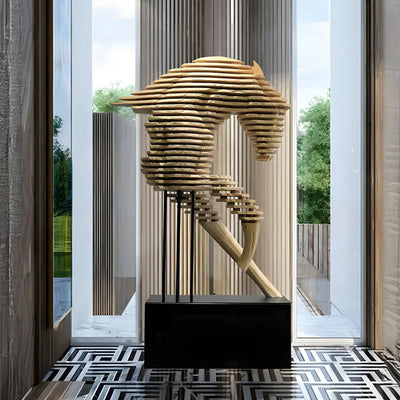
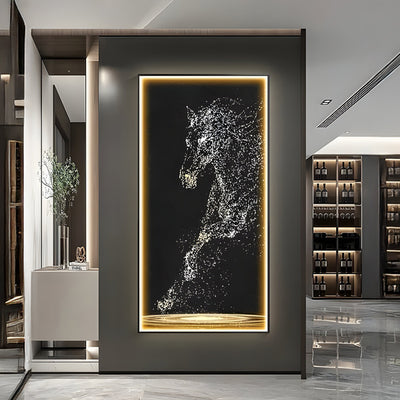
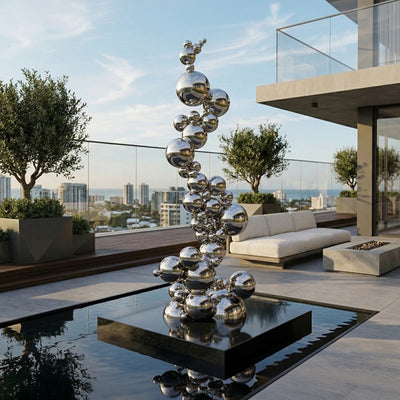
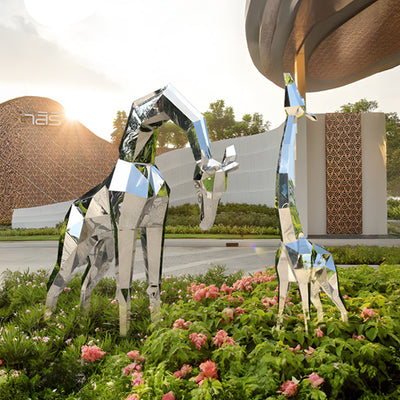
If a single animal is still the plan, choose a pose with height and spread. A reflective finish and a lifted forehand push visual size well beyond the footprint, which is why a polished steel figure such as the Rising Stallion Silver Steel Horse Sculpture holds open ground better than a quietly standing horse of similar height. Where the setting calls for a graphic silhouette rather than anatomical detail, the Horse Gold Steel Abstract Sculpture is closer to the right design language, whether it sits at terrace scale or anchors the far end of a lawn.
Approach Drive, Paddock Edge or House View: Setting the Sightline
Decide which way the group faces before you decide anything else. On an approach drive, the handler should lead toward the arriving car, so guests meet the group head-on and then see it in profile as they pass. At a paddock edge, angle the horse toward the real pasture, so the bronze appears to be walking out to join the herd. From the house, profile wins: the rope, the stride and the gap between the figures all read best from the side.
Plan the base and lighting with the sightline. A low plinth keeps a grounds sculpture horse feeling rooted in the landscape, while a raised base suits formal entrance courts. Comparing the poses in our bronze horse statues collection is a quick way to see how pose and base height change the read from a distance.

Maquette Questions to Settle Before a Horse-and-Handler Group Is Cast
A maquette is the cheapest place to change your mind. Before approving the enlargement, work through this checklist:
Primary viewpoint: Where will most people first see the group, and from how far?
Breed and type: Draft, Thoroughbred and Quarter Horse proportions differ, so pick one and keep it consistent.
Handler's dress and era: Contemporary groom, classical figure or working ranch hand will set the tone of the whole garden.
Rope tension: Slack suggests trust, while a taut rope suggests a horse testing its handler.
Load path: Confirm where the armature runs and which feet carry the weight.
Material and patina: Bronze, stainless steel or Corten will each age differently on your site.
Foundation and access: Can a crane or telehandler reach the spot, and what footing will the ground need?
Budget follows those answers. Material, scale, complexity, engineering, installation and finishing all shape the final figure, so we quote each commission individually. Giant Sculptures builds bespoke horse groups for private estates and commercial venues worldwide, and our wider horse sculptures and statues collection is a good starting point before you brief the studio.
For wider placement ideas, Resin Horse Sculptures: Where the Material Shines and Where It Gives Out is useful companion reading before finalising the setting and sightlines.