



























































































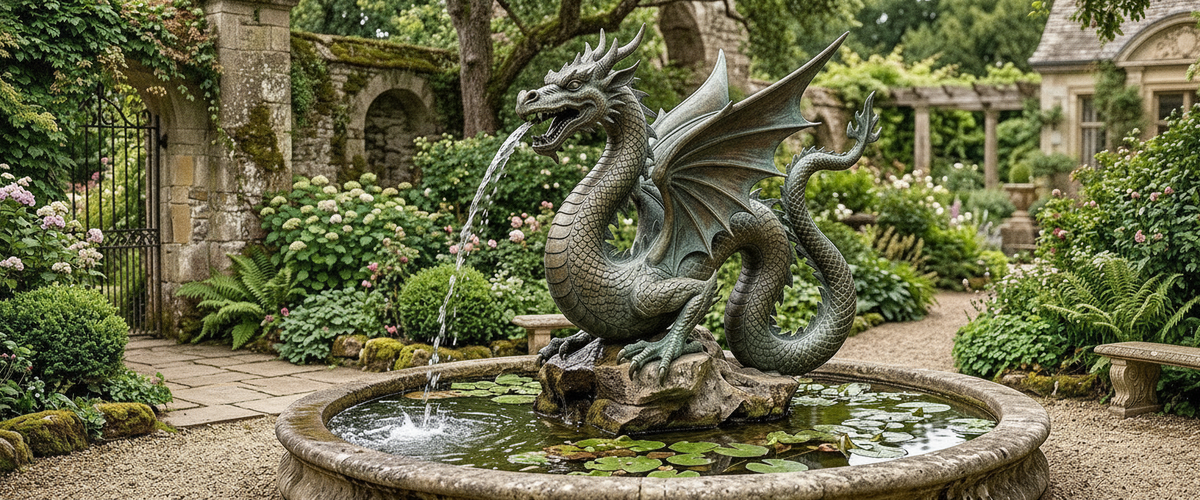

You hear a fountain before you read the figure on top of it. That is the part almost nobody plans for. Buyers spend weeks choosing between a dragon, a heron group or a classical figure, then sign off the pump and plumbing in a single email, and end up with a large bronze fountain statue that looks exactly right and sounds like a bathroom tap left running. Sound is the one variable you live with every day, and it is set by water engineering long before the bronze has anything to say about it.
Looking for the full range in this category? Browse our Bronze Fountains collection for every available finish, size, and configuration.

Key Takeaways
Flow rate sets character. Trickle, splash and roar are three different moods from the same casting.
Basin depth controls pitch. Shallow water gives a bright, ticking sound; deeper water drops it into a rounder murmur.
Spillway geometry controls splash radius. A crisp lip throws sheet flow; a rounded one dribbles and stains.
Hard surfaces reinforce the sound. Stucco walls, glass and paving reflect; hedging and planting absorb.
Pump and pipework need an acoustic plan, not just a hidden chamber.
Plan the winter silence before you plan the summer show.
Trickle, Splash or Roar: Flow Rate Sets the Character
Flow rate is the volume knob, and it changes the personality of the piece more than the pose does. A slow, low-pressure feed off a dragon's jaw gives you a broken, conversational sound you can hold a dinner party over. Push the same jet harder and you get a continuous white-noise hiss that flattens conversation within about ten feet (3 m). Every large bronze fountain statue has a flow window where it sounds like itself; outside that window it either gurgles or hisses. One of the most useful things we do in the studio is run a garden hose at three different rates over a test basin while the client stands where they will actually sit. It takes twenty minutes and saves a year of regret.
Multiple outlets spread the impact, which reads as gentler than one concentrated jet.
Figure count matters here too. Where the brief calls for a softer, more dispersed sound, a multi-figure arrangement such as the Large Traditional Three Herons Bronze Fountain - 180cm (roughly 5 ft 11 in) breaks the flow into several small, overlapping impacts rather than one big one, which reads as gentler even at similar total volume. A single mouth jet on a coiled dragon concentrates all that energy in one place and sounds more assertive. Neither is better. They are different rooms.

Why Basin Depth Changes the Pitch More Than the Bronze Ever Will
Two identical castings over two different basins will not sound alike. Water striking a shallow pool over a hard base makes a bright, high-frequency tick that carries and irritates. Water falling into a deeper column of standing water produces a lower, rounder note that dissipates faster. Somewhere around eight to twelve inches (20 to 30 cm) of standing water is where most residential schemes stop sounding sharp, but the honest answer is that it depends on drop height and jet pressure, so it should be tested rather than assumed.
Basin lining changes it again. A pebble or cobble bed breaks the impact surface and absorbs some of the strike. Polished stone reflects it. If you are choosing a large bronze fountain statue for a courtyard that already has travertine underfoot and rendered walls on two sides, the basin is your only real chance to take energy out of the system.
Spillway Edges, Sheet Flow and the Splash Radius Nobody Measures on Site
For wider placement ideas, Antlers Break First: An Insider's Guide to Bronze Deer Garden Statues is useful companion reading before finalising the setting and sightlines.
Sheet flow over a sharp spillway lip is quiet and visually generous. The same water over a worn or rounded edge clings, breaks into ribbons, and starts throwing droplets outside the catchment. That is how you get algae on paving and mineral staining on the base ring of an otherwise perfect large bronze fountain statue.
Measure splash radius in wind, not on a still morning. A Napa client with a west-facing terrace found that the afternoon breeze carried spray a good three feet (about 1 m) past the basin edge onto a seating group. The fix was a slightly wider catchment and a lower jet, not a different sculpture. Ask about splash containment at quotation stage; retrofitting a bigger basin around an installed bronze is the expensive way to learn this.
Twenty Feet Out: What the Water Masks and What It Drowns
Moving water is a genuinely effective sound mask. It works because broadband water noise sits across frequencies that overlap with traffic rumble and mechanical hum, which is why researchers in acoustics treat water features as a soundscape tool rather than decoration. At roughly twenty feet (6 m), a well-tuned large bronze fountain statue covers distant road noise and HVAC drone beautifully.
It also drowns things you wanted. Birdsong disappears. So does the other end of a dinner table. In a Hamptons garden we supplied, the fountain sat eighteen feet (5.5 m) from an outdoor dining table and the client ended up running it at half flow through every meal. Work out your listening positions first, then set the jet height to serve them.

Hard Walls, Hedges and the Echo Nobody Planned For
Reflective surfaces push the perceived volume up sharply and add a slapback that makes the sound feel artificial. Stucco, glass, pool coping and rendered garden walls are all reflectors. Yew, box, beech hedging and deep planting beds are absorbers. Drop a large bronze fountain statue into an enclosed courtyard with three rendered faces and you will hear far more water than you thought you specified.
Hard enclosure reflects; hedging, beds and soft planting take energy back out.
Footprint is part of the answer. On an open lawn with nothing to bounce off, a piece with real horizontal spread like the Large Traditional Running Deer Herd Bronze Fountain - 250cm (about 8 ft 2 in) distributes its water noise across a wide base rather than concentrating it at one point. Tight courtyards reward vertical, quieter compositions instead.
Pump Hum and Pipework: Hiding the Plant from Ears as Well as Eyes
Most fountain complaints we hear are not about the water at all. They are about a low-frequency pump hum transmitted through rigid pipework into a stone plinth, which then behaves like a soundboard. Specify flexible connectors at the pump, isolate the chamber from the plinth with a resilient pad, and vent the plant chamber properly so it does not become a resonant box. A correctly sized pump running mid-range is quieter than an undersized one running flat out.
What Winter Shutdown Does to the Garden Once the Sound Stops
Water expands as it freezes, which is why trapped water in basins, jets and pipe runs cracks stone and splits fittings; the USGS Water Science School explains the mechanics plainly. Drain down, blow the lines, cover or remove the pump, and leave the basin empty. Bronze itself handles freeze-thaw well and its patina keeps developing regardless.
Silhouette does the work for several months a year, with the water off.
The part clients underestimate is the silence. A garden that was masking road noise all summer suddenly is not. Plan a winter focal point so the piece still earns its position dry, which usually means favouring a strong single silhouette over a delicate multi-jet group; something like the Monumental Contemporary Sitting Frog Bronze Fountain - 220cm (roughly 7 ft 3 in) still holds a sightline with the water off.

Buyer Checklist Before You Commit
Stand in your three main listening positions and test flow with a hose first.
Confirm standing water depth and basin lining material.
Ask for the spillway edge detail and expected splash radius in wind.
Map reflective surfaces within thirty feet (9 m) and plan absorbent planting.
Specify vibration isolation between pump, pipework and plinth.
Check foundation and craneage access for the delivered weight.
Check the silhouette still reads dry, because a large bronze fountain statue spends months silent.
Agree the winter drain-down procedure at handover.
Commissioning a Large Bronze Fountain Statue
If you are searching for a large bronze fountain statue for sale and nothing in the catalogue fits the acoustic brief, that is exactly what bespoke work is for. At Giant Sculptures we adjust jet count, jet placement, spill geometry and basin proportion during design rather than after installation, and scale is set by sightlines and site rather than by what happens to be in stock. Budget depends on material, scale, complexity of the water engineering, installation and finishing, so the sensible next step is a tailored quote against your site drawings. The large bronze sculptures range is useful for scale reference, and the bronze garden statues collection is the place to look if the piece will share a setting with existing planting.