




























































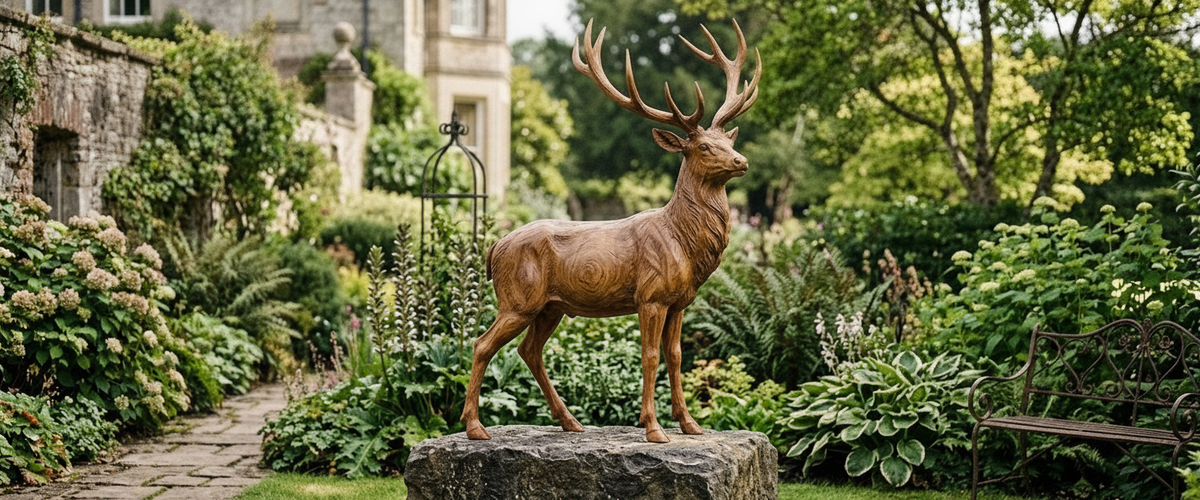

A carved wooden stag can look perfect on delivery day and lose an antler by its third winter. The cause is almost always settled before the first chisel cut. Wooden animal sculptures live or die by decisions most buyers never see: which way the grain runs through a leg, where the glue lines sit, and what the feet stand on. At Giant Sculptures we spend more time on those questions than on the finish, because a finish can be redone and a split antler cannot.

Key Takeaways
Grain direction: legs, horns, ears and tails should run with the grain. Short grain across a slender limb is the most common break point.
Timber choice: the species shapes fur and muscle as much as the carver does. Oak reads bold, teak holds fine texture, cedar is light and weather-tolerant, and suar shows dramatic figure.
Lamination: large pieces are glued up from several boards. Good joins follow the body mass and stay out of necks and ankles.
Outdoor placement: the plinth protects wooden animal sculptures more than any oil does.
Grain First: How Carvers Orient the Block
Wood is a bundle of fibers running along the trunk. It is strong along those fibers and weak across them. A carver laying out a standing deer has to decide what gets the grain, and the answer is usually the legs. A torso is thick enough to tolerate cross grain. A foreleg 2 inches (5 cm) across is not.
Antlers, horns and sideways-sweeping tails on wooden animal sculptures are often carved as separate pieces and dowelled in, so the grain can follow each curve. Buyers sometimes read a visible splice as a shortcut. More often it is the sign of a careful maker. We have turned down blocks that looked beautiful on the bench because the figure ran diagonally through exactly where the forelegs needed to go.
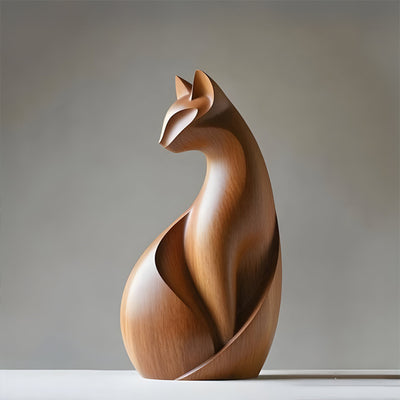
On well-made wooden animal sculptures, the grain follows each leg and antler rather than cutting across them.
Oak, Cedar, Teak or Suar: What Each Timber Does to Fur and Feather
Oak has an open, coarse grain with visible ray fleck. It suits broadly modeled, muscular subjects such as bulls, boars and horses; fine fur detail tends to tear out. Oak is also rich in tannins that stain black around ordinary steel, so fixings should be stainless or bronze. The American Hardwood Export Council has a useful profile of white oak's working properties.
Cedar (usually western red) is light, soft and aromatic, with naturally decay-resistant heartwood that weathers to silver gray. Its soft fibers bruise, so crisp feather edges blur. Save it for chunky owls, bears and seated foxes.
Teak is dense and oily and takes very fine texture, which is why carved wood animal sculptures with layered plumage or short coat detail are often teak. Its silica content blunts tools quickly, so carving hours climb. The Wood Database covers its durability and working quirks in detail.
Suar, the Southeast Asian rain tree, grows large enough to yield very wide slabs with swirling honey-to-chocolate figure. It is gorgeous indoors but prone to checking when moved into a dry, heated interior such as an Aspen chalet or a Manhattan apartment in January. Let it acclimatize slowly.

Hand-Carved or CNC-Roughed? Reading the Tool Marks
Give a carving a minute under side light. Hand gouge work leaves facets that vary in width and direction and follow the form, with slight asymmetry between left and right. CNC roughing leaves parallel scallops at a constant spacing, usually surviving in recesses under the belly or between the legs where sanding never reached. Perfect mirror symmetry and shallow undercuts are other giveaways, since a router cannot reach deep behind a shoulder.
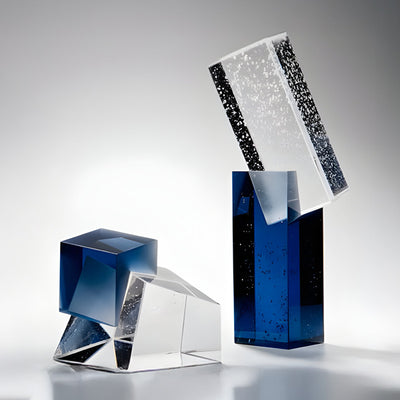
Neither method is wrong. In wooden animal sculptures, CNC roughing followed by hand finishing is common and honest, provided it is disclosed and the quote reflects it. The look you want matters too. If the appeal is crisp, perfectly even geometry on a shelf or desk, a cast piece such as the Brown Faceted Animal Cast Resin Sculpture, 15cm delivers that look more honestly than timber can. The same faceted language cut by hand in wood reads warmer, because no two planes are quite alike.
Large Wooden Animal Sculptures Are Rarely One Log
A log big enough for a 6-foot (1.8 m) bear is rare, and a section that thick dries unevenly and cracks. So large wooden animal sculptures are glued up from seasoned boards, then carved. Good joins run along the length of the torso and parallel to each leg, with grain and color matched across the line.
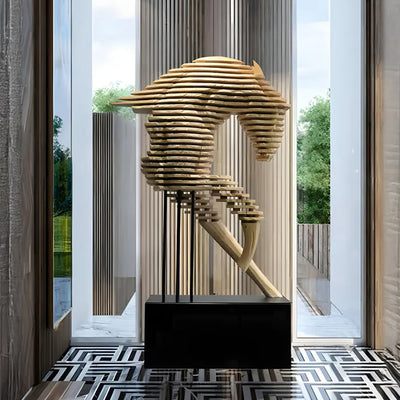
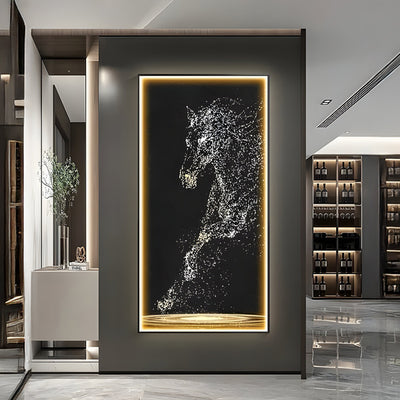
Joins should not cross a neck, an ankle or the base of a horn, and they should avoid high points like a cheekbone where a glue line catches the light. In wall-mounted work the layering can be the design itself; on a piece like the Mythoria Journey Fairytale Horse Wooden LED Wall Art, the stacked construction is meant to be seen. On a carved animal the aim is the opposite: the joins should disappear. Ask for a layup drawing before carving starts.
Outdoor Wooden Animal Sculptures Fail at the Feet
Because the legs run with the grain, the hooves and paws are end grain, and end grain drinks water far faster than side grain. Bed those feet in lawn, soil or gravel and rot starts inside the hoof while the oiled surface still looks healthy. Oil slows surface weathering; it does nothing for end grain sitting in a puddle.
The classic failure looks like this: a cedar bear set straight into gravel, faithfully oiled every spring, with feet soft as cork after a few winters. The fix is structural. Use a stone or steel plinth that drains, stainless steel pins, an isolation pad or small air gap under each foot, and a dedicated end-grain sealer.
A draining plinth and a small air gap under each foot keep end grain out of standing water.
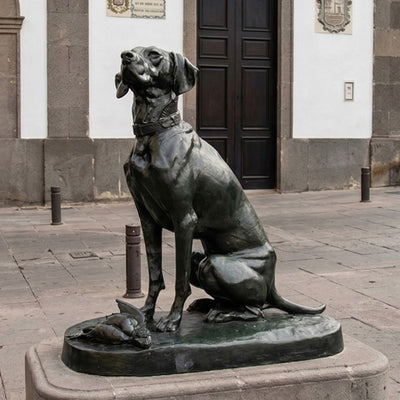
If a piece must stand year-round on a Hamptons lawn or in Texas sun with minimal upkeep, timber may be the wrong material. Our bronze animal sculptures carry the same subjects without the maintenance, and our life-size and large statues show how scale reads outdoors.

Questions to Ask Before You Approve a Maquette
Which way does the grain run through each leg, horn, ear and tail?
Which parts are carved separately, and how are they joined?
What species is it, and what was its moisture content at carving?
Where will glue lines fall? Can I see the layup?
Is it hand-carved, CNC-roughed, or both?
What finish is used, and how often does it need recoating?
How will it be mounted, and what is the plinth made of?
How will it be crated and acclimatized after shipping?
A maker of wooden animal sculptures who answers all eight without hesitating is worth hiring. Budget depends on species, scale, carving hours, engineering, installation and finishing, so the useful next step is a tailored quote. Browse our animal sculptures for subject and scale ideas, then bring your site photos to a commission conversation.
For wider placement ideas, Why Wooden Wall Art Cracks in Winter, and How to Buy One That Won't is useful companion reading before finalising the setting and sightlines.