










































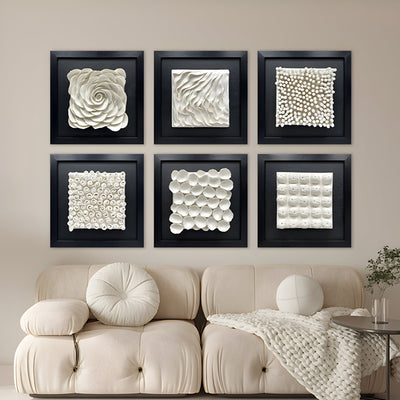
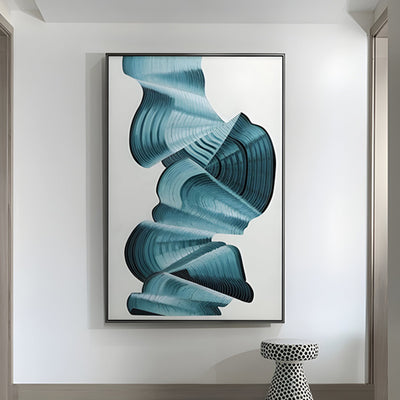
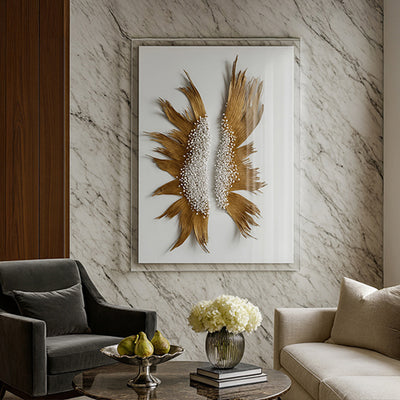
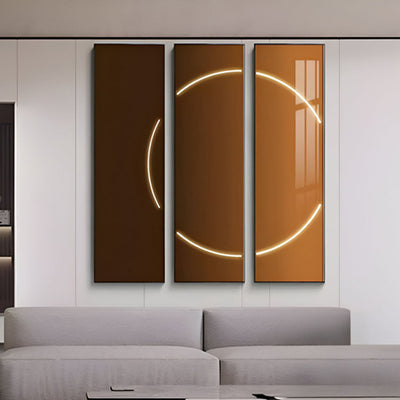

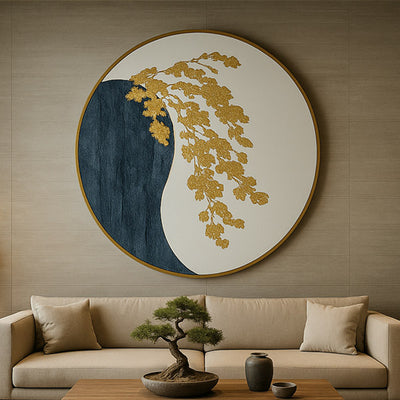
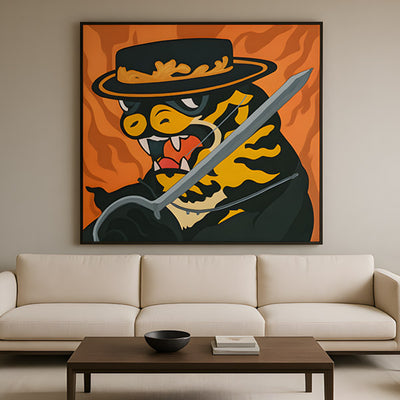
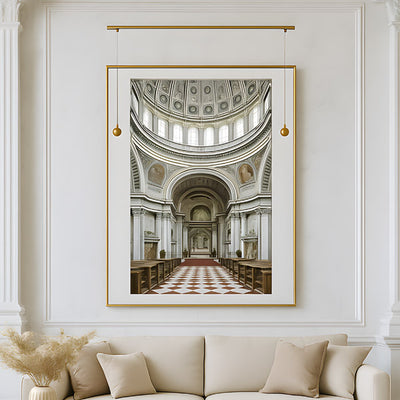
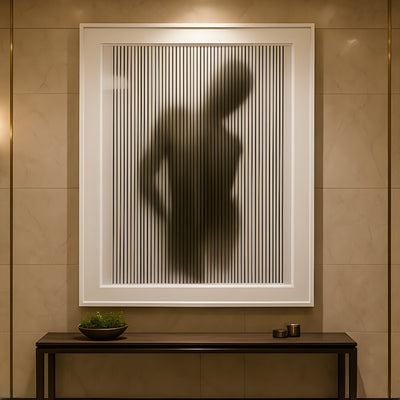

















Most of the cracked wooden wall art we see in client photos was perfectly sound in September. Then the thermostat goes on, the indoor air turns desert-dry, and a panel that hung flat all summer starts to shrink and lift at the edges. If you are buying a large timber piece for a living room in Chicago, Denver or a prewar Manhattan apartment with steam radiators, the heating season is the real test of wooden wall art. Buy with that test in mind.

Key Takeaways
Wood moves across the grain, barely along it, and winter heating is when it moves most.
Joints open before boards split. Fixings that look loose are usually a symptom.
Walnut and properly re-dried reclaimed timber stay calmest; plainsawn oak moves most.
Several smaller panels outlast one wide slab over a sofa.
Keep the piece out of the column of warm air rising from radiators and vents.
October to March: What the Heating Does to Wooden Wall Art
Timber constantly trades moisture with the air around it. The EPA suggests keeping indoor humidity between 30 and 50 percent (EPA guidance on indoor moisture), but a heated home in January often sits well below that, and in Colorado or Minnesota it can drop into the teens. As the air dries, the wood gives up water and shrinks, mostly across its width. Length hardly changes at all.
Forced-air systems speed this up, because every cycle pushes a fresh blast of warm, dry air across the wall. A panel near a register goes through far more humidity swings than one hanging on a wall away from the heating.
Why Joints Open First, and Why the Fixings Get Blamed
The first sign is rarely a split. It is a hairline gap along a glue line, or one block standing a fraction proud of its neighbor. Because the gap often shows up near the hanging cleat, owners assume the bracket has loosened and drive the screws in harder. That makes it worse. A panel screwed rigidly to the wall cannot shrink freely, so the stress concentrates and the board checks.
A client in a Brooklyn brownstone once sent us February photos of what he was certain was a failed bracket. It was a seasonal glue-line gap; the fixing was fine, and by May the gap had nearly closed. Since then we ask every client where the nearest heat source is before we quote. Good wooden wall art hangs on a French cleat or slotted fixings that let the timber move.

Oak, Walnut, Ash and Reclaimed Timber, Ranked by Stillness
Shrinkage figures from the USDA Forest Products Laboratory (Wood Handbook) make the differences between species fairly clear. In dry indoor air, our ranking from calmest to liveliest:
Walnut. Comparatively low shrinkage for a hardwood, with even grain that carves crisply and holds its shape.
Reclaimed timber. Decades of seasoning help, but only if the wood has been kiln-dried again after salvage. Barn boards stored outdoors can be wetter than new lumber.
Ash. Moderate movement and a lovely open grain, though wide plainsawn boards still cup.
Oak. Plainsawn red and white oak are among the more restless. Quartersawn oak jumps well up this list, which is one reason old paneling used it.
Over the Sofa: Why Paneled Wooden Wall Art for Living Room Walls Lasts Longer
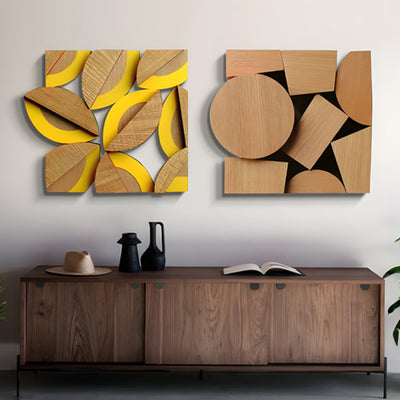
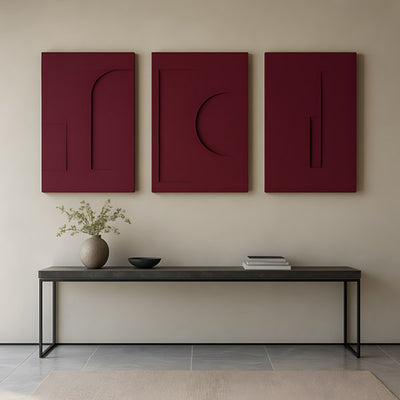
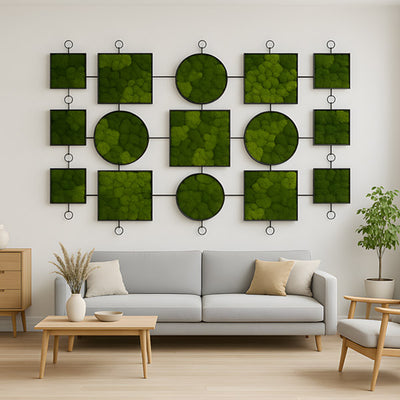
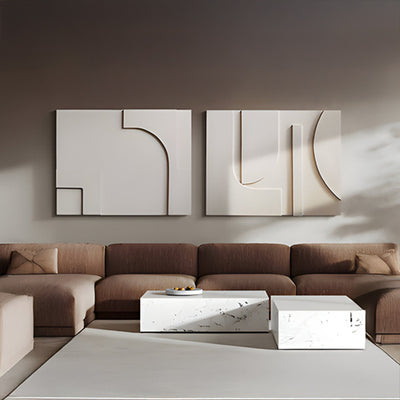
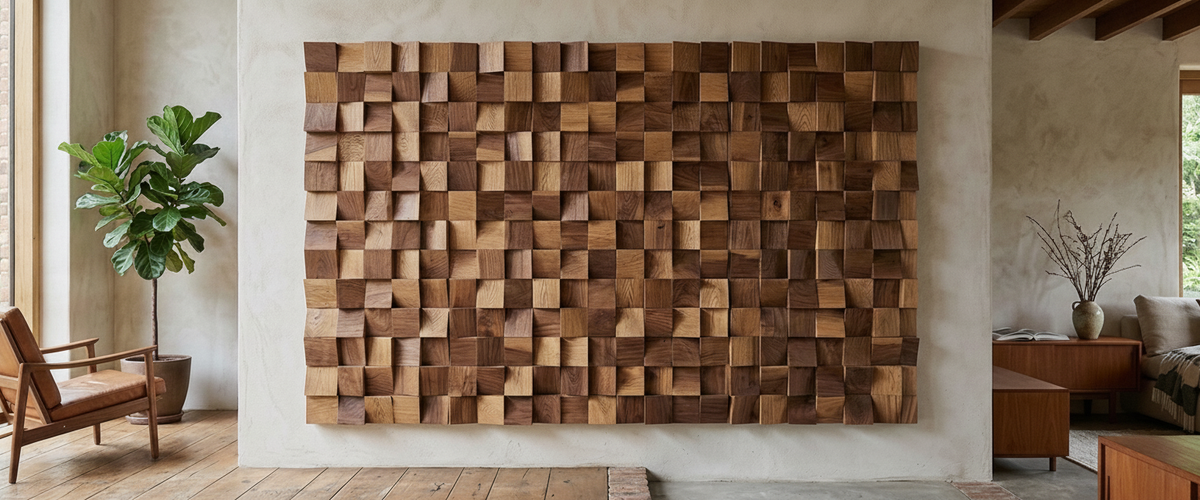
Total movement scales with width. A single slab four feet (1.2 m) across shrinks as one piece, and all that stress has to go somewhere. Split the same area into blocks and each one moves only its own small share, with the gaps between them absorbing the difference. If you are choosing wooden wall art for living room walls above a sofa, this is the single most useful design decision you can make. Where the room wants color and a bolder graphic presence, a modular design such as Nocturna Black & Green Modular Wooden Hand-Painted 3D Wall Art makes more sense than one wide painted slab: the separate elements read as a single composition from the sofa but move as individual pieces on the wall.
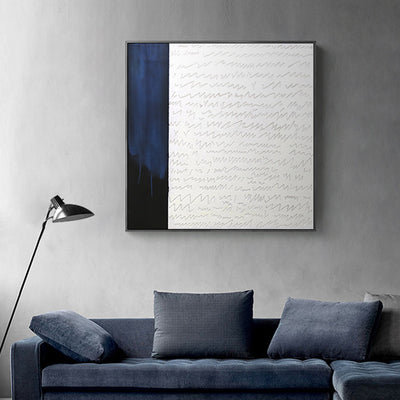
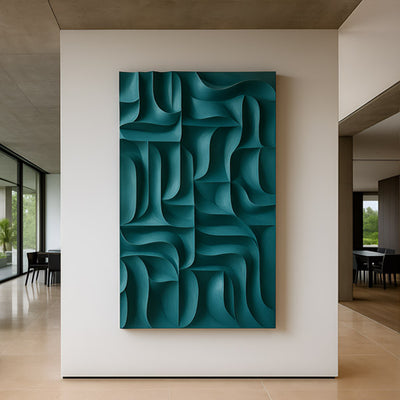
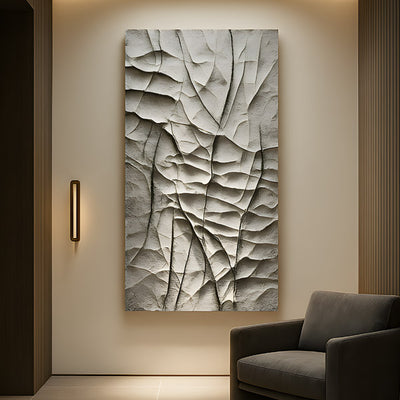
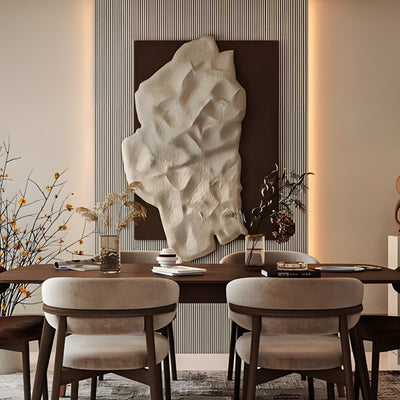
Carved relief helps in a quieter way. For a tonal living room where a single panel still feels right, a deeply cut surface like Barwick Mocha Grid Abstract 3D Carving Wall Art breaks the face into shadowed recesses, so a small seasonal hairline disappears into the pattern instead of running across a flat, glossy plane.

Oil, Lacquer and Charred Finishes After Three Winters Beside a Radiator
Oil lets moisture pass in both directions, so the wood moves gently and evenly. It goes dull when the air is very dry, and a light refresh brings it back. Lacquer slows moisture exchange, but it forms a hard film that bridges joints, and when the timber moves the film cracks along the seam. That white hairline is often the first visible damage. Charred finishes, in the Japanese shou sugi ban manner, give a stable, matte carbon surface but do nothing to stop movement underneath, and they mark if dusted roughly.
Whatever the finish, ask whether the back has been sealed too. A panel finished on the front only takes on and loses moisture unevenly, and that imbalance is a classic cause of cupping.
Moving It Six Inches: Hanging Distances That Spare Wooden Wall Art From Heat
Heat from a radiator or baseboard heater rises in a narrow plume. Shifting a piece even six inches (15 cm) sideways out of that plume often does more than raising it a foot, though more clearance is better. As working rules:
Never hang wooden wall art directly above a radiator, baseboard heater or floor register.
Leave at least 12 inches (30 cm) of sideways clearance from the edge of the heat source.
Above a fireplace, only hang it if a deep mantel shelf deflects the heat. If the wall is warm to your palm, choose another spot.
Avoid long hours of direct sun on south-facing walls, which dry the surface faster than the core.
If the only wall that works sits over the heating, consider metal wall art for that spot instead and save the timber for a calmer wall.

Before You Buy: A Winter-Ready Checklist
Name the species and the cut (quartersawn or plainsawn).
Confirm reclaimed wood was re-dried after salvage.
Prefer modular or carved designs for anything wider than about three feet (90 cm).
Check that both faces are sealed.
Ask for a cleat or slotted fixing, never rigid screws through the face.
Measure the distance to your nearest radiator, vent or fireplace before you choose a size.
When Giant Sculptures takes on a bespoke timber commission, those answers shape the design before any carving starts. Budget depends on species, scale, complexity, finishing and installation, so we quote each piece individually. Browse our wood wall art collection for finished designs, or bring us the wall, the climate and the heat source and we will build around them.
For wider placement ideas, Where the Depth Really Comes From in 3d Metal Wall Art is useful companion reading before finalising the setting and sightlines.