






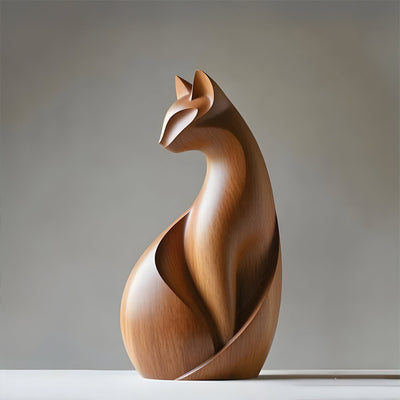
























































Sand a carved hare until it is glassy and it stops being a hare. It becomes a brown object shaped like one. The best animal wood carving sculpture keeps the evidence of the gouge: short, confident cuts that catch light the way fur, feather and muscle do. If you are buying, those marks tell you more about quality, timber and longevity than any provenance card.
At a glance
Visible, varied tool marks usually signal hand carving and a carver who understood the animal.
Timber choice should match the subject: fine-grained woods for detail, open-grained woods for bulk.
Grain should run along ears, legs and tails, never across them.
Some cracks are normal seasoning; others are warnings about moisture or rushed drying.
Raking side light, not overhead spots, is what makes a tool-marked surface read.
Why a Visible Gouge Reads as Fur and Feather
A gouge leaves a scooped facet with a crisp edge. Repeat it in overlapping rows and the eye reads direction, softness and growth, which is exactly what a pelt or a wing does in nature. Sanding erases those micro-shadows. The surface goes uniform, and uniform surfaces look molded, almost plastic, under a lamp.
Overlapping gouge cuts on a carved hare read as fur under raking light.
This is the first thing to check when assessing wooden carved animal sculptures. Run a thumb lightly across the surface. On a good piece, the cuts change rhythm: tight and short around the eye, longer and looser across a flank. That variation is the carver describing anatomy with a blade.
Limewood for Birds, Walnut for Bears, Oak for Horses
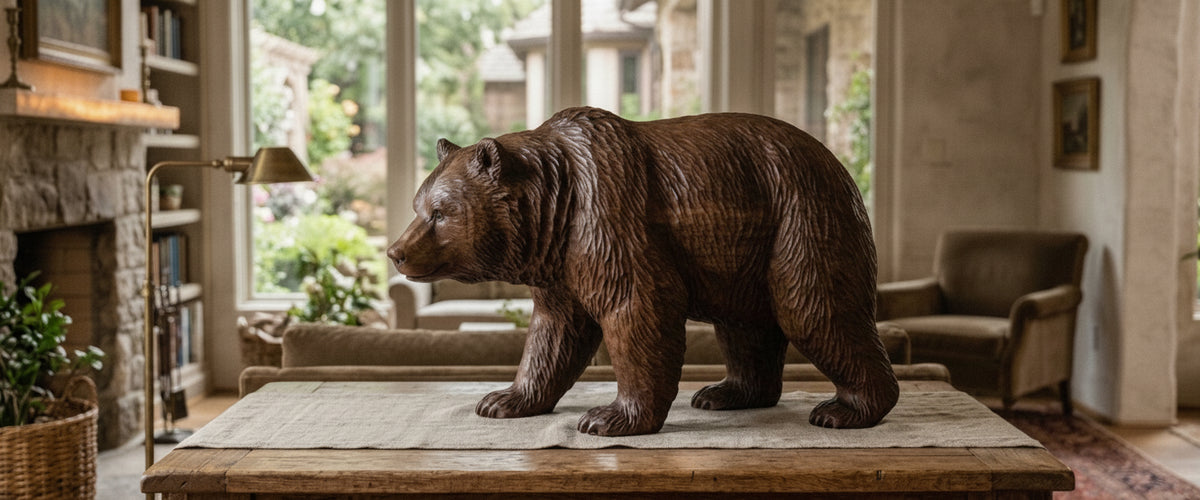
Each timber holds a cut differently, and the subject should follow the wood. Limewood is soft and pale with a fine, even grain, so it takes the finest feather work without tearing; its American cousin, basswood, behaves much the same, and its fine, even texture is why bird carvers favor it. Walnut is denser, darker and forgiving of bold planes, which suits the heavy shoulders of a bear. Oak has open grain and pronounced rays; it resists delicate detail but gives a horse's neck and haunches real structural confidence.
The mistake we see is a buyer falling for a delicate subject in a coarse wood. A wren in oak will look clumsy no matter who carved it. Look through our wood sculptures with this pairing in mind and the stronger pieces become obvious quickly.

Grain Direction Decides Whether Ears, Legs and Tails Survive
Wood is strong along the grain and weak across it. An ear carved with the grain running from base to tip can take a knock; one carved across the grain can snap off during a house move. On any animal wood carving sculpture, check slender parts closely. If the grain lines run sideways through a fox's tail or a deer's foreleg, expect trouble sooner or later, especially where the section is thin.
Skilled carvers sometimes join a separate piece of timber so the grain suits a projecting limb. A well-fitted joint is a sign of care, not a shortcut.
Hand Gouge or CNC Texture? Telling Real Tool Marks from a Machined Imitation
CNC routers can now fake the surface of an animal wood carving sculpture convincingly at a glance. Look closer. Machine texture repeats at fixed intervals and fixed depths, often in parallel tracks that ignore the anatomy beneath. Hand marks wander, overlap and change size where the form turns. Check undercuts, too: a three-axis router struggles to reach behind a leg or under a chin, so those areas are often blurred or sanded on machined work.
Machined blanks finished by hand are common and not dishonest, provided the seller says so. Ask directly.
Seasoning Checks Versus Carving Marks: Which Cracks Are Honest and Which Are Warnings
Wood moves as it loses and gains moisture. Fine, stable checks running with the grain, particularly in larger carvings cut from a single block, are part of the material's character. The US Forest Products Laboratory's Wood Handbook explains why: timber shrinks unevenly in different directions as it dries.
Warnings look different. Cracks that widen month to month, split across the grain, or open near a joint suggest the wood was carved too wet or is sitting somewhere too dry. A walnut bear placed a few feet from a wood-burning stove can see a check along its back widen noticeably within a single winter; moved to a cooler wall, it will usually stabilize. Heat sources, forced-air vents and desert climates in Arizona or Southern California all deserve caution.
Side Light on a Shelf or Hearth: Where Tool-Marked Animals Come Alive Indoors
Overhead downlights flatten the surface of an animal wood carving sculpture. Light from the side, a window at 90 degrees or a low lamp on a console, throws every gouge into relief. A mantel works beautifully if the fire is not directly below; a bookshelf beside a west-facing window in a Brooklyn apartment can do more for a carved owl than any spotlight.
Side light from a window throws every gouge on a carved owl into relief.
Small pieces need that breathing room too. On a narrow shelf, a compact form of around 25cm (about 10 in), such as the stainless steel Brown & Lavender Wood-Grain Abstract Bird Stainless Steel Sculpture - 25cm, reads far better with a few clear inches either side than wedged between books, where raking light never reaches its surface.
Keep wood indoors. If you want the same feel outside on a Napa terrace, a material built for weather makes more sense. Where a terrace wall or garden step would leave timber checking and softening within a few seasons, a stainless form finished in a wood-grain pattern, like the Brown & Blue Wood-Grain Abstract Bird Stainless Steel Sculpture - 50cm, keeps the warmth of carved timber with none of the rot risk. For a more traditional sculpted pelt or plumage, our bronze animal sculptures hold texture outdoors for generations.

Buying an Animal Wood Carving Sculpture: Decision Checklist
Surface: Do tool marks vary with anatomy, or repeat mechanically?
Timber fit: Is the wood suited to the subject's level of detail?
Grain: Does it run along every slender projection?
Cracks: Are they with the grain and stable, or across it and growing?
Finish: Oil or wax that lets tool marks show, rather than thick lacquer that fills them.
Placement: Side light available, away from heaters, vents and fireplaces.
Scale: Even a compact shelf piece needs space around it for light to rake across the carving.
Budget for any animal wood carving sculpture depends on timber, size, carving complexity, joinery and finish, so the right step is a tailored quote rather than a guess. Giant Sculptures handles bespoke commissions for collectors and designers who want a particular species, pose or scale, and we can advise early on whether wood, bronze or stainless steel will serve the setting best. Start with our animal sculptures for reference, then bring us the space and the animal you have in mind.
For wider placement ideas, Abstract Wood Sculpture for Sale? Read the Grain Before You Buy is useful companion reading before finalising the setting and sightlines.