



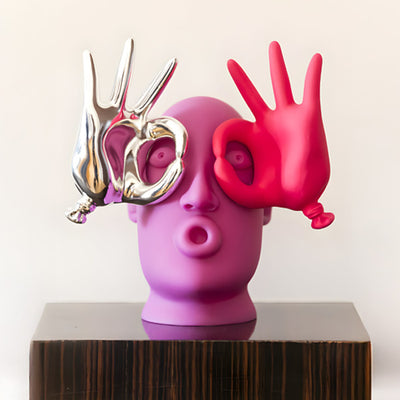


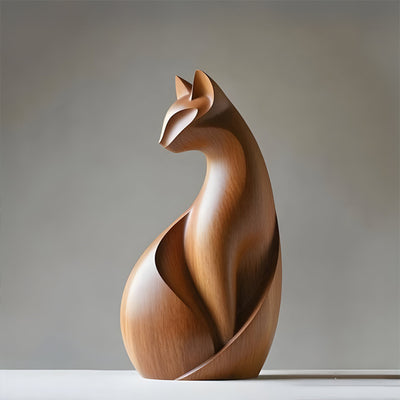





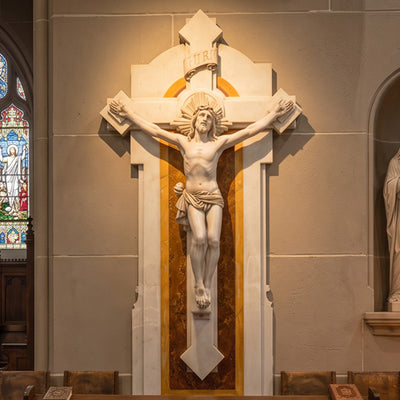
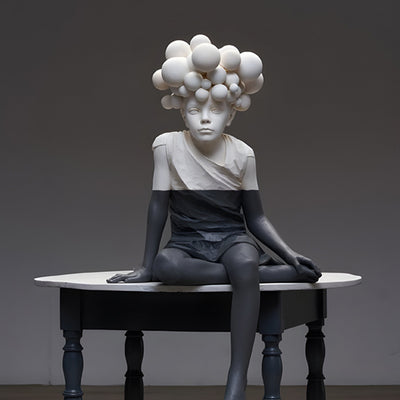










































Nine figurines on a floating shelf is not a collection. It is a queue. Art collectible figurines are among the easiest objects to buy well and the hardest to display well, because the failure is invisible at the moment of purchase: every piece looked strong alone on a dealer's table, lit from above, with nothing else competing for the eye. Bring five of them home, line them up, and they start cancelling each other out.

At a Glance
Spacing beats quantity. Three well-spaced pieces read as a collection; nine crammed together read as merchandise.
Never place a figurine against a window. Backlight flattens modeled form into a black outline.
Glass cabinets solve dust and create reflections. Pick your problem deliberately.
Group in odd numbers, at varied heights, or commit to a single piece with nothing near it.
Build around one material. A shelf of bronze reads as intent. A shelf of five materials reads as accumulation.
Read the base before you buy: edition number, foundry mark, signature, date.
There is a point where scale, not quantity, is the upgrade. That is when a bespoke commission makes sense.
Why Five Good Art Collectible Figurines Read as Clutter
Small sculpture needs negative space the way a photograph needs a border. When two pieces sit within a few inches of each other, the eye stops reading them as separate objects and starts reading the silhouette of the whole shelf. That composite outline is almost always ugly, because it was never designed.
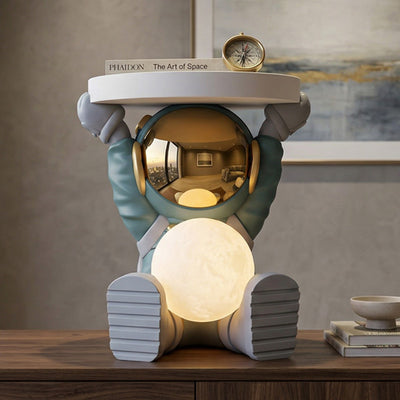
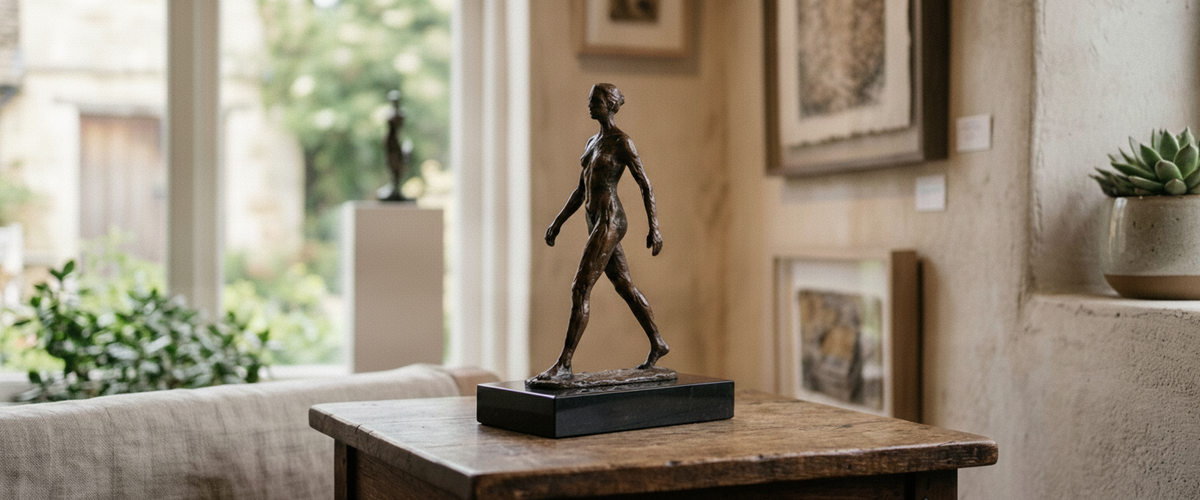
Spacing is the whole game: art collectible figurines need clear surface on every side before they read as separate objects.
We notice this in the studio every time we shoot small work. Photographing art collectible figurines means clearing the table completely, one piece at a time. Not for style reasons; a second object in frame steals the modeling from the first. Your console table works the same way. If you own six pieces you love, rotate three and store three. One collector we shipped a pair of small bronzes to keeps three of his nine out at a time and swaps them seasonally, and visitors assume he owns exactly three very good things.

Backlight Is the Enemy
The most common placement mistake is the most intuitive one: a windowsill or a console in front of glass. Daylight behind a bronze reduces it to a silhouette. You lose the patina, the tool marks, the shift from shadow into highlight across a shoulder or a flank, which is the entire reason to buy modeled sculpture rather than a print.
Light should come from the front and slightly above, at an angle. A picture light, a directional ceiling fitting set off-center, or a lamp two feet (about 60cm) to one side will all do more for a figurine than any plinth. Sustained direct sunlight is a second problem, since ultraviolet exposure and heat cycling are hard on waxed patinas, painted surfaces and any organic base material. If the only spot available is bright, treat it as a rotation position rather than a permanent home.
Glass Cabinets, Reflections and the Dust Nobody Can Reach
A vitrine genuinely solves dust, and dust is not cosmetic. On patinated bronze and painted resin it holds moisture against the surface and traps grit that scratches during cleaning, which is why the Victoria and Albert Museum's guidance on caring for metalwork leans on soft brushes and dry dusting rather than damp cloths and polishes.
The trade-off is reflection. A closed glass front bounces the room back at you, and unless the cabinet is internally lit, your art collectible figurines sit in their own shade. If you go with a cabinet, light it from inside with low-heat LEDs, keep the glass low-iron if you can, and leave one shelf deliberately half empty. If you go open-shelf, accept a dusting routine every few weeks and keep a dedicated soft brush nearby rather than reaching for the nearest kitchen towel.
Odd Numbers, and When One Figure Beats a Whole Shelf
Groups of three or five work because the eye cannot split them into pairs, so it keeps moving. Vary height as well as count: a low reclining form beside a taller upright piece creates a diagonal that a row of same-height objects never will. Keep the material family consistent within a group and let scale do the contrasting.
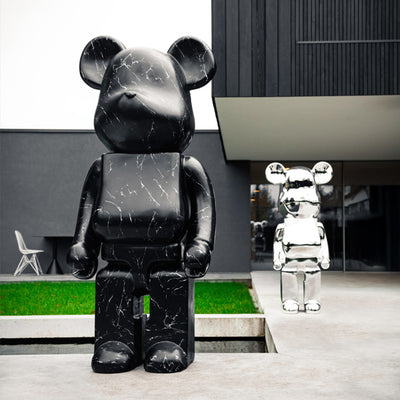
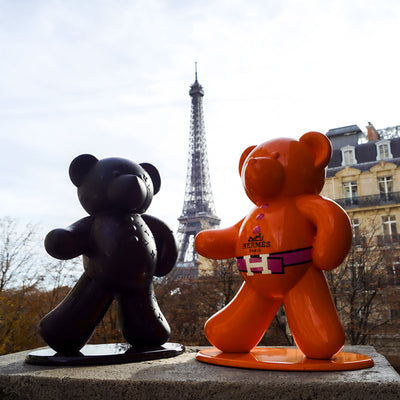
Some pieces should never join a group. A strongly narrative or unusually characterful figure carries a room by itself, and putting it in a lineup wastes it. Character-led work from our collectible character figurines range tends to fall into this camp; it wants a clear surface and a wall behind it, not four neighbors. The same is true of animal work with real presence, which is why single pieces from our small bear sculptures often land better on an entry console than inside a cabinet crowd.

Build Around One Material, Not Five
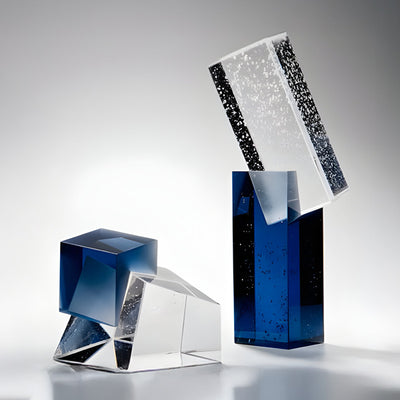
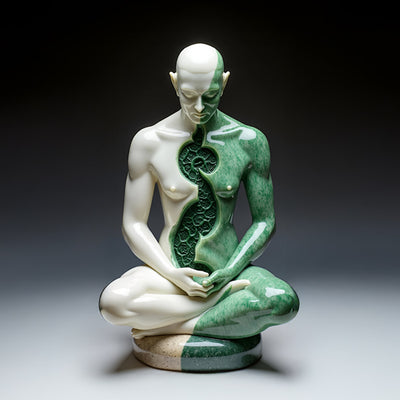
Buyers who assemble fine art collection figurines across bronze, marble, resin, glass and ceramic in the same six-foot run usually end up disappointed without knowing why. Mixed surface behavior is the reason. Bronze absorbs light, marble scatters it, glass throws it, high-gloss resin reflects it hard. Five different light responses in one sightline read as noise.
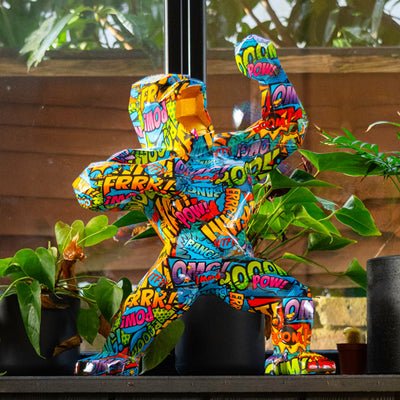
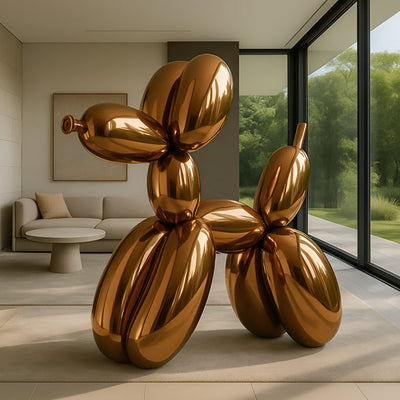
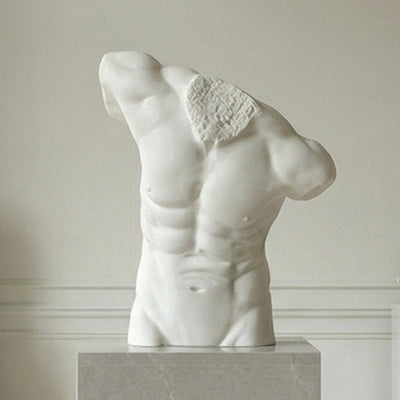
Pick a spine material and stay with it for the display group. Bronze and stone reward this most, because subtle patina and vein variation give you plenty of range without breaking the visual logic. Collectors working in gloss and color can apply the same rule, keeping a shelf entirely within pop-finish pieces such as the small Labubu sculptures and letting form rather than material carry the contrast.
Read the Base Before It Earns a Spot
Turn the piece over. On a cast edition you want a signature or foundry stamp, a date, and an edition number in the form 4/25. Artist's proofs are marked separately. Tate's explanation of what an edition actually means is worth five minutes if you are new to cast work, because edition size shapes long-term value as much as subject or scale does.
Also check the base as engineering. The best art collectible figurines have felt or cork facing, a flat true bottom, and enough weight low down that a passing sleeve does not topple it. Loose or rattling mounting hardware on a cast piece is a legitimate reason to walk away.
When to Commission Instead of Buying Another Figurine
Serious collections tend to hit a ceiling. You own the pieces you want, the shelf is edited, and the next purchase would add volume rather than quality. That is the moment to change axis and go bigger rather than wider, either with a commissioned tabletop bronze in an edition of one or by taking a subject you already love up to floor scale.
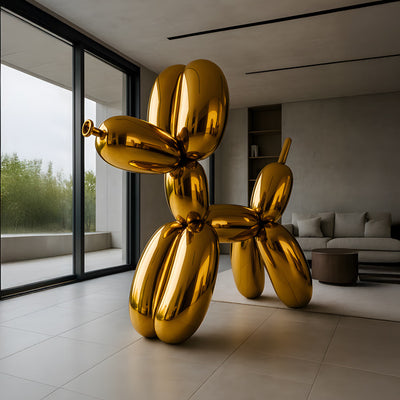
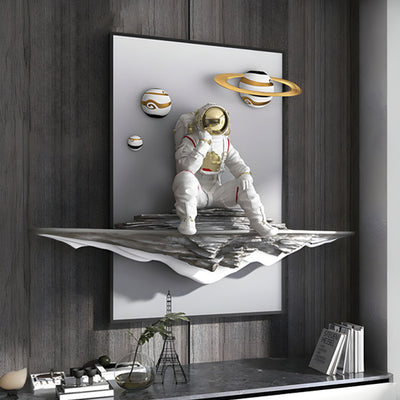
At floor scale, one figure does what a shelf of art collectible figurines cannot: it holds the room.
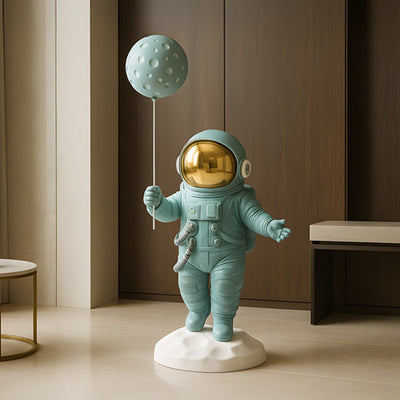
Where the room needs presence rather than another shelf object, a gloss resin figure at standing height such as Green Bubble Boy Figurine Globe Resin Sculpture 150cm (roughly 59 inches) does something no group can. At that scale a collectible-style figure stops being an object on a surface and starts holding floor space like architecture. It also needs clearance on all sides and its own light, not a slot in a cabinet.
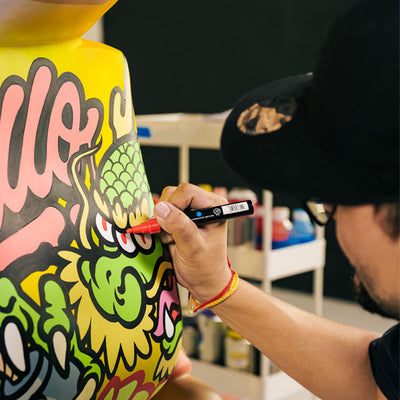
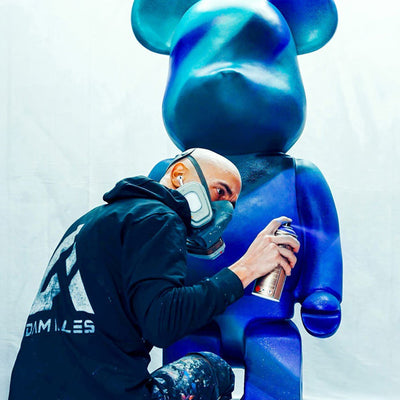
Bespoke work at Giant Sculptures usually starts with a reference the client already owns, often one of the art collectible figurines already on their shelf. We look at material, patina, base treatment and how the finish will behave under the light in the target room, then quote against scale, complexity, engineering and finishing rather than a catalog figure. Ask for a tailored quote early; it shapes the design conversation rather than ending it.

Quick Display Checklist
Give each piece at least a hand's width of clear surface on every side.
Light from the front and above at an angle, never from behind.
Keep permanent positions out of direct sun and away from heat sources.
Group in threes or fives at mixed heights, or stand a single piece alone.
Hold one material family per display run.
Dust with a soft dry brush; skip sprays and polishes on patinated surfaces.
Record edition number, foundry mark and purchase details for every piece.
Rotate what is on show and store the rest properly wrapped.
Edit hard, light properly, and let material discipline do the work. Art collectible figurines only look like a collection when the arrangement looks decided.
For wider placement ideas, Buying a Bronze Figure Sculpture: What Happens Before It Ships is useful companion reading before finalising the setting and sightlines.