





































































































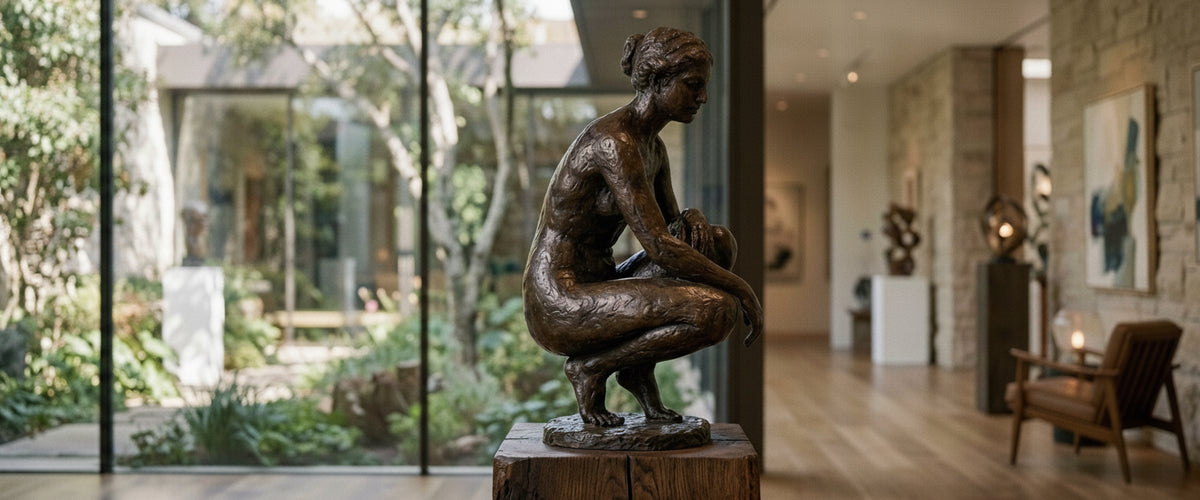

A bronze figure sculpture that works at ten feet can look wrong at thirty, and most buyers only discover that after the crate is opened. That gap between what you pictured and what arrives is where a bronze figure sculpture sale succeeds or quietly fails. The metal is the easy part. The decisions before the pour are what separate a piece you live with happily for decades from one you keep apologizing for.
This is written from the side of the table where the castings actually get made. If you are weighing a bronze figure sculpture for sale, whether an existing piece or a bespoke commission, here is what we think about at Giant Sculptures before we agree to a bronze figure sculpture sale, and what you should be asking in return.

Key Takeaways Before You Buy
- Scale is a design decision, not a size upgrade. A figure enlarged without reworking proportion often reads flat or top-heavy outdoors.
- Patina is a finish choice, not a fixed color. It changes with weather, orientation, and time, and it can be steered.
- Budget follows craft. Wall thickness, chasing hours, base engineering, and finishing all move the number more than the shape does.
- The maquette stage is your cheapest chance to change your mind. Fixes are almost free in clay and painful in cast bronze.
- Ask about foundry, warranty, and install before you commit. Silence on any of the three is a red flag on a bronze figure sculpture sale.

What Sculptors Weigh Before Taking a Bronze Figure Sculpture Sale Commission
Before anyone talks price on a bronze figure sculpture sale, we look at where the piece is going. A figurative sculpture for a shaded Napa courtyard behaves differently from one baking on a Texas terrace, and both differ from an indoor lobby where the piece will be seen from six feet away under artificial light. Sightlines, viewing distance, and how the sun tracks across the setting all change what the surface needs to do.
We also read the pose against the site. A crouching or seated figure grounds a space and rewards a close approach; something low-set like the Contemporary Crouching Figure Bronze Sculpture - 150cm pulls the eye down into a garden bed rather than fighting the skyline. A standing or reaching figure wants air around it and a clean backdrop, or it starts to look cramped.
The last thing we check before saying yes to a bronze figure sculpture sale is honesty of reference. Bronze holds detail beautifully, which means it also holds mistakes beautifully. If a commission is based on a photo with poor anatomy or a mood board of six clashing styles, we say so early. It is cheaper for everyone.

Craft Decisions That Change the Final Result (and the Price)
Most buyers assume the price of a cast figure tracks its height. Height matters, but the decisions underneath any bronze figure sculpture sale matter more.
Wall thickness and casting method. Traditional lost-wax casting, the same broad process museums document going back thousands of years, produces a hollow bronze with walls typically a few millimeters thick. Thicker walls use more metal and cost more; thinner walls save weight but demand more skill to pour cleanly. For a durable outdoor figure we lean toward well cast sections that survive shipping and decades of weather. The Getty Conservation Institute has published extensively on how outdoor bronze behaves over time, and thickness plays into that longevity.
Chasing and finishing hours. After casting, someone spends days removing seam lines, refining texture, and reworking the surface by hand. A smooth classical finish and a rough expressive one take different amounts of labor, and that labor is a large slice of the cost.
Patina. Brown, green verdigris, near-black, or a warmer bronze tone are all achieved with heat and chemistry, not paint. Patina is the single most-argued detail in the studio because it changes the mood entirely. It also shifts subtly outdoors, so we sample it in the light the piece will actually live in.
Base and armature. A large figure needs internal steel and an engineered base to stay stable and stay put. This is invisible work that never shows in a photo and always shows up in the quote. Skip it and you have a beautiful piece that cannot survive its first serious wind.

Why Some Pieces Read Right at 10 ft and Wrong at 30
Enlarging a figure is not a photocopy. As a piece grows, the eye reads it from farther away, and details that carried a tabletop bronze vanish while proportions that looked natural start to feel off. Hands and feet, in particular, tend to look small when a figure is scaled up naively, because our brains expect them to grow slower than the torso does. Good enlargement corrects for that, and it is why a bronze figure sculpture sale should start with the viewing distance.
Surface behaves differently too. A finely polished finish that glowed indoors can turn into a glare problem on a sunny terrace, flattening the form into a silhouette. Meanwhile a textured surface that looked busy up close resolves into rich, readable modeling from across a lawn. When we plan a piece for a Hamptons garden or an Aspen approach drive, we are thinking about the thirty-foot read first and the close-up second.
This is why a giant expressive piece such as the Giant Contemporary Rotund Figure Handstand Bronze Sculpture - 220cm at over seven feet is designed as a large object from the start, not a small one blown up. Mass, balance, and silhouette are resolved for the distance it will be seen from. If you want to understand the range, our large bronze sculptures show how scale changes what a figure can do in a space.

The Studio Process: Maquette, Sample, Fabrication, Install
A commissioned figurative sculpture for sale moves through predictable stages, and knowing them helps you spend your attention where it counts during a bronze figure sculpture sale.
- Maquette. A small-scale model, usually in clay or a working material, that locks pose, proportion, and gesture. This is your cheapest chance to change anything. Move a limb here and it costs a conversation; move it after casting and it costs a fortune.
- Sample and sign-off. We confirm patina direction, surface finish, and base detail. On larger commissions we sample patina on a test piece so you see the actual color in real light rather than a screen.
- Fabrication. Molding, casting, chasing, assembly, and patination. For a large figure this is the longest stretch and the least visible to the buyer. Ask for progress photos; a confident foundry sends them without being pushed.
- Crating and install. A heavy bronze needs proper crating, the right lifting equipment, and often a plinth or footing prepared in advance. We have shipped figures where the install crew mattered as much as the casting, because a perfect piece set on an unlevel footing looks wrong forever.
If your interest is a ready-made rather than a full commission, the same logic applies in reverse: you inherit someone else's craft decisions, so inspect the finish, base, and patina closely. A settled classical form such as the Classical Seated Male Figure Bronze Sculpture - 120cm already carries those choices, which makes it faster to place but less adjustable. Browse the wider bronze figures and statues collection of figure sculptures for sale to compare poses and finishes side by side.

Honest Red Flags to Ask About Before You Commit
A serious seller will answer these without flinching. Evasion is the answer, and it should end any bronze figure sculpture sale on the spot.
- What is the bronze alloy and wall thickness? Solid answers signal a real foundry relationship. Vague ones signal a reseller who does not know.
- Is the patina sealed and how is it maintained? Outdoor bronze needs periodic waxing to keep its patina stable. If nobody mentions maintenance, they are not thinking long term.
- What is the internal armature and base rated for? For anything large or outdoors, structural stability is not optional.
- Who handles crating, freight, and install? International bronze shipping is heavy and specialized. Find out where the responsibility sits before money moves.
- What happens if the finish is not what was agreed? A clear remedy on patina and finish protects you at the one stage that is hardest to judge from a photo.
Buying figurative work in bronze is a long commitment. A well-made figure outlives its buyer, so the questions you ask now decide what the next fifty years look like. When you weigh a bronze figure sculpture for sale, start with the setting and the sightline, and let the craft decisions follow from there. Any bronze figure sculpture sale we take on runs from maquette to install on bespoke commissions, and Giant Sculptures can advise on placement before anything is cast.
For wider placement ideas, Affordable Contemporary Bronze: Where to Place It so It Actually Reads is useful companion reading before finalizing the setting and sightlines of your bronze figure sculpture sale.