





































































































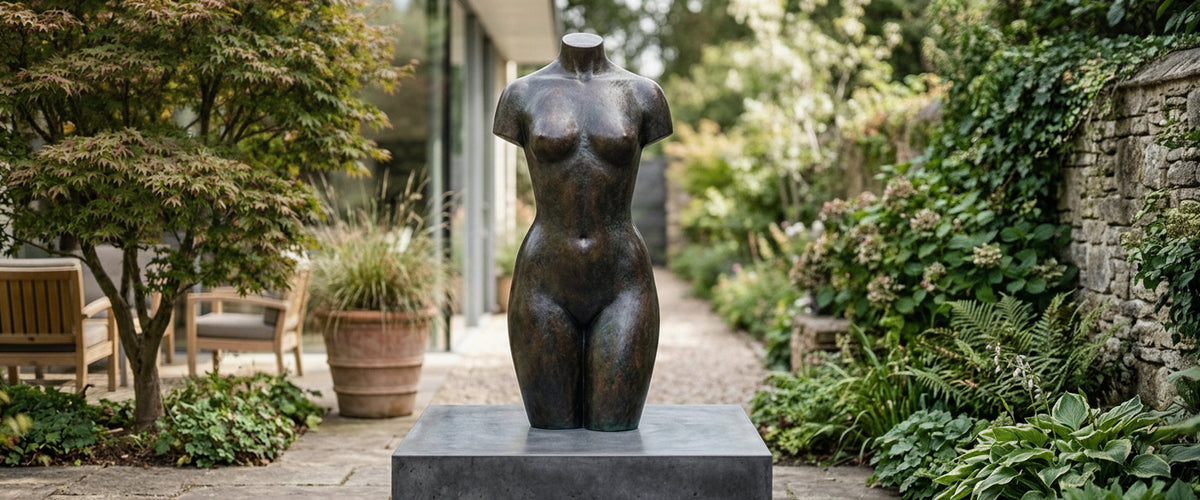

A great abstract sculpture can die in a bad corner. We have watched a beautifully cast bronze torso vanish against a busy wall, then come alive six feet away on a plinth with clean sky behind it. Same piece, same finish, completely different result. The truth about the best abstract sculptures ever created is that placement does half the work. Get the position right and a modest piece reads as monumental; get it wrong and even a museum-grade form looks like it wandered in by accident.
This is where abstract art sculpture behaves differently from figurative work. A realistic figure carries its own subject. An abstract form borrows meaning from what surrounds it, which means you are not just buying an object; you are staging a relationship between the sculpture, the space, and the eye moving through it. Even the best abstract sculptures ever made depend on that staging.

Key Takeaways for Placing Abstract Sculptures
- Scale is relative. A piece reads big or small based on sightline distance and what sits near it, not just its measured height.
- Pedestal height changes the whole read. Raise a form to eye level and it commands; drop it low and it becomes a quiet accent.
- Indoors rewards intimacy; outdoors rewards silhouette. Choose the setting for how you want the piece experienced.
- Backdrop and contrast decide impact. A polished bronze needs a calm background; a matte form needs light to carve it.
- Most placement mistakes are fixable before purchase if you plan sightlines first.

What the Best Abstract Sculptures Ever Look Like in Real Rooms and Gardens
Ask three people what abstract sculpture means and you will get three answers. So let us be plain. An abstract sculpture is a three-dimensional work that does not try to copy the world exactly. It works through form, mass, line, and negative space rather than literal representation. Some pieces still hint at a recognizable subject, which is where the term abstract figure sculpture comes in: think of a simplified torso or a reduced human gesture that reads as a body without spelling out every detail.
In a living room with double-height windows, an abstract bronze reads best when it sits where the light rakes across it in the late afternoon. In a wide entrance hall, the same category of piece wants a clear approach so guests see it building as they walk toward it. Outdoors, an abstract form against lawn and hedge becomes a silhouette first and a surface second. The setting is not decoration around the sculpture; it is part of how the sculpture is read. This is why the best abstract sculptures ever placed always match the room to the form.
Our clients tend to fall into two camps. One wants the piece to anchor a room, holding its own against furniture and art. The other wants a form that draws people outside, visible from the kitchen window in January and again from the terrace in July. Both are valid. They lead to very different choices in scale and finish, and both can produce some of the best abstract sculptures ever chosen for a home.

Scale, Sightlines, and Pedestal Height Change Everything
Height on a spec sheet tells you almost nothing about how a piece will feel. What matters is viewing distance. A 70cm bronze on a console you pass at arm's length can feel substantial, while the same piece across a 30-foot (9 m) great room looks lost. For that close, intimate read, a piece such as the Contemporary Abstract Female Torso Bronze Sculpture - 70cm works because the surface modeling and the turn of the form reward a viewer standing near it.
Scale up and the rules flip. Where a form has to hold a lawn or a lobby atrium, something like the Monumental Contemporary Abstract Female Figure Bronze Sculpture - 220cm is built to be read from distance, where anything smaller would disappear. When we ship a piece at this size, we ask clients for photos of the approach: how far away the first sighting is, what the eye passes on the way, whether the form is seen against sky, wall, or foliage.
Pedestal height is the lever most buyers underestimate. Raising an abstract form so its visual center sits near eye level, roughly 5 feet (1.5 m), makes it feel present and deliberate. Set it low and it becomes a grounded, quieter object; useful in a garden bed, less so as a room's focal point. A few inches of plinth can turn a decorative accent into a statement, and it is often what separates the best abstract sculptures ever displayed from the ones that get ignored. Test this before you commit by mocking up the height with a stack of boxes at the real viewing distance.

Indoor Versus Outdoor: When Each Wins
Indoors is about the surface and the intimate read. You get controlled light, no weather, and viewers standing close. This is where fine modeling, polished patina, and detailed abstract wood sculpture earn their keep. A carved abstract wood sculpture, with its grain and warmth, belongs somewhere hands might brush it and eyes can study the tooling. Some of the best abstract sculptures ever carved live exactly here.
Outdoors is about silhouette and endurance. The piece must read as a strong shape at 50 feet (15 m) before anyone gets close, and it has to survive freeze-thaw, UV, salt air, and sprinklers. Bronze, stainless steel, and Corten are our default recommendations for permanent outdoor placement because they age with dignity rather than degrading. The Getty's conservation guidance on outdoor bronze is worth reading if you want to understand how patina behaves over decades in the open air (Getty Conservation Institute).
Wood is the exception worth naming. Abstract sculpture wood pieces are magnificent indoors but demand real commitment outside; even durable species need sealing, shade planning, and honest expectations about weathering. If a client loves a wood form for a garden, we usually talk them toward a cast bronze version of the same silhouette so they get the shape they fell for without the maintenance anxiety. Browse our bronze abstract sculptures to see how a form translates across finishes; it is one route to the best abstract sculptures ever suited to your climate.
Light, Backdrop, and Contrast Decide the Impact
Light is the free tool most people waste. A polished bronze throws highlights and needs a calm, uncluttered background so those highlights read. Put a mirror-finish piece in front of a gallery wall of paintings and both fight for attention. A matte or textured surface, by contrast, wants directional light to carve out its planes; flat overhead lighting flattens it into a blob.
Think about the backdrop as seriously as the piece. Dark bronze against a pale limestone wall separates cleanly. The same bronze against dark paneling can disappear unless you light it deliberately. Outdoors, an evergreen hedge is the classic backdrop because it stays consistent and reads as a single tone behind the form. A mid-scale piece like the Large Modern Abstract Bronze Sculpture - 94cm set against clipped greenery is a reliable combination; the hedge does the work of isolating the shape. Backdrop discipline is a habit shared by the best abstract sculptures ever installed.
Contrast also drives how abstract art sculpture holds attention over time. A piece that offers a new profile as you walk around it stays interesting for years. One that reads the same from every angle gets ignored within weeks. When we advise on commissions, we push for at least three strong viewpoints: the approach, the passing view, and the close inspection.
Common Placement Mistakes We See on Commissions
For wider placement ideas, Buying an Abstract Bronze Sculpture: What Sculptors Weigh Before They Cast is useful companion reading before finalizing the setting and sightlines.
Most placement problems repeat, and they undo even the best abstract sculptures ever cast. Here are the ones worth guarding against.
- Buying to fit a corner. Corners kill abstract forms because you lose the walk-around. If a piece only shows one face, you have paid for three you will never see.
- Ignoring the first sighting. The moment a viewer first spots the sculpture matters more than the close-up. Plan the approach, not just the resting spot.
- Undersizing for outdoors. Open sky and lawn shrink everything. A form that felt large in the studio often needs to go up a size for a garden to hold it.
- Skipping the pedestal decision. Setting a piece straight on the floor or ground when it needed lift is the most common regret we hear.
- Forgetting winter and night. An outdoor piece is seen year-round. Check how it reads bare against a gray sky and whether it needs a discreet uplight for evening.
One commission stays with me. A client wanted an abstract torso for a loft with a single long sightline down a hallway. We nudged them from a 70cm piece to something with more presence and set it on a plinth at the hallway's end. It became the thing every visitor walked toward. The lesson: the corridor was the frame, and we designed the piece to reward the whole approach, not just the arrival. That is how the best abstract sculptures ever bought tend to happen.
How to Approach a Bespoke Abstract Commission
If nothing off the shelf fits your sightlines, a bespoke piece solves the geometry. When people ask how to make an abstract sculpture that actually works in a specific space, the honest answer is that it starts with measurement, not inspiration. We begin with your viewing distances, ceiling or sky height, backdrop tone, and light direction, then design the form and scale around those constraints. Material follows: bronze for warmth and permanence, stainless steel for a crisp contemporary edge, wood for indoor character, stone for weight and calm.
Budget for a commission depends on material, scale, engineering, finishing, and installation, so we quote each project individually rather than posting a number that would mislead you. A 220cm outdoor bronze with a concealed armature and a specified patina is a different proposition from a 70cm indoor piece. Tell us the space and the effect you want, and we will scope it properly. You can start by exploring our abstract sculptures collection to identify the language and scale you are drawn to before we talk specifics; it is a practical path toward the best abstract sculptures ever made for your setting.
The best abstract sculptures ever bought are the ones that were placed with intent. Choose the setting first, respect the sightlines, get the pedestal right, and let light do its job. The best abstract sculptures ever will repay you every day you walk past them.