














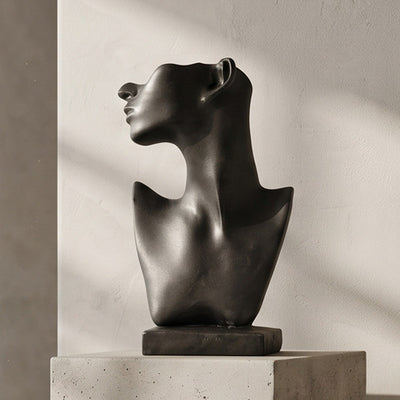

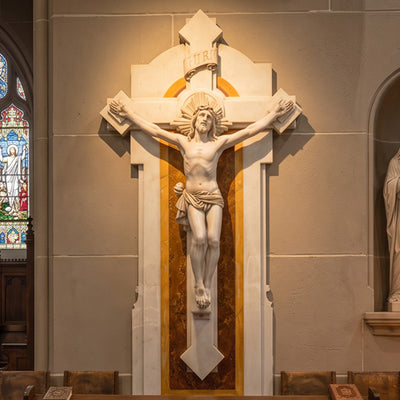

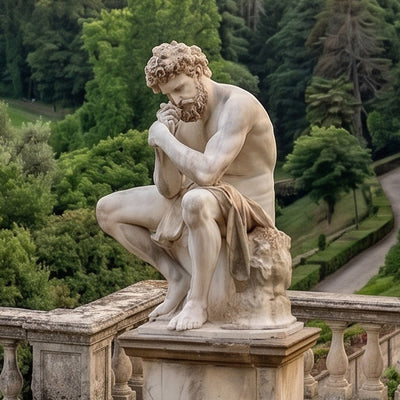
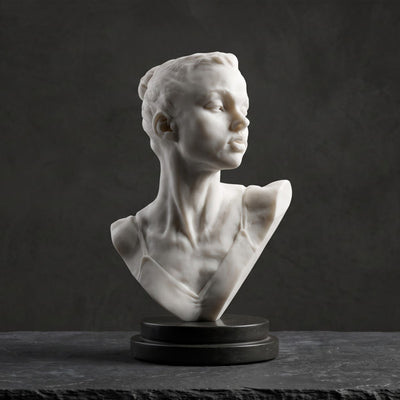








































































A contemporary abstract stone sculpture can carry an entire room or vanish into it, and the difference is rarely the piece itself. It is the placement. We have shipped abstract work into Napa courtyards, Aspen entrance halls and a double-height Manhattan loft, and the same lesson keeps repeating: buyers spend weeks choosing the form and about ten minutes deciding where it stands. That ratio is backwards.
A contemporary abstract stone sculpture reads differently from a figurative bronze. There is no face to anchor the eye, no obvious front. The form does the talking through mass, curve, void and the way light travels across the surface. Get the setting right and it holds a space with real authority. Get it wrong and it looks like it is waiting for a truck.

Key Takeaways for Placing Abstract Stone
- Match the piece to its sightline distance, not just the square footage of the room.
- Pedestal height changes the whole read; most sculptures sit too low, not too high.
- Abstract forms need a quiet backdrop and directional light to show their curves.
- Outdoors, plan for weather, drainage and how the stone weathers over decades.
- Budget depends on material, scale, engineering and installation, so ask for a tailored quote rather than guessing.

What Contemporary Abstract Stone Sculpture Looks Like in Real Rooms
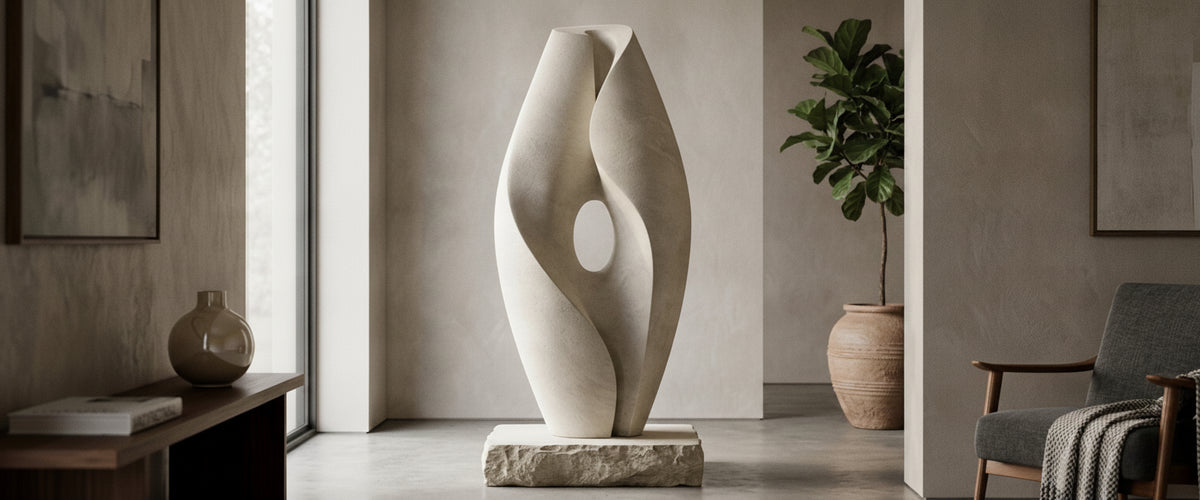
In an interior, an abstract contemporary sculpture works hardest where the eye already wants to rest: at the end of a hallway, in the turn of a staircase, in a bay window with light behind it. A carved marble or limestone form with soft, folding curves suits a calmer, more architectural room. A harder-edged granite or basalt piece holds its own against concrete, glass and steel. This is where a contemporary abstract stone sculpture stops being decoration and starts organizing the room around it.
Outdoors the rules loosen and the stakes rise. A garden gives a contemporary abstract stone sculpture distance, sky and moving light, which flatters abstract mass. We placed a pale limestone form in a Hamptons garden where it sat against a dark yew hedge; the contrast did most of the work, and the piece looked carved by the weather rather than dropped into it. That is the goal. Stone should feel inevitable in its spot.
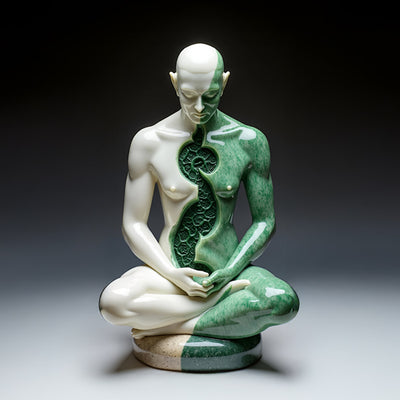
Worth naming here: not every buyer searching for a contemporary abstract stone sculpture actually wants stone. Some of the works people describe this way are cast in bronze with a stone-like patina, and some are cast in ceramic. A contemporary abstract ceramic sculpture behaves more like an interior object; it is lighter, more fragile, and better suited to a plinth indoors than a windswept terrace. If longevity outdoors matters, bronze, granite or a durable engineered stone will outlast a glazed ceramic every time.

Scale, Sightlines and Pedestal Height
The single most common miscalculation is scale. People measure the sculpture and the room, then forget the viewing distance. A contemporary abstract stone sculpture read from 30 feet (9 m) across a lawn needs far more mass than one you pass at arm's length in a hall. As a rough working rule, a piece seen from a distance should occupy a meaningful slice of the sightline, not sit as a small object marooned in a large view.
Pedestal height is where good placement is won or lost. Abstract forms are usually designed to be read at a specific eye relationship, and dropping a contemporary abstract stone sculpture onto a low plinth flattens the composition. For a seated or reclining abstract form, a lower base can be right; the Large Contemporary Abstract Reclining Figure Bronze Sculpture - 120cm at 120cm is a good example of a piece that wants a broad, low plinth so the horizontal line can stretch. An upright, vertical form is the opposite; it usually gains presence lifted closer to eye level.
When a piece is genuinely monumental, height solves itself. A form like the Monumental Contemporary Abstract Female Figure Bronze Sculpture - 220cm at 220cm reads at full body scale, so the ground itself becomes the pedestal and your job is clearing enough space around it to walk a full circle. A contemporary abstract stone sculpture rewards being seen from every angle, and a piece jammed against a wall loses half its intent.

Indoor Versus Outdoor: When Each Wins
Indoors wins when the surface finish is delicate, when you want the piece in daily close-up view, or when the material cannot take frost, salt or UV over the long term. Polished marble, fine carving detail and ceramic all belong inside or under cover. An interior also lets you control light precisely, which matters for abstract forms that live or die by shadow.
Outdoors wins when you have the distance to let a contemporary abstract stone sculpture breathe and a material built for it. Granite, basalt and bronze handle weather with grace, and many stones develop a patina over years that adds to them. The Getty Conservation Institute's work on outdoor stone is a useful reality check on how weathering, salts and biological growth affect exposed sculpture over time (Getty Conservation Institute). Plan drainage under the base, avoid trapping water in hollows, and think about a wax or sealing regime from day one rather than after staining appears.

Light, Backdrop and Contrast
A contemporary abstract stone sculpture is a shadow instrument. The curves and voids only speak when light rakes across them from one side rather than flooding them flat from the front. Indoors, a single directional spot or a wash from a window at an angle will carve depth into the surface. Overhead downlighting alone tends to kill the form and put dead shadow under the overhangs.
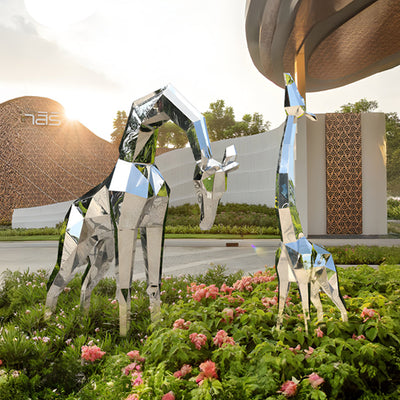
Backdrop is the other lever. A busy backdrop competes; a plain one lets the silhouette read cleanly. Pale stone against a dark wall or hedge, dark stone against a light rendered wall or sky, that contrast is what pulls the eye. Where the setting needs a piece that borrows movement from its surroundings rather than sitting as solid mass, reflective work such as the Large Contemporary Abstract Raindrop Cluster Sculpture - 250cm at 250cm wants sky, water or greenery around it to reflect.

Common Placement Mistakes We See in Commissions
For wider placement ideas, How to Place Contemporary Abstract Sculpture so It Actually Works is useful companion reading before finalising the setting and sightlines for your contemporary abstract stone sculpture.
- Too low, too small. The most frequent pairing. Buyers under-scale the piece for the space and then set it on a base that is too short to compensate.
- No walkaround room. Abstract work has no single front. Boxing it against a wall or hedge hides the angles that make it worth owning.
- Flat frontal light. Lighting straight on erases the shadow that defines the form. Aim for a raking angle.
- Busy backdrop. A cluttered wall or fussy planting steals attention from the silhouette.
- Wrong material for the site. Putting ceramic or fine polished marble on an exposed coastal terrace. Match the material to the weather it will actually face.
- Ignoring the base groundwork. A heavy stone piece needs a proper footing and, for large work, engineered fixing. Load and wind matter more than people expect.
Choosing the Right Piece: A Buyer's Shortlist
Work through these before you commit to a contemporary abstract stone sculpture:
- Where will it be seen from? Fix the primary viewing distance first, then size the piece to it.
- Indoor or exposed? This decides material more than taste does.
- What is the backdrop? Choose light stone or dark stone based on contrast, not just color preference.
- Can you light it well? If not, favor a form that reads on silhouette alone.
- Do you want figurative abstraction or pure form? Where you want a softened figure that reads warmer than a geometric abstract of the same size, the Large Contemporary Abstract Female Torso Bronze Sculpture - 140cm at 140cm sits closer to that language.
Commissioning Bespoke Abstract Work
Off-the-shelf is a fine place to start, but a bespoke contemporary abstract stone sculpture is where a commission often earns its keep, because you can tune scale, material and finish to the exact site. At Giant Sculptures we work on large-scale and bespoke pieces in bronze, stainless steel, stone and marble, and the conversation usually begins with the setting, not the object. Send us the sightlines, the backdrop, the light and how far away people will stand, and the form can be developed around those constraints.
If you are still gathering ideas, the abstract sculptures collection and the broader contemporary and modern sculptures range are the two best places to see how different forms handle scale. You will find figurative-leaning abstraction, pure geometric work and reflective metal pieces side by side, which makes it easier to see what your space is actually asking for. Whatever the material for your contemporary abstract stone sculpture, settle the placement decisions early. It is far cheaper to move a plan than a two-ton stone.