






























The part of a custom sculpture commission that surprises buyers is almost never the sculpting. It is everything the finished clay sets in motion: the weight of bronze poured, the hours a polisher spends on a single curve, the concrete footing nobody will ever see, and the crane sitting on a driveway for half a morning. Understand where those costs live and you can shape the piece intelligently instead of trimming it late, when trimming hurts.

At a Glance: What Actually Moves the Quote
Scale, because surface area and internal engineering climb faster than height does.
Material choice, since bronze, stainless steel and fiberglass carry completely different labor bills for the same form.
Finish complexity, from hand-chased detail and multi-tone patina to mirror polishing.
Engineering and installation, meaning armatures, base plates, footings, access and lifting equipment.
Schedule, because compressed timelines buy overtime, not miracles.
There is no list price for original work. Those five custom sculpture commission cost factors are the reason we quote each piece individually rather than publishing a headline figure that would mislead you.
Double the Height, Quadruple the Metal
Buyers often assume a 12 ft (3.7 m) figure costs twice a 6 ft (1.8 m) one. Geometry disagrees. Double the height and surface area roughly quadruples, and since cast bronze is hollow with a fairly consistent wall thickness, metal consumption tracks that surface area. Volume grows by a factor of eight, which is where the hidden work sits: a heavier internal armature, more mold sections, more wax to invest, more weld seams to chase, and a stainless steel base plate sized for real wind load.
Pour day: the moment a decision about height turns into a measurable quantity of metal.
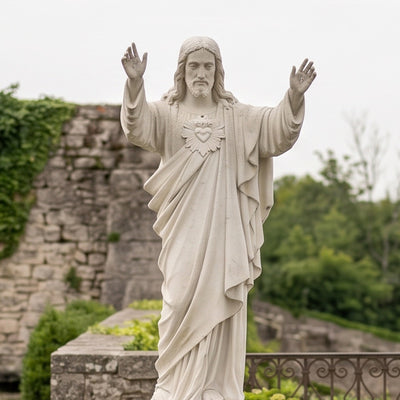
This is the single most useful lever in a custom sculpture commission. Ask for the cost at three heights before you fix the design. Sometimes a slightly smaller figure on a taller stone plinth reads bigger from the approach path and costs meaningfully less to cast. If you are weighing scale against silhouette, browsing finished work in our bronze figures and statues collection is a fast way to calibrate what a given height actually feels like in a garden or lobby.

The Maquette Fee Buyers Resist
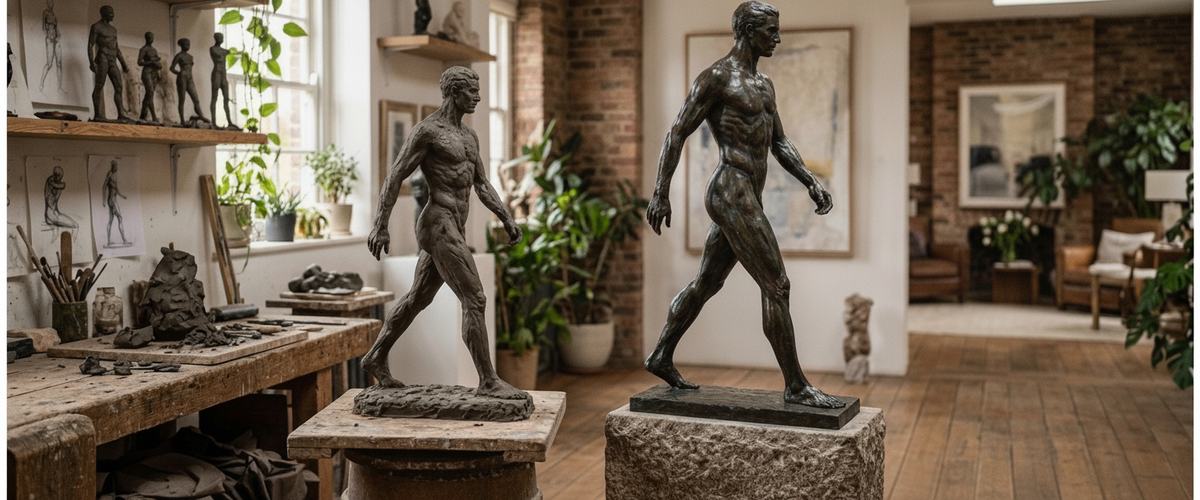
The line item most clients query is the maquette: a scale model, usually clay or plaster, made before anything is enlarged. It looks like an extra. It is the cheapest insurance in any custom sculpture commission contract. Every proportion argument, every "can the head turn a little more", every debate about whether the gesture works from the driveway rather than the terrace, belongs at maquette stage, where a change costs an afternoon of the sculptor's time instead of a re-sculpt at full size.
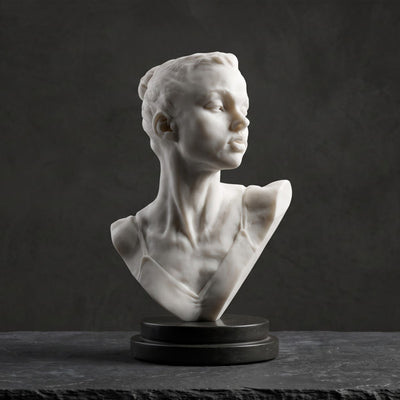
Portrait work makes the case plainly. On a memorial bust we modeled for a Texas family, the likeness only settled once we had the maquette in front of three relatives at once, and two rounds of small jaw and brow adjustments took an afternoon each. The same adjustments after enlargement and molding would have meant rebuilding a surface we had already finished. If a bust is the format you are considering, our bronze busts and heads collection shows how much likeness lives in small planes around the eyes and mouth.
Bronze, Stainless or Fiberglass: Three Very Different Labor Bills
One form, three materials, three unrelated cost structures. Choosing between them early is the quickest way to steer a custom sculpture commission budget.
Bronze is a foundry process. You pay for mold making, wax work, investment, pour, weld-up, chasing and patination. Detail is nearly free once it exists in the clay, so organic and figurative subjects suit it. The metal itself is a real commodity cost, and it scales with size.
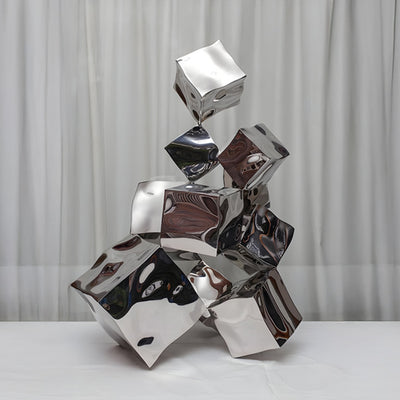
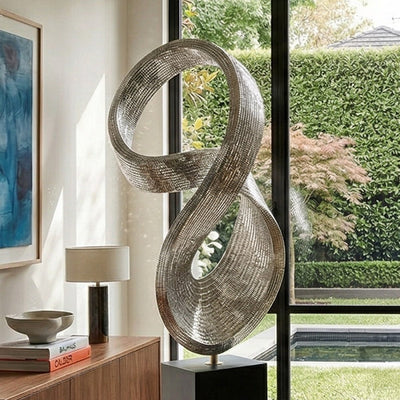
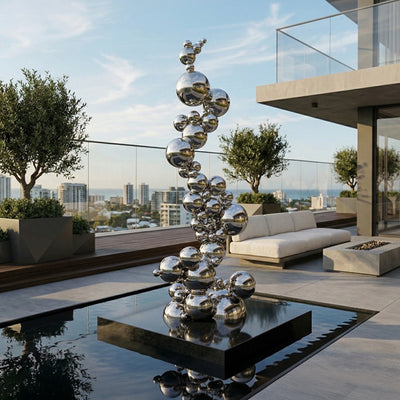
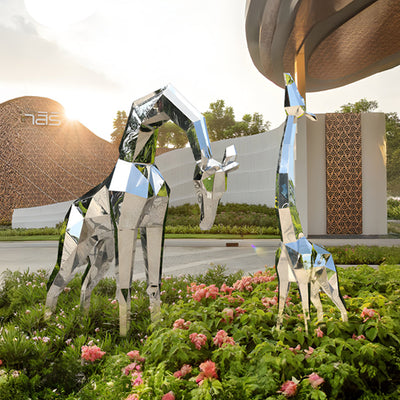
Stainless steel is fabrication. Cost concentrates in forming, welding and above all finishing: a mirror polish on a compound curve is measured in polishing hours, and those hours rise sharply with surface area. Coastal sites should specify grade 316 rather than 304 for its better chloride resistance, a distinction well documented in technical guidance on stainless steel grades. Corten sits in between, with lower finishing labor and a weathered surface that suits sculptural mass over fine detail.
Fiberglass is the lightest bill and the shortest life. It earns its place for interior installations, event work, and pieces that must be handled by two people without lifting gear. For a permanent outdoor custom sculpture commission in strong UV or salt air, it is not the material we would put a client's money into.

Foundry Weeks Against Fabrication Weeks
Time is one of the custom sculpture commission cost factors clients underestimate most. Lost-wax casting is a sequence of waits: molds cure, ceramic shells dry, patina needs settled temperature and humidity to behave. Fabricated stainless moves differently, with the bottleneck at forming and polishing rather than curing. Neither compresses well. When a client needs a piece for a fixed opening date, the extra cost usually shows up as second-shift labor or parallel mold work, not as a shortcut. The Royal Society of Sculptors' commissioning guidance is a sober read on why realistic timelines protect both sides.
Footings, Cranes and Site Access
For wider placement ideas, What Nobody Tells You About Commissioning Custom Bronze Animal Sculptures is useful companion reading before finalising the setting and sightlines.
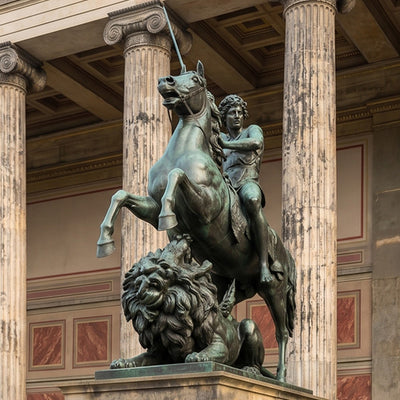
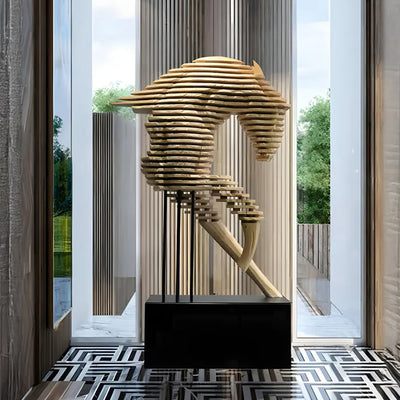
A large share of custom sculpture commission spend never touches the studio. Structural footings sized to the piece and the soil, anchor bolt patterns cast into concrete, engineered drawings where a local authority requires them, then lifting on the day. A large equine or animal piece can weigh several hundred kilograms, with a high and narrow center of gravity, so it needs both a correct footing and a plan for getting it there.
Installation day costs are set months earlier, by gate widths, gradients and overhead cables.
We learned the access lesson the hard way on a mountain property outside Aspen: the sculpture fit the terrace perfectly, and the gate pillars did not fit the truck. Measure the whole route before you sign, not the destination. Anyone considering the scale of pieces in our bronze horse statues collection should send us photographs of the gate, the driveway gradient and any overhead cables early, since it changes the installation figure more than the sculpture does.
Approval Gates: The Last Point a Change Is Free
Good contracts for a custom sculpture commission are built around gates, and knowing where they fall keeps costs predictable.
Concept and reference sign-off. Changes cost nothing but conversation.
Maquette approval. The last genuinely free gate. Proportion, pose and expression lock here.
Full-scale clay or fabrication mock-up. Changes are still possible, but they are chargeable.
Wax and mold stage. Altering the form means new wax or new mold sections, so revisions are quoted rather than absorbed.
Patina or finish approval. Sample-based. Repatination after signing off a sample is billable.
Installation sign-off. Triggers the final payment and the start of care obligations.
Contingency and Stage Payments
A fair custom sculpture commission contract spreads risk. Expect a deposit at commission, further payments released against approved milestones such as maquette and full-scale approval, and a balance held until the piece is installed and signed off. That retained final payment matters: it keeps the studio accountable for delivery and installation quality, not just casting. A sensible contingency allowance covers the unknowns that live outside the workshop, mainly ground conditions and access. If a quote has no contingency line at all, the risk has not vanished; it is simply waiting to be argued about later.

Commission Checklist Before You Sign
Costed options at two or three heights, so scale is a decision rather than an assumption.
Material and grade named in writing, including patina or finish specification.
Maquette stage included, with named approvers on your side.
A clear list of approval gates and what a change costs after each one.
Structural footing and fixing responsibility, stated as ours or your contractor's.
Site access survey: route width, gradient, overhead obstructions, ground protection.
Crating, freight, insurance and customs handling for international delivery.
Care schedule after handover, especially waxing intervals for outdoor bronze.
Giant Sculptures works on bespoke pieces at architectural scale, and the projects that run smoothly are the ones where custom sculpture commission cost factors were mapped before the clay was touched. Send us the site, the sightlines and the intended height, and we will come back with a tailored quote that separates sculpture, engineering and installation so you can see exactly what you are buying.