






































































































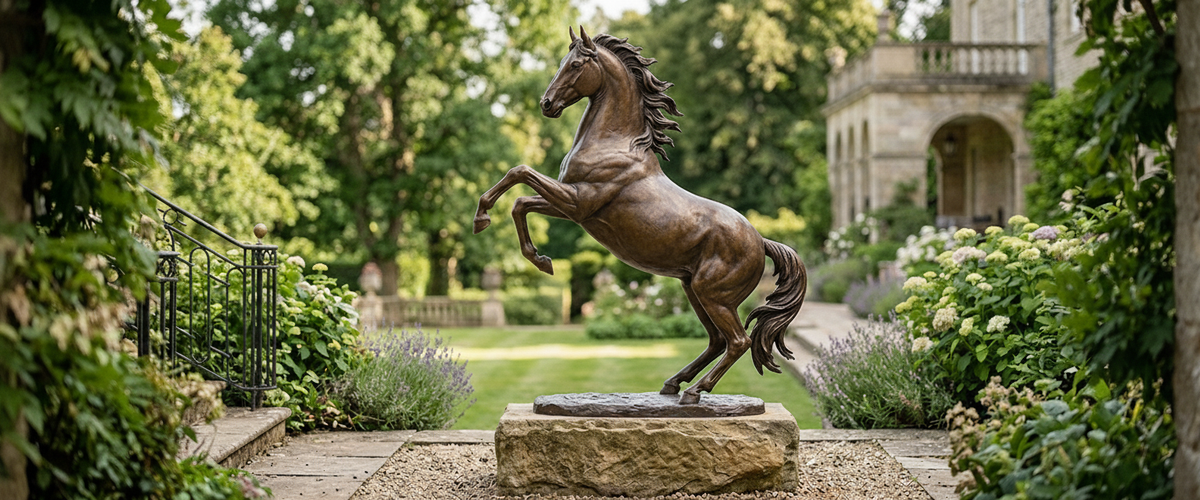

Ask a serious studio how much does it cost to commission a sculpture and it will refuse to give you a single number. You get a stack of stages instead: design, maquette, enlargement, fabrication, finish, shipping and installation. Each stage has its own cost logic, and the total sculpture commission cost only makes sense once you can read it line by line. This guide goes through every one of those lines and why scale and material swing the figure so hard, then shows you how to compare two quotes that look nothing alike.
At Giant Sculptures we quote bespoke work constantly, from life-size bronze figures to engineered stainless steel pieces for hotel forecourts. So what will your own sculpture commission cost come to? That depends on choices you control. The buyers who commission sculpture with confidence know which lines move, and why. They also know what it should cost to commission a sculpture properly, and where a cheap quote is quietly cutting corners.

At a Glance
Scale is the biggest lever. Volume and weight climb far faster than height.
Material moves the quote, but finishing and engineering often matter just as much.
Two honest studios can quote very differently. Compare what each price includes before comparing totals.
Fair payment schedules follow visible milestones, such as maquette approval and casting.
An accurate sculpture commission cost needs specifics: dimensions, site, material and deadline.
How Much Does It Cost to Commission a Sculpture? The Quote Line by Line
Every bespoke sculpture commission cost breaks down into roughly the same stages. If a studio cannot show you these lines, ask why.
Design and concept. Sketches, reference gathering and a digital model, with an agreed number of revision rounds.
Maquette. A small model in clay, wax or 3D print. This is where you change a pose cheaply.
Enlargement. Scaling to full size through digital scanning and milling or traditional pointing, plus the internal armature.
Fabrication. Casting, welding or carving, depending on material.
Finish. Chasing welds, patination, polishing and sealing.
Crating and shipping. Custom crates, freight, insurance and import paperwork.
Installation. Foundations, fixings, lifting equipment and structural sign-off.
The maquette line is the one buyers most often want to skip, and the one we defend hardest. A client commissioning a sculpture of a rearing horse for a ranch outside Austin changed the angle of the head three times at maquette scale. At full size, each of those changes would have meant reworking a clay surface taller than the sculptor standing next to it, and the sculpture commission cost would have climbed with every revision.
Double the Height and the Cost Multiplies
A 6-foot (1.8 m) figure scaled to 12 feet (3.7 m) is twice as tall but holds roughly eight times the volume. In bronze, that pushes the sculpture commission cost up fast: far more metal, more casting sections to weld and chase, and freight measured in tons rather than hundreds of pounds. Surface area roughly quadruples, so patina and polishing labor rise too. Past a certain height the piece also needs wind-load engineering and a proper foundation, which can add a line that did not exist at the smaller size.
Browse our bronze horse statues and the jump from life-size to over-life-size looks modest on screen. On a quote it is anything but modest. If budget matters, settle the height early, because every extra foot shows up in your sculpture commission cost.

Bronze, Stainless, Marble or Fiberglass: How Material Moves the Quote
Material is the next big swing in sculpture commission costs. For outdoor work, bronze is cast by the lost-wax process, which is labor-heavy but gives a piece that lasts generations outdoors and can be repatinated. Stainless steel is fabricated rather than cast; the metal is only part of the cost, because a mirror polish on complex curves eats workshop hours. Grade matters too, and the World Stainless association publishes clear guidance on why higher-alloy grades resist chloride corrosion better near the coast.
Marble brings the cost of a sound block, long carving time and the risk of hidden flaws, plus serious weight to ship and lift. Fiberglass sits at the lighter end and suits temporary event installs or interiors, but it will not match bronze or stainless for outdoor lifespan or long-term value. When the sculpture commission cost has to buy decades outside, in a Napa garden or a Dallas corporate plaza, we steer clients toward metal or stone.
Two Studios, One Brief, Two Very Different Numbers
Some gaps between sculpture commission costs from different studios are legitimate. One studio may include shipping, installation and engineering; another may quote ex-works and leave you to sort freight. Bronze wall thickness, the number of maquette revisions and foundry labor rates all vary. Some gaps are warning signs: no line-item breakdown, vague answers about alloy or steel grade, or reluctance to take responsibility for installation. Sculptor associations such as the International Sculpture Center are a useful place to read how commission agreements are typically structured before you sign anything.
Stage Payments That Track the Work
A fair schedule spreads the sculpture commission cost across payments tied to something you can see. Typically that means a deposit on signing to cover design, a payment on maquette approval, another when the full-size model is approved or casting begins, and the balance before shipping or on installation. Ask for photographs at each milestone. If a studio wants most of the money before you have approved a maquette, walk away.

Where Savings Stay Invisible, and Where They Show
Smart savings on sculpture commission costs rarely show in the finished piece. Adapting an existing pose instead of designing from scratch, choosing a classic patina, allowing a relaxed deadline instead of a rush, and sizing just below the point where heavy engineering kicks in all trim cost quietly. A bust is a good example of scale working in your favor; our bronze busts and heads carry real presence on a plinth without the freight and foundation demands of a full figure.
Cuts that show are the ones to refuse. Thin casting walls dent and crack. Cheap patinas streak within a few seasons. Unchased welds leave visible seams, and lower-grade stainless near salt air develops rust staining that no amount of polishing fully hides.
Before You Ask for a Quote: A Buyer's Checklist
Target height and footprint, in feet or meters
Photos and measurements of the site, indoor or outdoor
Preferred material, or a willingness to be advised
Reference images for pose, style and finish
Your deadline and how flexible it is
Who handles foundations, access and installation
Whether you want shipping and insurance included
Send those details and the answer to how much does it cost to commission a sculpture becomes a real figure rather than a guess. Start with our bronze figures and statues for scale and pose references, then ask Giant Sculptures for a tailored quote built around your site.
For wider placement ideas, Art Deco Bronze or Clever Fake? How to Read a Figure Before You Buy is useful companion reading before you lock in your sculpture commission cost and finalize the setting and sightlines.