






































































































Most portrait busts fail in the first conversation, not in the clay. Someone decides to commission a bust sculpture, sends over a folder of phone snaps from a wedding, and expects a sculptor to rebuild a jawline from an image shot from below with a flash. The likeness gets close and never quite lands, and nobody can explain why. The modeling is rarely the weak link. The brief is.

Key Takeaways Before You Commission a Bust Sculpture
Sittings beat photographs, but twelve correctly shot photographs beat two sittings squeezed into a weekend.
The clay review is your last cheap fix. Changes are free in clay and painful after casting or carving begins.
Decide the cut early: head only, head and shoulders, or a full bust with chest and arms. It changes weight, mood and mounting.
Marble, bronze and resin read differently even from an identical model. Pick the temperature you want, not the material you have heard of.
Socle height sets the eye line. Resolve it before the base is fabricated, not on installation day.
Payments should follow milestones, not the calendar. Ask how the commission invoice for a sculpture bust is staged.
Think in months, not weeks, from first sitting to final patina. A bust sculpture commission is a slow build by nature.
What a Sculptor Genuinely Needs: Sittings, or Twelve Photographs Shot Properly
Live sittings are still the gold standard when you commission a bust sculpture, because a sculptor is reading depth, not surface. The distance from the outer eye corner to the ear, the way the cheek fat sits over bone, the slight asymmetry that makes a face specific rather than handsome: none of that survives a wide-angle phone lens held at arm's length.
When sittings are not possible, and for memorial work they often are not, a disciplined photo set does the job. Most of the bust sculpture commissions we take on begin from photographs rather than a live model. We ask for a minimum of around twelve frames: straight-on, three-quarter left and right, both full profiles, a low angle, a high angle, and the back of the head. All at chest height, all with the same soft daylight, no flash, no smiling in some and not others. Add two or three older reference images for character and expression, plus a measurement or two if anyone recorded them. We have been handed folders of forty images with only three usable frames in them, because every shot was taken at a party from below. That single lesson saves more likenesses than any amount of skill later.

The Clay Review Is the Last Moment a Change Costs You Nothing
Every serious bust sculpture commission passes through a clay or plaster stage, and that is where you should be most demanding. Ask for photographs of the modeled head from the same angles you supplied, in the same light. Look at the mouth corners and the eyelids first; that is where likeness lives. If the nose reads slightly heavy or the hairline sits a quarter inch low, say so now.
Once a mold is taken and a bronze goes to the foundry, or a carver starts cutting stone, revisions stop being adjustments and start being rework. Clay is generous. Marble is not. Buyers who commission a bust sculpture and then treat the clay review as a polite formality are the ones who quietly live with a bust that is 90 percent right.
Head, Head and Shoulders, or Full Bust: Where to Cut the Figure
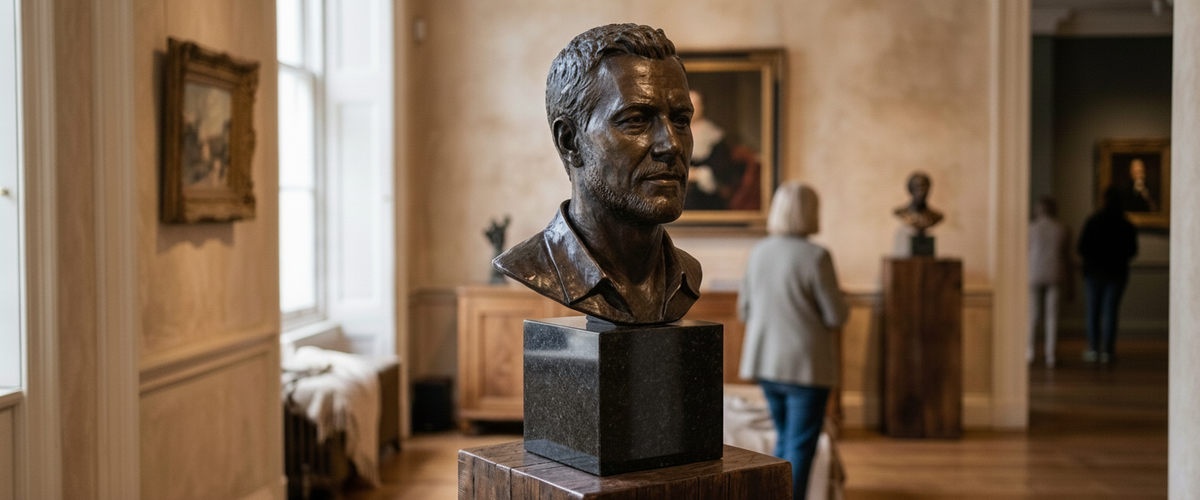
Where you cut the figure is one of the earliest calls in a bust sculpture commission. The Roman portrait tradition offers several conventions, from a tight cut at the base of the neck to a broad chest-and-shoulder truncation, and each carries a different attitude. A cut at the neck is stark and modern. Shoulders bring dignity and let clothing, a collar or a uniform do narrative work. A full bust with the beginning of arms reads as public and ceremonial; the bronze busts and heads that hold their own in a corporate lobby almost always include shoulders.
Scale follows the cut. A 70cm (about 28 inch) piece such as the Traditional Cowboy Guitarist Bronze Bust - 70cm sits comfortably on a console or plinth inside a room, while a 150cm portrait becomes architecture and needs floor space and a sight line to earn it: something like the Modern Elongated Female Bust Bronze Sculpture - 150cm only reads correctly with a clear approach and a wall of its own behind it. For interiors, we generally suggest going one step smaller than instinct says and one step taller on the socle.
Marble, Bronze or Resin: The Same Face, Three Different Temperatures
Material sets the temperature of the whole piece, so treat it as a real decision when you commission a bust sculpture rather than a default. Bronze absorbs light and holds detail with authority. Patina gives you real control over mood, from near-black through mid-brown to green, and cast bronze handles outdoor exposure across decades with only light care. Cast bronze portraits still rely on the lost-wax process, a method that has barely changed in principle for centuries, which is a reasonable argument for its durability.
Marble is cooler and quieter. It scatters light just under the surface, which flatters skin and softens edges, and it suits interiors and sheltered garden settings better than exposed coastal sites. Stylization also behaves differently in stone: a piece like the Faceted Gorilla Head Marble Bust - 120cm works precisely because faceting and white stone agree with each other, where the same planes in bronze would fight the patina. Resin has a place for lightweight display, temporary installations and upper-floor mounting where load is a real constraint, but for a portrait meant to outlive its owner we steer anyone commissioning a bust sculpture toward bronze or stone. If you are weighing the two, the marble busts and torsos range is a useful reality check on how differently the same subject can feel.

Socle Height and Eye Line: The Mounting Call That Gets Left Far Too Late
Plenty of people commission a bust sculpture and leave the mounting question until the crate is already in the hallway. A portrait bust wants to meet the viewer's gaze, or sit just above it. That means the total height of socle plus sculpture, not the sculpture alone, is the number that matters. For a standing viewer, aim to bring the sculpted eyes to roughly adult eye height or a few inches above; drop that in a seated dining room and the bust starts to loom.
Get the material of the socle decided at the same time. Dark granite disappears and lets bronze float. White marble competes with a marble bust unless the profile is kept simple. If a masonry pier is being built on site, send us the drawing before the mason starts. A pier that sets the eye line even a few inches high is a beautiful piece badly presented, and nobody tends to notice until it is grouted in and immovable.
Stage Payments and the Commission Invoice for a Sculpture Bust
Milestones, not months. A sensible commission invoice for a sculpture bust is broken into stages tied to work you can actually see: brief and reference approval, clay modeling and review, casting or carving, finishing and patina, then crating and delivery. Each stage releases against sign-off, which protects both sides and gives you a natural checkpoint to comment. Ask for that staging in writing at the quote stage, so the commission invoice, sculpture bust specification included, sits on one document with your review dates.
Budget on a bust sculpture commission depends on material, finished scale, the complexity of the likeness, mold and foundry work, socle engineering, finishing and installation, so any honest figure comes from a tailored quote rather than a published band. Ask what is included in crating and freight, who handles installation, and what happens if you request a change after clay approval. Clear answers to those three questions tell you a great deal about a studio.
Months, Not Weeks: The Honest Timeline
A bust sculpture commission moves through reference gathering, modeling, review, mold-making, casting or carving, chasing and assembly, then patination or polishing. Bronze adds foundry scheduling; marble adds carving time that no one can compress without hurting the work. Plan in months and build slack around any show or anniversary. If a deadline is fixed, tell us at the enquiry stage rather than halfway through modeling, because sequencing decisions change when a date is genuinely immovable.

Your Bust Sculpture Commission Checklist
Twelve or more reference photographs, chest height, soft daylight, all angles including profiles and the crown.
Two character shots that show the expression you actually want.
A decision on cut: neck, shoulders or full bust.
Final display location, indoor or outdoor, coastal or sheltered.
Material chosen for the mood and the environment, not the brochure.
Socle height, material and fixing method confirmed before fabrication.
Written milestone schedule and a named clay review date.
Delivery access noted: doorway widths, stairs, crane or forklift needs.
Giant Sculptures works on bespoke portrait and animal busts at every scale, from interior pieces to over life-size bronze for public and commercial sites. If you are still deciding on form, browse the wider bust and torso sculptures collection first; seeing where existing pieces cut the figure is the fastest way to sharpen your own brief before you commission a bust sculpture of your own.
For wider placement ideas, Bronze Bust Sculpture Sale: Read the Plinth Before You Read the Price is useful companion reading before you finalize the setting and sightlines for a bust sculpture commission.