

























Almost every new client arrives with the subject already decided: a rearing horse, a family dog, a bust of a founder. We love that part too. But the decisions that make or break a custom sculpture commission are usually sitting outside, in the patch of lawn, courtyard or hotel forecourt where the piece will live for the next century. Get the site right and the subject falls into place. Get it wrong and even a beautifully modelled bronze looks lost, or worse, never makes it through the gate.

At a Glance
Start with the site: viewing distance and light decide scale and finish before anyone sketches.
Expect handling: public and hospitality pieces need tougher patinas and safer edges.
Match the proof to the question: a maquette tests form, a render tests placement, a full-size mock-up tests scale.
Cost lives in logistics too: access, crane reach and foundations can move a quote as much as material does.
Measure early: missing site data is the most common reason a sculpture commission stalls.
The Subject Can Wait: Why Our First Studio Meeting Happens on Site
For wider placement ideas, What Drives Bronze Sculpture Cost? Reading a Foundry Quote Line by Line is useful companion reading before finalizing the setting and sightlines for your custom sculpture commission.
When we can, the first real conversation happens where the sculpture will stand, either in person or over a video walk-through with the client holding a phone and a tape measure. A photograph taken from the kitchen window tells us nothing about the slope behind it. A walk-through does.
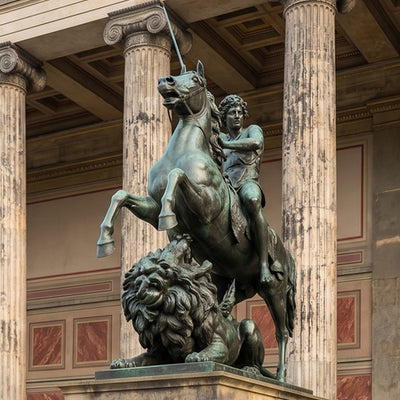
One Napa client's sculpture commission centered on a life-size bronze stallion at the end of a long gravel drive. On the call we noticed the drive narrowed to a single stone bridge. That one observation changed the casting plan, the shipping crate and the installation day. The horse still reared; it just arrived in a different way.
Measuring the narrowest access point before any sketching begins.
Viewing Distance, Light and Weather: The Three Facts Every Brief Needs
Viewing distance sets scale, and it is the first number we ask for on any custom sculpture commission. A figure seen from a terrace roughly 15 feet (4.5 m) away can be life-size and read beautifully. The same figure viewed from a porch 150 feet (46 m) across a Texas pasture shrinks to a garden ornament. For long sightlines we usually recommend going larger than instinct suggests, often well over life-size, and our bronze horse statues show how strongly silhouette carries at distance.
Light decides surface. A north-facing courtyard in Manhattan flattens fine detail, so we push deeper modeling and a lighter patina. Hard California sun sharpens every shadow and can make polished stainless steel glare. Weather decides material and maintenance: salt air in the Hamptons, freeze-thaw in Aspen and desert UV each favor different finishes. Bronze is forgiving outdoors, but it still benefits from regular waxing, a routine the National Park Service Conserve O Gram series covers well for outdoor metals.

Who Will Touch It? Crowds, Climbers and the Case for a Tougher Finish
A sculpture in a private walled garden gets admired. A sculpture in a hotel lobby gets patted, leaned on, photographed and occasionally climbed. That difference matters more than most briefs admit.
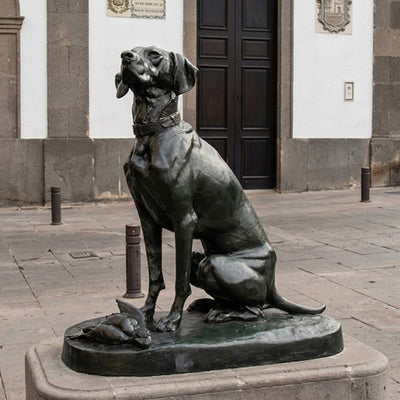
For a high-traffic sculpture commission we specify harder-wearing patinas, rounded edges at hand height and internal armatures rated for unplanned loads. Expect visitors to rub the nose of a bronze dog until it shines gold; some clients love that, others want it avoided. Smaller animal pieces, like those in our bronze cat statues collection, often end up in exactly this kind of much-touched setting, which is why we discuss handling before patina color.
Maquette, Scale Model or Render: Matching the Proof to the Site Question
Clients starting a custom sculpture commission sometimes ask for a maquette by default. It is a lovely object, and sculptors from Henry Moore onward have relied on small hand-held studies. A maquette answers questions about form. It does not tell you whether a 9-foot (2.7 m) figure will crowd your entrance.
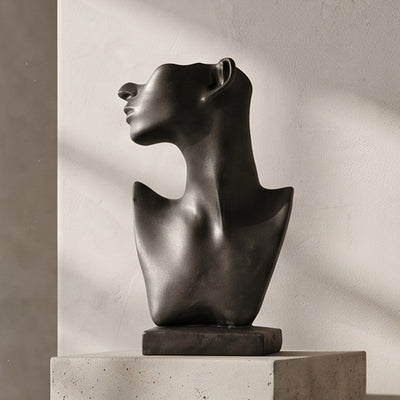
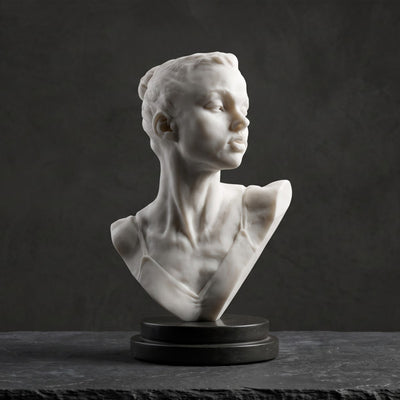
Maquette: best for pose, gesture and expression. Ideal for portrait work like bronze busts and heads.
Digital render on site photos: best for placement, sightlines and proportion against architecture.
Full-size cutout or frame: best for scale anxiety. A plywood silhouette on the lawn settles more arguments than any drawing.
A plywood stand-in answers the scale question in minutes.
Custom Sculpture Commission Cost Factors: Access, Crane Reach and Foundations
Buyers naturally focus on material and size, and those matter. But the custom sculpture commission cost factors that surprise people are logistical. Can a truck reach within crane distance? Is there overhead cabling? Will a rooftop terrace take the load, or does a structural engineer need to sign off? Does the ground need a reinforced concrete footing, and who pours it?
A large bronze installed beside a driveway is a straightforward day. The same bronze lowered over a house into a sunken courtyard may need a larger crane, road permits and a split casting assembled on site. None of that changes how the sculpture looks, yet all of it shows up in the quote. This is why Giant Sculptures prices each commission individually rather than publishing figures: material, scale, complexity, engineering, installation and finishing all interact.

Missing Measurements Are Why Commissions Stall in Month Three
In our studio the pattern is predictable. Month one is excitement and sketches. Month two is approvals. Month three is when foundry scheduling needs a final size, and suddenly nobody knows the gate width, the soil type or the height of the plinth. Work pauses while someone drives back out with a tape measure.
A custom sculpture commission moves fastest when the site file arrives complete on day one.
Before You Brief Us: A Site Checklist
Main viewing points and their distance from the sculpture position
Sun direction and any evening lighting plans
Narrowest access point: gates, doors, bridges, elevators
Ground type, slope and anything buried beneath
Overhead obstructions for crane work
Expected footfall and whether people will touch the piece
Plinth or base preferences, with heights
Local climate notes: salt, frost, heat, pollution
Send us that list with a handful of photos and a rough idea of subject, and we can start talking seriously about scale, material and approach. Browse our bronze figures and statues for a sense of what reads well at size, then let the site shape the rest of your custom sculpture commission.