






































































































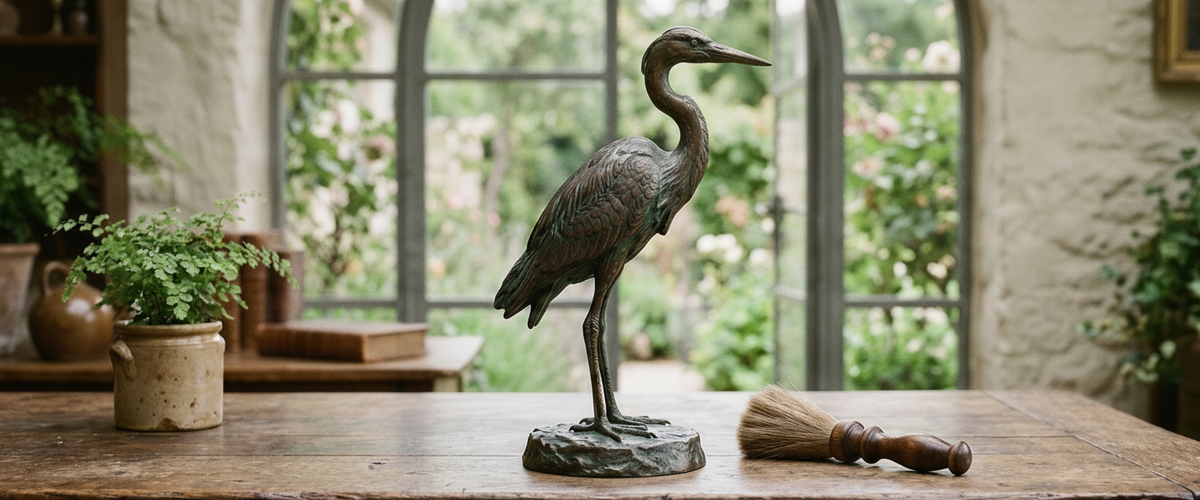

Weather rarely ruins an old bronze. Well-meaning owners with a tin of brass polish do. If you want to clean old bronze sculpture properly, the first job is restraint: work out what that dark, uneven surface actually is before a single cloth touches it.

Quick Answer
Dark brown or green color that is even, hard and smooth is usually patina. Leave it.
A dull, cloudy or sticky film is tired wax or grime, and that is what you clean.
Powdery pale green spots that return after wiping may be bronze disease. Stop and call a conservator.
Use distilled water, a soft brush and pH-neutral soap, then protect with microcrystalline wax.
Never use wire brushes, metal polish, vinegar or a pressure washer.
Patina, Tired Wax or Plain Grime? Diagnose Before You Clean
Look at the sculpture in daylight and from a low angle. Patina reads as color living in the metal: chocolate brown, olive, blue-green, sometimes nearly black in the recesses where the foundry or decades of weather darkened it. It feels smooth and does not transfer to a white cotton cloth. Grime sits on top. It is gray and greasy, usually thickest on upward-facing surfaces like shoulders, antlers and the backs of animals. Old wax is the third suspect. It turns milky, traps dust and can feel tacky on a warm afternoon.
A simple test: dampen a cotton swab with distilled water and roll it gently over a hidden area, such as the underside of a base or the back of a leg. Gray on the swab means dirt. Brown or green means you are lifting surface, so stop there. Repeat this test every time you clean old bronze sculpture, even a piece you have cared for over many years.
Gray on the swab is dirt. Brown or green is patina, so stop.
Why Historic Patina Is Worth Protecting
A 19th-century foundry patina, or eighty years of slow outdoor weathering, cannot be bought back. Repatination is possible, and our metalworkers do it routinely on bespoke commissions, but on an antique bronze a fresh chemical patina reads as new. Appraisers and collectors price it that way. Polishing an old piece back to bright metal is the fastest way to make a period bronze look like a reproduction.
That is the heart of how to clean old bronze sculpture without removing patina: you clean the surface of the patina and never clean through it.

Powdery Pale Green Spots Mean Stop
Not all green is good green. Hard, even verdigris on an outdoor figure is normal. Small, soft, pale green spots that look like talc, sometimes with pitting underneath, can signal bronze disease. This chloride-driven corrosion keeps feeding itself in humid air. Scrubbing spreads it, and waxing over it seals the moisture in. Photograph the spots, keep the piece dry, and leave this one to a trained conservator.
Our Studio Routine to Clean Old Bronze Sculpture
When an older piece comes into our studio for assessment, the routine is deliberately boring.
A soft natural-bristle brush lifts loose dirt without scratching the patina.
Dust first. A soft goat-hair or hog-hair brush lifts loose dirt without scratching. Work from the top down.
Wash with distilled water. Add a few drops of pH-neutral, non-ionic soap. Skip tap water: in hard-water areas it dries into chalky rings that show badly on a dark patina.
Rinse and dry. Rinse with clean distilled water and pat dry with lint-free cotton. Let crevices air-dry fully, ideally overnight.
Wax thin. Brush on a very thin coat of microcrystalline wax, let it haze, then buff with soft cotton. Outdoor pieces often get a heated wax application, which bonds better but is best left to a professional.
The same sequence answers how to clean a bronze sculpture of any age. With old work you simply go slower and test every step on a hidden area first.

How to Clean Outdoor Bronze Sculptures Versus Indoor Pieces
Indoors, the enemies are dust and fingerprints. Skin oils and sweat carry acids and salts that slowly mark unwaxed bronze. That is why a lobby piece from our bronze figures and statues needs fresh wax on the hands and feet, where people touch it, more often than anywhere else. A dry brush weekly and a wax refresh once or twice a year is usually enough.
Outside, the chemistry is harsher. Acid rain draws pale streaks down the patina, and bird lime is acidic enough to etch spots if it sits for weeks. Soften droppings with distilled water and lift them. Never scrape. Coastal gardens from the Hamptons to Malibu collect salt that needs a gentle rinse after storms. For large pieces, say a 6-foot (1.8 m) figure from our bronze garden statues, plan an annual wash and hot wax, and check the base fixings at the same visit.
Not every bronze-colored piece is cast bronze, either, and the material decides the routine. A tall architectural accent such as the Quoin Bronze Reeds Sculpture - 400cm stands 400 cm (about 13 feet). It is fiberglass with a bronze finish, so it calls for a damp microfiber cloth and mild soap rather than metal-care products or hot wax.
Mixed-media pieces need the same caution. On a sculpture that pairs a clear resin body with bronze-finish detail, such as the Clear Stag with Bronze Antlers on Black Marble Resin Sculpture - 180cm, solvent-based wax could cloud the resin. Treat the antlers with a soft dry cloth and keep wax well away. Confirm the material before you open the wax tin.
The Shortcuts That Ruin Old Bronze
Most of the damage we see when owners clean old bronze sculpture at home comes from a handful of shortcuts.
Wire brushes and abrasive pads cut straight through patina and leave scratches that catch dirt forever.
Metal polish strips color and leaves residue in recesses that later turns white or green.
Pressure washers force water into casting seams and blast off loose patina. An old garden bronze that has been "freshened up" this way usually comes out striped with bare, salmon-pink metal wherever the jet lingered.
Vinegar, lemon and baking soda hacks are acids and abrasives with a friendly name.
Household spray cleaners often contain ammonia or chlorides, exactly what an old bronze does not need.

When to Put the Brush Down
Run through this checklist. If any line is true, hand the piece to a professional. In the US, the American Institute for Conservation runs a searchable directory. In the UK, the Conservation Register lists accredited specialists.
Powdery, pale green spots or active pitting.
Flaking, lifting or blistering patina.
Cracks, loose joins, or movement at the base fixings.
Old coatings that will not respond to water and soft soap.
Signs of past repairs, fills or gilding you cannot identify.
Documented provenance or significant value.
The owners who clean old bronze sculpture best do it rarely and gently, and they know when to step back. If you are planning a new piece, start with our bronze sculptures or talk to Giant Sculptures about a bespoke commission. We specify patina, wax and installation with long-term ownership in mind, so the bronze you buy now becomes the old bronze worth protecting later.
For wider placement ideas, How to Judge a Bronze Dragon Garden Statue by Its Scales, Seams and Patina is useful companion reading before finalising the setting and sightlines.