









































The color you approve in the studio is not the color you will live with. A bronze garden statue leaves the foundry with a patina applied hot, sealed under fresh wax, and photographed at its most flattering. Then rain, UV, irrigation overspray and whatever is growing above it all get a vote. Owners who understand that timeline stay calm in year two. The ones who don't call us in a panic about a green streak that is doing no harm at all.

Quick Answer: What Changes and When
Months 1 to 18: the sharpest visual shift in the life of a bronze garden statue. Foundry gloss dulls, hot browns settle, highlights soften.
Sun versus shade: the two sides of the same piece will not match, and that is normal.
Green streaking: usually surface copper salts or algae, not structural failure.
Care regimes: annual wax, occasional lacquer, or deliberate neglect. Each buys you something different.
Year 10: re-patination is a real option, but leaving it alone is often the better call.
Foundry Gloss to Garden Brown: The First Eighteen Months
Fresh patina is chemistry, not paint. A patineur heats the surface and works liquid compounds into it, then seals the result with microcrystalline wax while the metal is still warm. That wax layer is what gives a new piece its depth and slight sheen. Outdoors, it starts thinning within weeks.
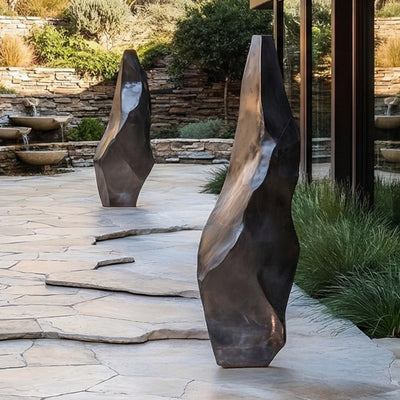
What you notice first is loss of gloss. The piece reads flatter, then browner, and raised areas begin to lighten as rain and wind polish them. Recessed areas darken because dust and moisture sit there longer. This differential is exactly what makes an aged bronze garden statue look like sculpture rather than a casting, and it is why patina belongs in the specification as part of the work rather than as a coating laid over it. The copper alloys involved corrode slowly and self-limit, which is why the Copper Development Association treats surface films on copper alloys as protective rather than destructive.
Foundry gloss gives way to garden brown across the first eighteen months outdoors.

Why the Shaded Face of a Bronze Garden Statue Ages Slower
Point a figure south in Texas or Arizona and the sunlit side will lighten noticeably faster. UV degrades wax, heat drives off moisture quickly, and the surface stays dry for most of the day. The north face is a different microclimate entirely: it stays damp longer after rain, holds dew into mid-morning, and grows a cooler, greener film.
We shipped a life-size figure to a vineyard property in Napa a few seasons ago where the client rotated the piece 180 degrees on its plinth after two years, wanting the "good side" facing the terrace. Within eighteen months the color balance had started to reverse. Bronze is honest about orientation. If you want an even tone, choose an open, well-drained position with light from more than one direction rather than a piece tucked against a north-facing wall.
Drip Lines, Rain Shadow and Green Streaks
Overhanging trees are the single biggest cause of the marks people worry about. Water that has run over leaves and bark arrives loaded with organic acids and tannins, and it lands in the same place every time. That gives you vertical green or black streaking on shoulders, backs and horizontal planes. Under a copper beech or a mature oak, expect it.
Drip lines from branches above land in the same place every time, and the streaking follows.
Rain shadow does the opposite. A wall, a pergola or a deep canopy keeps part of the piece permanently dry, so it never gets the natural rinse the rest receives. Dust and pollutants build up and the surface goes chalky. Both problems are placement problems, not material problems. Before you commit a bronze garden statue to a spot, stand there after a storm and see where the water actually goes. Historic England's technical conservation advice on outdoor metalwork makes the same point about sheltered and exposed zones on a single object.
Hebe, Deer or Elephant: Which Forms Show It First
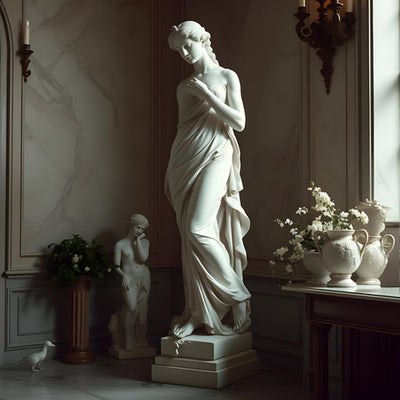
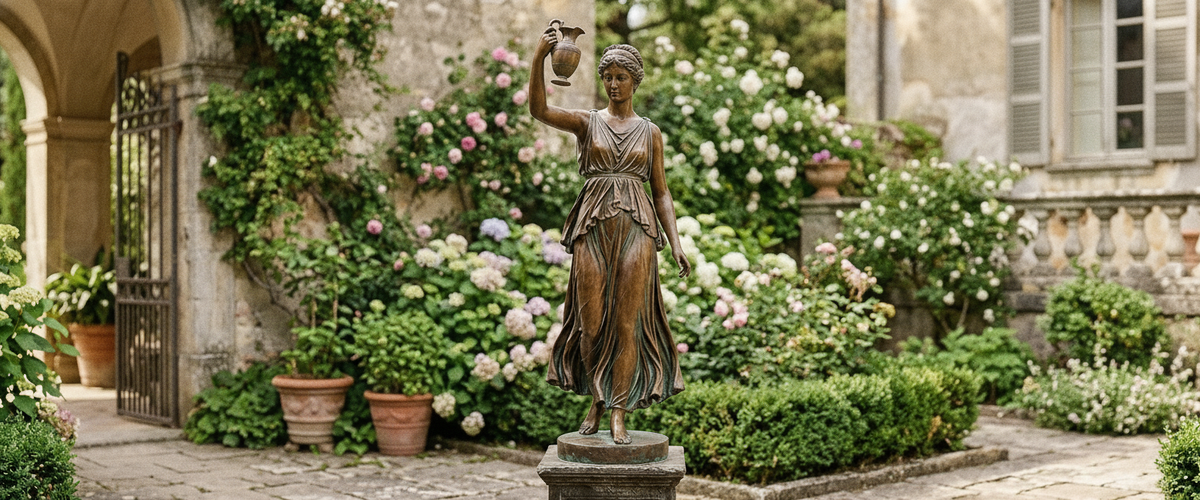
Subject matters more than buyers expect, because the form of a bronze garden statue decides where water lingers and where it runs off. A classical garden statue of Hebe in bronze, with her raised cup and deep drapery, has dozens of folds that trap water and dust; her patina develops fast and richly in the recesses while the raised knee and shoulder polish bright. She looks better for it.
A bronze deer garden statue behaves differently. Thin legs, antler tines and slender necks shed water rather than holding it, so the body ages evenly while the antler tips stay lighter. A grouped composition puts both behaviors on one base: in something like the Life-Size Classical Goddess and Deer Bronze Sculpture - 250cm, the drapery darkens into its folds while the deer's legs and antler tips stay pale, which is worth thinking about if the sculpture sits where you will see it daily.
A bronze elephant garden statue is the toughest case. Broad flanks are large uninterrupted planes, and any streak running down them is visible from fifty feet away. Big animal forms and tall figures need generous clearance from trees and roof lines, or the weathering pattern will map every drip point above them. At the height of the Monumental Classical Falconer and Bird of Prey Bronze Sculpture - 450cm, that clearance has to be settled before the plinth position is fixed, because a 450cm piece reaches into canopy that a life-size figure would sit well below.

Wax, Lacquer or Nothing at All
Annual wax is the regime we recommend for most privately owned bronze garden statues. Wash with clean water and a soft brush, dry the surface, then apply a thin coat of microcrystalline wax on a warm, dry day and buff it back. It keeps the patina stable, deepens color, and takes an afternoon.
Lacquer holds a specific color for longer and suits commercial venues and hotel courtyards where nobody is going to hand-wax anything. The trade-off is real: when lacquer eventually fails it fails in patches, and stripping it back is a specialist job.
Nothing at all is a legitimate choice, particularly for pieces meant to read as landscape rather than object. Expect a paler, greener, chalkier surface within five years. On a seated figure at hand height, such as the Life-Size Modern Seated Reader Bronze Sculpture - 170cm, hands and knees will polish golden from passing touch long before the rest of the surface settles, and most owners come to like it.
Verdigris You Wanted Versus Corrosion You Didn't
Good verdigris is tight, even and slightly translucent. It follows the form, sits in recesses, and feels smooth. Leave it alone.
The warning signs are different: bright powdery green that wipes off on a finger, pitting you can feel with a fingernail, or pale crusty blooms concentrated near fixings and drainage holes. That last one usually means water is sitting inside the casting or a dissimilar-metal fixing is reacting. Fix the drainage, not the surface.
Owner's Checklist
Rinse with clean water twice a year; skip detergents and never use a pressure washer.
Check drainage holes are clear each spring.
Move irrigation heads so they never spray the bronze; hard water leaves permanent white deposits.
Wax in late spring and again in early autumn in wet climates.
Photograph the piece annually from the same four positions so you can actually see change.
Keep leaf litter and soil off the base and plinth junction.

Year Ten: Re-Patinate or Leave It?
Re-patination means stripping back and reworking the chemistry, ideally by the studio that made the piece. It is worth doing when a color has gone genuinely blotchy, when a lacquer has failed unevenly, or when a sculpture has moved to a new setting and no longer suits its surroundings. It is not worth doing simply because the piece no longer matches its original photographs.
A ten-year-old bronze garden statue that has aged honestly in one position is usually the best-looking version of itself. Our advice to clients across the collection of bronze garden statues is to wait a full season before deciding; winter light flatters a patina that looked tired in August.
Commissioning With Weathering in Mind
If you are commissioning rather than buying from stock, tell us the site. Prevailing wind, tree cover, irrigation, coastal salt and whether the bronze garden statue sits in sun or shade all change the patina recipe we specify and the wall thickness and internal drainage we engineer. Giant Sculptures builds bespoke bronze work for private gardens, estates and commercial sites worldwide, and the pieces that age best are the ones where placement was discussed before casting began. Budget depends on scale, alloy, complexity of the form, internal engineering, finishing and installation, so ask for a tailored quote rather than working from an assumed figure. If you are still comparing subjects and scale, browse the wider range of garden statues and shortlist by silhouette first; color you can plan for, proportion you cannot fix later.
For wider placement ideas, A Large Bronze Horse Sculpture Needs Room to Move is useful companion reading before finalising the setting and sightlines.