






































































































A bronze on a mantelpiece can go ten years with nothing more than a soft cloth. Move the same casting into a Napa garden and it starts living by a calendar of winter rain, spring pollen, summer sprinklers and autumn leaf litter. The work needed to clean outdoor bronze sculptures is gentle and predictable once you know what each season asks for. Most of the damage we see comes from owners who try too hard, not from owners who do too little.

At a Glance
Late winter: Inspect the surface. Green streaks are usually harmless. Pale, powdery bloom needs a closer look.
Spring: Wash with soft water, pH-neutral soap and brushes that will not scratch.
Summer: Spot clean bird lime, pollen and sprinkler marks within days.
Autumn: Apply a fresh wax coat before the first frost.
Every few decades: Consider professional repatination. It is never an annual chore.
Why Garden Bronze Runs on the Seasons
Indoors, bronze sits in stable, dry air. Outdoors, its patina behaves like a living skin of copper compounds that reacts to moisture, sulfur and salt. The Copper Development Association explains how copper alloys weather from bright metal through browns toward green as those compounds build up. A good foundry patina is chemically fixed. The wax over it is sacrificial, though, and the weather wears it down a little every month. To clean outdoor bronze sculptures well, you renew that wax layer on a schedule and leave the patina alone.
Late Winter: Read the Surface Before You Touch It
Before you clean outdoor bronze sculptures in spring, walk around the piece on a dry day in February or March and photograph it from the same four angles you used last year. Comparing photos is the most reliable diagnostic tool an owner has.
Green streaks running down from drip points are normal weathering runoff. Leave them unless they bother you. A white, chalky film is usually mineral residue from hard water or salts wicking up from a stone plinth, and it often wipes back with a damp cloth. Pale green, powdery spots that return in crevices after cleaning are a different matter. They can signal active chloride corrosion, and that calls for the maker or a conservator rather than a scrubbing brush.

The Spring Wash: How to Clean Outdoor Bronze Sculptures Properly
Pick a mild, overcast morning so the metal stays cool and nothing dries in spots.
Rinse from the top down with a hose on a gentle setting. If your tap water is hard, finish with distilled or deionized water.
Add a few drops of pH-neutral soap to a bucket of lukewarm water.
Wash with a soft natural-bristle brush. Use a soft toothbrush for crevices.
Rinse thoroughly so no soap film is left to attract dust.
Dry with microfiber cloths, paying attention to pockets where water collects.
Leave the pressure washer, wire brushes, abrasive pads, brass polish, vinegar and ammonia cleaners in the shed. Each of them can cut through wax and patina in a single pass. Highly textured forms take the longest. Curling tentacles, feathers, sucker detail and deep folds all trap winter grit, so on a heavily modeled animal piece, budget an extra half hour for the toothbrush work.
Summer Spot Cleaning Before Marks Etch
In summer, the easiest maintenance is catching marks early. Bird lime is acidic, and on a hot wax coat it can leave a dull ghost within a week. Lay a damp cloth over the deposit for a few minutes, then lift it away without scraping. Wash off tree sap and heavy pollen the same way.
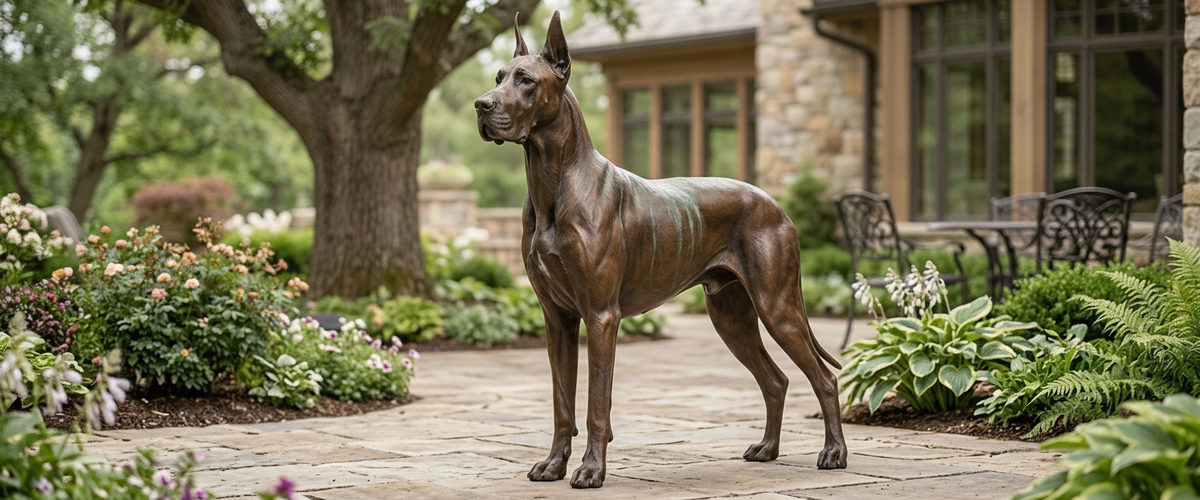
Broad, horizontal surfaces become perches, which is worth weighing when you decide where a larger animal piece will stand. The long, level back of a standing hound such as the Large Contemporary Great Dane Dog Bronze Sculpture - 150cm, about 4 feet 11 inches (150 cm) tall, is an inviting landing spot under a tree line, so either site it in open lawn or plan on a quick look every week or two in nesting season.
Sprinklers do slower but more stubborn harm. One client in the Hamptons sent us photos after the first summer showing a white crust along one flank of a pair of garden bronzes. A single sprinkler head was hitting them twice a day with hard water. Turning that head ten degrees solved a problem that no amount of cleaning would have fixed.

The Autumn Wax Coat
Wax is what carries a bronze through frost, salt air and wet leaf litter. After a final wash, and once the metal is completely dry, apply a thin coat of microcrystalline or bronze-specific paste wax with a soft brush. Let it haze, then buff it to a low sheen. Two thin coats protect better than one thick, sticky one.
In our studio, finishers apply hot wax by warming the metal so the wax flows into the surface. It gives a deeper result, but it is skilled work. Once a casting rises well above head height, as the Large Contemporary Dual Dragon Bronze Sculpture - 250cm does at roughly 8 feet 2 inches (250 cm), scaffolding and access join the list, and an annual professional visit is often the sensible choice.
Coastal and Sun-Belt Gardens Need a Tighter Schedule
Salt is the quickest route to trouble, and it changes how often you need to clean outdoor bronze sculptures. In Malibu, coastal Florida or anywhere you can taste the sea air, rinse with fresh water monthly and wax in both spring and autumn. Hot, dry climates in Texas or Arizona bring a different problem. Wax softens in the afternoon heat and picks up dust, so wash in the early morning and always wax onto cool metal. Inland gardens with steady, mild rain can usually manage on a single annual cycle.
Repatination Comes Round Once in Decades
Over many years, even a well-kept patina will shift in color. Repatination means stripping the surface and rebuilding the color with heat and chemistry, and it belongs with the foundry or a specialist. If the wax routine is followed, most owners will think about it once in a generation, if ever. When we make bespoke commissions, Giant Sculptures records the patina recipe so a future refresh can match the original.

A Buyer's Checklist for Low-Maintenance Garden Bronze
If you have not bought yet, a few decisions now will shape how much effort it takes to clean outdoor bronze sculptures later.
Ask about the finish: Find out which patina and wax the piece leaves the foundry with.
Check drainage: Make sure the plinth sheds water instead of letting it pool against the base.
Site it with care: Keep it clear of sap-dripping trees, sprinkler arcs and favorite bird routes.
Match form to effort: If you want the lightest possible routine, a continuous, open surface such as the Bronze Abstract Flowing Ribbon Sculpture Brass - 100cm, at about 39 inches (100 cm), sheds rain and wipes clean in minutes. Smooth pieces across our bronze abstract sculptures collection behave the same way. Deep undercuts take longer.
Plan for scale: For anything in our large bronze sculptures range, plan for professional access and servicing.
Budget depends on material, scale, complexity, engineering, installation and finishing, so request a tailored quote. Browse our bronze garden statues, or talk to us about a commission built for your climate from the first casting.
For wider placement ideas, Where Should a Bronze Mermaid Sculpture Sit? Start With the Water is useful companion reading before finalizing the setting and sightlines.