































A bronze is one of the few artworks people buy without ever seeing the original. The clay or wax figure that bronze sculpture artists model by hand is usually cut apart, recycled or shelved long before the metal reaches your terrace. The piece you own is a cast made by a team. That is no reason for suspicion. It is a reason to ask sharper questions, because the best bronze sculpture artists stay involved wherever the work can drift from their intent. The weaker ones hand over the model and hope.
Quick Answer
The artist's original (clay, wax or a digital sculpt) holds the creative decisions. The bronze translates it.
Mold-making, wax work and the pour belong to the foundry, and that is normal.
Chasing and patina show whether the artist came back to the piece.
Large outdoor bronzes need structural engineering as much as artistry.
A well-built crate tells you more about a studio than any free shipping banner.

The Original Is the Artwork; the Bronze Is Its Translation
Every gesture, proportion and surface mark is decided in the soft original. Bronze records those decisions with ruthless honesty, including the mistakes. That is why the modeling stage is where your money is really going, even though the metal makes up most of the visible cost.
Scale complicates things. Many large commissions now start as a smaller maquette that is 3D scanned and enlarged. In our studio, the most common disagreement on a commission happens right here: a face that reads perfectly at 24 inches (61 cm) can look slack at eight feet (2.4 m). Only the sculptor can fix that. A software setting cannot. If the artist does not rework the enlarged model by hand before molding, the finished bronze is a magnified sketch.
Molds, Wax and the Pour: Why Foundries Own These Stages
Once the original is approved, the foundry takes over. A flexible rubber mold is made over the model and backed by a rigid jacket. Hollow wax copies come out of it, get fitted with channels for the metal, then dipped repeatedly in ceramic slurry. The wax is melted out, and molten bronze goes in above 2,000°F (about 1,100°C). The Metropolitan Museum's account of ancient Greek bronze technique shows how little the core lost-wax logic has changed in over two thousand years.
Sculptors have rarely poured their own metal. The furnaces, safety systems and specialist crews behind a large pour are a separate trade, and a good foundry is a collaborator. What matters to a buyer is whether the artist checked the waxes. A wax is the last soft stage, so a sharp eye can still restore a softened edge or a lost fingerprint before it becomes permanent metal.
The wax stage is the last chance bronze sculpture artists have to correct the surface before it turns to metal.
Chasing and Patina: Where the Artist's Hand Returns
Large bronzes come out of the shell in sections. They are welded together, and the seams are ground and chased back into the surrounding texture. This is where the most careful bronze sculpture artists come back to the foundry. Done well, you cannot find the joins. Done hurriedly, a polished band runs across a carefully modeled muscle like a scar.
Patina is the other moment of truth. Colors are built with heat and chemical solutions brushed or sprayed onto warm metal, then sealed with wax. The same recipe looks different on every pour. Artists who attend the patina session make live decisions about depth and contrast; artists who approve from a photo accept whatever the foundry's default produces. Either way, that wax layer needs renewing outdoors, and the Getty Conservation Institute publishes useful research on how outdoor metals age.

Five Questions to Ask Bronze Sculpture Artists Before You Commission
Who reworks the enlargement? You want a named person, ideally the sculptor, not "the scanner handles it."
Did the artist approve the waxes in person? Ask how many rounds of corrections were made.
Who chased the seams? Ask to see close-up images of joins on a previous large piece.
Was the artist at the patina? Ask for test tiles from the same metal and recipe.
What alloy and wall thickness were used? Silicon bronze is the usual choice for outdoor work. Any studio should answer without hesitating.
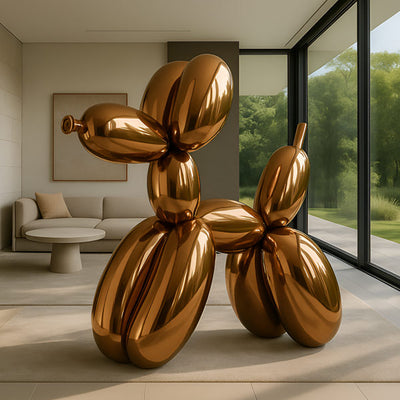
Read listings closely as well. "Bronze" in a product title sometimes describes a color rather than cast metal. For an interior lobby where bronze is an accent rather than the structure, a resin piece such as the Clear Stag with Bronze Antlers on Black Marble Resin Sculpture - 180cm carries the warm tone without the weight, footings or patina maintenance of cast metal. The same is true of the Bronze-Maned Guardian Lion on a Bird & Branch Column Resin Sculpture - 120cm, where the bronze lives in the finish of the mane rather than in the material underneath. Both suit sheltered interiors well, but they are a different purchase from a foundry-cast figure. When you want the metal itself, start with our bronze sculptures collection.
Large Outdoor Bronzes Need an Engineer Too
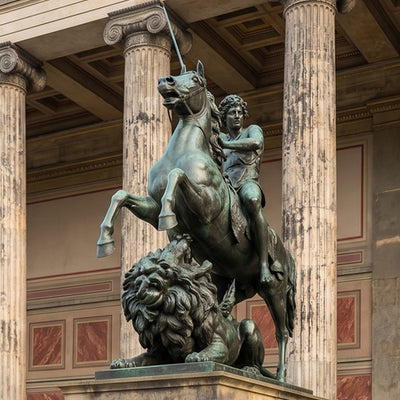
Once a figure passes life size, even experienced bronze sculpture artists share authorship with an engineer. A life-size bronze can weigh several hundred pounds (well over 100 kg) and act like a sail in wind. Internal stainless steel armatures, base plates, anchor bolts and concrete footings decide whether a raised arm or a rearing horse survives decades of weather.
Site matters. A coastal garden in the Hamptons faces salt air and winter gusts. A slope in Aspen carries snow load against the base. On a pair of herons we shipped to a lakeside property in Connecticut, the slender legs were redesigned with internal steel after engineering review, and the client never saw the change. That is the point. Good engineering is invisible. For heavier figures, our large bronze sculptures are planned with foundations in mind from the first conversation.
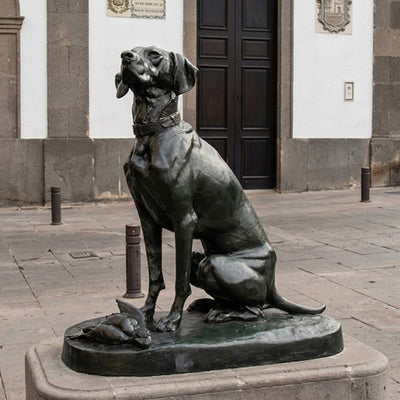
Animal subjects are a useful test. A four-legged bronze balances its weight across slim supports, so ask how the legs are reinforced before you commit to anything from our bronze animal sculptures.

Free Shipping on Large Pieces: What the Crate Tells You
Plenty of buyers type "bronze sculpture artists free shipping large pieces" into a search bar, and the offer sounds simple. Freight for a heavy bronze is never free; the cost is built in somewhere. What matters is what it covers.
A careful studio builds a custom timber crate around each piece. The bronze is bolted to the base through its own mounting points, padded with foam at structural contact points, and kept clear of straps that would scuff the patina. Export crates use heat-treated wood to meet international phytosanitary rules. Lifting points are marked, and the crate opens from the side that suits your site. A bronze that arrives in a generic box packed with loose foam has told you how the rest of the process went.
Before you buy, ask whether the price includes insurance, delivery to the placement spot rather than the curb, and crane or installation support. When Giant Sculptures quotes a bespoke bronze, crating, freight and installation are discussed in the same conversation as the patina, because they all affect the finished result. Budget depends on material, scale, complexity, engineering, installation and finishing, so request a tailored quote rather than comparing headline numbers. Garden buyers can start with our bronze garden statues and bring the site details to a commission call.
For wider placement ideas, Best Bronze Tabletop Sculptures: What Holds up at Arm's Length is useful companion reading before finalising the setting and sightlines.