












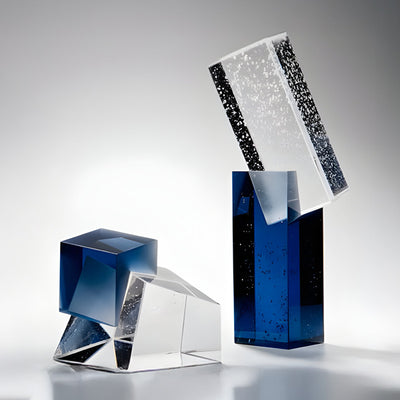
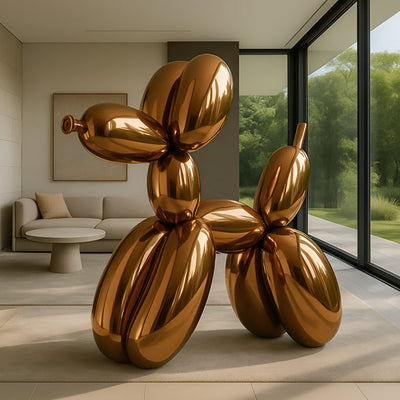
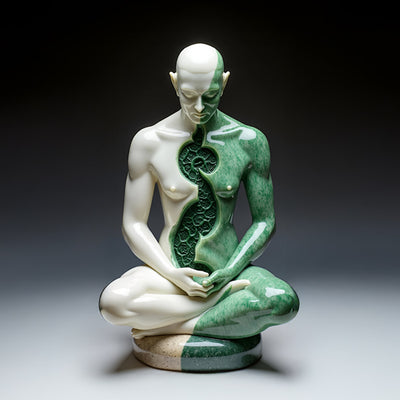
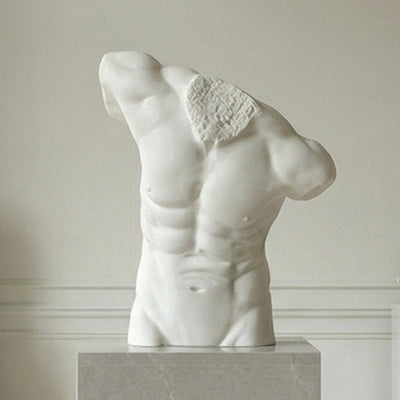


















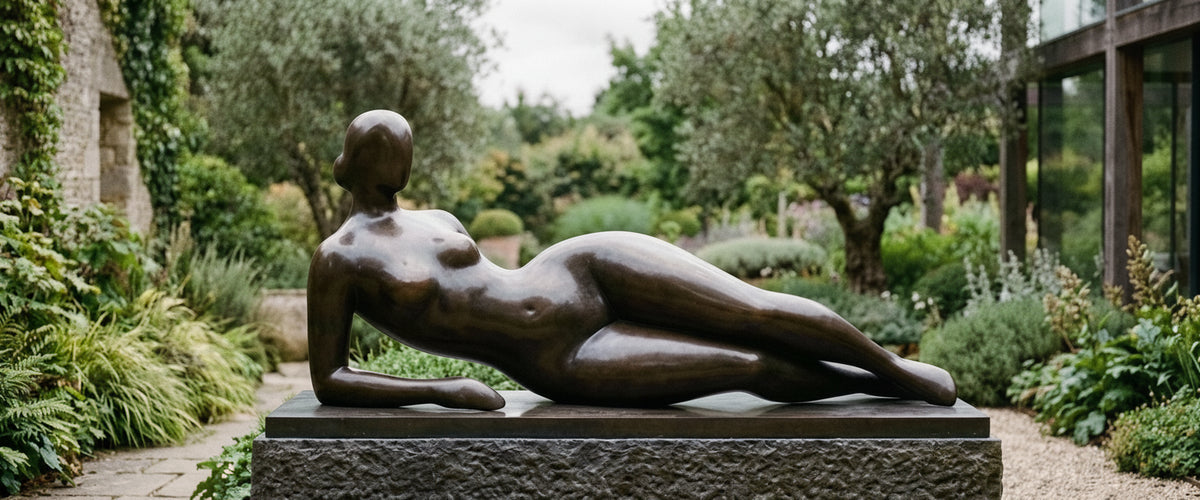

Two buyers can point at the same bronze torso and call it two different things. One says modern, one says contemporary, and both feel right in the moment. The difference between modern and contemporary sculpture is not a hair-splitting exercise; it changes what a piece is trying to do in a space, and that in turn changes where you should put it. Get the category and the placement wrong together and even a beautifully cast figure can look stranded.
We field this question constantly from designers and private collectors furnishing a new build or a garden overhaul. The difference between modern and contemporary work trips up smart buyers all the time. So let us settle the terms first, then spend most of our time on the part that actually decides success: where the work goes, how high it sits, and what sits behind it.

Key Takeaways
- Modern sculpture broadly refers to work from roughly the 1860s to the mid-twentieth century, driven by movements like abstraction, Cubism and Surrealism.
- Contemporary sculpture means art made in our own time, with no single house style and a wide range of materials and intentions.
- The difference between modern and contemporary matters less than how a piece reads in a room; scale, sightlines and pedestal height do the heavy lifting.
- Bronze, stainless steel and Corten each behave differently under light and against different backdrops.
- The most common commissioning mistake is choosing a piece before deciding where it lives.

What the Difference Between Modern and Contemporary Actually Means
Modern is a period term. It describes art from around the 1860s through to the mid-1900s, the era that broke figure and form apart and let sculptors chase idea and gesture rather than strict likeness. Think of the reduced, essential shapes you associate with early abstraction. The Museum of Modern Art collection is a useful map of how that thinking moved from realism toward pure form.
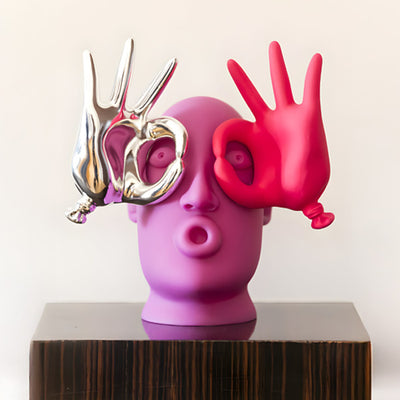
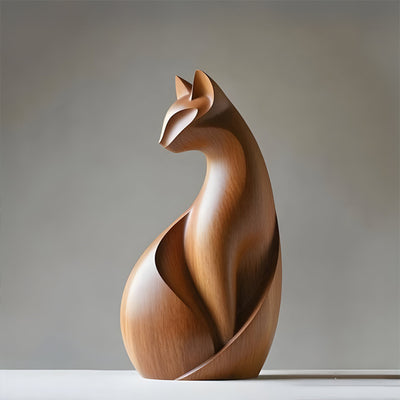
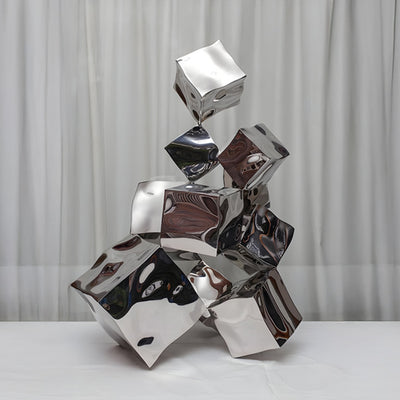
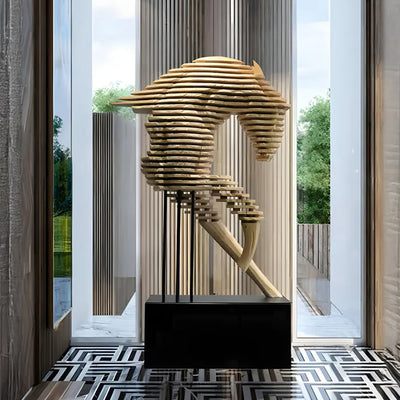
Contemporary simply means now, or close to now. It is art being made in living memory, and it refuses one style. A contemporary sculptor might carve marble, weld stainless steel, or cast a distorted figure that borrows the reduced language of modernism and pushes it somewhere stranger. That is why our own contemporary and modern sculptures often sit side by side; the lineage is direct, and the visual family resemblance is real. The difference between modern and contemporary intent, then, is often a matter of degree rather than a clean break.
For a buyer, the practical takeaway is this: a period piece usually carries a settled, resolved quality, while a present-day work often reads as more open-ended and conversational. Neither is better. But they ask for different rooms. Understanding the difference between modern and contemporary intentions helps you match a work to the space it will actually live in.

Scale, Sightlines and Pedestal Height
The single biggest lever you control is scale relative to the space, not absolute size. A 6-foot (183 cm) bronze that dominates a small courtyard can look modest in a double-height entrance hall. The difference between modern intent and monumental impact often comes down to this ratio. Before we quote a commission, we ask clients to measure the viewing distance, because a piece meant to be read from 30 feet (9 m) away across a lawn needs more mass and a simpler silhouette than one you pass within arm's reach.
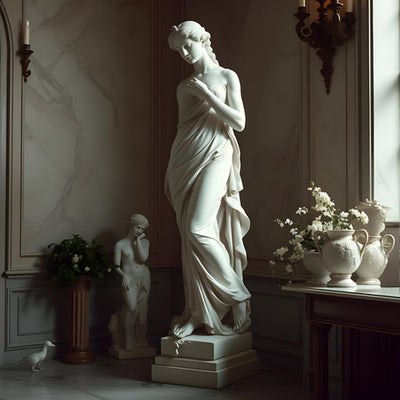
Pedestal height changes the whole reading. Raise a reclining figure and it becomes ceremonial; drop it to floor level and it becomes intimate, almost approachable. A Monumental Modern Reclining Female Figure Bronze Sculpture - 220cm at 220 cm behaves very differently on a low plinth than on a waist-high base. Low, and viewers look down into the curve of the form; higher, and the horizon of the piece cuts across the sky or the far wall, which reads as more monumental.
Sightlines are the quiet decider. Walk the actual approach path. Where does the piece first appear? A sculpture that reveals itself gradually as you round a hedge or turn on a staircase earns far more attention than one dropped in full view from the front door. We once repositioned a client's abstract bronze by barely 8 feet (2.4 m) so it landed at the end of a gravel sightline rather than beside it. Same sculpture, completely different presence.

Indoor Versus Outdoor: When Each Wins
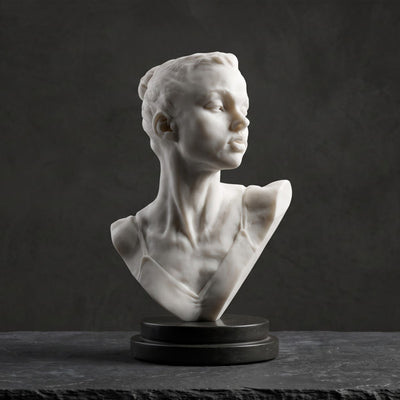
Some pieces are built to hold a room; others want weather and open sky. This is another place the difference between modern and contemporary framing gives way to plain physics. Indoors, a modern female torso rewards close looking, where the surface finish and the edge of the patina do the work. A Life-Size Modern Female Torso Bronze Sculpture - 140cm sits comfortably in a gallery landing or a wide hallway where people slow down and circle it.
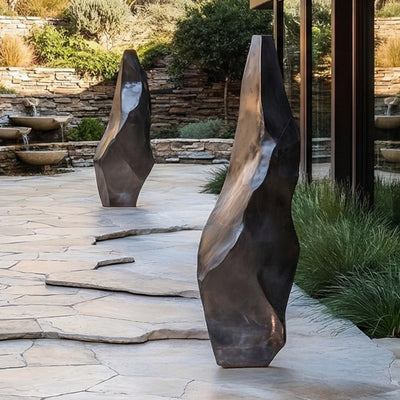
Outdoors, silhouette matters more than surface detail because you often read the piece against sky. This is where a tall, clean form earns its keep. A Monumental Modern Crane Bird Bronze Sculpture - 300cm works precisely because its outline stays legible from across a wide lawn or a hillside terrace. Fine surface texture that would reward close indoor viewing is mostly lost at that distance.
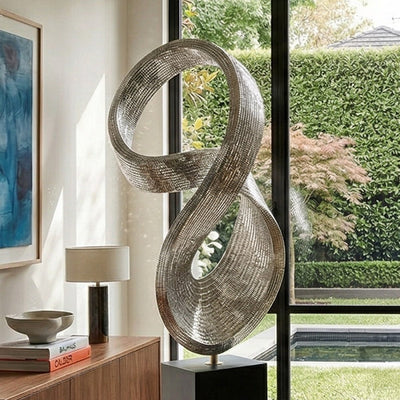
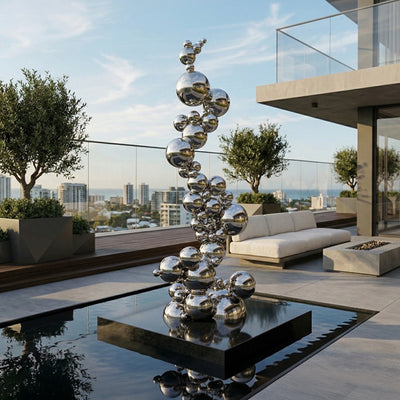
Material choice tracks the indoor-outdoor decision closely. Bronze handles both, developing a stable patina outdoors that many owners prize. Stainless steel throws light and reflects its surroundings, which reads beautifully in open landscapes. Corten steel earns its rusted skin outdoors and looks deliberate against greenery. For guidance on how patina forms and why it protects the metal beneath, the American Institute for Conservation is a sober, reliable reference rather than a sales pitch.
Light, Backdrop and Contrast
Light does more for a sculpture than any pedestal. Raking light, low and from the side, pulls out every ridge and hollow; flat frontal light erases it. Indoors, aim adjustable spots to cross the form at an angle rather than blast it head on. Outdoors, watch where the sun tracks across the day. A north-facing bronze reads cool and even; a west-facing one catches long dramatic shadows late in the afternoon. The difference between modern and contemporary pieces fades once the light gets to work on the form.
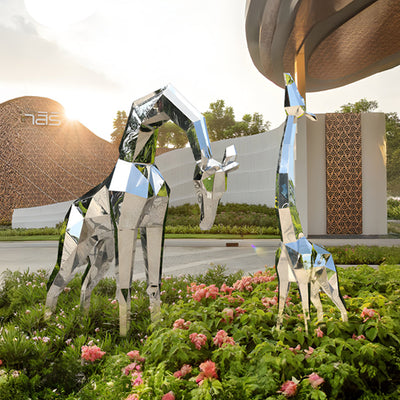
Backdrop decides contrast. A dark bronze in front of dense evergreen hedging can disappear; the same piece against a pale rendered wall or open sky snaps into focus. Reflective stainless steel wants a busy, changing backdrop it can mirror, while a matte modern form wants a calm, uninterrupted surface behind it. Before committing a piece to a spot, we ask clients to photograph the backdrop at three times of day. It sounds fussy. It saves expensive repositioning later.
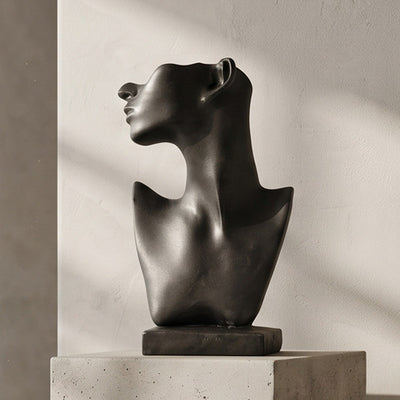
Contrast is not only about color. A Large Modern Abstract Face Fragment Bronze Sculpture - 180cm gains drama when its broken, incomplete form sits against something whole and simple, a flat wall or a still reflecting pool. Set busy against busy and both cancel out.
Common Placement Mistakes We See in Commissions
For wider placement ideas, Contemporary Modern Sculpture: How Placement Decides Whether a Piece Sings or Sulks is useful companion reading before finalizing the setting and sightlines.
Most placement problems trace back to the same handful of decisions, and few of them turn on the difference between modern and contemporary at all. Here is what to check before anything ships.
- Buying before siting. Choosing the piece first and finding a home for it later is the most expensive way to shop. Decide the spot, the viewing distance and the backdrop, then commission to fit.
- Ignoring the approach. A sculpture should reveal itself along a path, not sit flatly beside the front door where you never really look at it.
- Wrong pedestal height. A base that is too tall turns an intimate figure into a lamppost. Too low, and a monumental piece loses its authority.
- Underestimating scale for open ground. Gardens swallow objects. A piece that felt large in the studio often looks tentative on a wide lawn. When in doubt outdoors, size up.
- Fighting the backdrop. Dark on dark, or reflective steel against a blank sky with nothing to mirror. Match the piece to what stands behind it.
- Skipping foundation planning. Large bronzes and steel works need proper footings and, outdoors, drainage. This is engineering, not decoration, and it belongs in the plan from the start.
If you are weighing a single statement piece against a smaller starter work, the same logic scales down. A Small Modern Abstract Bull Bronze Sculpture - 30cm asks for a shelf, console or plinth where it can be seen at close range, not a spot across a large room where its scale simply vanishes.
Commissioning With Placement in Mind
Because we work bespoke, we would rather talk about the site before the subject. The difference between modern and contemporary taste rarely stalls a project; the wrong spot does. When a client sends measurements, a rough plan and a few photographs of the intended spot, we can advise on scale, material and finish that suit that exact location, whether that is a courtyard, a lobby or a coastal garden that will punish the wrong metal. That conversation also settles the boring-but-vital parts: weight, footings, transport access and installation.
Budget for a large commission depends on material, scale, complexity, engineering, installation and finishing, so there is no honest single figure to quote. The sensible move is to describe your space and ask for a tailored quote against it. That way the number reflects your actual piece rather than a generic guess.
Whether you land on a resolved period form or a more restless present-day one, the difference between modern and contemporary is only the starting point. The room, the sightline, the light and the base decide whether the work sings or sulks. Sort those, and any sculpture can carry a space for decades.