































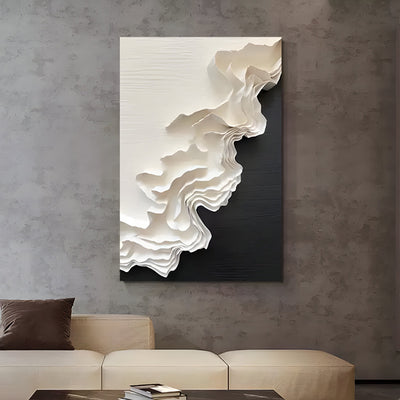
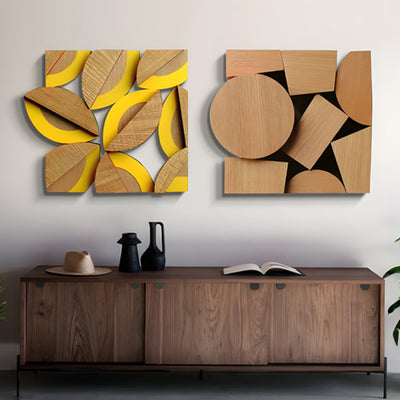

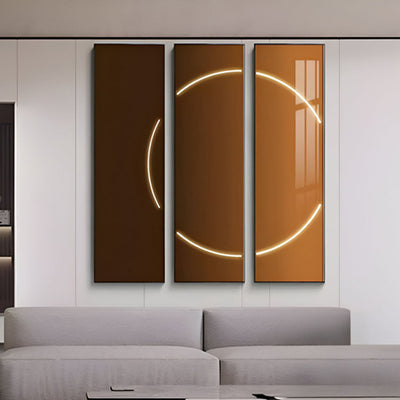
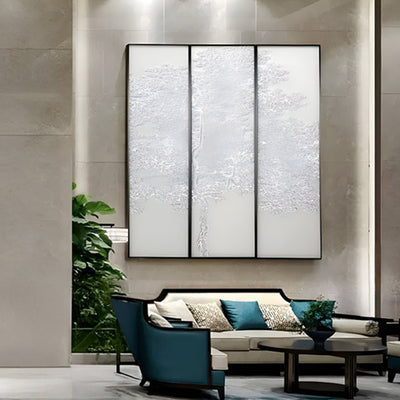
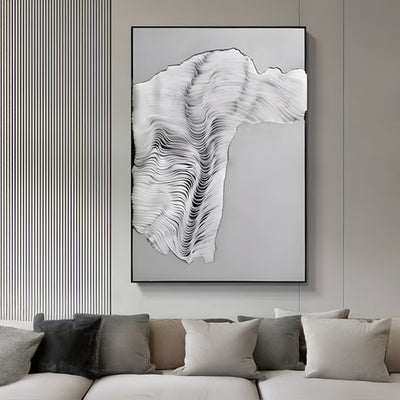
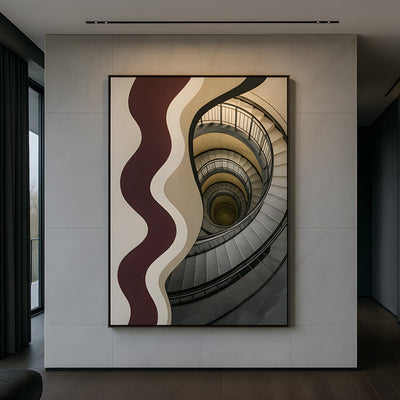
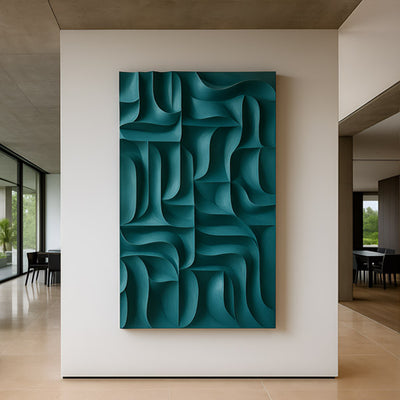
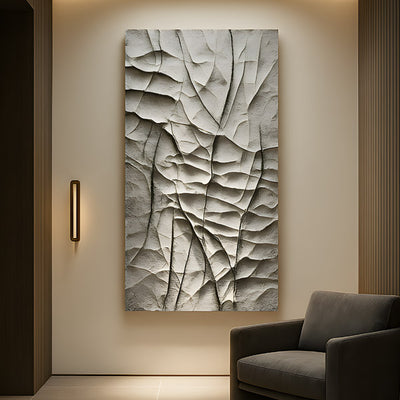
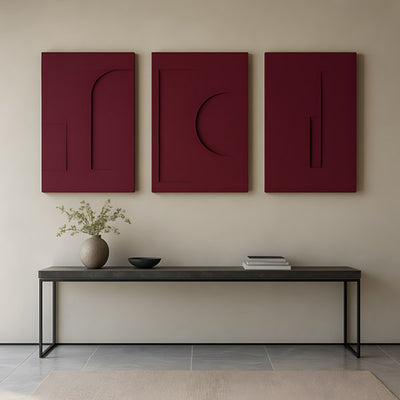
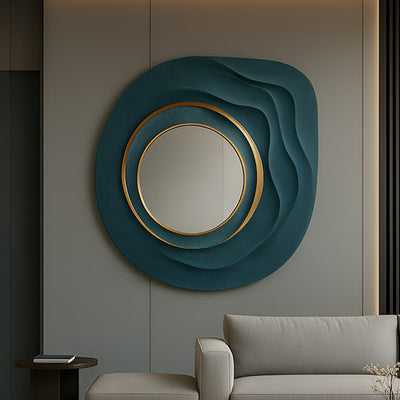












A blank wall over ten feet (3 m) wide is a problem most people solve badly. They hang three small frames in a nervous row and hope it reads as a feature. It rarely does. Wood panel wall art solves that wall in one confident move, giving you carved relief, grain, and shadow across a surface big enough to hold the room. Done at the right scale, it does the job a painting cannot.
This guide is written for people buying a real piece for a real wall: designers speccing a project, collectors filling a double-height entry, venue owners who need a focal point that survives daily foot traffic. We build large and bespoke work, so the advice here leans toward pieces meant to last and to be seen from across a room.
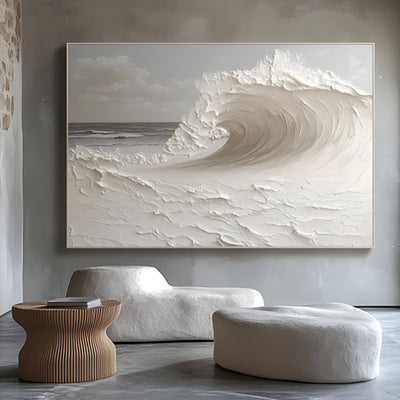
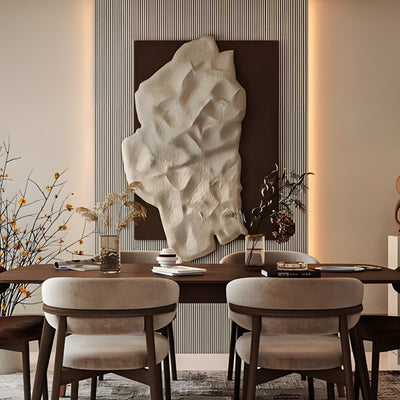
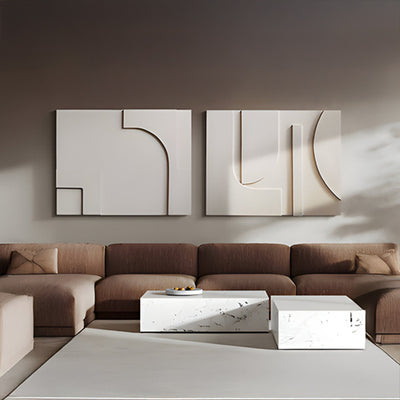
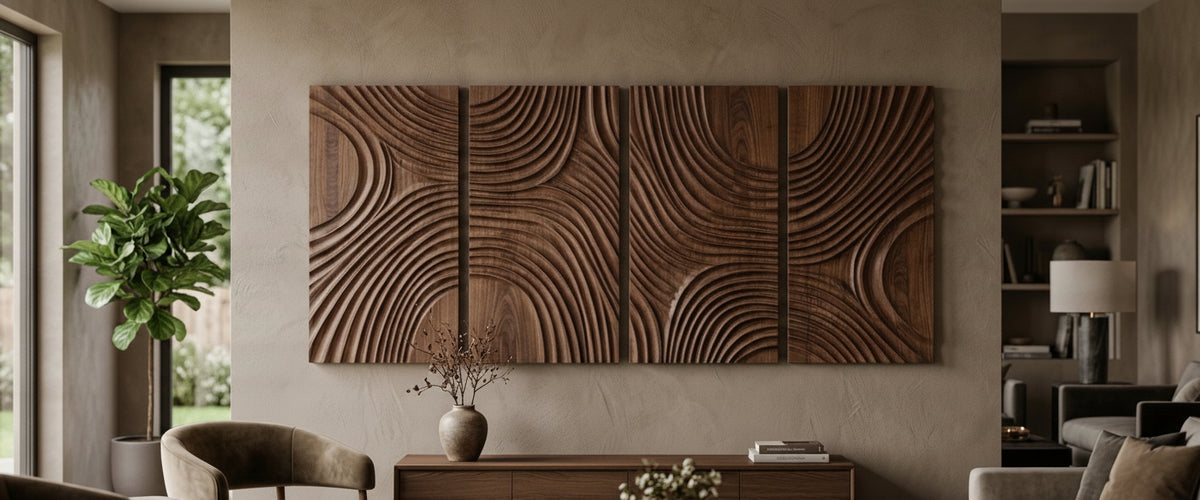
A deep-relief panel sized to hold a wide living-room wall.

Quick Answer: What Wood Panel Wall Art Is and Who It Suits
What it is: carved or sculpted wood, usually mounted as a single panel or a multi-panel set, worked in relief so light and shadow do most of the visual work.
Best for: wide or tall walls that swallow small art, warm interiors that want texture rather than another framed print, and commercial spaces that need a durable focal point.
Materials to know: solid hardwood, engineered timber panels, and mixed pieces that combine wood with metal leaf or integrated LED lighting.
Key decision: scale first, finish second. Get the size wrong and no amount of beautiful carving fixes it.
Budget: driven by material, size, depth of carving, and whether the piece is stock or bespoke. Ask for a tailored quote rather than guessing.

What Wood Panel Wall Art Actually Means
The term covers a wide field, so it helps to be precise. At the simple end you have flat decorative panels with a printed or lightly etched surface. At the serious end you have deep-relief carving where the wood is worked into ridges, waves, or geometric forms that throw real shadow. That shadow is the point. It changes through the day as the light moves, which is why a good carved panel never looks static the way a print does.
Wooden wall art panels also come as sets. Where a wide wall needs one composition that still ships and hangs in manageable sections, a four-panel arrangement such as the Harmonic Forms 4-Panel Brown Wood Carving 3D Wall Art makes life easier on tall staircases and awkward access, and the visual rhythm across the panels gives you movement without a single enormous slab of timber.
Who is it best for? Anyone whose wall is fighting them. If you have tried framed pieces and they look lost, the wall is telling you it wants mass and texture. Wood panelling wall art answers that in a way that feels warmer than metal and more forgiving than stone.

Key Materials, Finishes and Scale Decisions
Start with the material, because it sets the tone and the maintenance.
Solid Hardwood vs Engineered Panels
Solid hardwood carries depth and weight, and it ages with real character. It also moves with humidity, so it wants a stable interior rather than a damp orangery or an unheated barn conversion. Wood shrinks and swells as its moisture content shifts with the surrounding air, a behavior the USDA Forest Products Laboratory Wood Handbook documents in detail. Engineered timber panels stay flatter across large spans and are lighter to hang, which matters once a piece runs past six feet (1.8 m). For most large indoor installations we specify engineered cores with a quality hardwood face, so you get the grain you want without the warping risk. Solid wood expands and contracts with moisture, and a big panel has to be built around that behavior.
Finish
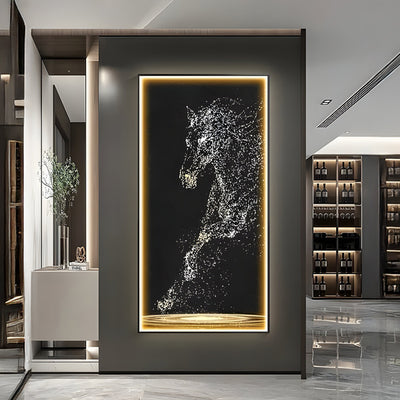
Finish decides how the grain reads. A natural oil keeps the wood matte and tactile and lets the figure show. A darker stain flattens the grain slightly but deepens the shadow lines in relief carving, which suits contemporary interiors. Some pieces add metal leaf or a colored wash across the carved surface, and a few integrate lighting. Where a wall stays dim after dark and you want the piece to keep working, a lit relief like the Ventus Azure Depths Wood Carving 3D LED Wall Art builds the light into the carving itself rather than relying on the room to reveal it.
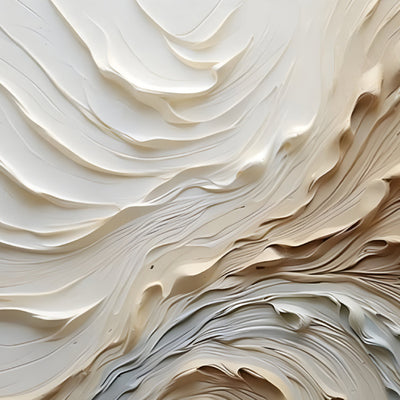
Natural oil keeps the grain tactile and lets relief shadows do the work.
Scale
This is where most buyers slip. A panel that looks large in a showroom shrinks the moment it goes on a big wall. As a working rule, a feature piece should fill roughly two-thirds of the wall width it sits on, and it should relate to the furniture below it rather than float above like an afterthought. Measure the wall, tape out the panel size on it with painter's tape, and live with the outline for a day before you commit. We have watched plenty of clients size up on the spot after seeing the tape; almost nobody sizes down.

Where to Place Wood Panel Wall Art for the Strongest Impact
For wider placement ideas, Wood Wall Art Decor: A Buyer's Guide to Scale, Finish, and Placement is useful companion reading before finalising the setting and sightlines.
Placement is half the result. The best wood panel wall art earns a wall that people approach, not one they pass at speed.
Living rooms. Above a low console or behind a sofa is the classic spot. In a wide great room, a horizontal multi-panel set stretches the eye along the wall and calms a tall ceiling. Keep the bottom edge roughly eight to ten inches (20 to 25 cm) above the sofa back so the two read as a pair.
Entryways and staircases. A double-height entry is exactly the wall that defeats small art. Here a tall composition or a stacked panel set gives you a piece people see from the door and again from the landing. Relief carving is a strong choice because the shifting light down a staircase keeps the surface alive.
Dining and hospitality. Restaurants and hotel lounges use wooden wall art panels because they add warmth and absorb a little sound, and they survive being brushed past. A lit panel behind a bar reads well in low evening light where a flat print would go dead.
What to put beside a large panel. Usually, less than you think. A single tall plant, a floor lamp with a warm bulb, or nothing at all. The panel is the event; crowding it with smaller frames fights the very impact you paid for. If you want company for it, choose something in a different medium, like a bronze form on a plinth, so the two do not compete for the same job. Our wood wall art range is worth browsing alongside the bronze wall art collection to see how the two materials play off each other on a wall.
Budget, Commissioning and Delivery
Price on wood panel wall art moves with a few clear levers: the species and quality of the timber, overall size, how deep and detailed the carving is, whether lighting or metal finishing is involved, and whether the piece is stock or made to order. A shallow decorative panel and a deep hand-carved relief at gallery scale are not the same purchase, so the honest answer is to send us the wall dimensions and the look you want, and we will quote it properly.
For bespoke work, plan the timeline early. Carved and finished pieces at scale take time to make, cure, and pack, and rushing the finish is where quality slips. Large panels ship crated and often in sections for exactly the same reason we hang them in sections: access. A single ten-foot panel that will not turn the corner of a staircase is no use to anyone.
A Short Buyer's Checklist
Measure the wall width and height, then tape out the panel footprint before ordering.
Confirm the interior is stable. Avoid high-humidity or unheated rooms for solid hardwood.
Decide finish by light. Matte oil for tactile grain, darker stain or lighting for drama.
Check access. Doorways, stair turns, and elevator sizes decide whether a piece ships whole or in panels.
Ask about mounting hardware and the wall type; masonry, stud, and plasterboard all need different fixings.
Get a tailored quote rather than assuming a size or spec is out of reach.
How to Hang and How to Make Wood Panel Wall Art
To hang wood panel art on a wall, find your fixing points first. On a stud wall, locate the studs and mount into them, or use a French cleat rail so the weight spreads and the panel sits flush. On masonry, use appropriate anchors rated well above the panel weight. For multi-panel sets, snap a level chalk line and set consistent gaps between sections; even spacing is what makes a set read as one piece rather than several. Heavy panels are a two-person job, and a laser level saves a lot of regret.
People often ask how to make wood panel wall art themselves. At small scale it is a genuine weekend project: a sanded plywood or hardwood board, a carved or applied geometric pattern, an oil or stain finish, and cleat mounting on the back. Where DIY runs out of road is depth and scale. Deep relief carving across a large panel needs proper tooling, seasoned timber, and a finish that will not check or crack over years on a warm wall, which is precisely the work a bespoke maker exists to do.
How Giant Sculptures Handles Bespoke Wood Panel Projects
We build large and made-to-order work for homes, developments, and commercial venues, and wood panel wall art sits naturally alongside our sculpture commissions. That means we think about the same things on a panel that we think about on a ten-foot figure: how it is engineered, how it is finished to survive its setting, and how it actually gets through the door and onto the wall.
If you have a specific wall, send measurements, a couple of photos, and a sense of the style. We can advise on species, finish, panel layout, and lighting, then quote the piece to your space. Giant Sculptures is a bespoke supplier, so the goal is a piece cut to your wall rather than a stock size you have to design a room around.