

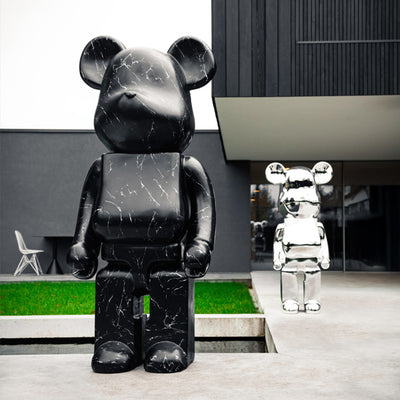

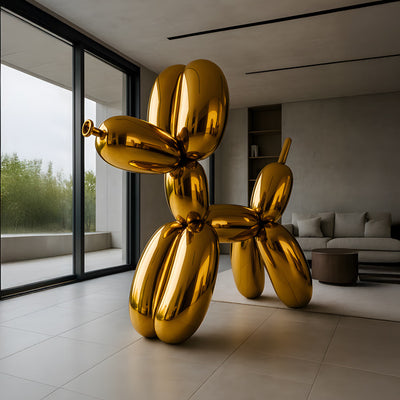
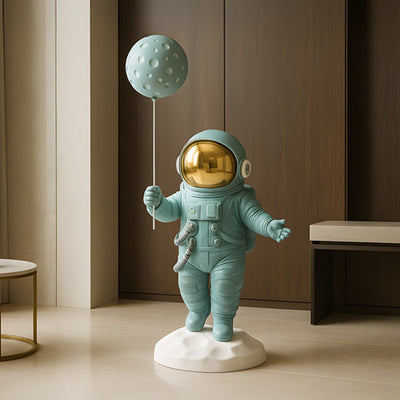














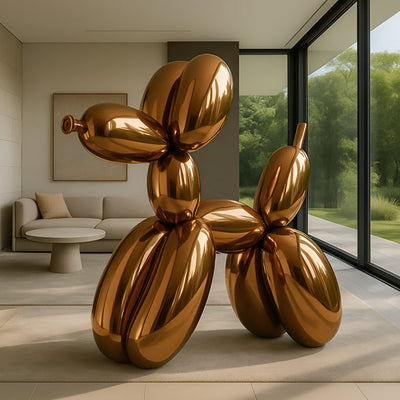









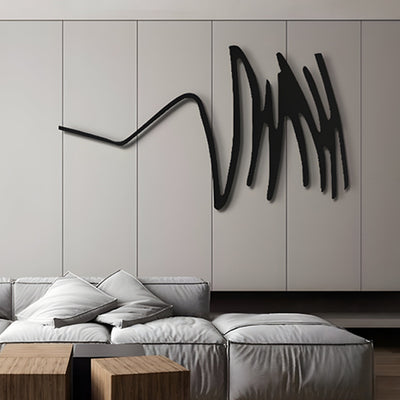


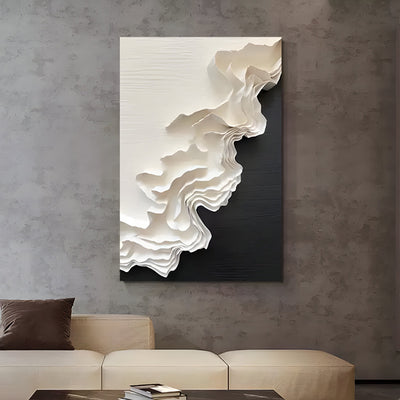
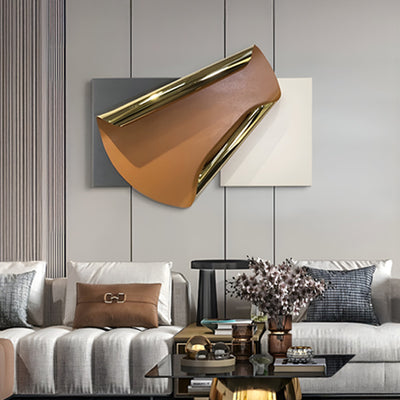
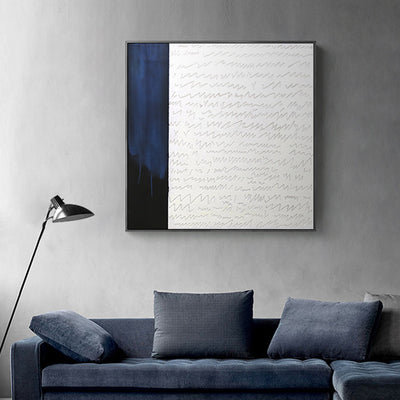
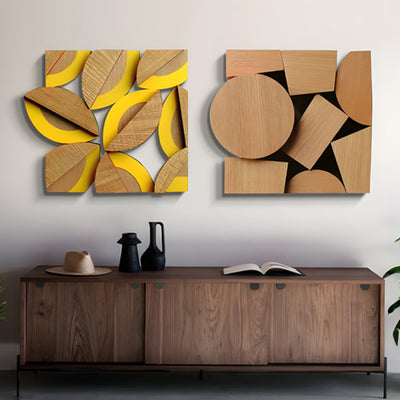

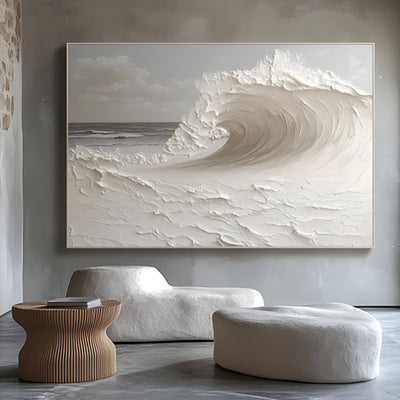
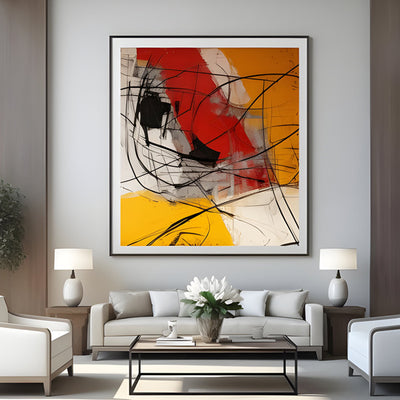
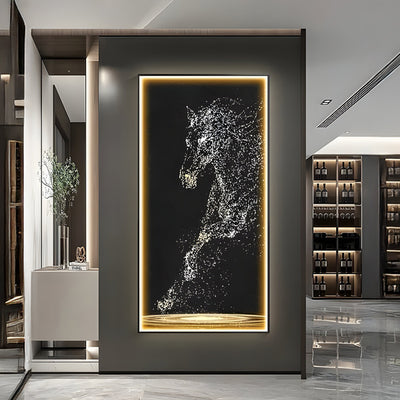
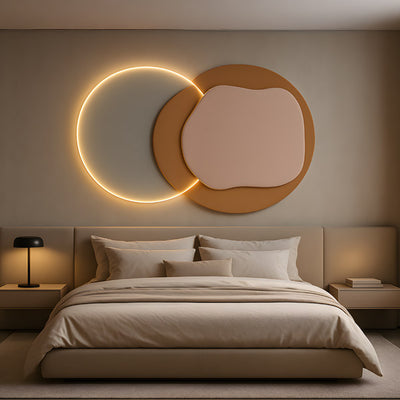
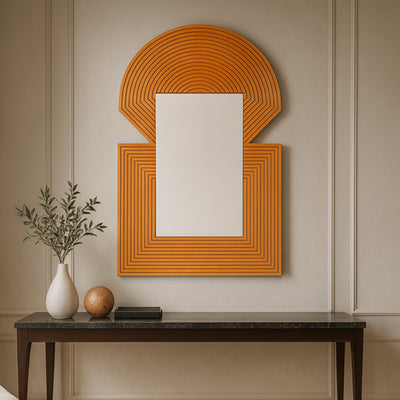
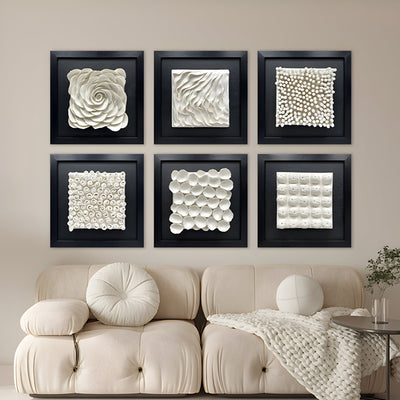
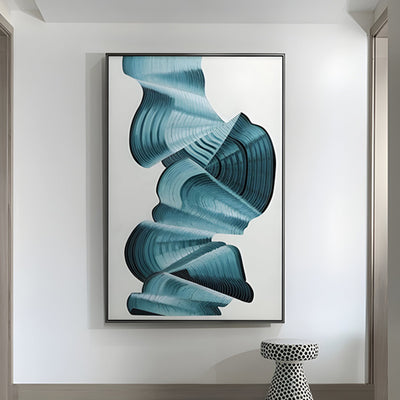
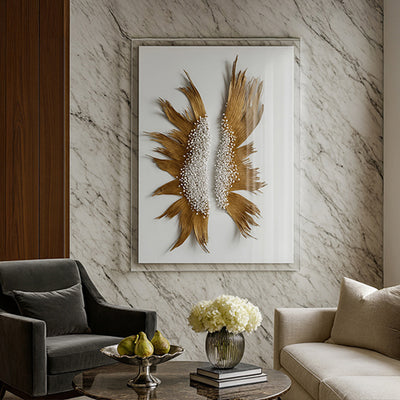
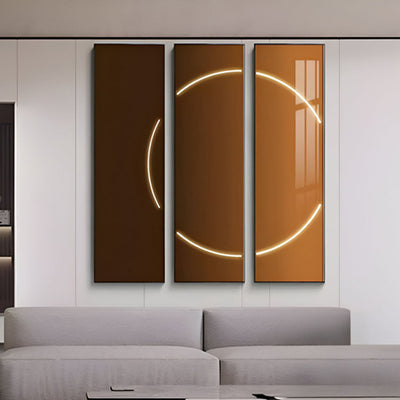
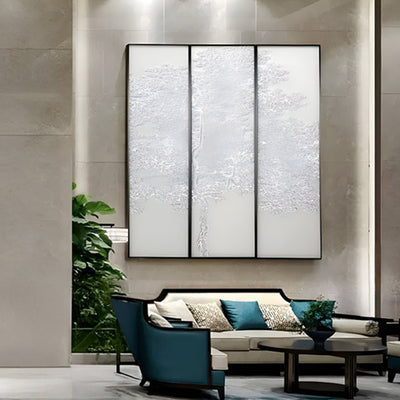
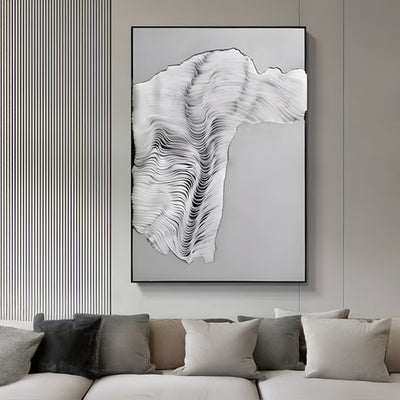
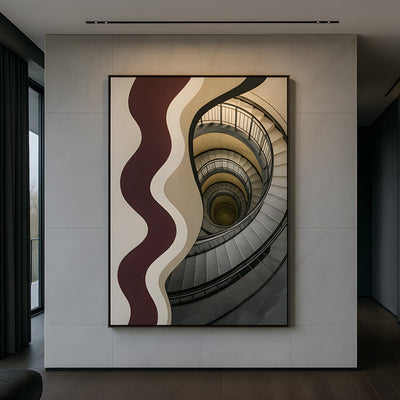
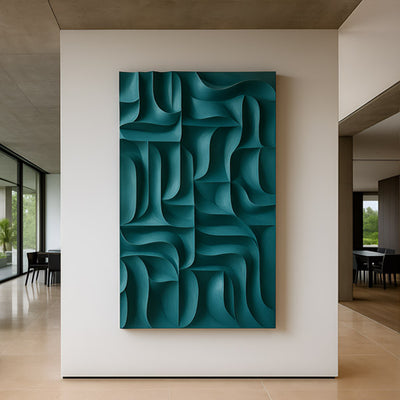
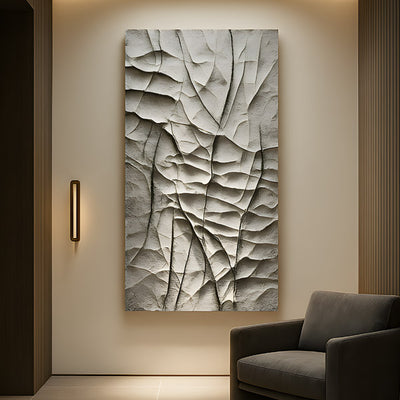
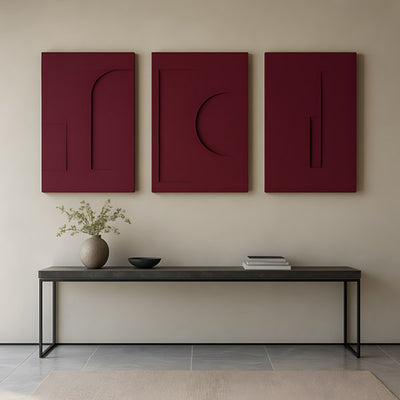
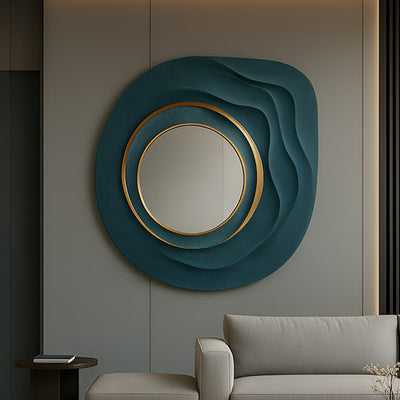
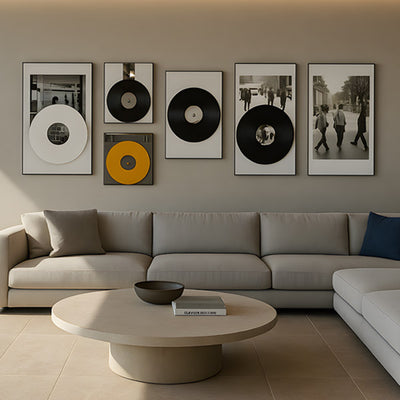
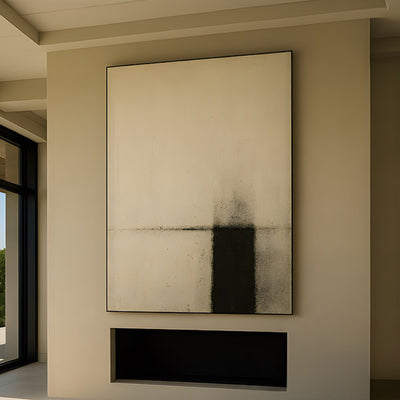
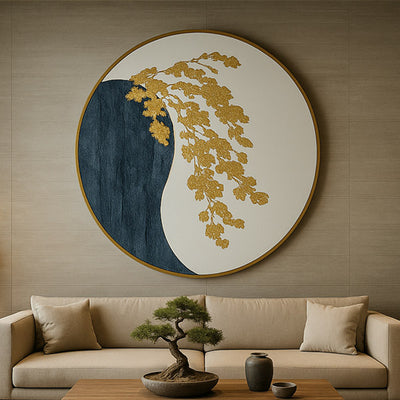
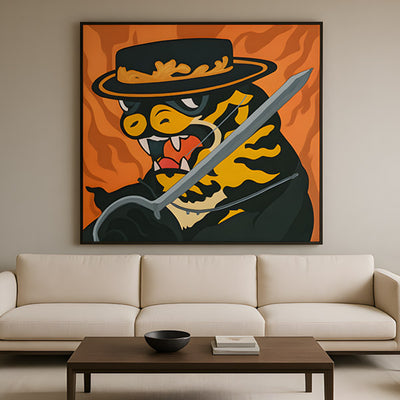
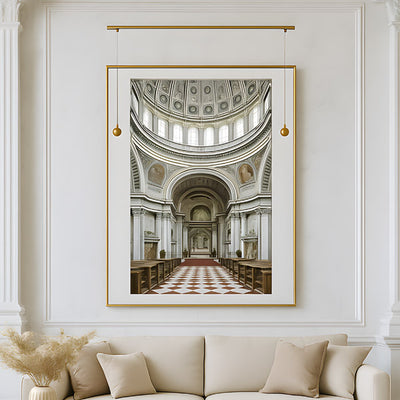
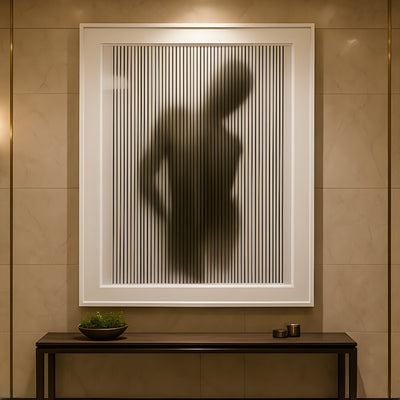
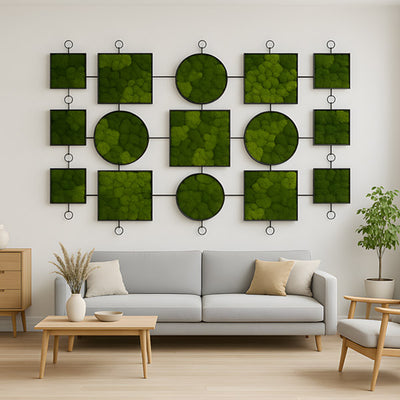
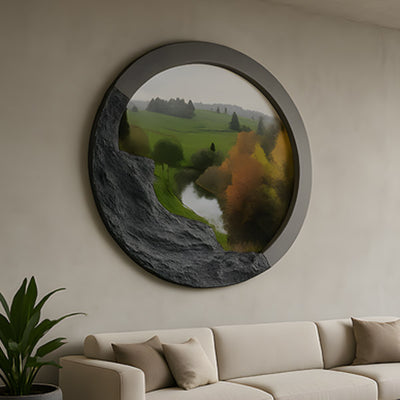
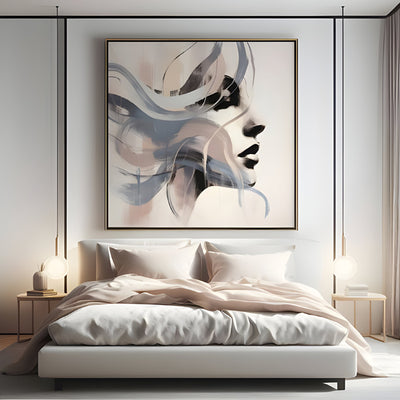
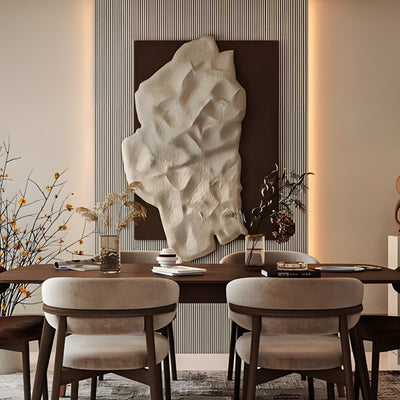
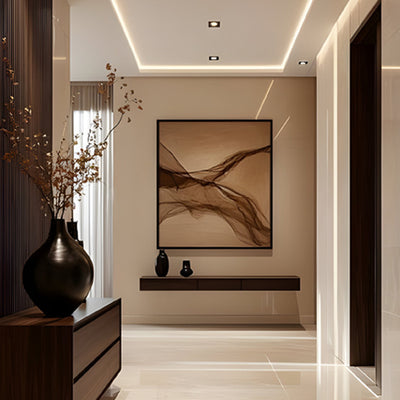
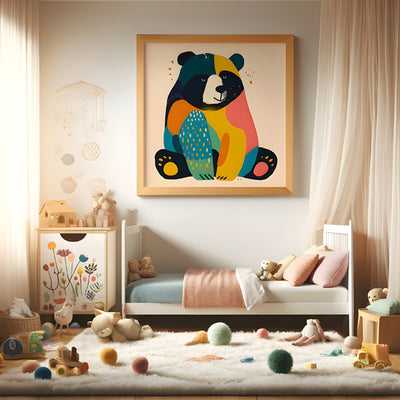
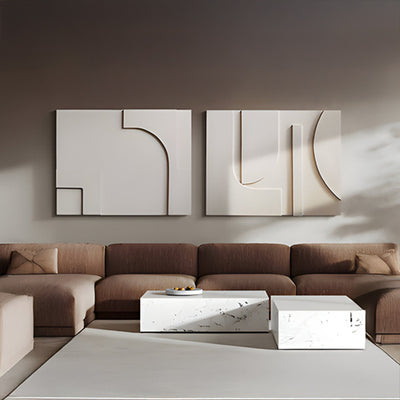
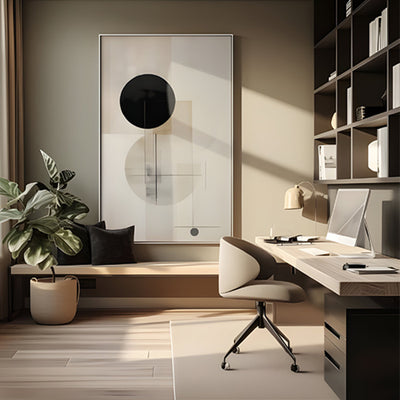










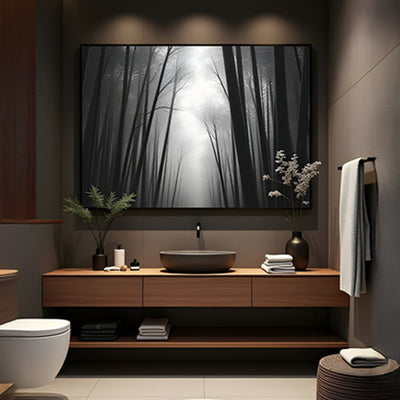
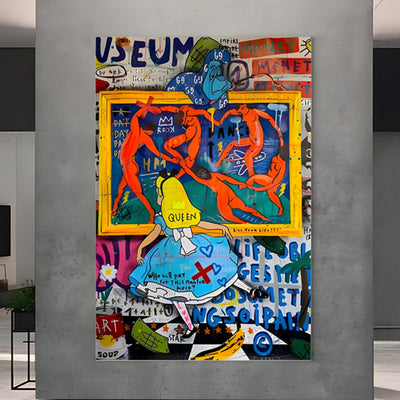
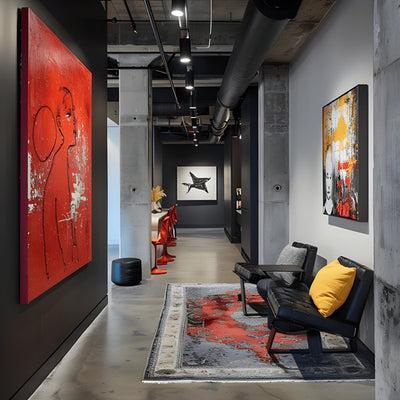

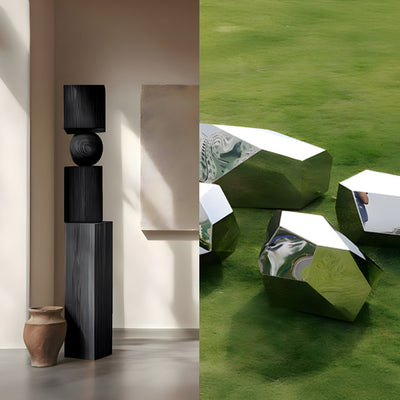


Most living rooms are hung with art that is a size or two too small for the wall behind it. The piece is fine. The proportion is wrong, and the eye reads the empty plaster around it before it ever reads the artwork. That single mistake is why so many buyers keep swapping pictures without ever fixing the room. Large wall art solves it by treating the wall as the composition, not as background, and the decision that matters most is scale.

Key Takeaways Before You Shop
Cover roughly two thirds to three quarters of the width of the sofa, console, or fireplace it hangs above.
Depth beats print. A cast bronze or metal relief throws real shadow and changes through the day; a flat print does not.
Weight drives fixings. Anything substantial needs studs, masonry anchors, or a French cleat spanning two supports.
Finish should answer the light. Matte patina calms glare; polished steel amplifies a dark room.
Bespoke is worth asking about when the wall is oversized, double height, or an odd shape that no stock size of large wall art flatters.
What Counts as Large Wall Art, and Who It Suits
There is no formal threshold, but in practice a piece starts behaving like large wall art once it passes about 40 inches (100 cm) in its longest dimension, or once a grouping reads as one mass rather than several objects. At that size the work stops decorating and starts organizing the room: it sets the sightline, anchors the furniture plan, and gives the wall a center.
A single deep relief sized to the sofa below it does more work than three small framed prints.
Large wall art suits three buyers in particular. Homeowners with tall modern rooms, where a standard canvas floats like a postage stamp. Designers working on double-height entries, stairwell walls, and open-plan great rooms in places like Aspen and Napa, where the architecture is doing a lot and the art has to answer back. And venue owners, hoteliers and developers who need one durable focal point instead of a gallery wall that needs constant re-leveling. We ship relief work to hospitality clients for exactly that reason: one fixing, one clean surface, no re-leveling.
How to Compare Large Wall Art Options Before You Buy
Comparison usually collapses into a price hunt, which is the fastest route to a piece you replace in two years. Run your shortlist through these criteria instead:
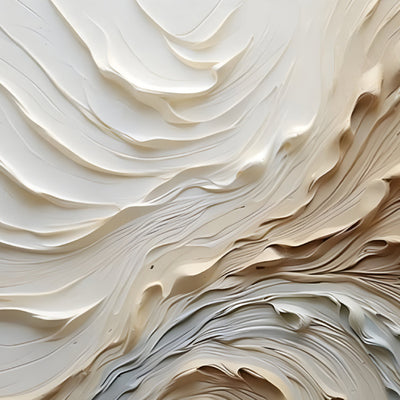
Relief depth. How far does the form project from the mounting plane? Half an inch reads as texture. Four inches (10 cm) reads as sculpture and creates shadow you can see from across the room.
Material honesty. Is the bronze cast, or is it a resin shell with a bronze-look coating? Ask directly. The answer changes lifespan, weight, and how the surface ages.
Viewing distance. Fine surface detail is wasted at 20 feet (6 m). Bold silhouette work is wasted at arm's length in a hallway.
Mounting system. Concealed cleat, keyhole plates, or standoff pins? Standoffs float the work off the wall and add a shadow gap, which reads as more expensive and hides minor wall imperfections.
Repairability. Bronze can be re-patinated in place. A damaged printed panel is landfill.
Lead time and access. A large panel that cannot make the turn on a stairwell is a problem no discount fixes.
Working through our wall art and wall decor collection with those six points in hand is a far more useful way to shortlist large wall art than scrolling for something that "goes with the sofa."
Materials and Finishes That Hold Up on a Wall
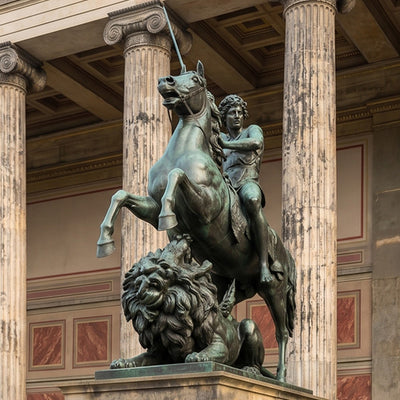
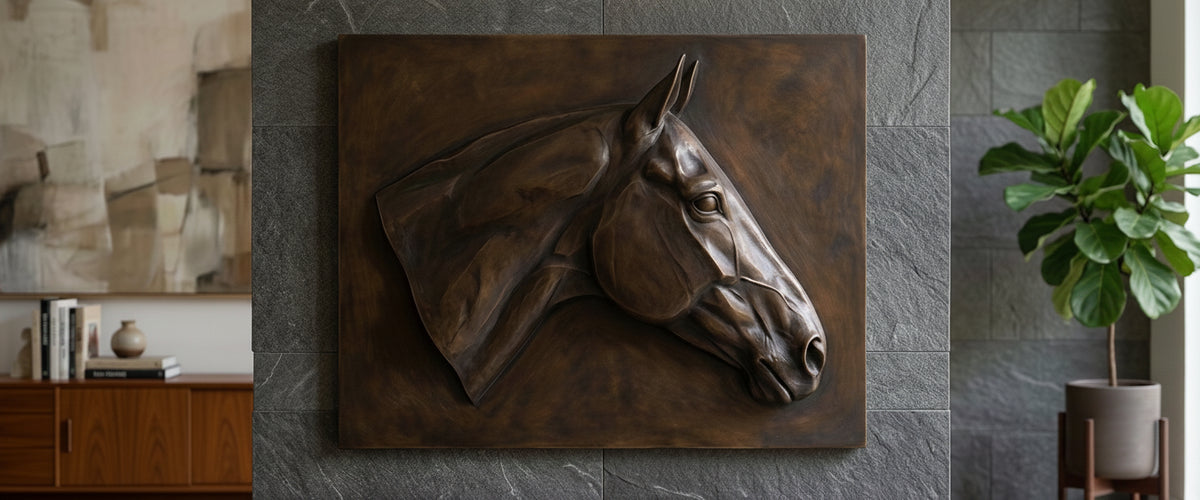
Bronze remains the benchmark for interior relief, and it is the material most large wall art buyers end up measuring everything else against. It takes crisp detail from the mold, carries chemical patinas from near-black through deep brown to green, and is stable indoors for generations. Relief sculpture has been the workhorse of architectural art since antiquity precisely because it survives on walls; the Metropolitan Museum of Art's overview of relief sculpture traces how consistently builders have used it to give flat surfaces depth and narrative. Where a wall needs one strong note rather than a composition, a cast relief such as the Traditional Horse Head Bronze Relief - 80cm at 80 cm (about 31 inches) sits comfortably above a console, or repeats at even spacing down a longer hallway.
On tall walls, scale to the architecture rather than to the nearest piece of furniture.
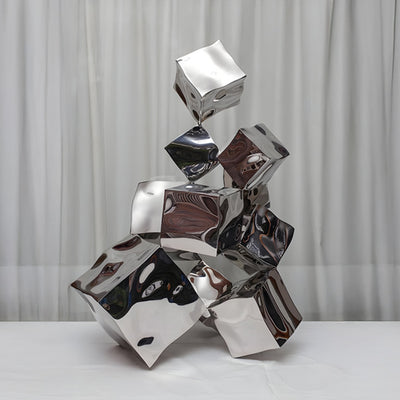
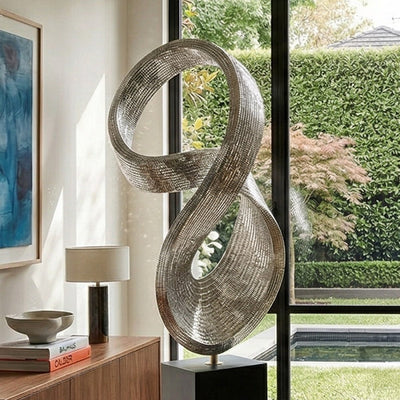
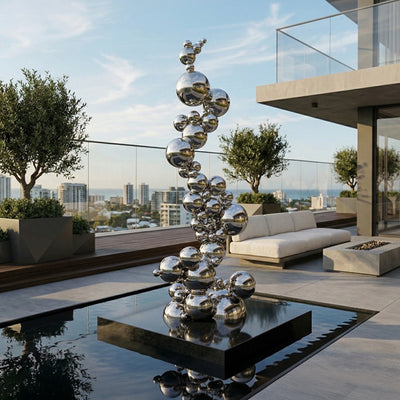
Stainless steel and Corten pull large wall art in the opposite direction. Brushed or mirror-polished steel bounces light into rooms that lack windows, which is why it earns its place in apartments where the only natural light comes from a single aspect. Corten brings a warm, granular rust surface and belongs on covered terraces, loggias, and pool houses rather than over upholstery, since the oxide layer can mark porous surfaces below during its early weathering. Explore metal wall art if you want that harder-edged register.
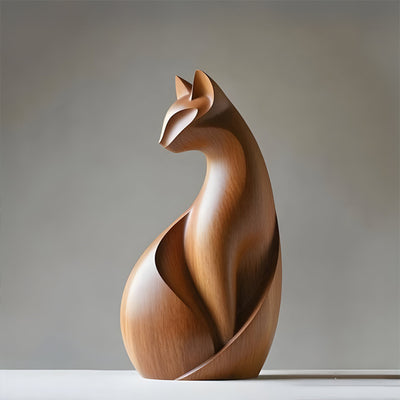
Stone and carved marble panels carry weight both literally and visually, and they belong on solid masonry walls that can take the load. Carved timber sits at the softer end: warm, tactile, quieter under lamplight. A layered piece from our wood wall art range gives a living room texture without the reflectivity of metal, which helps in rooms already busy with glass and chrome.
On finish, choose against your light source. South-facing rooms with hard afternoon sun flatten polished surfaces into glare; a matte or lightly waxed patina holds form far better. North-facing rooms and evening-use spaces reward reflectivity.
Getting the Scale Right
The workable rules for hanging large wall art are simple, and most buyers break all of them.
Above a sofa or sideboard, aim for a piece or grouping covering two thirds to three quarters of the furniture width.
Hang so the visual center sits around 57 to 60 inches (145 to 152 cm) from the floor in standing rooms. In a seated lounge, drop it slightly.
Leave 6 to 10 inches (15 to 25 cm) between the top of the sofa back and the bottom edge. More than that and the two objects stop speaking to each other.
On a double-height wall, scale to the full wall, not to the furniture. This is where stock sizing usually fails and bespoke earns its keep.
Test before you commit. Cut brown paper or cardboard to the exact footprint, tape it up, and live with it for two days. We have talked more than one client out of a piece they loved and into a noticeably larger one after they saw the template in situ. It costs nothing and it is the single most reliable check in this whole process.

Where to Place Large Wall Art for the Strongest Impact
For wider placement ideas, Large Canvas Wall Art: How to Choose a Piece That Actually Holds the Wall is useful companion reading before finalizing the setting and sightlines.
The best wall for large wall art is rarely the biggest one. It is the wall you see first when you enter, or the one framed by a doorway from an adjoining room. In open-plan homes, that is often the wall opposite the kitchen island rather than the one behind the sofa.
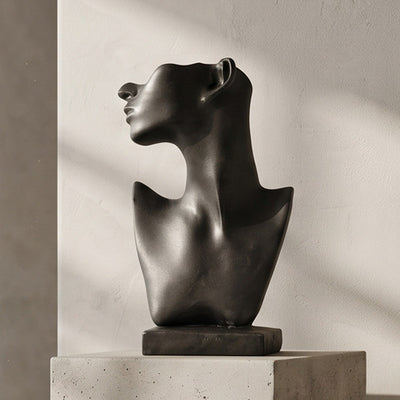
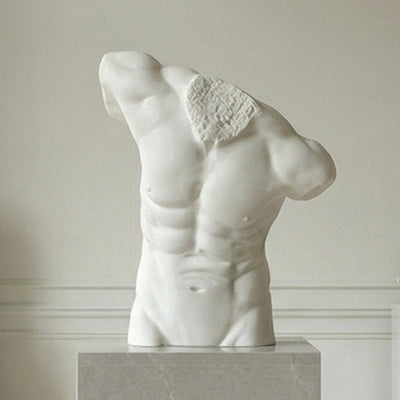
Living room wall art tends to work hardest above a fireplace or centered on the main seating axis, and most large wall art for living room settings gets sized to one of those two anchors. A sculptural head or torso can also break the tyranny of the rectangle. Where the wall is tall and narrow rather than wide, a vertical form such as the Classical Figural Torso Wall Sconce Bronze Sculpture - 90cm at 90 cm reads better than a landscape panel, whether it is used in pairs flanking a chimney breast or as a single asymmetric accent on a plain plaster return.
Stairwells and entries reward vertical compositions and pieces read from below, so favor strong outlines over delicate detail. Dining rooms suit relief work because seated guests view it at a shallow angle where shadow does the work. Corridors need shallow projection for safety and clearance; check your local accessibility clearances if the property is commercial.
Light it deliberately. A narrow-beam adjustable fitting placed at roughly 30 degrees from vertical grazes a relief and pulls out every modeled plane. Straight-on lighting kills the same piece stone dead.
Budget, Commissioning and Delivery
Cost for large wall art is driven by material, finished size, relief depth, casting or fabrication complexity, patina or coating work, mounting engineering, and installation access. A deeply undercut bronze relief needs more mold work and more chasing than a shallow panel of the same footprint, and that shows up in the quote. Rather than guess at a band, send us the wall dimensions, a photo, the light conditions, and any deadline, and we will price the specific piece.
Practical points worth raising early:
Wall build-up. Drywall on studs, block, brick, or steel frame all take different anchors. The Gypsum Association is a useful reference on what board alone can and cannot carry; for anything heavy, we specify fixings into structure.
Access route. Measure doorways, stair turns, and elevator car diagonals before ordering an oversized panel.
Crating. Relief work should be crated face-supported and shipped flat where possible. We learned that early and have not changed the practice since.
Installation. Ask who is drilling. Multi-panel work needs a level datum line and a template, not eyeballing.
Aftercare. Bronze indoors wants dusting with a soft dry cloth and an occasional microcrystalline wax. Skip household sprays entirely.
Commissioning Bespoke Large Wall Art with Giant Sculptures
Stock sizes are a compromise on unusual walls, and bespoke large wall art exists to remove that compromise. Giant Sculptures works from a wall survey and a mood reference through sketch, maquette, and sign-off, then casting or fabrication, patina, and mounting design. Subject can be figurative, animal, abstract, or architectural. Scale is set by your wall rather than by a catalog.
The large wall art commissions we see most often: a single oversized bronze relief for a double-height fireplace wall, a set of matched animal reliefs sized as a rhythm along a long gallery corridor, and abstract fabricated steel compositions for hotel lobbies where the client needs impact and near-zero maintenance. Most of those briefs begin with an existing piece at a known size, and something like the Classical Bull Head Bronze Relief - 70cm at 70 cm is a useful starting point: the modeling and patina are settled, and the only variable left to discuss is how far the footprint needs to grow for the wall in question.
If you are still narrowing material, our bronze wall art collection is the clearest place to compare patina and relief depth side by side before you brief a custom large wall art piece. Get the scale right first, and every other decision becomes easier.