

































































































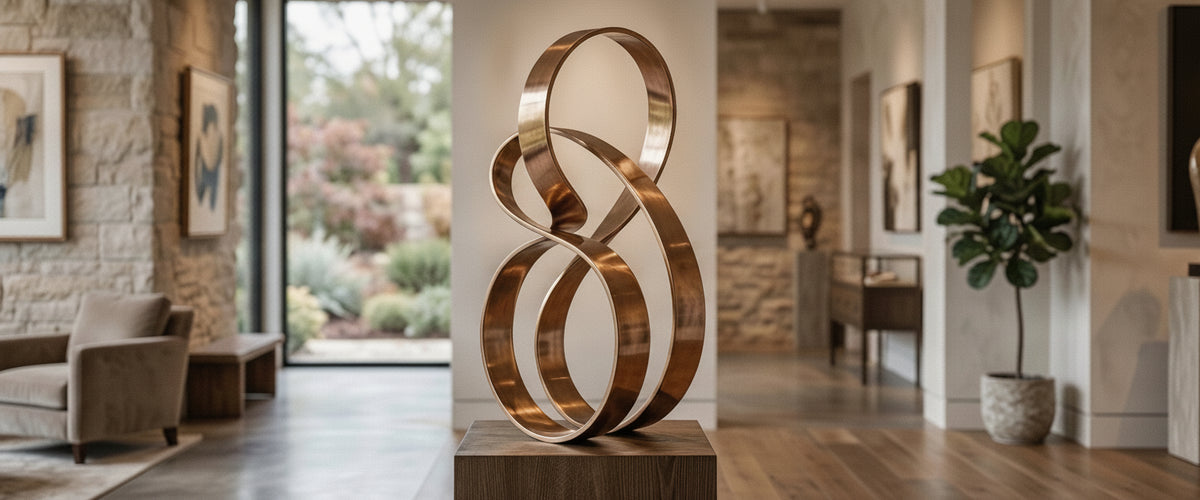

Most indoor sculptures fail for one reason: they are too small for the space they are supposed to command. A 30-inch bronze on a wide console in a double-height room reads as an ornament, not a focal point. Buyers who understand indoor sculptures contemporary in style know the piece has to answer the architecture, not apologize to it. Get the scale and material right and a single contemporary indoor sculpture can hold a whole room together.
Looking for the full range in this category? Browse our Contemporary & Modern Sculptures collection for every available finish, size, and configuration.
This guide is written from the studio floor. We ship large-scale and bespoke work to homes and venues across the US and beyond, so the advice here is about how these contemporary indoor sculptures actually behave once they are installed, not how they look in a catalog.
A tall bronze figure anchoring a double-height entrance hall.

Key Takeaways
Scale first. Measure the wall height and sightlines before you fall in love with a shape.
Material sets the mood. Bronze reads warm and permanent; stainless steel reads cool and architectural; stone and marble read weighty and quiet.
Placement is a decision, not an afterthought. Think about the approach, the eye line, and the light through the day.
Budget depends on the build. Material, size, complexity, finishing and installation drive the number, so ask for a tailored quote rather than guessing from a category.

What Contemporary Indoor Sculptures Actually Means, and Who They Suit
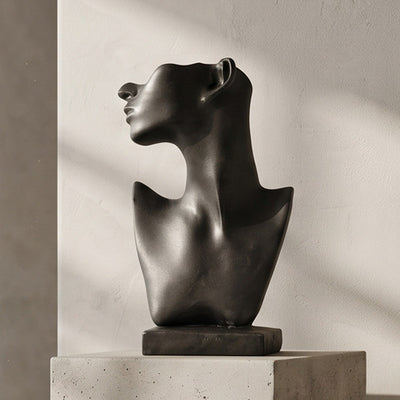
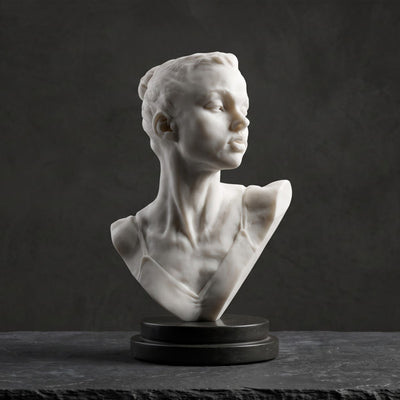
Contemporary indoor decor sculpture covers a wide field: abstract forms, stylized figures, pared-back animals, and figurative work stripped of Victorian fuss. The common thread across these indoor sculptures contemporary in feel is restraint. Clean lines, confident silhouettes, and surfaces that do the talking. A headless figure or a smooth animal head reads as modern precisely because it edits out detail that older work would insist on.
These contemporary indoor sculptures suit anyone who wants a room to have a clear center of gravity. Collectors buy them as statements. Interior designers use them to resolve a space that feels flat. Developers and venue owners install them in lobbies and members' clubs because a strong sculpture does more for a first impression than any amount of soft furnishing. If you want one object that people remember, this is the category.

Materials, Finishes and the Scale Decision
Material is the first real choice, because it sets the emotional temperature of the room. Bronze is our default recommendation for indoor work that needs to last generations. It takes patina beautifully, holds fine surface modeling, and ages with grace rather than degrading. For a tall entrance hall that needs a floor-standing anchor, a piece such as the Large Contemporary Headless Figure Bronze Sculpture - 220cm gives the eye somewhere to travel and reads as intentional rather than oversized.
Stainless steel reads cooler and more architectural. Polished, it throws reflections and picks up the color of everything around it, which makes it ideal for minimalist interiors where you want the piece to feel like part of the building. Stone and marble bring density and calm; they suit rooms that already have movement and need an anchor that sits still.
Polished stainless steel picks up the color and light of a minimalist loft.
Then comes scale, which is where most buyers of contemporary indoor sculptures go wrong. A useful rule from the studio: for a floor-standing piece, aim for something that reaches at least a third of your wall height in a standard room, and more in a double-height space. For a tabletop or console piece, the sculpture should feel generous against the surface, not marooned in the middle of it. Where a substantial sideboard or plinth needs weight without height, a Contemporary Dog Head Bronze Sculpture - 45cm earns its place; put the same piece on a wide, low coffee table and it disappears.
One more scale point that gets ignored: weight. A large bronze can run to several hundred pounds (well over 100 kilograms), so the floor, the plinth, and sometimes the route into the room all need checking before delivery day. We cover this in the commissioning conversation, but it pays to think about it early.

Where to Place Contemporary Indoor Sculptures for the Strongest Impact
For wider placement ideas, 3 Indoor Decorative Sculptures That Anchor a Room is useful companion reading before finalizing the setting and sightlines.
Placement is the difference between a sculpture that stops people and one that gets walked past. Start with the approach. Where does the eye first land when someone enters? That sightline is your strongest position, and it is often wasted on a table lamp.
A few placements that reliably work for contemporary indoor sculptures:
The entrance hall. A tall figurative or abstract bronze at the end of a hallway pulls people through the space. This is where height earns its keep.
The stair turn. A landing or the base of a staircase gives a sculpture a natural pause point and a second viewing angle from above.
Against a plain wall. Contemporary work needs breathing room. A busy gallery wall behind a sculpture cancels both out.
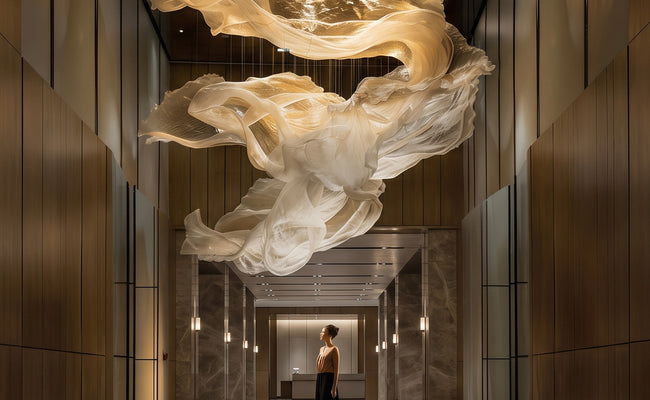
In a double-height living room. A California great room or a NYC loft can swallow a modest piece whole. This is where a 6-to-7-foot work reads as intentional rather than oversized.
Light matters more than people expect. Bronze looks richest under warm, directional light that rakes across the surface and shows the modeling. Polished steel wants light it can bounce. Track a room through the day before you commit to a spot, because a modern indoor sculpture that glows at 10am can flatten out under a single overhead downlight in the evening. If the piece is figurative, walk around it. Where a room allows approach from several angles, a work like the Large Contemporary Girl with Bird Bronze Sculpture - 130cm is designed to reward viewing in the round, so give it space to be seen from more than one side.
Budget, Commissioning and Delivery
Buyers always want a number first. The honest answer is that price for large contemporary indoor sculpture depends on material, size, complexity, finishing and installation. A tall polished bronze with intricate surface work and a custom plinth is a different proposition from a compact head study. Rather than guess from a price band, ask us for a tailored quote against your actual piece and site.
If you are commissioning bespoke, budget time as well as money. A cast bronze goes through modeling, mold-making, casting, chasing and patination, and each stage takes real hands and real days. The lost-wax casting process that most of our bronze work relies on has not fundamentally changed in thousands of years, and that craft is exactly why a good bronze outlives its owners. The Metropolitan Museum of Art traces this same lost-wax method back through antiquity, which is a good reminder of how durable well-made bronze really is.
For delivery, three things decide how smooth installation is: access, floor loading, and the final position. Narrow doorways, tight stair turns and elevator dimensions all need checking against the crated size. We handle logistics for large pieces, but the more we know about the route in, the better the delivery day goes. On one recent commission bound for a private residence, the access door was two inches too narrow, so we planned a side entry and a two-person carry in advance rather than discovering the problem on the day.
How Giant Sculptures Helps With Bespoke Projects
We are a bespoke sculpture supplier that works at scale, which means most of what we ship is either a substantial catalog piece or a commission built to a client's brief. If you have seen an animal, a figure or an abstract form you like but need it larger, in a different patina, or paired to a specific interior, that is normal work for us. Plenty of our contemporary indoor sculptures start life this way. We can adjust size, finish and base to suit the room.
Bronze animal work is a strong entry point for contemporary interiors because it carries character without cliche. For a room that needs presence and a talking point in equal measure, a Large Contemporary Wild Boar Bronze Sculpture - 150cm sits comfortably in both traditional and modern schemes. Dog lovers commissioning a portrait piece often start by browsing our dog statues and sculptures to settle on scale and stance before we discuss a bespoke version.
A short checklist before you buy or commission one of these contemporary indoor sculptures:
Measure wall height, ceiling height and the primary sightline.
Decide the emotional register you want: warm bronze, cool steel, or quiet stone.
Confirm floor loading and the delivery route into the room.
Choose a placement that gives the piece light and breathing room.
Ask for a tailored quote that covers finishing, plinth and installation, not just the sculpture.
Buy for the long term. A well-chosen contemporary indoor sculpture is not a seasonal accessory; it is the fixed point a room organizes itself around. Get the scale and material right, place it where it can breathe, and it will still be earning its keep long after the rest of the interior has been refreshed.