






































































































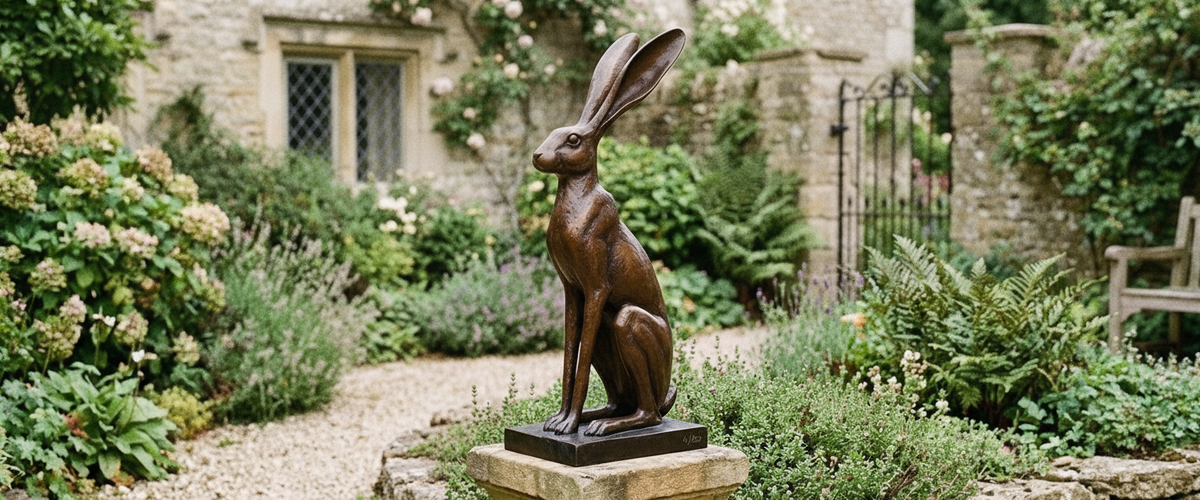

A bronze is only as rare as its foundry says it is, and the foundry says so in a few small digits near the base. If you are browsing any bronze sculpture for sale, from a 3-foot (90 cm) hare for a terrace to a life-size figure for a hotel forecourt, that fraction tells you more about long-term value than the patina, the plinth or the photography. Most buyers glance at it. The ones who end up with regrets usually never asked what it meant.
At a glance
An edition number such as 3/12 means the third cast of a planned run of twelve. The second number is a promise.
Artist proofs and foundry proofs are legitimate, but they sit outside the count and should always be disclosed.
Posthumous casts can be authorized or unauthorized. Documentation is the difference.
A genuine mark is usually cast in, or at least applied before patination, so the patina settles into it naturally.
One-off commissions and numbered editions hold value in different ways, so match the choice to the site.

Bronze Sculpture for Sale: What 3/12 Really Means
The denominator is the important half. When a foundry casts an edition of twelve, it commits to stopping at twelve, after which the molds should be retired or destroyed. That cap is what turns a reproducible process into a scarce object. French convention, which much of the art market still follows, treats up to eight numbered casts plus four artist proofs as originals. The Musée Rodin has cast within that limit for decades.
Does a low number matter when you compare one bronze sculpture for sale against another? Less than sellers like to suggest. In lost-wax casting every pour is chased and patinated by hand, so 1/12 and 11/12 are siblings, not copies of each other. What matters far more is that the edition is closed, documented and honest.
Artist Proofs, Foundry Proofs and the Casts Outside the Count
Artist proofs, marked AP or EA (épreuve d'artiste), traditionally belong to the sculptor. Foundry proofs (FP) and pieces marked HC (hors commerce, not for sale) are kept for reference or exhibition. None of these are suspect in themselves. The issue is arithmetic. An edition of twelve with four APs and two foundry proofs means eighteen bronzes exist, and a seller quoting only the twelve is telling you part of the story.
Be wary of any bronze offered as an AP with no stated edition size. A proof only means something relative to the run it belongs to.
Posthumous Casts and Recasts: The Gray Zone
The antique bronze market is full of casts made after the artist died. Some are perfectly legitimate. Degas left his figures in wax, and the bronzes most people know were cast after his death with the authority of his heirs, as collections like the National Gallery of Art explain alongside the surviving waxes. Others are surmoulages, molds taken from an existing bronze rather than the original model. These lose crispness with every generation and come out slightly smaller, because metal shrinks as it cools.
When a listing describes a cast as "after" an artist, or "in the manner of," it is telling you something. Read those words as carefully as the signature.

Foundry Stamps Under the Patina
A genuine cast-in mark has slightly softened edges, and the patina pools into the recesses exactly as it does across the surrounding surface. Marks punched or engraved later look different: sharper walls, sometimes a tiny burr, and if they went on after patination you will often see bright metal at the bottom of the strokes. A raking flashlight and a jeweler's loupe will show you most of what you need.
This is exactly the kind of problem that shows up in photographs buyers send before an auction. Picture a handsome "numbered" bronze horse, ideal for a courtyard, whose digits were punched in after the patina, with gold-colored metal glinting at the bottom of every stroke. The sculpture may still be attractive, but the number means nothing. Walk away, or at the very least ask for the foundry record before you bid, and favor pieces whose edition is recorded in writing from day one.
Numbered Edition or One-Off: How Each Holds Value in a Garden or Lobby
A numbered edition carries the advantage of comparables. Other casts exist, they sell, and that market history supports value. This suits collectors who may move house or rotate pieces, and it works well for recognizable subjects such as those in our bronze animal sculptures collection, where a hound or stag can read beautifully in a Napa vineyard or on a Hamptons lawn.
A one-off commission holds value through place and provenance. For a corporate lobby in Manhattan or a private estate in Aspen, a unique figure sized to the sightlines often makes more sense than a cast that could appear in a neighbor's garden. Our bronze figures and statues are a good starting point for scale and pose before you brief a bespoke piece. When Giant Sculptures produces a limited bronze edition, we cap it in writing and issue documentation tied to the foundry record, because ownership lasts longer than the excitement of delivery day.

Five Edition Questions to Ask Before You Pay a Deposit
Treat any bronze sculpture for sale as a document purchase as well as an object purchase. Before money changes hands, ask:
What is the full edition size, including every AP, FP and HC cast? You want one total figure.
Which foundry cast it, and when? A named foundry and date can be checked. "A European foundry" cannot.
Was it cast from the original model or the artist's authorized molds? This separates a lifetime or estate cast from a surmoulage.
Is "bronze" the metal or the finish? Listings across the market use the word loosely, so read the material line before you read the edition line.
What paperwork transfers with it? A certificate, foundry invoice or edition register protects resale and insurance.
Bronze-toned and mixed-material pieces deserve scrutiny too, just on different terms. If what the room needs is the warmth of bronze on a sculptural form rather than a numbered cast, a wood piece such as the Crescent Soleil Bronze Abstract Wood Sculpture - 89cm names its material in the title, which is the kind of clarity you should expect everywhere. For an entrance hall that wants height and presence without foundry pricing, a 180 cm resin piece like the Clear Stag with Bronze Antlers on Black Marble Resin Sculpture - 180cm is better weighed as a design statement than as an edition, and an honest listing lets you do exactly that.
If you would rather find a bronze sculpture for sale from a known run than research the secondary market, browse our bronze sculptures or bronze garden statues, then talk to us about scale. Budget depends on alloy, size, complexity, engineering, installation and patina, so we quote each piece individually rather than guess. Ask for a tailored quote, and ask us the five questions above. We expect them.
For wider placement ideas, Bronze Garden Bird Sculpture: When Verdigris Reads as Plumage and When It Reads as Neglect is useful companion reading before finalising the setting and sightlines.