





































































































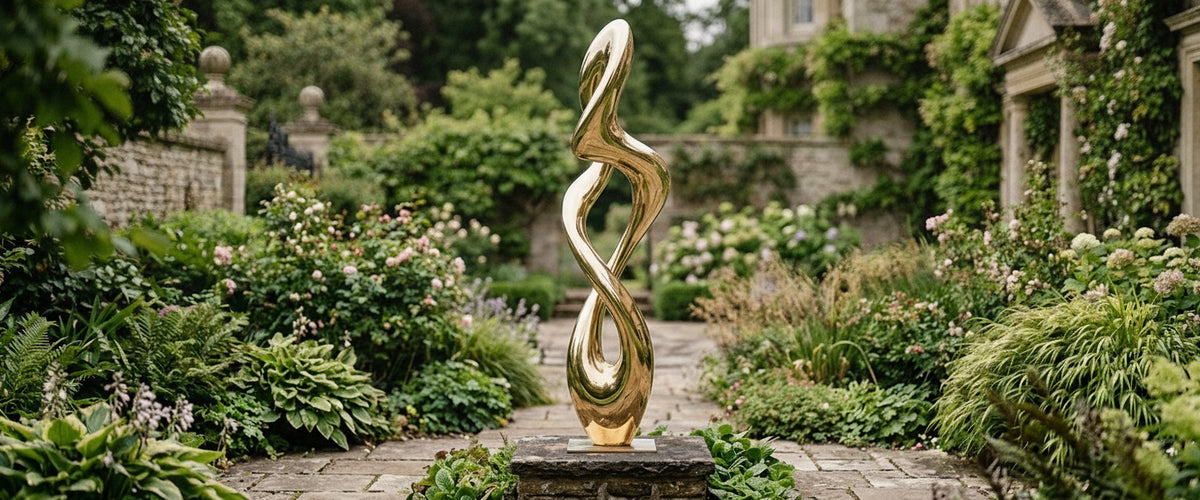

A large metal garden piece is only as good as the spot you give it. We have watched the same six-foot stainless steel form look monumental at the end of a Napa lawn and then look oddly small when a client tried it against a tall hedge that swallowed the light bouncing off the surface. The sculpture did not change. The sightline, the backdrop and the pedestal height did all the work, and that is the part most buyers underestimate.
Metal earns its place outdoors because it takes weather, holds a crisp edge, and plays with daylight in a way stone and timber cannot. A polished or brushed steel surface throws light in the morning, goes quiet at midday, and warms up at golden hour. So placement is not a decoration afterthought. It is the decision that determines whether your large metal garden investment reads as a landmark or a leftover.
A tall stainless form reads as a destination when it commands an open sightline.

Key Takeaways for Placing a Large Metal Garden Sculpture
Scale to the sightline, not the object. A piece looks right when it fills the view from where people actually stand, not when it looks big in the studio photo.
Pedestal height changes the reading. Raising a piece a foot or two shifts it from garden ornament to architectural marker.
Backdrop and contrast decide visibility. Reflective metal needs a background that lets it separate; matte or Corten needs something to reflect against.
Indoor and outdoor placement follow different rules. Interior pieces work at closer viewing distances; a large metal garden piece is read from across the space.
Most placement mistakes are about distance and light, not the sculpture itself.

What a Large Metal Garden Sculpture Looks Like in Different Settings
The same form behaves differently depending on where it lands. Drop a tall, organic stainless piece into an open lawn and it becomes a destination; you walk toward it. Set it inside a courtyard and it becomes a companion to the architecture, reflecting brick, glass and sky back at you. In a wide Texas garden with long views, a large metal garden piece like the Molecular Gold Organic Steel Outdoor Sculpture at 226cm (around 7 feet 5 inches) holds a distant sightline because the gold surface keeps catching light where a darker material would disappear.
Smaller footprints ask for tighter framing. Where the encounter happens at conversational distance, near a seating area or a pool edge, a grouped or rounded form such as the Pebble Organic Outdoor Steel Sculpture reads better than a towering vertical. Put that same piece 80 feet away and it shrinks into the planting. The lesson from large metal garden commissions we have shipped: match the mass of the piece to the distance it will usually be viewed from.
Indoors, metal changes character again. In a double-height entry or a gallery-style hall, a reflective sculpture becomes a light instrument, throwing color off polished floors and glazing. That is why we often steer interior buyers toward pieces with more surface movement, where the reflections carry the drama at close range.

Scale, Sightlines and Pedestal Height
Buyers usually ask how tall a piece should be. The better question is how far away people will stand. A large metal garden sculpture 100 feet down a lawn needs real height and mass to register; the same object at 20 feet can feel overbearing. We tell clients to walk to the two or three spots where they will actually see the piece (kitchen window, terrace, driveway approach) and judge scale from there.
Pedestal height is the quiet lever. Lift a piece and you change how it reads entirely. A form set flat on the grass belongs to the garden; the same form on a low plinth becomes an object of attention, and on a taller base it becomes architecture. Where the movement of the form runs upward, a dynamic abstract like the Phoenix Gold Abstract Outdoor Steel Sculpture at 212cm gains real presence on a modest plinth because that vertical gesture reads against the sky rather than against the shrubs behind it.
A modest plinth lifts a vertical form so its gesture reads against the sky, not the shrubs.
One practical note on engineering: raising a piece changes the wind load and the fixing detail. A large metal garden work needs proper anchoring and, for tall pieces, an engineered base. This is where a bespoke commission earns its keep, because the mounting is designed for the exact location, ground condition and exposure rather than guessed at afterward.

Indoor Versus Outdoor: When Each Wins
Outdoors is where these large-scale pieces belong when you want them to hold an open space, survive weather, and change through the day. Stainless steel resists corrosion well in most garden settings, and marine-grade stainless (316) is the sensible choice near coastal or pool environments where salt and chlorine are in play. According to the Nickel Institute, alloy selection and surface finish drive long-term corrosion behavior far more than looks alone, so the finish you pick on a large metal garden piece is a durability decision, not only an aesthetic one.
Indoors wins when you want the piece read up close, protected from weather, and integrated with interior lighting. For a wide hallway, stair landing or a gallery wall of glazing, a compact geometric form such as the Diamond Geometric Steel Sculpture at 103cm sits at the right scale, its facets catching directional light. The tradeoff is scale: interior ceilings cap the height you can use, so many buyers who want real drama end up choosing an outdoor location and a bigger piece.
Some clients want both worlds and place a piece in a covered loggia or an atrium that reads as inside but behaves like outside. Those transition spaces are excellent for a large metal garden form, because you get controlled sightlines and still catch shifting daylight.
Light, Backdrop and Contrast
Light is the difference between a sculpture that sings and one that sits there. Track where the sun moves across your site. A reflective gold or silver surface facing east delivers a morning show; facing west it warms at the end of the day. Backlighting a form at dusk turns it into a silhouette, which flatters flowing, open shapes.
Backdrop controls whether the large metal garden piece separates or merges. Polished stainless in front of a dense green hedge can vanish because the metal simply mirrors the green. Give it sky, water, pale render, or a gap in the planting and it snaps into focus. Where you have an open backdrop to work with, a silver abstract like the Dolphin Silver Abstract Steel Outdoor Sculpture reads cleanest, its curve drawing a clear line against the sky.
Contrast is the last check. Dark planting behind bright metal, or a bright wall behind a darker patinated form, gives the eye an edge to lock onto. When a client tells us a piece looks flat, the fix is almost always background, not the sculpture.
Common Placement Mistakes and How to Avoid Them
For wider placement ideas, Large Buddha Garden Statues: How Scale and Placement Decide the Whole Effect is useful companion reading before finalizing the setting and sightlines.
These are the errors we see most often once a large metal garden sculpture is on site:
Buying to the studio photo, not the garden. A piece that fills the frame in a catalog shot can look lost across an open lawn. Measure the viewing distance first.
Ignoring the backdrop. Reflective metal placed against matching foliage disappears. Aim for contrast or open sky behind the piece.
Skipping the pedestal decision. Setting a tall form flat on the ground wastes its verticality. Even a low plinth can lift the reading.
Under-engineering the base. Wind load on a large, tall metal piece is real. Anchor properly and design the fixing for the site.
Facing the wrong way for light. Point the most active surface toward the sun path you will actually see, usually from the terrace or main window.
Crowding the piece. Give a large metal garden sculpture breathing room. Planting that grows into it within two seasons will bury the effect.
A wider abstract animal piece such as the Horse Silver Steel Abstract Sculpture, which reaches up to 250cm, is a useful test of whether you have the room: its length needs an unobstructed line so the whole gesture reads at once. Squeeze it into a border and you only ever see fragments.
Commissioning the Right Piece for Your Site
When an off-the-shelf size does not suit the sightline, a bespoke commission is the honest answer. As a supplier of large-scale and bespoke work, Giant Sculptures builds each large metal garden piece to a specific height, finish and mounting for the exact location, which removes the guesswork around scale and anchoring. If you are browsing large metal garden sculptures for sale and still comparing forms and finishes, the wider metal sculptures collection is a good place to see how different surfaces behave, then narrow down by the viewing distance and backdrop your garden actually offers.
Budget for a large metal garden piece depends on material, scale, complexity, engineering, installation and finishing, so the sensible route is a tailored quote once the site and size are settled. Get the placement thinking right first; the piece follows from it.