





















































A carved sandstone lion can look flawless on delivery day and be shedding grit into the gravel by its third spring. Sandstone garden sculptures rarely fail because of the stone itself. The way a piece is bedded, drained and oriented does the damage, and most of that is decided before the crate is ever opened.
Sandstone garden sculptures carry one of the longest unbroken traditions in garden ornament, from Mughal palace courts to Victorian estate terraces. They also punish carelessness more visibly than bronze or granite. Sandstone is a sedimentary stone: grains of quartz and feldspar cemented together in layers, with pore space in between. That porosity is exactly what gives the material its warmth and its soft, light-absorbing surface. It is also the reason a piece placed in a wet hollow behaves differently from the identical piece placed six feet away on free-draining ground.

Quick Answer: What Actually Determines How Sandstone Ages
Grain direction. Bedding planes should run horizontally, the way the stone was laid down. Stand them vertically and the piece will delaminate.
Density. Soft, open-grained yellow sandstone weathers visibly faster than a tight, dense gray or buff bed.
Base drainage. Standing water wicking up into a plinth causes more splits than frost on the carved surface ever will.
Orientation. The shaded face greens and stays damp; the sun-facing side dries, bleaches and spalls.
Sealants. The wrong coating traps moisture behind an impermeable skin and accelerates the failure it was meant to prevent.
Bedding Planes: Read the Grain Before the Piece Is Placed
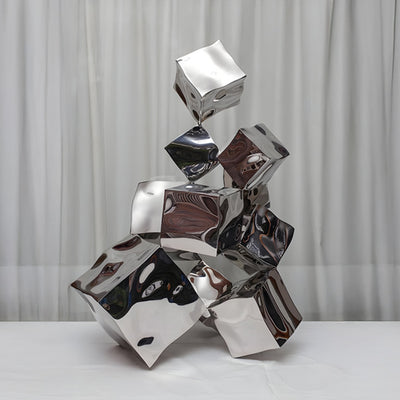
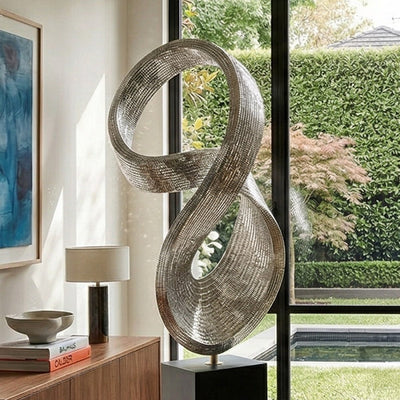
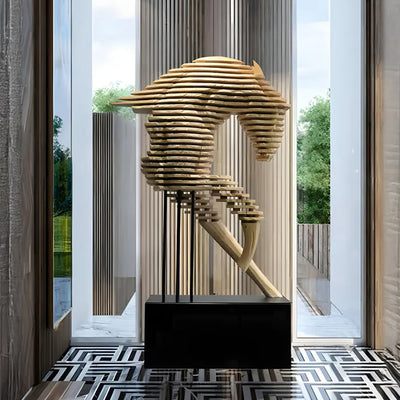
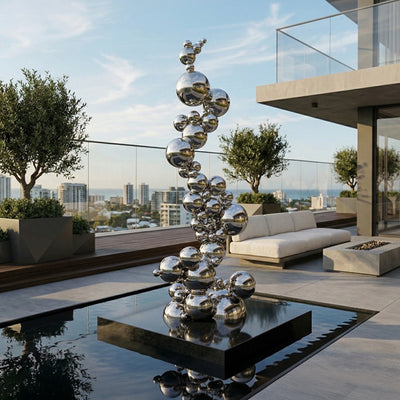
For wider placement ideas, 10 Stunning Stainless Steel Sculptures That Could Be in Your Garden is useful companion reading before finalizing the setting and sightlines.
Every block of sandstone remembers the riverbed or dune it formed in. Those layers, the bedding planes, are visible as faint stripes or tonal bands running through the carving. A well-made sculpture is carved with those planes running horizontally, so weather runs across the layers rather than into their edges. Turn the block ninety degrees and you have face-bedded stone, where each layer presents its raw edge to the sky. Water gets in, freezes, and lifts the layers off like pages from a damp book. Conservation bodies catalog this as one of the classic deterioration patterns in sedimentary stone; the ICOMOS-ISCS illustrated glossary is a useful reference if you want to see what early delamination looks like before it becomes structural.
Tonal banding shows the bed direction; it should sit horizontally once the piece is set.
Ask the supplier which way the bed runs. Any studio working seriously in stone will know without checking. When we ship sandstone garden sculptures we mark the bedding orientation on the crate, because installers who handle bronze all day will happily set a plinth on its side otherwise.

Soft Yellow Sandstone Versus Dense Gray, Five Winters Apart
Density is the single biggest variable in how sandstone garden sculptures hold their detail. Set two identical carvings side by side, one in a soft honey-yellow bed and one in a dense gray, and after five winters they are no longer the same object. The yellow stone will have rounded off; crisp edges soften, tool marks fade, lettering blurs. Many buyers love that. It reads as age, and on a country property with mature planting it looks correct within two seasons. The gray holds its line far longer and takes on lichen more slowly, so it looks new for longer too.
Pick based on what you want the piece to look like in a decade, not on delivery day. Broad-massed animal subjects tolerate a softer, warmer bed comfortably: at 220cm, roughly 7 feet 3 inches, the Indian Elephant in Pink Sandstone Statue - 220cm keeps its silhouette even as the surface mellows, because nothing about the reading of the form depends on fine tooling. Fine plumage, drapery folds or claw detail want denser stone.
The Shaded Face Greens First, and What That Tells You About Siting
Walk any old garden in the northern hemisphere and you can find north without a compass. It is the side of the stone wearing algae and moss, and south of the equator the same logic simply runs the other way. On a carving, that shaded face stays wet for hours longer after rain, and persistent moisture is what feeds biological growth and drives salt movement inside the stone.
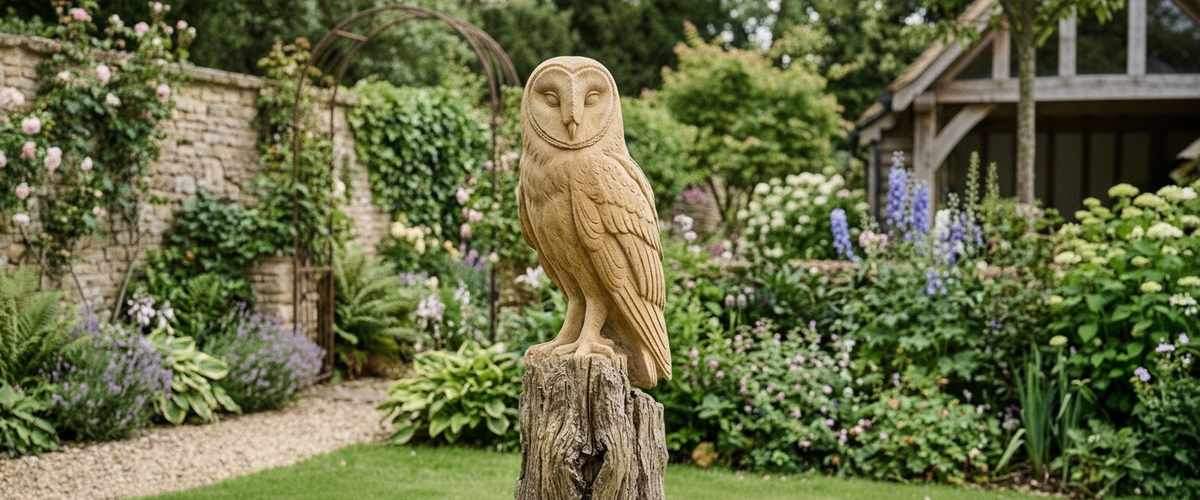
Use it. Sandstone garden sculptures set in a shaded border will green, so choose a subject where that patina reads as character rather than neglect. A perched bird form at 150cm, roughly 5 feet, such as the Barn Owl on a Post Sandstone Statue - 150cm, looks entirely at home with a soft green bloom down its shaded side. A formal terrace figure flanking a pool does not. For those, give the piece open sky and airflow on at least three sides.
Standing Water at the Base Is What Actually Splits a Plinth
Most failures we are asked to assess in sandstone garden sculptures start at the bottom, not the top. Water pools around the base, wicks upward through the pore network, carries dissolved salts with it, and those salts crystallize just below the surface as the stone dries. The result is a crumbling band a few inches up from ground level, and eventually a horizontal split.
The fix is unglamorous and permanent: lift the sculpture clear of wet ground on a compacted, free-draining pad, and never bed a stone plinth directly into cement mortar or into a lawn that puddles. Historic Environment Scotland's technical guidance on stone in buildings makes the same point about breathability at ground level, and it applies to freestanding sculpture just as much as masonry.

Sealing Sandstone: When It Protects and When It Traps Moisture In
Sealants sound like insurance. Applied wrongly, they do the opposite. An impermeable film coating stops water entering from outside but also stops the moisture already inside from leaving. The stone then dries from behind the film, salts build up at that boundary, and the coating lifts off carrying a layer of stone with it.
If you seal at all, use a breathable, vapor-permeable treatment designed for porous limestone and sandstone, applied to genuinely dry stone. In most temperate gardens, good drainage and annual gentle cleaning beat any coating. In coastal salt air or a heavily de-iced driveway setting, a specialist consolidant applied by a stone conservator is worth the call.
Detail Limits: What Sandstone Carries at Life Size and What Crumbles Off
Sandstone rewards mass. Muscle, mane, drapery, broad planes and deep undercuts all read beautifully at scale. Where the drama sits in bulk and gesture rather than hairline surface work, the carving keeps its impact as the stone weathers, which is why a subject like the Roaring Tiger Sandstone Statue at 200cm, about 6 feet 7 inches, holds up outdoors over decades.
What sandstone will not hold outdoors is thin, unsupported projection. Fingers held away from the body, delicate wingtips, slender weapons, open lace patterns. These survive indoors and shear off in a garden within a few winters. If a design calls for that kind of fine work at scale, we usually steer the commission toward bronze or cast metalwork for the delicate elements and keep the stone for the mass.
Sydney Sun Versus British Damp: One Stone, Two Different Failures
Sydney has a particular claim on this material. The city is built on Hawkesbury sandstone, so the sandstone garden sculptures Sydney gardens are known for read as native rather than imported. But the failure mode there is nothing like the British one. Australian sun drives thermal cycling and surface drying, so pieces bleach, dust and develop a chalky friable skin, and salt spray near the harbor accelerates it. British and northern US gardens face freeze-thaw and long saturation instead, so the same stone splits and delaminates rather than powdering.
In Sydney the enemy is sun and salt; in Britain it is freeze-thaw. Siting answers both.
Buyers in California and Arizona should plan like Sydney: shade at the hottest hours helps, and a light annual rinse removes abrasive dust. Buyers in New England, the Midwest and the UK should plan like a wet winter: drainage first, everything else second.

Buyer's Checklist for Sandstone Garden Sculptures
Confirm the bedding orientation with the supplier and mark it before installation.
Choose stone density to match the level of carved detail you want to keep.
Site the piece on free-draining ground, raised clear of standing water.
Decide whether a shaded, greening face suits the subject before choosing the spot.
Check access and lift equipment; a 7 foot stone animal can weigh well over a ton.
Avoid film-forming sealants; specify breathable treatments only, if any.
Clean with water and a soft brush, never a pressure washer at close range.
Budget for a proper base. It costs a fraction of the sculpture and doubles its useful life.
Commissioning Sandstone at Scale
Bespoke sandstone garden sculptures start with the block, which is why lead times differ from metal commissions. Giant Sculptures matches the bed and quarry to the design rather than the other way around, and we will say plainly when a design should be carved in stone and when it belongs in bronze, Corten or stainless steel. Working through the wider stone sculptures collection before the first conversation helps most clients settle the material question, since sandstone, marble and granite each behave differently in the same garden. Cost depends on block size, stone selection, carving complexity, base engineering, finishing and installation access, so the honest answer on price is a tailored quote rather than a headline figure.
Bring us the site conditions early. Soil drainage, prevailing wind, shade hours and how the piece will be viewed all shape the recommendation. Stone lasts for centuries when it is understood. It ages badly in a season when it is not.