






























































































Walk into most offices and the walls tell you almost nothing. A framed print here, a whiteboard there, maybe a logo vinyl someone approved in a hurry. Wall art office decor is the quiet upgrade that changes how a space feels the moment a client, candidate, or investor walks in. Get it right and the wall does real work: it signals attention to detail before anyone has said a word. Get it wrong and you have spent a budget on something nobody notices.
This guide is for the people who actually sign off on these decisions: office owners, facilities leads, interior designers, and architects fitting out commercial spaces. We ship large-scale and bespoke wall art office decor from our studio, so the advice here leans on what survives daily use in a working building, not what photographs well once.
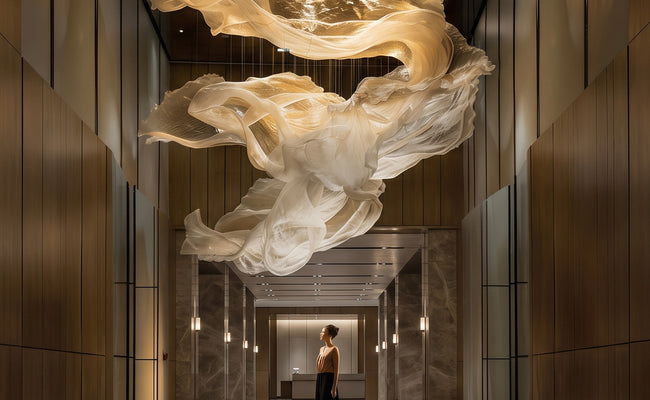
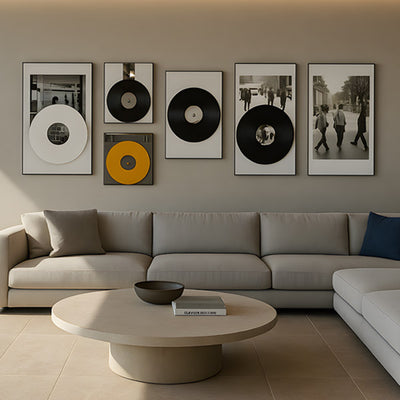
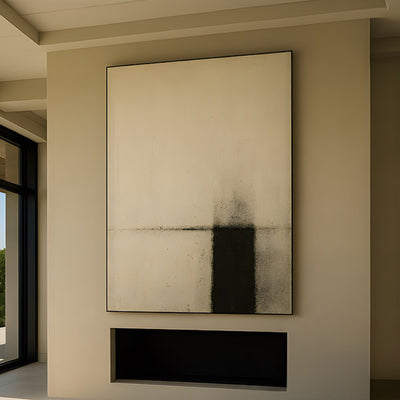
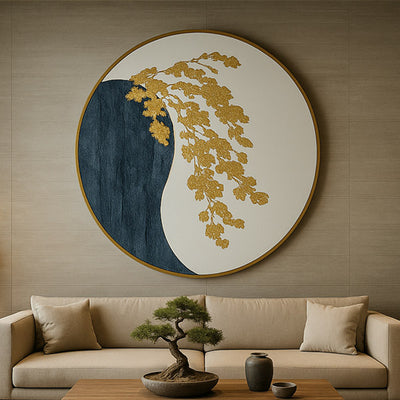
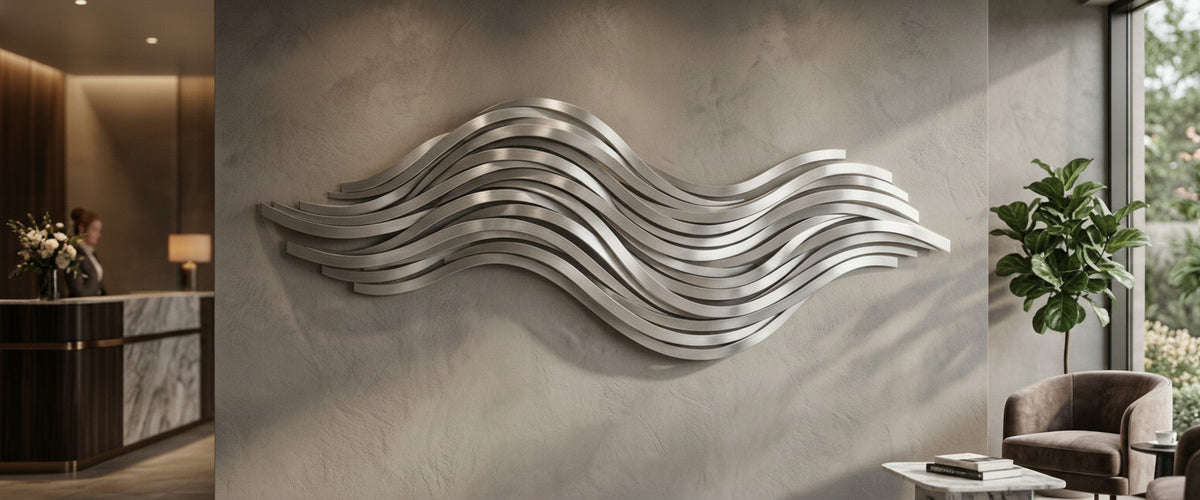
A properly scaled reception feature wall sets the tone before anyone speaks.

Key Takeaways Before You Buy
Scale first. A reception or boardroom wall usually needs a piece far larger than people expect. Under-scaling is the most common and most expensive mistake in office decor wall art.
Material sets the mood. Metal reads sharp and corporate, wood softens, textured 3D panels add depth without color noise.
Placement beats quantity. One well-sized piece on the right wall outperforms five small frames scattered around.
Bespoke solves fit problems. Odd wall dimensions, brand colors, and specific finishes are exactly where a commission earns its budget.
Budget depends on the build. Material, size, engineering, finishing, and installation all drive cost, so request a tailored quote rather than guessing from a range.

What Wall Art Office Decor Means and Who It Is Best For
Wall art for office decor covers everything from a single sculptural panel above a reception desk to a coordinated set that runs the length of a corridor. The best candidates for wall art office decor are spaces where people pause and form impressions: reception areas, boardrooms, client-facing meeting rooms, and the walls behind a video-call backdrop that now doubles as your brand on every screen.
Office art decor works hardest when it carries a clear intent. A law firm wants something composed and understated. A creative studio can push texture and color. A home office that shows up on daily calls needs a piece with enough presence to read on camera without dominating the room. The category is broad, which is why the buying decision matters more than the shopping.

How to Compare Wall Art Office Decor Options Before Buying
Start with the wall, not the artwork. Measure the full available area, then note what sits below it (a desk, a console, seating) because that furniture sets your visual baseline. A common rule from interior designers is to fill roughly two thirds to three quarters of the usable wall width with your focal piece. For a reception wall that runs 12 feet (3.7 m) wide, that points you toward a piece around 8 to 9 feet across, not the 3-foot panel most buyers default to. Most people instinctively choose wall art office decor that is too small, then wonder why the wall still looks bare.
Next, decide whether you want a flat graphic piece or dimensional depth. Three-dimensional pieces throw shadows that shift through the day, which keeps a corporate space from feeling static. Where the palette is already set by existing branding, a monochrome sculptural surface such as the Artisana White Grid 3D Paper Wall Art can hold a large wall without introducing color that clashes. That neutrality is a genuine advantage in offices where the brand colors are fixed.
Then think about longevity. Offices get repainted, reorganized, and relocated. A piece built to be remounted and cleaned easily is worth more over a five-year lease than something delicate. When you compare wall art office decor, ask how the work is fixed to the wall, how heavy it is, and whether it can be taken down and rehung without damage.
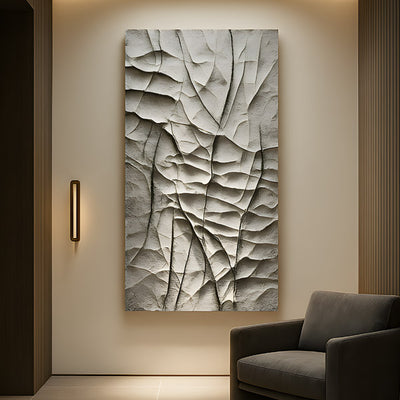
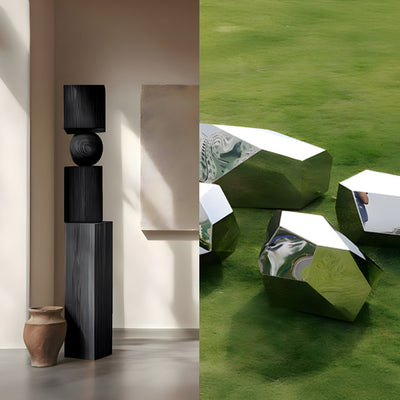
Metal, wood, and textured 3D panels each set a different tone in a working office.

Key Materials, Finishes, and Scale Decisions
Material is the fastest way to set tone. Here is how the main options behave in a working office:
Metal wall art reads precise and contemporary. Brushed or polished metal catches light and suits reception areas, tech firms, and finance interiors that want to look sharp. Our metal wall art range covers pieces that hold up well in high-traffic zones because the surface tolerates the occasional knock better than paper or delicate composites.
Wood wall art warms a space and softens hard architecture. In an office full of glass and steel, a carved wood panel introduces a natural counterpoint. Where a boardroom needs the wall to hold attention even when the overhead lights are low, a carved piece with integrated lighting like the Ventus Azure Depths Wood Carving 3D LED Wall Art pairs depth with its own light source, which reads well during presentations.
Textured 3D panels in resin, porcelain, or layered composite add depth and quiet drama. For a piece of wall art office decor that needs color used with restraint, the Rivura Navy Layered Sandstone Texture 3D Wall Art grounds a space in deep navy without shouting, and its texture reads differently up close than from across the room.
Illuminated pieces deserve a note of caution. Integrated LED work adds a real focal point in reception or lounge areas, but plan the power source before you fall in love with it. Retrofitting a discreet outlet is far easier during a fit-out than after the furniture is in.
On scale, err larger than feels comfortable in the showroom photo. Ceiling height, viewing distance, and the size of the furniture below all compress how big a piece looks once installed. A panel that seems generous flat on a studio floor can look modest on a double-height reception wall of 16 feet (about 4.9 m) or more.

Art Deco Office Decor and Style Direction
Style should follow the building, not a trend. Art deco office decor still holds strong appeal for firms that want a sense of heritage and craft: geometric lines, sunburst motifs, and a controlled use of metallic finish. The style dates to the 1920s and 1930s, and it still reads as confident in the right room. Where a reception or lounge area calls for that vocabulary with a genuine focal point, an illuminated piece such as the Genesis Sunburst 3D Resin Crystal Porcelain LED Wall Art is closer to the right design language than a flat framed graphic. Deco suits older buildings with good bones and firms that want to signal permanence. If your interior leans minimal and Scandinavian, a heavy deco statement will fight the room, so match the vocabulary to the architecture you already have.
For a home office art decor project, the calculus shifts slightly. You are balancing a professional backdrop with a room you actually live near. A single sculptural piece behind the desk usually does more than a gallery wall, which can look busy on camera and date quickly.
Where to Place Wall Art Office Decor for the Strongest Visual Impact
For wider placement ideas, 3d Wall Art Decor That Actually Reads From Across the Room is useful companion reading before finalizing the setting and sightlines.
Placement is where good wall art office decor either lands or disappears. A few reliable positions:
Behind the reception desk. The first wall a visitor faces. This is your headline. Go large and go considered.
The boardroom feature wall. The wall opposite the main seating, or behind the head of the table, carries the room's authority.
The video-call wall. Whatever sits behind your team on calls is now seen by clients every week. Treat it as brand real estate.
Long corridors. A single strong piece at the end of a corridor pulls the eye through the space. Avoid lining both walls with small frames.
Breakout and lounge areas. Softer, more textural work suits spaces meant to feel less formal.
Lighting makes or breaks the result. As a rule, hang the center of a piece around 57 to 60 inches (about 145 to 152 cm) from the floor at standing eye level, then adjust for the furniture below. Dimensional and textured pieces need light raked across the surface to reveal depth; flat front lighting flattens them. If you can, position a piece where it catches natural light through part of the day, then add discreet directional lighting for the rest. Museum guidance on display lighting is worth reading before you commit a fit-out budget, since the same principles that protect and present gallery works apply to a serious office install (see the Smithsonian's Museum Conservation Institute for the fundamentals on light and material care).
Budget, Commissioning, and Delivery Considerations
There is no honest flat price for wall art office decor because the cost is built from the piece itself. Material, overall size, structural engineering for larger works, finish quality, and installation all move the number. A large illuminated panel with custom color is a different proposition from a single unlit sculptural piece. The right approach is to define the wall and the effect you want, then request a tailored quote so the figure reflects your actual project rather than a generic band.
Delivery and installation deserve early attention for commercial work. Access matters: freight elevators, door widths, and whether the piece arrives in sections or as one unit. For a heavy or oversized work, confirm who is responsible for mounting and whether the wall needs reinforcement. We have shipped statement pieces into buildings where the only viable route in was a service stair, and knowing that in advance changed how the work was built and packed.
How Giant Sculptures Can Help With Bespoke Projects
Off-the-shelf wall art office decor works for many offices. Bespoke earns its place when the wall is an awkward size, the brand colors are specific, or you want a piece that no competitor can order from the same catalog. As a bespoke sculpture supplier, Giant Sculptures handles commissions that start from your exact wall dimensions, your material preference, and the finish that matches your interior.
A typical commission for office wall art decor runs through concept, material selection, a scale check against your measurements, then fabrication and finishing. Because we work at large scale across metal, wood, stone, and engineered surfaces, we can advise on which material will survive your building's traffic and light rather than just which one photographs best. If you are weighing several directions, browse our office art and broader wall art and wall decor collections first to sharpen your brief before a commission conversation.
The short version: measure your wall, decide on the mood you want the room to project, choose a material that matches your building's wear and light, and go bigger than your instinct suggests. Do those four things and your wall art office decor stops being an afterthought and starts doing the work you are paying it to do.