
























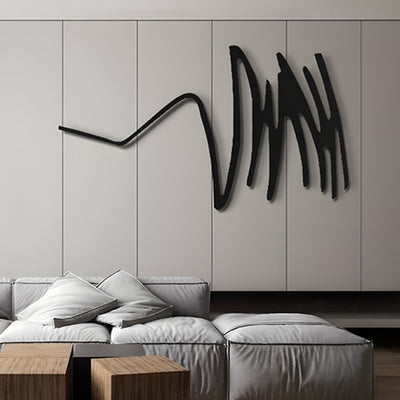

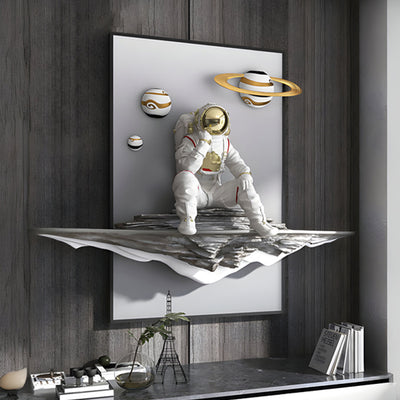

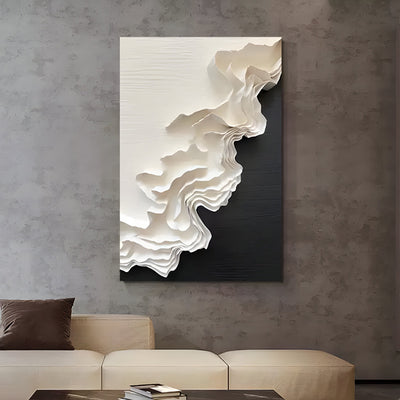
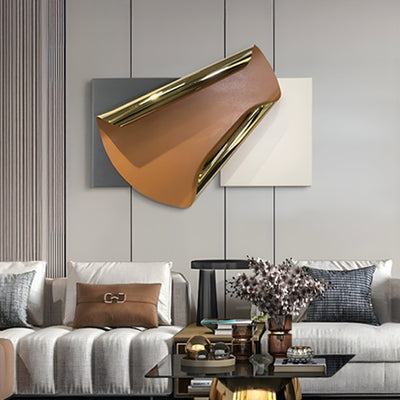














Most Art Deco dining rooms fail in the same place. Somewhere between the third sunburst mirror and the chrome bar cart, the room stops reading as 1929 Manhattan and starts looking like a themed party. Art deco dining works when one confident object carries the period and everything around it stays disciplined. The fix is rarely more Deco. It is almost always less Deco, chosen better.
At a glance
Your art deco dining room table sets the geometry. Repeat its lines; never compete with them.
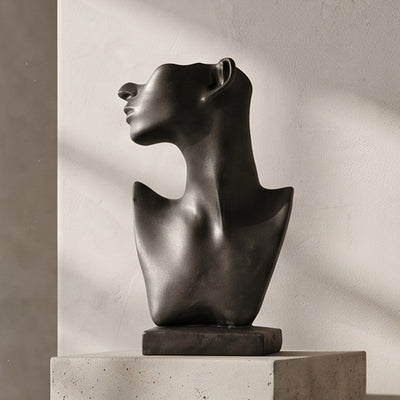
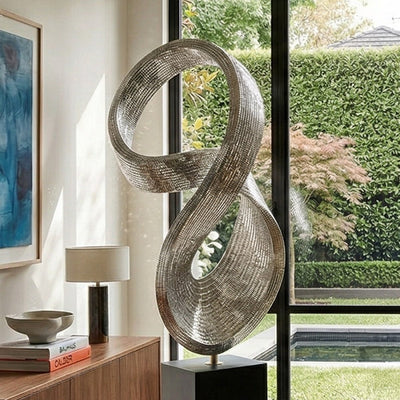
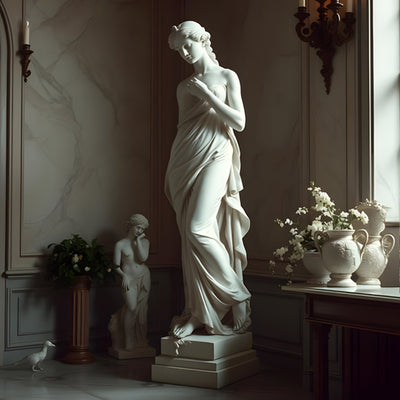
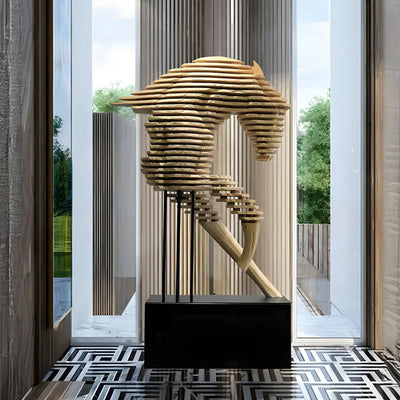
One sculptural anchor, such as a bronze figure on the sideboard, does more work than a wall of mirrors.
Add only one supporting element. A second mirror or relief on top of that is where costume begins.
Warm, low light is what makes brass and bronze look valuable rather than plated.
A well-made new piece in the Deco spirit often beats a tired period original.

Why Art Deco Dining Rooms Tip Into Costume Faster Than Any Other Style
Deco is a style of signals: chevrons, sunbursts, stepped profiles, fan shapes, lacquer and chrome. Every one of them is instantly legible, which is exactly the problem. A Georgian room can absorb a dozen classical details before anyone notices. A Deco room cannot absorb four. The original designers set ornament against long runs of plain veneer and quiet walls, a restraint that is obvious when you study the pieces in the V&A's Art Deco collection. Modern reproductions tend to stack motifs instead, and the eye reads the stacking as theater.
Stepped, Fluted or Lacquered: The Table Sets the Geometry
Start with the table, because it is the largest object in the room and it already declares a shape. A stepped pedestal base is a ziggurat in miniature, so it wants vertical, upward art: a tall figure, a narrow relief, nothing round. A fluted base sets up rhythm, which suits ribbed metalwork or a carved panel with repeating lines. A lacquered elliptical top is all curve, and that is where circular wall pieces belong.
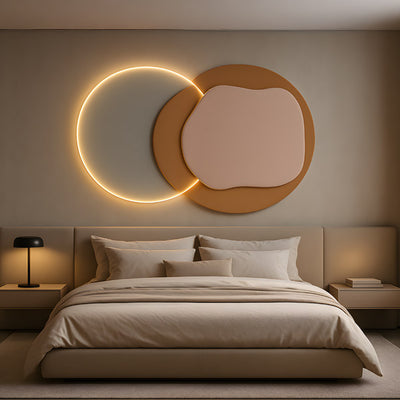
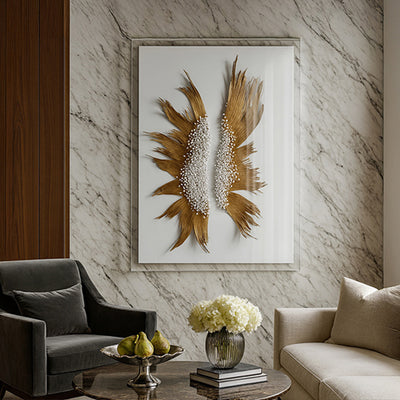
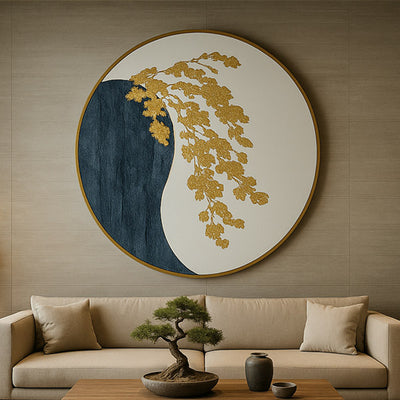
On the wall beside an elliptical table, a round floral piece in a golden finish, such as Blossom Halo Golden Bloom, picks up the oval of the tabletop and the radiating language of the period without resorting to a literal sunburst mirror. The rule for art deco dining is simple: let the table choose, and make the art for the dining room answer it.
A Single Bronze Figure Outworks a Wall of Sunburst Mirrors
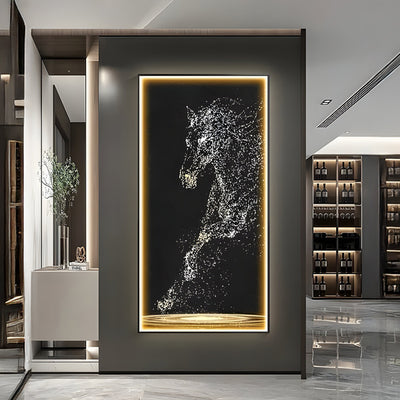
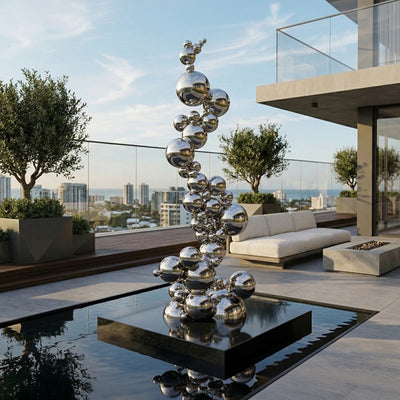
Picture a long dining room with four sunburst mirrors and a nagging sense that it looks rented. Keep one mirror, move it to the end wall, and replace the rest with a single bronze figure on the sideboard, sized so its silhouette breaks the line of the wall behind it. The room goes from busy to deliberate in an afternoon.
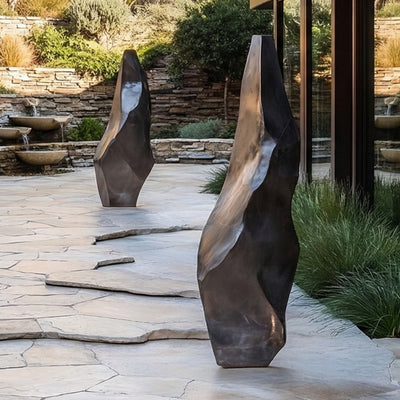
Bronze earns that role because it has weight, shadow and a surface that changes as you walk past it. Scale matters more than subject. The figure should rise clearly above the sideboard's back edge and hold its own against the art above it; a small statuette reads as clutter. If nothing ready-made fits your proportions, a bespoke commission lets us size the piece to the sideboard and ceiling height. For finished options, start with our dining room art collection.

Choosing the Second Element: Mirror, Metal Relief or Stone
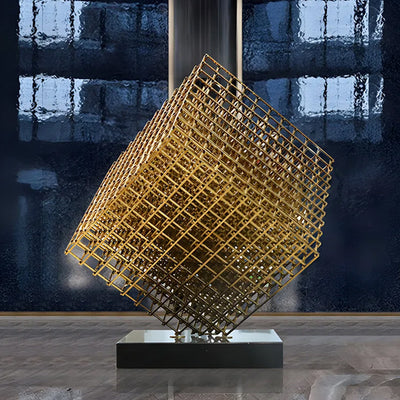
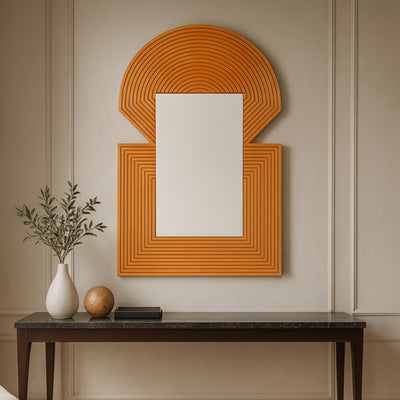
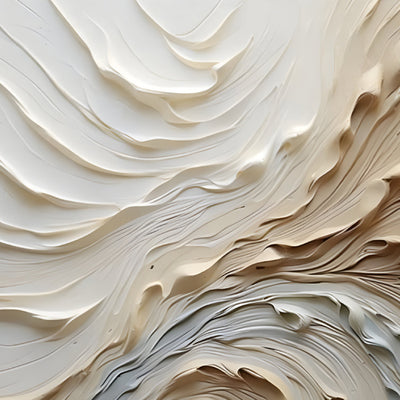
Once the anchor is placed, you get one supporting player. A mirror adds light and depth, best opposite a window. A metal relief adds texture and casts its own shadows at night; our iron art and wrought iron wall decor includes geometric pieces that suit a fluted or stepped table. Stone or marble adds coolness and mass, ideal for a pale lacquered scheme.
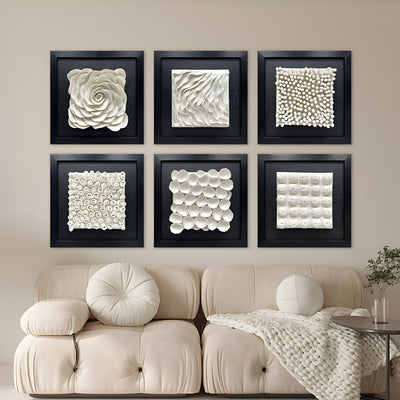
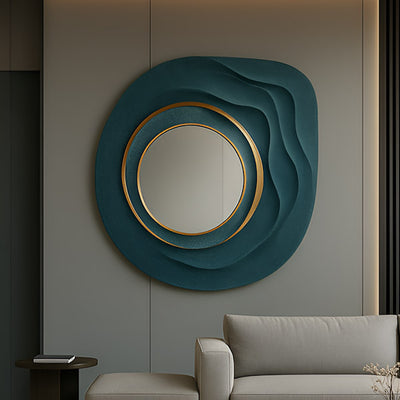
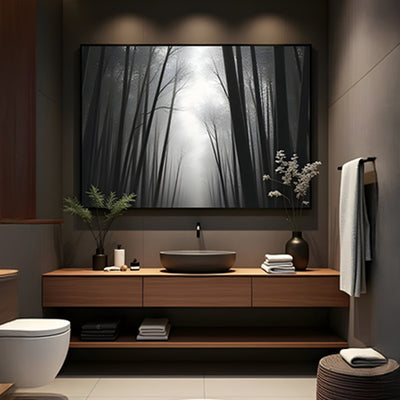
Pick one. A room with a bronze figure, a sunburst mirror and a marble relief has three focal points and no hierarchy. In darker, jewel-toned rooms the supporting player need not be reflective at all: where the walls are already deep and saturated, Blossom Halo Midnight Blue sits quietly in the palette, answers a curved table, and leaves the bronze to stay the star.
Brass, Bronze and Polished Resin After Dark
Dining rooms live at night, so judge your Deco scheme with the overheads off. Compare a bronze patina under warm and cool light and the difference is blunt: under cool white LEDs, a brown patina slides toward muddy gray-green, while warm light around 2700K brings out honey and amber. Brass behaves the same way.
Put everything on dimmers. Use a picture light or angled ceiling spot on the wall piece and a low uplight behind the sideboard figure to throw shadow up the wall. Polished resin and high-gloss lacquer show every hotspot, so aim light across those surfaces rather than straight at them.
Deco-Inspired, Not Deco-Replica
Period originals carry charm, but they also carry worn finishes, old repairs and a market full of spelter sold as bronze. Walk any of the buildings documented by the Art Deco Society of New York and you will notice that what made them work was craft and proportion, not nostalgia. A new piece made in solid bronze, stainless steel or stone, scaled to your actual room, will often look more authentically Deco than a tired original squeezed onto the wrong wall.

Buyer Checklist for Art Deco Dining Rooms
Read the table first. Stepped means vertical art, fluted means rhythmic art, elliptical means round art.
Choose one anchor. A bronze figure or substantial relief, sized to break the sideboard line.
Limit yourself to one supporting element. Mirror, metal, stone or a single quiet wall piece.
Test at night. Check finishes under warm, dimmed light before you commit.
Check material honesty. Ask what the piece is cast or fabricated from and how the finish is sealed.
Consider bespoke. If proportions are awkward, commission rather than compromise.
Budget for an art deco dining scheme depends on material, scale, casting or fabrication complexity, finishing and installation, so the sensible next step is a tailored quote. Giant Sculptures can propose sizes and finishes for your room, or you can keep browsing our wall art and wall decor for the supporting piece.
For wider placement ideas, Your Outdoor Wall Art Decor Needs a Lighting Plan Before It Goes Up is useful companion reading before finalising the setting and sightlines.