






































































































The first call we get about a large wall hanging sculpture is rarely about the art. It is usually about a hairline crack in the drywall, a corner that has dropped a quarter inch, or a timber panel that clicks every evening when the heat comes on. Big wall pieces sit inside the building's movement, and they report that movement before anyone else notices it. Here is how we think about choosing one so it still hangs true in ten years.

Quick Answer
Past about 3 feet (1 meter) across, treat the piece as a fixture. Survey the wall and specify the fixings before you fall in love with the finish.
Hardwood moves with humidity, so the hanging system has to allow for it.
Gloss resin is the weak link on sunlit walls. It fades long before it chips.
Brushed stainless steel and marble barely change. With these materials the risk moves to the fixings and the wall behind them.
Keep big pieces away from heat sources and drafty stairwells.
Book a proper check at five years and again at ten.
Past 3 Feet Across, a Large Wall Hanging Sculpture Becomes Structure
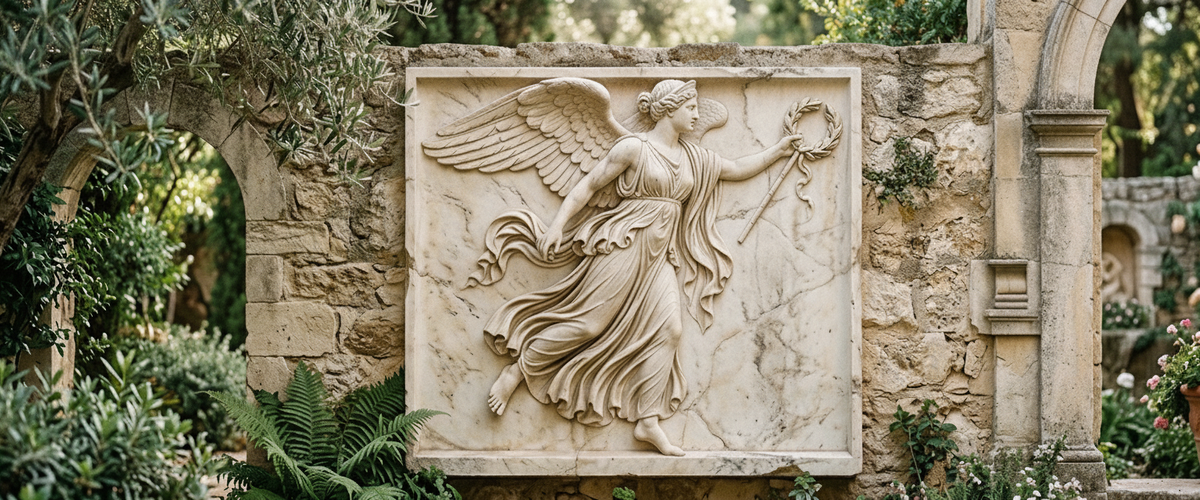
A small relief hangs on a picture hook. A large wall hanging sculpture hangs on a plan. Once a piece passes roughly a meter wide, its weight climbs quickly and so does the load on each fixing, and the question shifts from "will it look right?" to "what is it actually fixed into?" Just under that threshold, an 80cm marble panel such as Processional Figures Marble Relief Wall Art still needs located studs or solid masonry, but the fixing is a straightforward job for a competent installer. At 350cm (about 11.5 feet), a relief on the scale of Archangel Triumph Marble Relief Wall Art - 350cm is a different undertaking. It goes up on a fixing scheme agreed with the installer, and that usually means anchoring into studs, masonry or a steel subframe rather than trusting the drywall face.
At this scale, the fixing scheme matters as much as the carving.

Hardwood Moves Every Season, and the Gap Behind It Tells You First
Wood takes on moisture in humid months and gives it back when the heating runs. The USDA Forest Products Laboratory's Wood Handbook shows that movement across the grain is far greater than movement along it. That matters when a large wall hanging sculpture in oak or walnut spans several feet. The first sign is the shadow gap between the piece and the wall. It opens through the heating season and closes again in spring, and if it only opens at one edge, something nearby is drying that side faster. A French cleat or slotted bracket lets the timber move without tearing at its fixings. In the studio we let wooden panels acclimatize before final fitting, and anyone considering wood wall art should allow the same settling time at home.
Gloss Resin Fades on Sunlit Walls Before It Chips
Buyers worry about resin cracking. On a south- or west-facing wall, UV exposure is the bigger threat to a large wall hanging sculpture. High-gloss coatings go dull and slightly yellow, and the side nearest the window changes first, so the piece ends up with a sunburned half. We saw this on a sunroom wall in the Hamptons, where a client's older resin panel had faded unevenly within a few summers. For walls that catch hard afternoon light, we steer clients toward bronze, stainless steel or stone. All three tolerate direct sun far better than any gloss coating.
Brushed Steel Barely Changes, but Watch the Fixings
Brushed stainless steel is about as stable as wall art gets indoors. The surface holds its tone, and fingerprints wipe off. The trouble tends to come from the wall. In new-build homes in Texas and California, framing lumber dries and the structure settles during the first year or two, and fixings that were snug at installation can work loose by a fraction. Rigid framed metal pieces are the first to show it, because a straight edge reveals even a slight tilt. The same rule holds across metal wall art generally: the more stable the metal, the more attention the anchors need.
Stable metal shifts the risk to the anchors behind it.

Radiators, Underfloor Heating and Stairwell Drafts
These are the quiet causes of warping. A radiator or baseboard heater directly below a panel sends a column of warm, dry air up its face, so one side dries faster than the other. Radiant floor heating dries a whole room evenly, which is kinder to the piece but still hard on timber over a long winter. Stairwells cause the most trouble. Warm air rises through the void, cold air falls from high windows, and a big piece hung there goes through a small weather cycle every day.
Pieces We Re-Specified After a Wall Survey
A client in Austin wanted a broad oak panel above a double-height stair. The survey found an HVAC register just below the proposed position and a glazed wall above it. We re-specified the design in brushed steel with the same silhouette, and it has not moved since. In a Napa dining room, a 150cm (about 5 feet) marble panel, the Reclining Mermaid Marble Relief Wall Art - 150cm, was the right piece in the wrong wall build-up. The lime plaster was decorative skin over masonry, so we changed the fixing method and left the sculpture as it was. Sometimes a survey changes the material. Just as often it changes only what sits behind the wall.
Buyer Checklist Before You Commit
Wall build-up: drywall on studs, plaster on masonry, or concrete. Find out before you choose the piece.
Light: which way the wall faces and how many hours of direct sun it gets.
Heat: radiators, registers, fireplaces or radiant floors within a few feet.
Air movement: stairwells, entry halls and doors that open straight to the outside.
Access: whether an installer can reach the fixing points again for future checks.
Material fit: timber for stable, shaded rooms. Steel, bronze or marble where conditions are harsher.

Five-Year and Ten-Year Checks That Keep a Big Piece Hanging True
At five years, check the piece is still level, look for new cracks around the fixings, and test that nothing moves when lightly pushed.
Look at the shadow gap on timber pieces in both summer and winter. It should open and close evenly around the edges.
Compare the sun-facing edge of any coated or resin surface with the shaded edge for fading.
At ten years, have the installer take the piece down, inspect the anchors and cleats, and replace anything corroded or worn.
After any renovation nearby, such as a new heating system or a moved window, recheck the piece and do not wait for the scheduled date.
Every large wall hanging sculpture we make as a bespoke commission starts with these questions, because the room decides how the piece will age. If you are planning a statement wall, look through our 3D wall art for scale and form, then send Giant Sculptures photos, measurements and the wall details. Budget depends on material, scale, complexity, engineering, installation and finishing, so we will prepare a tailored quote around your space.
For wider placement ideas, Large 3d Wall Art Starts at the Wall Anchor: How to Hang Heavy Relief is useful companion reading before finalising the setting and sightlines.