



























































































A mirrored geometric panel is only as good as the wall it lives on. Hang the same piece on a shadowed hallway wall and then on a sunlit double-height staircase, and you will swear you bought two different works. That gap between potential and reality is what this guide is about. Mirrored geometric wall art rewards planning more than almost any other category we ship, because its whole personality depends on what it can catch and throw back.
Looking for the full range in this category? Browse our Wood Art collection for every available finish, size, and configuration.
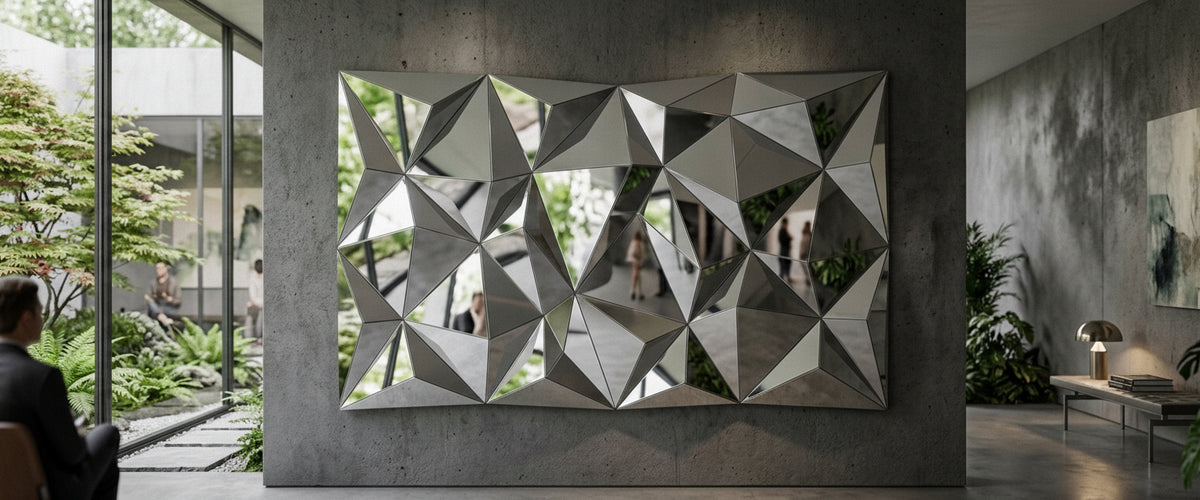
At Giant Sculptures we build and commission large-scale, durable metalwork, and mirrored geometric wall art is a recurring request from designers who want movement on a wall without hanging a painting. The tessellated facets pick up light, color and passing figures, so the art changes through the day instead of sitting flat. Get the placement right and it does real work. Get it wrong and it reads as a busy chrome smudge.

Mirrored Geometric Wall Art at a Glance
- Best trait: faceted, reflective surfaces that shift with light and viewer movement.
- Scale rule of thumb: fill roughly two-thirds of the visual wall width for a considered look.
- Indoors: wins on double-height walls, stairwells, and rooms with cross light.
- Outdoors: stainless steel and marine-grade fixings only; pick a backdrop that gives the facets something to reflect.
- Biggest mistake: hanging it opposite clutter or a dead white wall, so the reflection has nothing worth showing.
- Budget: driven by material, scale, panel count, engineering and finishing; ask for a tailored commission quote.

What These Reflective Panels Look Like in Real Rooms
In a great room with tall glazing, a piece of mirrored geometric wall art behaves almost like water. It grabs the green outside and the warm interior wood, then splinters both across its facets. The art never looks the same at 9am and 6pm, which is exactly the point. In a darker apartment, the same panel needs help; without a lamp or an accent light angled across it, the mirror flattens and the geometry disappears. Where a room needs the shifting, dual-plane play of reflection rather than a single flat surface, a piece like Vistarte Geometric Illusions Abstract Dual Panel Metal Wall Art is closer to the right design language.
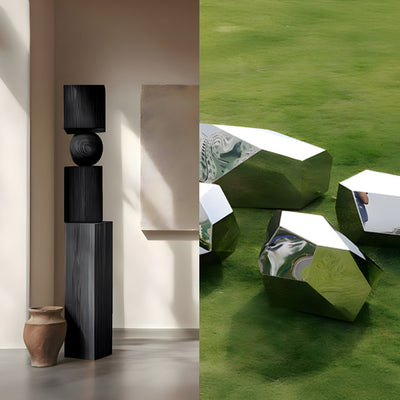
Outdoors, the effect changes again. On a pool wall or a rendered garden partition, a mirrored geometric form throws sky and planting back at you. This is where the line between wall art and freestanding sculpture blurs. If the setting can carry a freestanding faceted form rather than a mounted panel, Panther II Geometric Steel Outdoor Sculpture (217cm) shows how tessellated stainless catches an outdoor scene, and a wall-mounted version follows the same logic on a vertical plane. If you are drawn to that reflective, tessellated language, the wider geometric art collection is the fastest way to see the range of forms.

Scale, Sightlines and Pedestal Height
Scale is the decision that quietly makes or breaks the whole thing. Buyers tend to under-size. A piece that looked generous in the studio can shrink against a 14-foot (4.3m) wall until it reads like a postage stamp. As a working guide, aim for your mirrored geometric wall art to occupy around two-thirds of the usable wall width, and center it on the natural sightline rather than the physical wall center.
That sightline point matters more than most people expect. In a seated room, hang lower; the reflective facets should meet the eyeline of someone on the sofa, not someone standing in the doorway. In a circulation space like a stairwell or gallery landing, hang for the moving eye and let the piece reveal itself as people climb. Wall-mounted works do not sit on pedestals, but the same height discipline applies: the center of visual interest wants to land near standing eye height in a hall, and a touch lower where people sit.
For pieces with depth, 3d geometric wall art adds a second variable. Raised facets cast their own shadows, so the mounting depth and the throw of your lighting start to interact. A panel that projects three or four inches (roughly 8 to 10cm) off the wall reads very differently under a downlight than under a side wash. Ask about mounting depth before you commit to a lighting plan.

Indoor Versus Outdoor: When Each Wins
Indoors wins when you want controlled drama: a considered focal point in an entrance, a stair, or above a long console. You govern the light, the backdrop and the sightline, so mirrored geometric wall art performs predictably. It also stays clean longer, which matters for a polished surface that shows every fingerprint and water spot.
Outdoors wins when you want the art to breathe with the setting. A faceted metal piece on a garden wall borrows the whole scene: sky, foliage, changing weather. The tradeoff is material and maintenance. For anything exposed, we specify marine-grade stainless steel and appropriate fixings, because a true mirror polish outdoors needs an alloy that resists corrosion. The American Institute of Steel Construction publishes useful background on why stainless grades behave differently in exposed conditions, and it is worth understanding before you fix a reflective panel to an exterior wall (aisc.org).
One hard-won lesson from a coastal commission: salt air will dull a polished surface faster than clients expect, so we now brief owners on a simple wipe-down rhythm from day one rather than after the first haze appears.
Light, Backdrop and Contrast
A mirror shows you what is in front of it, so the space opposite your mirrored geometric wall art is really part of the artwork. Point a faceted reflective panel at a cluttered shelf and it will dutifully reflect the clutter, multiplied across every facet. Point it at a clean plaster wall with a single accent, or at a window with a view, and the piece finds something worth repeating.
Contrast against the mounting wall decides how the geometry reads. A bright mirror finish on a pale gray wall can vanish at certain angles; the same piece on a deep charcoal or a warm timber wall gains a crisp edge. This is one reason wood wall art geometric pieces and mixed timber-and-metal panels stay popular; the warmth of wood behind or around reflective facets gives the eye an anchor. If you prefer that softer, layered look, the wood wall art collection shows how grain and geometry play together.
Lighting is the last lever. A single raking light across the facets creates the sharpest three-dimensional effect, far more than a flat frontal wash. For deeper relief pieces, low side light exaggerates the shadows and makes the geometry legible from across a room. Test the direction before you fix any fitting; a downlight and a wall wash can produce opposite results on the same mirrored geometric panel.
Common Placement Mistakes We See
For wider placement ideas, Abstract Geometric Wall Art: How to Place It so It Actually Reads is useful companion reading before finalizing the setting and sightlines.
- Hanging too high. The classic gallery error. Mirrored geometric wall art hung above natural sightline throws light at the ceiling instead of the viewer.
- Ignoring the opposite wall. A mirror reflects whatever faces it. Style that space, or the art shows your mess.
- Under-scaling on a big wall. A small panel on a tall wall reads as an afterthought. Go larger or cluster with intent.
- Flat frontal light only. Frontal light kills the facets. Add a raking or side source to bring the geometry forward.
- Wrong material outdoors. Interior-grade finishes corrode outside. Specify marine-grade stainless for exposed positions.
- Competing focal points. Two loud pieces on adjacent walls cancel each other. Let the mirrored work lead and keep neighbors quiet.
Commissioning a Bespoke Piece
Off-the-shelf geometric panels suit plenty of rooms, and the 3D wall art collection is a good starting point when you want depth without a full commission. But a bespoke piece of mirrored geometric wall art is a natural candidate, because the whole effect hinges on your specific wall, light and sightline.
When we commission a piece of mirrored geometric wall art, we start with the wall dimensions, the light through the day, and what sits opposite. From there we advise on panel count, facet depth, finish (mirror polish, brushed, or a mixed metal-and-timber build) and the mounting system your wall structure can carry. Weight and fixing spread matter on plasterboard versus masonry, so structural detail is part of the conversation, not an afterthought. Budget depends on material, scale, complexity, engineering and finishing, so we quote each project individually rather than working to a fixed list price.
Get mirrored geometric wall art to read at scale, and the piece stops being decoration and starts holding the room. That is the difference between a panel you notice once and one that changes with the light every day you own it.