





















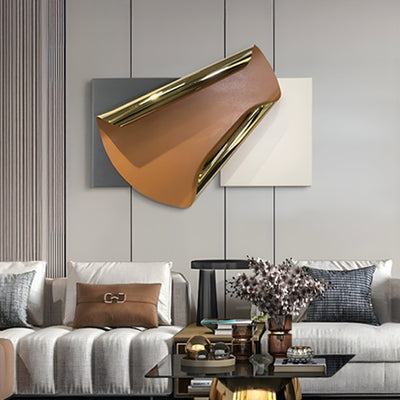
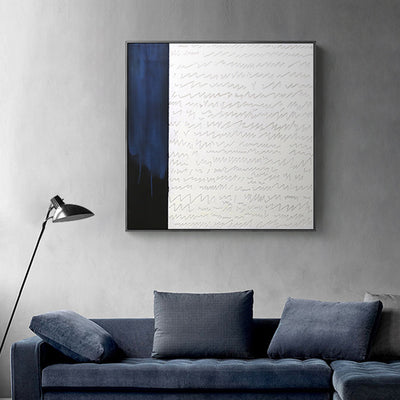
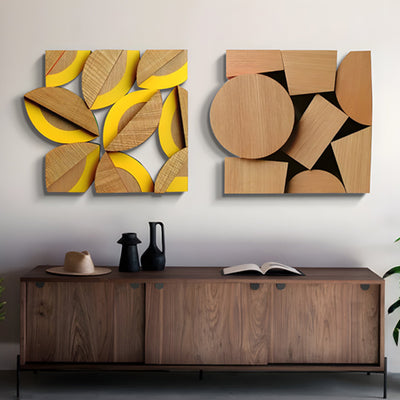

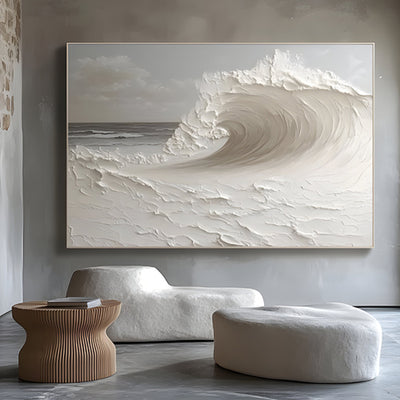
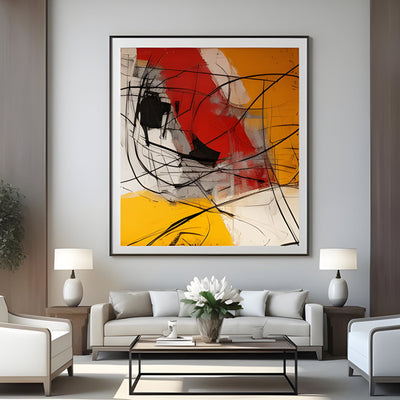
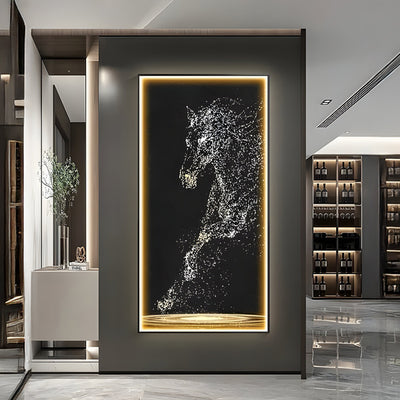
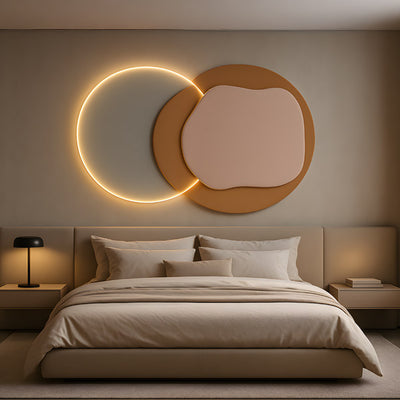
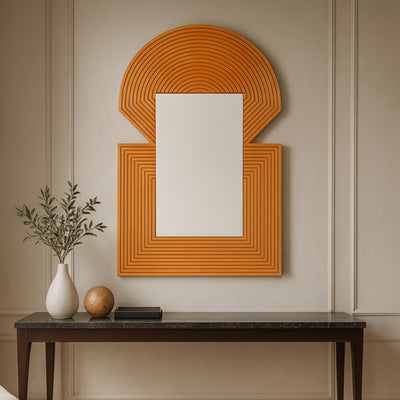
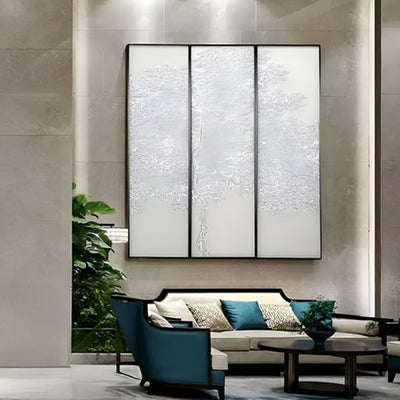
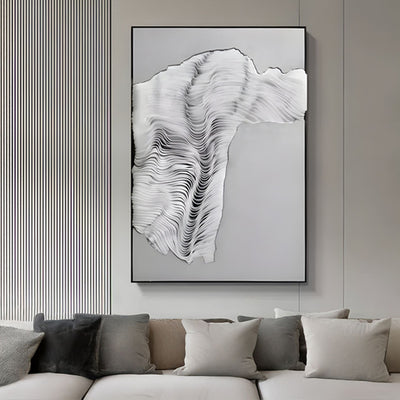
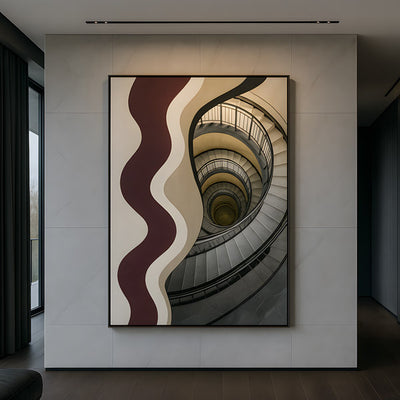
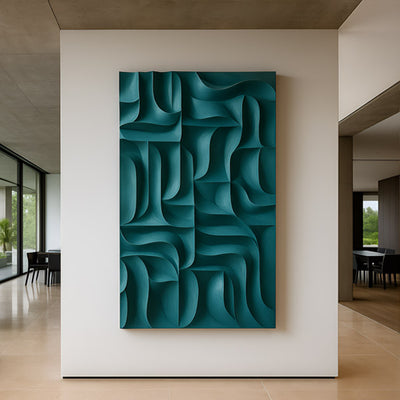










Most stair art is hung by someone standing still on the landing, which is the one place almost nobody looks at it from again. Metal wall art for staircase walls is seen on the move. You see it from the bottom step as you start up, square-on as you turn at the landing, and in a quick downward glance from the top. A piece that only works from one of those positions will feel slightly wrong every day you live with it. Stairwells are also narrow and awkward to install in, with light that is rarely even. That makes a metal wall art staircase brief harder than choosing metal wall art for a living room wall.

Key Takeaways
Design for three viewpoints: the bottom step, the landing and the view down from the top.
Follow the pitch: on the sloped run, line the composition up with the handrail, not the floor.
Keep relief shallow at shoulder height on narrow stairs. Save the deeper work for above head height.
Pick the light before the finish. A brushed surface and a mirror polish behave very differently under a skylight.
Plan the fixings and the access before you commission, especially in a double-height stairwell.
Three Viewpoints, One Piece
From the bottom step, the piece is foreshortened and seen from below, so the lower edge and any projecting elements dominate. From the landing you get the frontal view the maker designed for. From the top, you look down across the face, and anything with deep undercuts reads as shadow rather than form. When we model a metal wall art staircase commission in the studio, we check all three angles before signing off a drawing. A composition with a strong silhouette and texture that holds up at an angle almost always beats one that relies on a single head-on reading.
The same panel has to read from the bottom step, the landing and the top of the flight.
Why Level Metal Wall Art on a Staircase Looks Like It Is Sliding
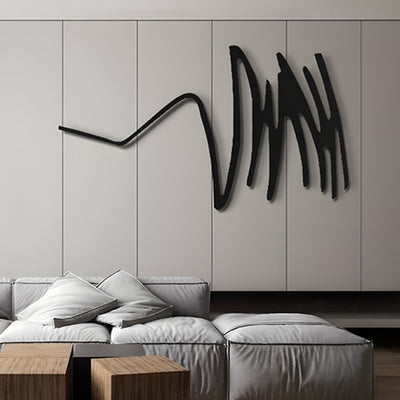
A residential stair usually climbs at somewhere between roughly 30 and 37 degrees. Hang a perfectly horizontal panel on the sloped wall and the eye compares it with the stringer and handrail, not with the floor, so the art looks as if it is slipping downhill. There are two fixes. Choose a composition with a diagonal or flowing rhythm that runs parallel to the pitch, or keep a level piece and move it to the landing wall, where horizontal lines make sense again. If you want metal wall art for staircase walls on the sloped run itself, set the center line roughly 57 to 60 inches (145 to 152 cm) above the stair nosings, measured straight up from the treads rather than from the hall floor.

Shoulder Room: How Deep Can Relief Go?
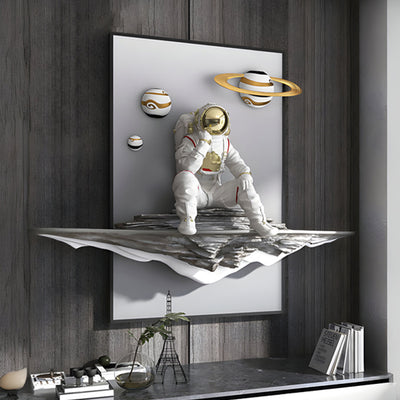
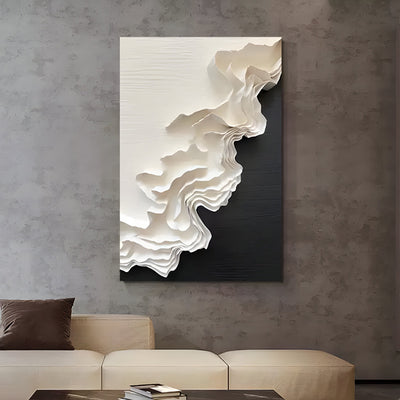
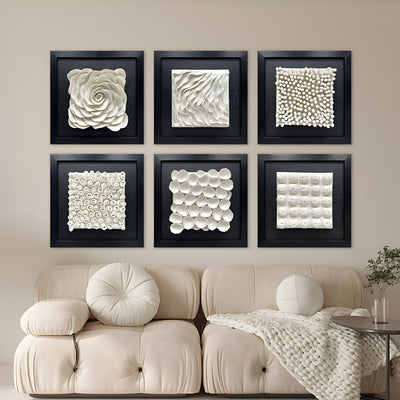
A narrow stair is a tight corridor that people climb while holding things. The International Residential Code, the model code behind most US home building rules, sets the minimum stair width at 36 inches (914 mm) and lets handrails project up to 4.5 inches (114 mm) into that width. On a stair that tight, a sculpted edge standing 4 inches off the wall at shoulder height makes people flinch, and it will get brushed by laundry baskets and shoulders. Our rule of thumb is to keep projections at shoulder height to about 2 inches (5 cm) on narrow flights and to put the deeper layered work from our 3D wall art collection above head height or on a landing wall with open floor in front. We learned this on a metal wall art staircase project in a Brooklyn brownstone, where the first drawing had a petal-like edge at shoulder height that would have caught a coat sleeve on every trip down. We flattened that lower zone and kept the drama above.
Pendant, Skylight or Wall Washer: How Stair Light Rakes Across Steel and Brass
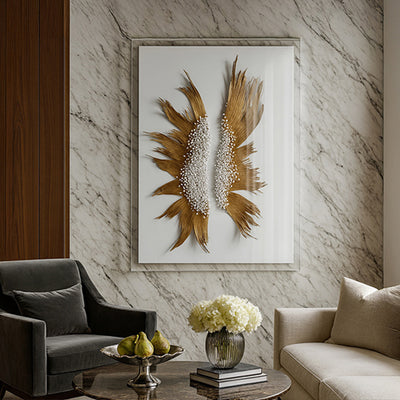
Stairwells get unusual light, and metal shows every bit of it. A skylight sends daylight down the wall at an angle that shifts through the day, so textured stainless steel and hammered brass can look sharply modeled at one hour and noticeably flatter at another. A pendant hanging in the void puts a hotspot on any polished surface, and from the top step you can end up staring at the bulb's reflection. A wall washer set back from the wall gives an even wash but softens relief. For textured work, a narrow grazer mounted close to the wall brings out the surface far better. Brass also changes color over time unless it is lacquered, and the Copper Development Association has useful notes on how copper alloys age indoors. A stairwell has a lot of hands passing close, so on any metal wall art staircase project decide early whether you want that patina or a sealed finish.
Studs, Masonry and the Double-Height Ladder Problem
Every metal wall art staircase install has the same snag: there is no level floor under the wall. Stepladders on treads are unsafe, so a double-height stairwell usually needs a stair-adjustable platform or a small scaffold tower, which you should budget for and book. Behind the drywall, wood studs typically sit at 16 inches (406 mm) on center, which rarely matches where a panel's fixing points want to go. We usually specify a hidden French cleat or a backing plate spanning several studs. Masonry and concrete stairwells take sleeve or chemical anchors and need proper drilling. A large steel panel can weigh well over 100 pounds (45 kg), so share the wall build-up with us before fabrication. It is far easier to place fixing points on the back of a piece in the workshop than to improvise on a ladder.
Tall, Narrow Stairwells: When a Stepped Series Beats One Catalog Panel
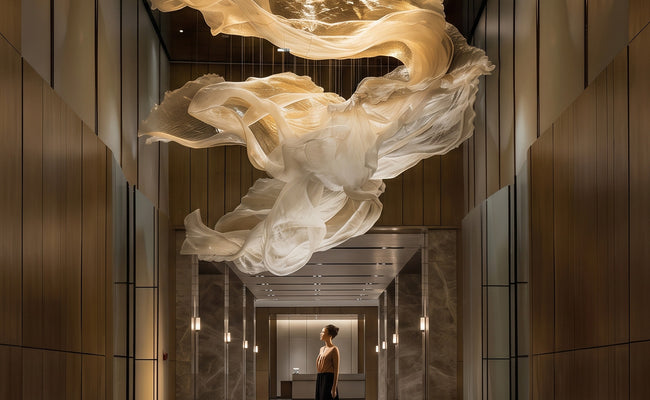
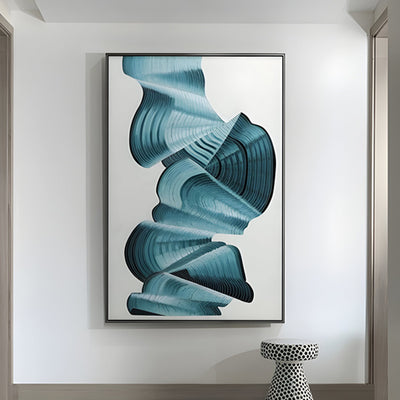
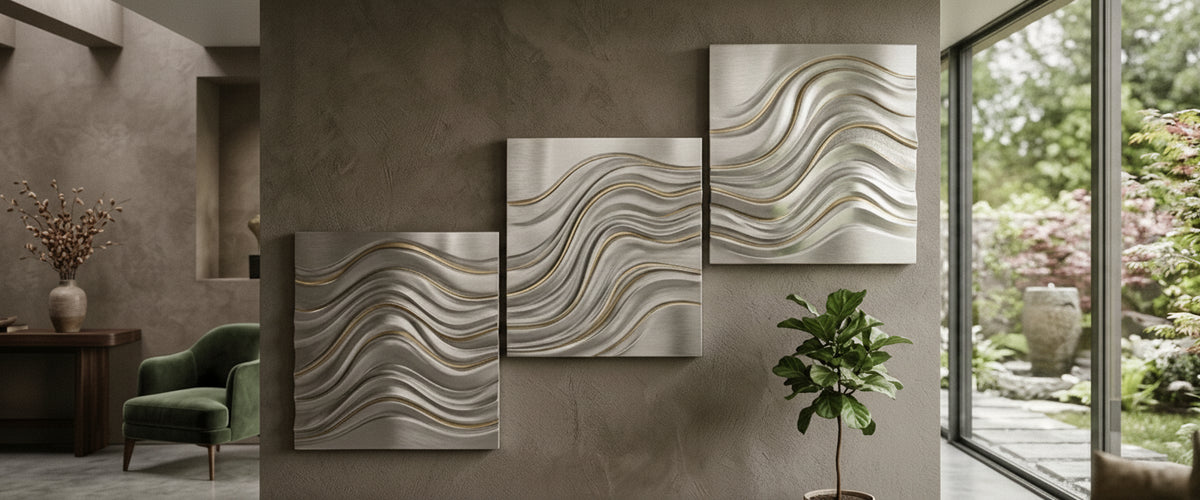
A three-story stairwell is tall and thin, and a single standard panel looks lost in it. A stepped series, with three or four related pieces rising with the flight, fits the pitch, gives each viewpoint its own moment and is much easier to carry up a stair and hang. For a Dallas townhouse we shipped a stepped run of brushed stainless panels whose wave motif climbs with the handrail, and each panel went up the stair by hand with no crane or window removal needed. Browse our metal wall art collection for single statement pieces, and talk to us about a bespoke series when the wall is taller than it is wide.
A stepped series follows the pitch and is far easier to carry up the stair than one oversized panel.

Buyer Checklist for a Metal Wall Art Staircase Project
Photograph the wall from the bottom step, the landing and the top before choosing anything.
Measure clear stair width and handrail projection, and keep relief shallow where shoulders pass.
Note the light sources and when the stair gets direct sun.
Choose a finish to match: brushed or textured for raking light, polish only where glare is controlled.
Confirm the wall build-up (stud, masonry, concrete) and send photos to the fabricator.
Plan access for installation, including a platform or scaffold in double-height spaces.
Decide between a single piece and a stepped series based on wall proportion, not catalog habit.
Budget depends on material, scale, complexity, engineering, installation and finishing, so the most useful next step is a tailored quote. Giant Sculptures designs and builds bespoke metal pieces for stairwells, atriums and double-height halls and ships them worldwide. Send us your stair dimensions and a few photos, or start by browsing our wider wall art and wall decor range.
For wider placement ideas, 3d Metal Wall Art Lives in the Shadow Gap: How to Place It in a Living Room is useful companion reading before finalising the setting and sightlines.