






















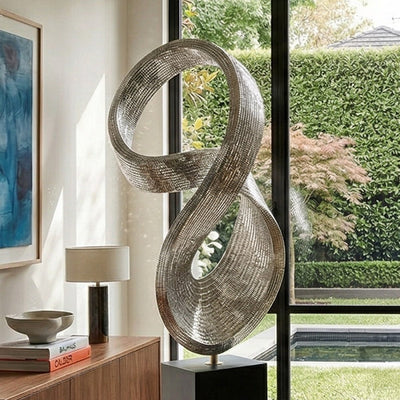



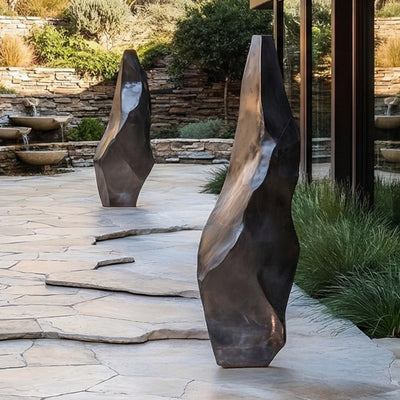



















































A modern abstract metal sculpture can hold an entire room in the best way, or it can shrink into a corner and look like an afterthought. Same piece, same finish, wildly different result. The variable is almost never the metal sculpture itself; it is where you put it, how high it sits, and what sits behind it. We have shipped enough commissions to know that the client who obsesses over the bronze patina and skips the placement plan is the one who calls back a month later, quietly disappointed.
So before you fall for a form, think about the space it will live in. That is what decides whether a modern abstract metal sculpture earns its footprint.
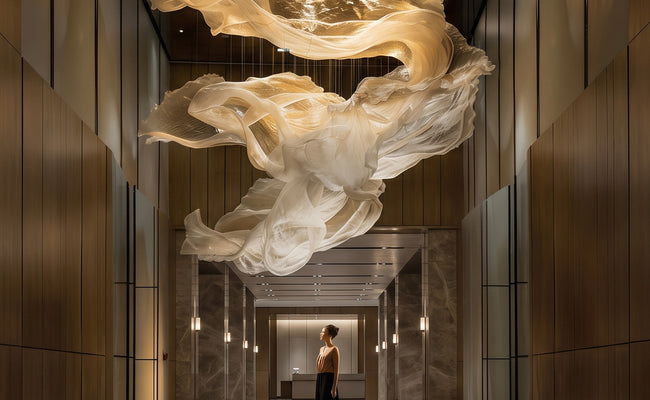
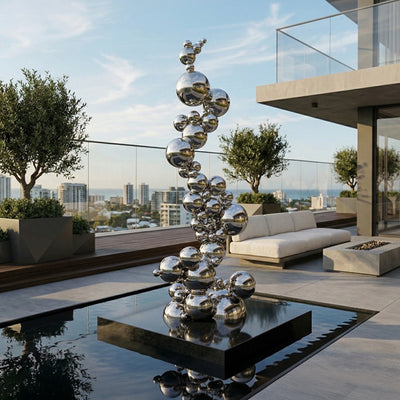
A single strong form commands a double-height hall where nothing competes for the eye.

Key Takeaways
Scale beats detail. A piece read from 20 feet away needs mass and silhouette, not fine surface work.
Pedestal height changes the whole read. A few inches up or down shifts a sculpture from grounded to floating.
Backdrop is half the sculpture. Contrast between the metal and the wall or planting behind it is what makes the form legible.
Indoors rewards intimacy; outdoors rewards mass. Match the piece to how close people will stand.
Sightlines matter more than the wall you had in mind. Place for the approach, not the plan drawing.

What a Modern Abstract Metal Sculpture Looks Like in Different Rooms and Settings
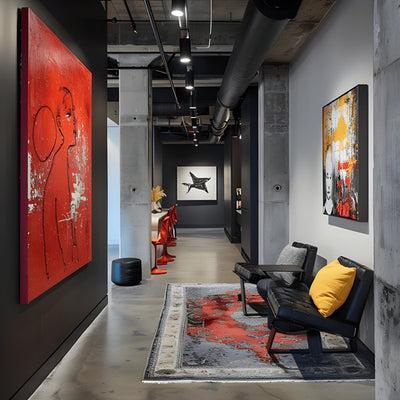
A modern abstract metal sculpture behaves differently depending on how much air surrounds it. Set a polished bronze form in a double-height entrance hall and it reads as a confident, singular object; the eye has nothing to compete with, and the curves catch daylight from above. Drop that same piece into a busy living room stacked with art, textiles and a large sofa, and it fights for attention it will not win.
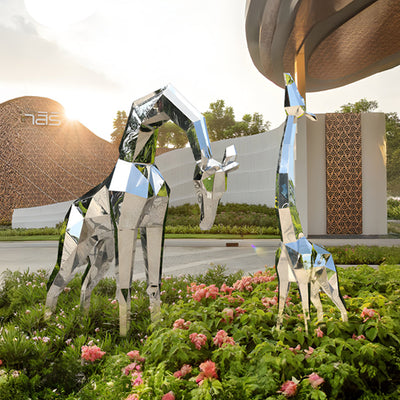
Indoors, modern abstract sculptures tend to work as punctuation. One strong form at the end of a hallway, on a console, or centered in a stairwell void. Outdoors, the rules loosen and the scale grows. A lawn or a gravel court can absorb a piece that would overwhelm any interior. The open sky is a neutral, endlessly patient backdrop, which is why so many of the larger abstract bronzes we make are destined for gardens rather than rooms.
The lesson from the studio: buyers routinely underestimate how much empty space a modern abstract metal sculpture needs to breathe. Give it room and it commands. Crowd it and it apologizes.

Scale, Sightlines and Pedestal Height: the Choices That Change How a Piece Reads
Scale is the first decision and the one people get wrong most often. A modern abstract metal sculpture that looks generous in a warehouse showroom can look modest once it is 30 feet from your front door across a lawn. As a rough working rule, judge scale from the distance people will normally view it, not from arm's length.
For an interior focal point in a large room, a piece around 3 to 4 feet (roughly 90 to 120 cm) usually holds its own on the floor or a low plinth. A form such as the Large Modern Abstract Bronze Sculpture - 94cm sits comfortably in a hallway or on a wide console, close enough that its surface work rewards a second look. Step up to the Large Modern Abstract Bronze Sculpture - 120cm and you are into pieces that want floor space and a clear approach rather than a shelf.
Pedestal height is the quiet lever. Raise a modern abstract metal sculpture and you formalize it; the piece becomes an object to be regarded. Lower it, or set it directly on the ground, and it becomes part of the space you move through. For figurative abstracts, we often place the visual center of the form near eye level for the average standing viewer, around 5 feet (152 cm). Get this wrong and you either force people to look up an uncomfortable angle or you bury the most expressive part of the piece below the natural line of sight.
Walk the real approach before you commit: a piece meant to be read in the round needs room to be circled.
Sightlines are the third factor and the most overlooked. Walk the actual approach before you commit. Where do people first see the sculpture? From the driveway, the front door, the top of the stairs? Where a work is designed to be read in the round, such as the Monumental Modern Abstract Biomorphic Bronze Sculpture - 340cm, it needs a position people can circle. Push it against a wall and you lose half of what you paid for.

Indoor Versus Outdoor Placement: When Each Wins
For wider placement ideas, Contemporary Abstract Metal Sculpture: A Buyer's Guide to Form, Scale, and Placement is useful companion reading before finalising the setting and sightlines.
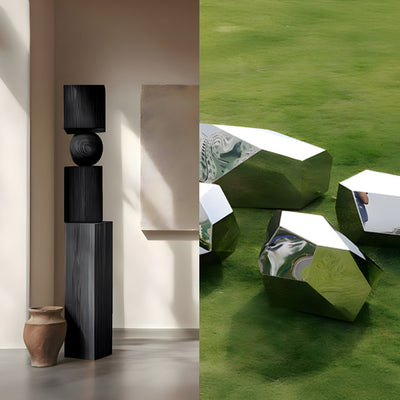
Indoors wins when you want intimacy and control. You govern the light, the backdrop and the viewing distance, and the piece stays protected from weather. Polished bronze and stainless steel keep their sheen indoors with almost no effort, which makes reflective finishes a natural interior choice. A modern abstract metal sculpture kept inside also asks less of you in maintenance.
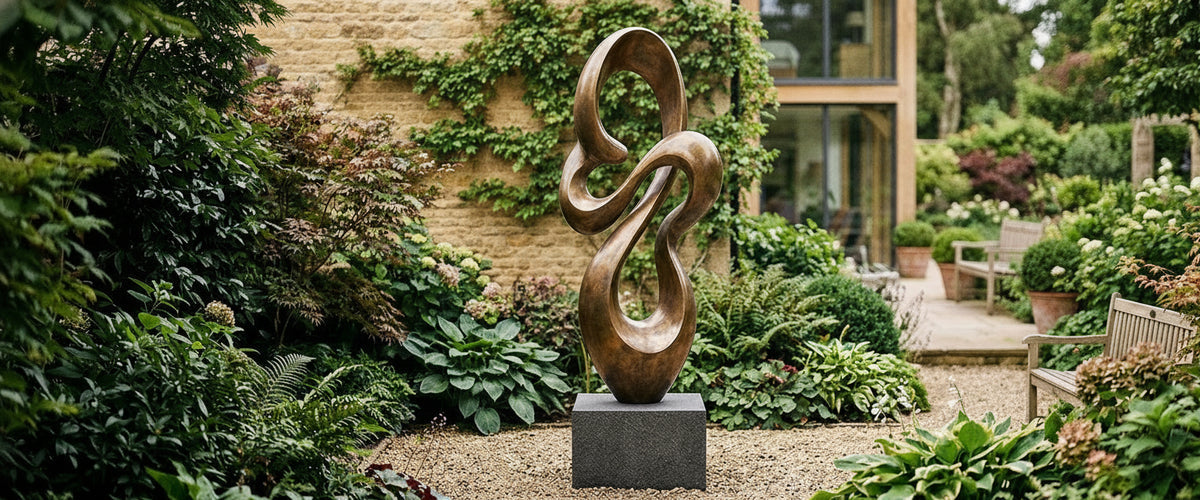
Outdoors wins when you want scale and drama. A garden gives you the space to place something monumental, and natural light moves across the form through the day in a way no gallery spot can copy. Material matters more here. Bronze develops a patina over time and takes to the elements gracefully; the Metropolitan Museum of Art has good background on how bronze surfaces age and are conserved, which is worth reading before you assume a fixed color forever. Corten steel is built to weather into a warm oxide skin. Stainless steel resists corrosion and holds a mirror finish. If a piece is heading for a coastal property, tell us early; salt air changes the specification.
For buyers torn between the two, ask a blunt question: do you want people to live around a modern abstract metal sculpture daily, or to arrive at it? Daily contact suits interiors and mid scale. Arrival suits gardens and monumental work; where the setting needs a piece to be discovered from a distance across open ground, the Monumental Modern Abstract Arch Bronze Sculpture - 370cm is the kind of scale that lands properly.
Light, Backdrop and Contrast: What Decides Visual Impact
A modern abstract metal sculpture is only as strong as the contrast behind it. A dark bronze against a dark hedge disappears; the same bronze against a pale render wall or a bright lawn snaps into focus. Before you site anything, hold up something roughly the right color and mass in the intended spot and look at it from the main viewpoints. It feels crude. It saves expensive mistakes.
Light does the rest. Reflective stainless and polished bronze want directional light to model their curves; flat, even light kills them. Matte and patinated surfaces are more forgiving and read well in softer conditions. Outdoors, note where the sun sits at the times you will actually see the piece, evening on a terrace, morning from the kitchen, and place accordingly. A raking, low sun across a textured surface is where a modern abstract metal sculpture looks its best.
Indoors, one well-aimed spot beats a ceiling full of ambient light. Aim to graze the surface rather than flatten it. If the piece will sit near a window, remember that daylight shifts through the day and the sculpture will look like several different objects between breakfast and dusk. That is a feature, not a flaw, if you have placed it to catch the movement.
Common Placement Mistakes We See in Commissions
Some errors come up again and again with a modern abstract metal sculpture. Here is the short list, and how to avoid each one.
Buying for the empty room. People choose scale before the furniture arrives, then wonder why the sculpture looks lost once the room fills. Plan for the finished space.
Flattening a piece against a wall. If a work is designed in the round, give it clearance to be circled. A wall placement wastes the back half.
Pedestal too tall. Height reads as pomp when overdone. Match the plinth to the viewing distance and the expressive center of the form.
No thought for the backdrop. Dark on dark, busy on busy. Contrast is what makes the silhouette legible.
Ignoring the ground. Outdoor pieces need a proper base and, for larger work, engineered footings. A monumental bronze on soft turf will lean within a season.
Forgetting the approach. The most memorable placements reveal the sculpture gradually as you walk toward it. Design the reveal, not just the resting spot.
If you are commissioning a bespoke modern abstract metal sculpture, this is exactly where our studio earns its keep. We will ask about sightlines, prevailing light, the backdrop and the foundation before we finalize a form or a finish. A modern abstract metal sculpture is a long-term object, often outliving the room or garden it was made for, so the placement thinking should be as considered as the casting. Browse the bronze abstract sculptures or the wider metal sculptures collection to get a feel for scale, then talk to us about the site before you decide.