

































































































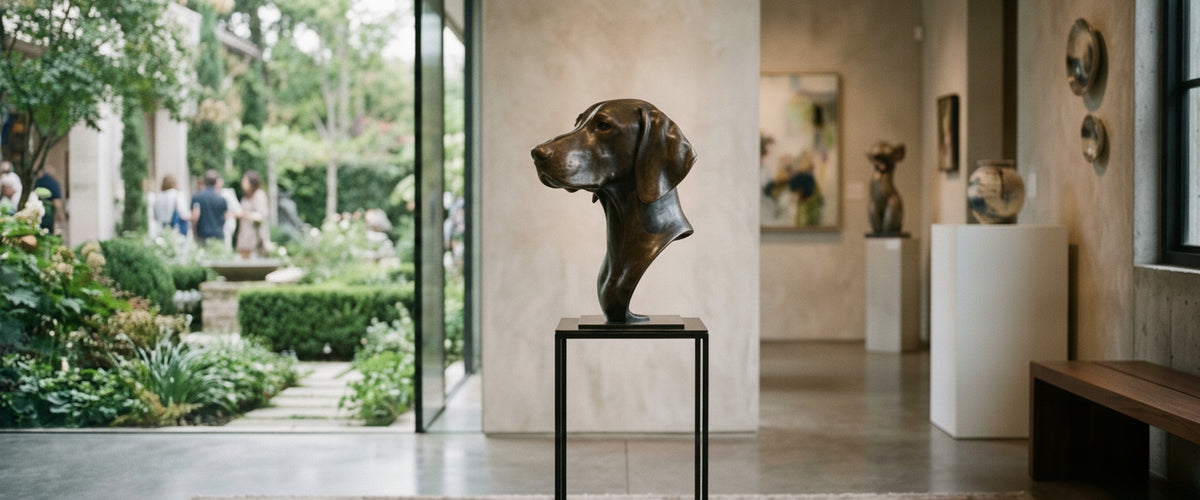

A beautiful bronze can look small and apologetic on the wrong surface, and commanding on the right one. The bronze itself has not changed; the setting has. That gap between a piece that anchors a room and one that gets lost among the coffee-table books is almost always about placement, not the casting. Bronze tabletop sculptures reward buyers who think about sightlines, height and backdrop before they think about the subject.
Looking for the full range in this category? Browse our Bronze Sculptures collection for every available finish, size, and configuration.
We say this from experience. We shipped a compact bronze bust to a design studio only to hear that the piece felt marooned on a wide reception counter until they moved it onto a slim plinth against a dark wall. Same object, completely different read. The lesson stuck, and it shapes how we talk buyers through bronze tabletop sculptures today.
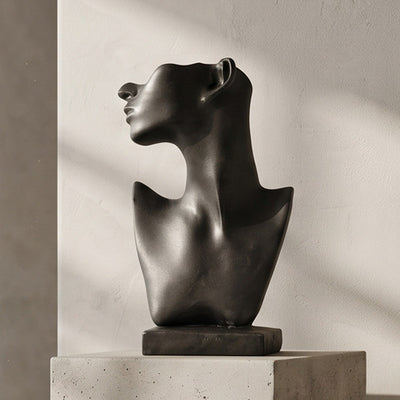
A slim plinth against a dark wall gives a compact bronze the presence it lacked on a wide counter.

Key Takeaways for Bronze Tabletop Sculptures
Scale to the surface, not the room. A piece should occupy a confident share of the table or console it sits on.
Eye line matters more than square footage. The top third of the sculpture wants to sit near seated or standing eye level.
Backdrop and contrast do half the work. Bronze reads best against a plain, contrasting wall or open light.
Indoor and outdoor placement ask for different finishes. Patina behaves differently in weather.
Most placement mistakes are fixable. Height, spacing and light usually solve them without buying anything new.

What Bronze Tabletop Sculptures Look Like in Real Rooms
Bronze changes character with its surroundings. In a warm, book-lined study, a small bronze animal head reads as considered and personal. Put the same casting on a glass console in a white-walled loft and it becomes graphic, almost architectural, because the eye has nothing else to hold onto. Neither is wrong; they are two different jobs, and both explain why bronze tabletop sculptures are so setting-dependent.
For office sculpture decor, the calculation shifts again. A reception desk, a boardroom credenza or a partner's shelf all carry a message about the firm, so the piece needs enough weight to survive the visual noise of a working environment. A confident, legible form like the Contemporary Dog Head Bronze Sculpture - 45cm works well here because it reads cleanly from across a room rather than rewarding only close inspection. Contemporary office decorative bronze sculptures earn their keep when they still hold up at ten or fifteen feet (3 to 4.5 m); where a firm wants something with more edge, a bolder subject such as the Contemporary Roaring Tiger Head Bronze Bust carries the same across-the-room legibility with more attitude.
Outdoors, the same principles apply on a bigger canvas. On a stone terrace or a planted courtyard, a bronze on a low pedestal becomes a focal point that carries the eye through the garden. The surface behaves differently in daylight, and that is a good thing; bronze loves natural light raking across its modeling.

Scale, Sightlines and Pedestal Height
Here is the single most useful habit: decide where the viewer's eye will be, then place the sculpture so its most expressive area sits at or just below that line. For a seated lounge, that is roughly 40 to 46 inches (100 to 117 cm) off the floor. For a standing reception area, closer to 55 to 62 inches (140 to 158 cm). Most bronze tabletop sculptures rarely reach that on their own, which is why a plinth, riser or purpose-built console does so much of the work.
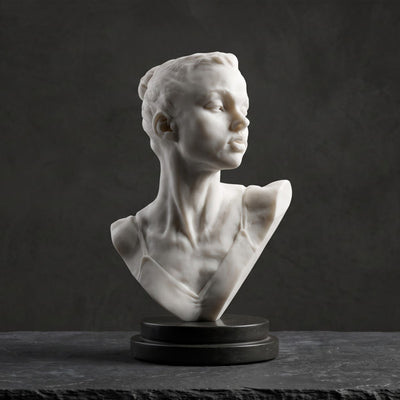
Raising a piece toward eye line, with a raking light source, restores the depth and authority a low table steals.
Scale to the surface is the second rule. A bronze that covers a modest share of a console looks intentional; one that hides in a corner of a vast dining table looks like an afterthought. As a rough guide, let the sculpture occupy between a third and a half of the visible depth of the surface it sits on. When a client cannot find a tabletop that flatters a piece, we sometimes suggest scaling up entirely; a floor-standing work such as the Contemporary Mosaic Figure Bronze Sculpture - 150cm at 150 cm solves the problem by not needing a table at all.
Weight is the quiet constraint people forget. Solid and thick-walled bronze tabletop sculptures are heavier than they look, and a decorative side table is not always rated for a dense casting. Before you commit, confirm the piece's weight and the load your surface can carry. We advise on this at the quote stage because it changes what plinth or fixing we recommend.

Indoor Versus Outdoor: When Each Wins
Indoors, you control everything: light, humidity, contact with hands, the exact backdrop. That control means you can push detail and let a fine patina stay stable for years. Where a living room or private office lets people slow down and look closely, a refined figurative piece like the Contemporary Seated Nude Female Figure Bronze Sculpture rewards that closer attention. This is also where small bronze tabletop sculptures shine, since nothing competes with their detail.
Outdoors wins when you want the sculpture to hold a larger space and change through the day. Bronze is well suited to it; the alloy develops a stable protective layer over time, and conservators note that this natural patina, properly maintained, is part of what protects the metal beneath (see guidance from the American Institute for Conservation). Where the setting needs a form that reads well with sky behind it and morning light across the surface, a garden piece like the Contemporary Upright Dolphin Bronze Sculpture - 170cm is closer to the right design language than a detailed interior bust.
If you want one of our bronze tabletop sculptures to move between a covered terrace and an interior with the seasons, tell us at the commissioning stage. We can specify a patina and protective wax regime suited to that life rather than treating the piece as fixed to one spot.

Light, Backdrop and Contrast
Bronze has no light of its own. It borrows from the room, so what sits behind and above a piece decides much of its impact. A plain wall in a contrasting tone is the reliable friend: warm bronze against a cool gray or deep charcoal, or a darker patina against pale plaster. Busy wallpaper, a cluttered shelf or a window directly behind the piece will flatten it into a silhouette.
Directional light is your other tool. A single raking source, from the side rather than straight on, models the surface and gives the sculpture depth. Flat overhead lighting does the opposite; it kills the modeling that you paid a foundry to achieve. In a boardroom we often suggest a small adjustable spot rather than relying on the ceiling grid. The difference in how bronze tabletop sculptures read is immediate.
Outdoors, orient the piece to catch morning or late-afternoon light, when the sun is low and the shadows are long. Midday overhead sun is the weakest moment for most sculpture, indoors or out.

Common Placement Mistakes We See
For wider placement ideas, Affordable Bronze Tabletop Sculpture: How to Place It so It Actually Reads is useful companion reading before finalizing the setting and sightlines.
These come up again and again with bronze tabletop sculptures in commissions, and all of them are fixable.
Setting the piece too low. A bronze on a coffee table asks the viewer to look down on it, which drains its authority. Raise it to eye line and it commands.
Backing it into visual clutter. Frames, books and cables behind a sculpture compete with it. Give the piece clean negative space.
Under-scaling for the room. A small casting on a large surface reads as timid. Either move it to a smaller, more intimate surface or scale up the work.
Ignoring the backdrop tone. Bronze against a same-tone wall disappears. Choose contrast on purpose.
Relying on flat lighting. Overhead-only light removes depth. Add a directional source.
Forgetting handling. On a reception desk, hands touch bronze. Skin oils affect patina over time, so a wax maintenance habit matters for accessible pieces.

A Short Placement Checklist
Where will the viewer's eye be? Set the expressive area of the piece near that line.
Does the sculpture own a confident share of its surface?
Is the wall behind it plain and contrasting?
Is there a directional light source, not just overhead?
Can the surface carry the weight of a bronze safely?
Indoor, outdoor, or moving between both? Match the finish to the answer.
Commissioning a Piece That Fits the Spot
Most placement problems are cheaper to solve before casting than after. When you commission bronze tabletop sculptures with Giant Sculptures, we start from the setting: the surface, the sightline, the light and whether the piece lives inside, outside or both. From there we advise on scale, patina, plinth and fixing so the finished bronze does what you wanted in the room you actually have.
Browse our Bronze Figures & Statues for figurative work, or the Bronze Busts & Heads collection if a compact, high-impact piece for a desk or console is what you are after. Whichever route fits your space, the right bronze tabletop sculptures start with the spot they will occupy. If you are weighing a specific spot, send us the dimensions and a photo of the wall behind it. That is usually all we need to point you toward the right scale.