










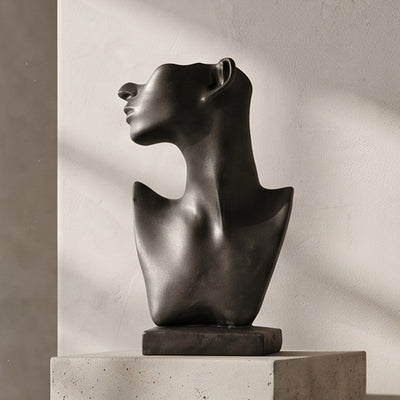

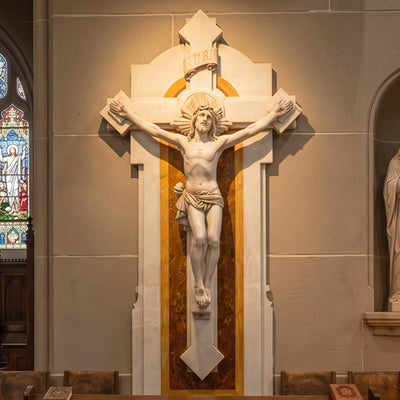
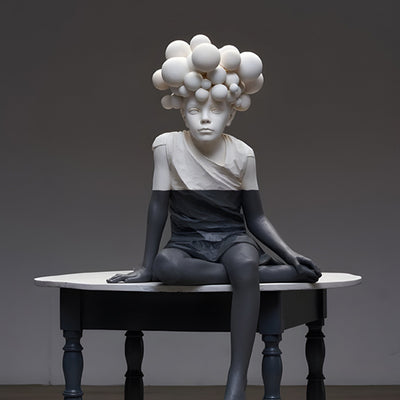

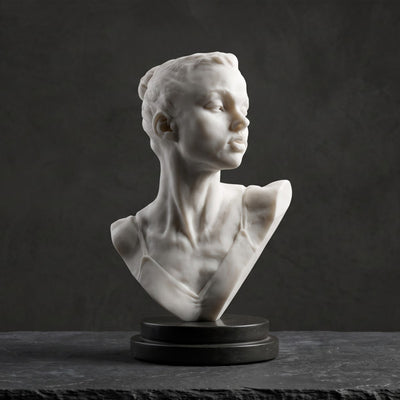































A wood sculpture commission is decided at the lumberyard, months before anyone picks up a gouge. The log sets the height, the reach of an arm and the way light runs across the surface. It also decides how the piece will behave in a dry Aspen living room or on a humid Miami terrace. Buyers who choose a pose first and look for timber afterward usually end up with a design that has been quietly scaled down, or with steel hidden inside the carving. Here is how we run wood commissions at Giant Sculptures, and where the waiting actually earns its keep.
At a Glance
Species first: it fixes size, level of detail and outdoor suitability.
Drying takes seasons: properly seasoned timber moves far less once carved.
Grain decides the pose: long, thin projections need grain running along them, or an honest joint.
Indoor or outdoor: this changes the joinery, the finish and the schedule.
Approve a maquette before the main block is touched.
Expect small checks in year one. Most are normal movement.

Species Comes Before the Sketch
Every wood species carves differently. Basswood (lime in Europe) holds crisp detail and suits interior figures, but it has no business outdoors. Black walnut gives a deep, chocolate color for living spaces. White oak and Western red cedar tolerate weather far better, though oak's open grain resists the finest detail. Then there is size: a sound trunk wide enough for a seated figure without a hollow or rotten heart is rarer than most clients expect. We source the log, measure what is actually usable, and only then draw. Sketching first and hunting for timber later is the most common reason a wood sculpture commission stalls.
Air-Drying Takes Seasons, and Rushing It Shows
The old rule of thumb for air-drying is about one year per inch of thickness, and large carving blocks are far thicker than furniture boards. Kilns help with thin stock, but forcing a massive section dry stresses the core. So carvers either wait, or rough out the form green and let it settle before final carving. The target is moisture content that matches where the piece will live. Interiors in heated, air-conditioned American homes run far drier than a covered porch. The USDA Forest Products Laboratory's Wood Handbook explains how wood shrinks and swells as it trades moisture with the surrounding air, which is exactly why that match matters.
We learned this the expensive way. A walnut torso, carved from stock a supplier swore was seasoned, opened a split wide enough to slide a credit card into within weeks of arriving in a heated Manhattan loft. Every block now gets metered in the studio before it is accepted, and we record the reading for the client.

Grain Direction Decides Which Poses Survive
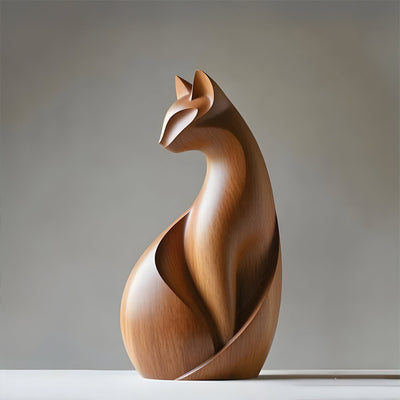
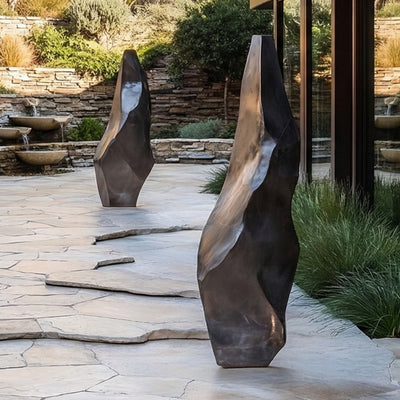
Wood is strong along the grain and weak across it. An outstretched arm carved with the grain running across its width will snap with a knock, or simply with time. Carvers have three honest options: rework the pose so projections follow the trunk, add a separate piece joined with grain aligned, or hide a steel pin inside. Ask your maker which they plan, and where. Tall, upward-reaching forms suit timber naturally, because the form rises with the tree rather than cutting across it. A vertical composition like the Twin Flame Bronze Abstract Wood Sculpture (165cm) is the kind of silhouette that works with the grain instead of fighting it.
How a Wood Sculpture Commission Changes Indoors and Out
Indoors, a wood sculpture commission can use glued mortise-and-tenon joints and a hand-rubbed oil or wax finish. The enemies are heat and dryness: keep the piece away from HVAC vents, fireplaces and south-facing glass, and aim for steady humidity year-round.
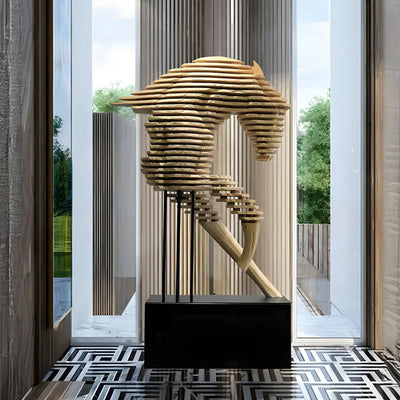
Outdoors, the rules tighten. For an outdoor wood sculpture, we avoid glue lines that trap water, seal the end grain, and never let the carving sit on soil or lawn. Lifting timber onto stone breaks the moisture path and frames the piece at the same time. For a covered terrace or an entrance hall that opens onto the garden, a wood form set on a dark stone plinth, such as the Bronze & Teal Oval Wood Sculpture on Black Marble - 130cm, gives the timber both protection and presence. Expect untreated cedar or oak to silver over time. For a permanent garden site with sprinklers in Napa or the Hamptons, we often suggest carving the master in wood and casting it in bronze, the approach behind many of our bronze figures and statues.

The Maquette Stage: A Week of Patience Saves a Recut
Before the main block is touched, we make a small maquette, with the grain plan marked on it. For larger pieces we also send a full-size cardboard silhouette for the client to stand in the actual space. One Texas client moved a 6-foot (1.8 m) figure from a hallway to a stairwell landing after seeing the cutout, a change that cost nothing at that stage and would have been impossible after carving. Small height differences matter more in a room than on paper: the gap between a vertical form like the Twin Flame Bronze Abstract Wood Sculpture (150cm) and its 165cm sibling is barely six inches, yet on a landing it can decide whether the piece clears a handrail line or crowds the ceiling. Changes at maquette stage are cheap. Changes after the first deep cut usually mean a new log.
The First Year After Handover
Wood keeps moving as it settles into a new climate, especially through the first heating season. Hairline checks along the grain that open in winter and close in summer are normal. Wood lasts for centuries when its climate stays steady: painted Romanesque church figures still survive today. What is not normal: cracks running through joints, soft spots, mold, or a split that keeps widening. Dust with a soft brush, refresh the finish as your maker advises, and do not fill checks during the first year. Filling too early locks in stress.

Your Wood Sculpture Commission Checklist
Before you sign off on a wood sculpture commission, confirm each of these with your maker:
Species chosen, and why it suits the location
Moisture reading of the block and the drying plan
How each projection is handled: grain, joint or hidden pin
Indoor or outdoor finish, and the plinth or base
Maquette and site silhouette approval points
Aftercare guidance for the first twelve months
Budget depends on species, scale, carving complexity, engineering, installation and finishing, so we quote each custom wood sculpture individually. Browse our wood sculptures to compare species, finishes and scale, then tell Giant Sculptures where the piece will live. We will start with the log.
For wider placement ideas, Personalized Wood Wall Art: Why the Name Should Whisper is useful companion reading before finalizing the setting and sightlines.