






































































































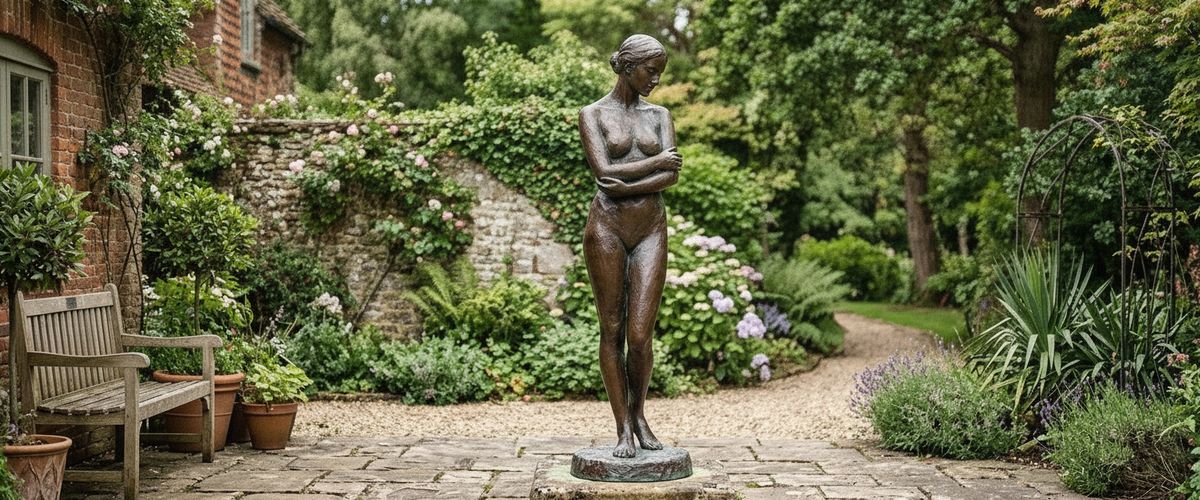

Most of the bronze damage we see in the studio was done by someone trying to help. An owner reaches for brass polish, a stiff brush or a pressure washer, and ten minutes later the surface a foundry spent days building is gone. If you want to clean bronze sculpture properly, start here: the color you see is the finish you paid for. Your job is to protect it, never to strip it back to shiny metal.

At a Glance
Patina is the finish. Never polish it away.
Diagnose first. Dust, tired wax and active corrosion each need a different response.
The safe routine: soft brush, pH-neutral soap, gentle rinse, full drying, thin microcrystalline wax.
Outdoor bronzes need rewaxing twice a year; indoor pieces far less.
Antiques and powdery green spots belong with a conservator.
Patina Is the Finish, So Stop Treating It Like Dirt
A fresh casting leaves the mold the color of a new penny. Everything after that (the chocolate browns, verdigris greens, the gold highlights on a shoulder or a fold of drapery) is chemistry. Patineurs build color with heat and chemical solutions in layers, then seal it with wax. That layer is thin. Scrub hard enough and you are through it.
This is where generic advice on how to clean bronze sculpture goes wrong. Tips borrowed from brass door handles and copper pans assume you want brightness. On a sculpture, brightness usually means damage. Remove what sits on top of the patina, such as pollen, bird droppings and failing wax, and leave everything else alone.

Dust, Old Wax or Active Corrosion? Diagnose Before You Touch It
Spend five minutes looking before you clean a bronze sculpture of any size. First, confirm what it is made of. Plenty of contemporary work carries a bronze tone over carved wood rather than cast metal, and a piece like the Twin Flame Bronze Abstract Wood Sculpture - 150cm wants dusting and a dry environment, not the soap-and-rinse routine meant for solid bronze. Then walk around the piece in daylight.
Loose dust or grime lifts with a soft brush. The easy case.
Cloudy or tacky wax shows as white haze in recesses or dirt trapped in a dull film. Usually fixed with fresh wax.
Pale streaks below drip points are common on garden pieces and often stable weathering.
Bright green powdery spots should be treated as active corrosion until proven otherwise.
A Gentle Way to Clean Bronze Sculpture and Keep Patina Intact
This is how to clean bronze sculpture without removing patina, the same sequence our finishers use on pieces returning from exhibitions.
Dry brush first, top to bottom, with a soft natural-bristle brush that reaches into hair and texture.
Wash only if needed with a few drops of pH-neutral soap in lukewarm water and a soft sponge. In hard-water areas like much of Texas and Southern California, use distilled water; mineral spots dry white on dark patinas.
Rinse gently with a low-pressure hose or damp cloth.
Dry completely with cotton towels, then let it air-dry. Moisture trapped under wax clouds.
Wax thinly with clear microcrystalline wax, let it haze, then buff. Two thin coats beat one heavy one.
Dry brushing lifts dust from textured areas before any water touches the surface.
Skip vinegar, lemon juice, ammonia and the internet ketchup trick. All of them are chemically aggressive toward patina, and all of them are tricks for brightening bare metal.
Mixed-media work needs extra thought, because each material wants its own treatment. On a piece that combines bronze with polished steel and acrylic, such as the Bronze Stainless Steel & Acrylic Boat Sculpture - 150cm, keep wax on the bronze, use microfiber on the steel, and keep solvents well away from the acrylic. Stone bases raise a similar issue: where a bronze-toned form sits on marble, as with the Bronze & Teal Oval Wood Sculpture on Black Marble - 130cm, those same acidic household cleaners will etch the base as readily as they strip a patina.

Bright Green Powdery Spots and the Brass-Polish Mistake
Soft, pale green spots that spread, or leave green dust on a fingertip, can signal bronze disease: chloride corrosion that reacts with humidity and keeps eating into the alloy. The Canadian Conservation Institute lists pollutants and incorrect humidity among the main agents of deterioration for metals. Do not scrub it or wax over it. Keep the piece dry and call a professional.
Metal polish is the other error you cannot take back. The classic case is a life-size figure that a landscaping crew has freshened up with copper cleaner: knees, nose and shoulders gone raw salmon pink against a mottled brown body. A foundry can repatinate a modern cast, but that means refinishing the whole surface, and the original patineur's hand is lost.
How to Clean Outdoor Bronze Sculptures and Indoor Pieces
Garden bronzes face UV, acid rain, sprinkler water and tree sap. On coastal sites from Malibu to Montauk, or through Aspen winters, wash and rewax outdoor bronze twice a year, ideally in spring and again in autumn. The National Park Service, which cares for outdoor bronze monuments nationwide, treats routine washing and waxing as first-line care. Larger pieces from our bronze garden statues range, especially figures around 6 feet (1.8 m) and up, benefit from professional hot waxing every few years, where warmed metal lets the wax go deeper.
A thin seasonal wax coat shields garden bronzes from UV, rain and sprinkler water.
Indoors, owners tend to clean bronze far more often than it needs. A bronze in a Manhattan living room or a Dallas hotel lobby needs dusting every week or two and fresh wax perhaps every year or two. Heavy waxing builds a soft film that grabs dust and blurs detail, and on the smooth, unbroken surfaces typical of bronze abstract sculptures it shows as streaks almost immediately. Keep fingers off, too; skin oils mark patina over time.

Old and Antique Bronzes: Who Should Do the Work
For anyone asking how to clean old bronze sculpture, the honest answer is: less than you think. An antique patina carries age and provenance that appraisers read closely, and a uniform scrubbed finish can cost a piece real market value.
DIY for modern cast bronze with stable patina, dust and tired wax.
Conservator for antiques, signed or editioned works, flaking patina, powdery corrosion or old repairs.
Foundry or supplier for modern pieces that have been polished, scratched or vandalized.
Before you buy, ask how the finish was sealed and which wax the maker recommends.
Buy Bronze With Ownership in Mind
When Giant Sculptures takes on a bespoke commission, we discuss placement and maintenance before casting. A seaside terrace may call for a different patina and sealing schedule than a sheltered courtyard. Browse our bronze sculptures or life-size bronze statues, and ask for a care plan alongside your quote that explains how to clean your bronze sculpture in its setting. Treated gently, a bronze will outlast everyone who owns it.
For wider placement ideas, How to Judge a Bronze Dragon Garden Statue by Its Scales, Seams and Patina is useful companion reading before finalising the setting and sightlines.