























































































The fastest way to ruin a cast piece is to treat it like a quarried block. If you want to clean marble statue surfaces made from marble and resin, and still have a crisp finish in ten years, the method matters far more than the bottle you pick off the shelf. Cast marble carries a thin, worked skin over a resin-bound body, and almost every aggressive cleaning habit that solid stone shrugs off will leave that skin cloudy or chemically etched for good.

Quick Answer: How to Clean Marble Statue Surfaces Safely
Water first. Distilled or filtered water and a soft brush handle most routine dirt when you clean marble statues.
pH neutral only. No vinegar, no lemon, no bleach, no ammonia, no bathroom descaler.
No abrasives. Scouring pads, wire brushes, powder cleaners and pressure washers all cut the cast skin.
Yellowing is not dirt. UV degradation of the resin binder cannot be scrubbed away.
Reseal on a schedule. A fresh wax or breathable stone sealer outperforms repeated cleaning.
Dry it properly. Trapped moisture in shaded corners is what feeds green film.
Soft bristles and distilled water do most of the work when you clean marble statues cast from bonded dust.
Marble Plus Resin: Why Your Statue Behaves Nothing Like Stone
Marble statuary is made by mixing finely ground marble with a polymer binder and casting it into a mold. The result reads as marble to the eye and to the fingertips, holds fine detail beautifully, and weighs considerably less than a carved equivalent. It also behaves like a composite. The mineral content gives you the coolness and the color; the binder gives you the flex, the moisture resistance and, unfortunately, the sensitivity to UV and solvents. That mix is why a clean marble statue routine written for quarried stone can do real damage here.
Solid stone behaves the opposite way. A carved figure at around 6 feet (180 cm), such as the Arching Dolphin Grey Marble Statue - 180cm, is porous all the way through, so dirt sinks in and gentle poulticing pulls it back out. A cast piece is dense at the surface and resin-rich underneath, so dirt sits on top. That is good news when you clean marble statues cast this way, and bad news for anyone who reaches for something harsh.
The Dish Soap Routine That Suits Solid Marble and Ruins a Cast One
Almost every clean marble statue guide online tells you to use a drop of mild dish soap in warm water. On carved marble that is sound advice. On a cast piece it stores up trouble: detergents leave a residue film that attracts dust, and repeated washing strips whatever wax or sealer was applied at the studio. Six months later the piece looks flat, and the owner assumes the marble has "gone dull" when the real issue is a bare, chalky surface with nowhere to hide.
If a piece is genuinely greasy, use the mildest conservation-grade neutral surfactant you can find, rinse twice, then reseal. Otherwise, water does the work. Conservation guidance on stone and plaster sculpture consistently favors the least invasive treatment that achieves the result, a principle laid out in the Canadian Conservation Institute's care notes, and it applies just as neatly when you clean marble statues made from bonded dust.
How to Tell Yellowing from Dirt in Ten Seconds
Before you clean marble statue detail, work out what you are actually looking at. Wet a cotton swab with distilled water and wipe a small area in a fold or behind a wing. If the swab picks up gray and the patch brightens, you have surface soil and a wash will fix it. If the swab stays clean and the patch stays warm-toned, the binder itself has yellowed under ultraviolet light. No amount of scrubbing reverses that. It is a chemical change in the polymer, and the only real answers are shade, a UV-inhibiting sealer, or professional refinishing.
This is the single most common misunderstanding we field from owners. One client in Scottsdale spent a weekend scrubbing a cast figure that had stood through three summers of full southern exposure, convinced the discoloration was smoke residue from a nearby fire. It was UV. We moved the piece under a loggia, resealed it, and specified carved stone for the replacement in the open courtyard.

How to Clean Marble Statue Detail Indoors
Our studio routine is deliberately unglamorous, and it is the safest way to clean marble statue detail indoors without opening up the surface.
Dry-dust with a soft natural bristle brush, working top down and into the undercuts.
Vacuum the loosened dust with a brush attachment held slightly off the surface.
Dampen a microfiber cloth with distilled water and wipe panel by panel, not all at once.
Use a soft toothbrush and distilled water on carved detail: hair, feathers, drapery folds, lettering.
Blot dry immediately with a clean lint-free cloth. Do not let water pool in the base or seams.
Once a year, apply a thin microcrystalline wax or a sealer rated for cast marble, then buff lightly.
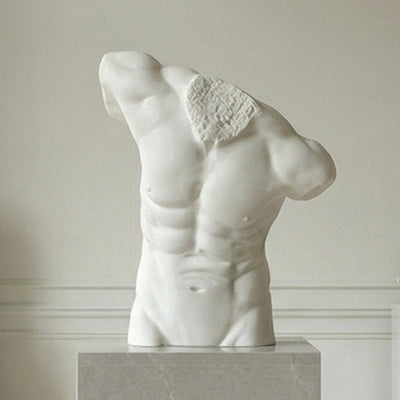
Interior busts and torsos are the easiest category to keep looking new because they are out of the weather entirely. Indoors, a clean marble statue stays clean for months at a stretch. Anything from our marble busts and torsos range should need little more than dusting and an annual wax if it sits in a hall or a study away from direct sun.
Terrace Pieces, Green Film, and the Shaded Corner Problem
Outdoors, the enemy changes and the clean marble statue schedule gets shorter. Algae and biofilm colonize damp, shaded, poorly ventilated spots, which is exactly where people love to tuck a figure: under a pergola, against a north-facing wall, behind planting that never dries out. The green tint is biological growth on the surface, not staining in the material.
Drainage and airflow keep green film off far better than any cleaner.
Rinse with plain water, brush gently with a soft nylon brush, and improve airflow around the base. Trim back the planting. Raise the piece on a plinth so water drains away instead of wicking up. It is far quicker to clean marble statue surfaces on a terrace when the piece sits on gravel with 12 inches (30 cm) of clearance rather than in a mulch bed. If a shaded corner is non-negotiable, carved stone or bronze is the smarter specification. For a wet, wind-exposed position at real height, a solid piece such as the Alighting Eagle Grey Marble Garden Statue - 220cm at 7 feet 3 inches (220 cm) takes seasonal damp without a polymer binder becoming the weak point, which is why so many of our garden statues for damp planting schemes are quoted in solid marble rather than cast.
What Acidic and Alkaline Cleaners Do to a Bonded Marble Skin
Acids dissolve calcium carbonate. That means vinegar, lemon juice, tile cleaner and most limescale removers will etch the marble particles at the surface while leaving the resin behind, producing a dull, slightly gritty patch that catches the light differently forever. Strong alkalis and bleach attack from the other direction, hazing and embrittling the binder. Solvent-based products can soften the polymer outright. One bathroom spray will cost you a clean marble statue finish permanently.
Museum conservation departments, including the V&A's conservation team, treat solvent and acid use on composite sculpture as a specialist decision rather than a step in any clean marble statue routine. Treat it the same way at home. If a stain will not lift with water, stop and ask before escalating.
When a Fresh Seal Coat Beats Another Round of Scrubbing
Owners often keep cleaning a piece that has simply lost its protective layer. Run a finger across an unseen area: if the surface feels chalky or the water beads have stopped forming, you are past cleaning and into resealing. A thin, even coat of appropriate sealer restores depth of color, blocks soil from keying into the surface, and buys another season or two of easy maintenance. Reseal on time and you rarely need to clean marble statue detail more than twice a year.
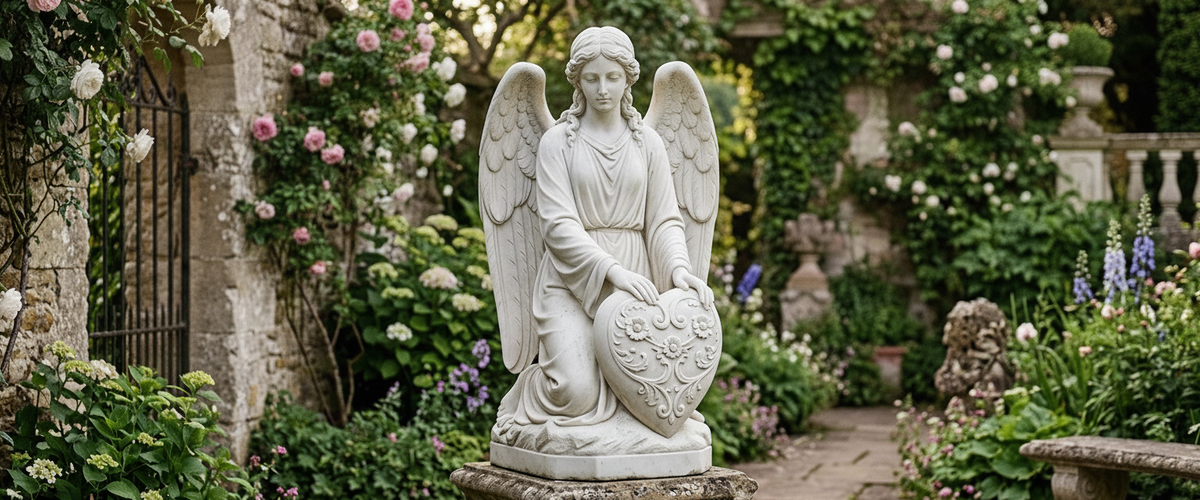
Memorial work is where this matters most, because lettering and fine relief lose legibility once the surface goes open and dusty. A clean marble statue memorial still reads clearly at ten paces; a scoured one does not. Where the carving carries the meaning, as it does in the feather edges and folded drapery of the Angel Resting on a Heart Marble Memorial Statue - 170cm at around 5 feet 7 inches (170 cm), detail survives for generations when the piece is sealed on a schedule instead of scrubbed on impulse. The same logic runs through our marble headstones, where surface care and long-term readability are the whole point.

Buying Decisions That Make Cleaning Easier Later
Exposure: full sun, coastal salt or heavy shade all point toward carved marble, bronze or Corten rather than cast.
Detail level: deeply undercut drapery and feathering trap dirt. Simpler forms in exposed positions age better.
Access: a piece you cannot reach around is a piece that will not get cleaned. Plan the plinth and the planting together so you can clean marble statue detail from every side.
Weight and mounting: cast pieces are lighter, which helps installation but makes anchoring more important in wind-exposed positions.
Replacement finish: ask, at the point of order, which sealer was used and what refresh it needs.
When clients come to Giant Sculptures for a bespoke commission, that conversation happens before anything is cast or carved. We would rather specify solid marble for an exposed terrace and reserve cast work for a sheltered atrium than sell the lighter option and watch it yellow. That single call does more for a clean marble statue over five years than any product on a shelf. Cost depends on material, scale, complexity, engineering, installation and finishing, so the honest answer on any given piece comes from a tailored quote rather than a list price.
If you are weighing cast against carved for a specific position, browse the marble sculptures and statues collection and tell us where the piece is going. Knowing how to clean marble statue surfaces helps, but sun angle, drainage and prevailing wind change the recommendation more than the design does.
For wider placement ideas, How to Judge a Hermes Marble Sculpture Bust Before You Buy is useful companion reading before finalizing the setting and sightlines.