










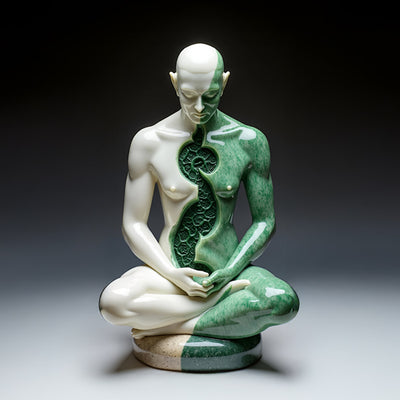















Stand thirty paces back from a highly detailed bronze nude and the face goes first. Then the fingers, the folds, the carefully modeled collarbone. What survives at that distance is outline and mass, which is precisely why an abstract figure sculpture so often beats a realistic one in a large garden, a hotel forecourt, or a double-height lobby. Abstraction is not laziness. It is editing, and good editing is what makes a piece legible from the driveway as well as from three feet away.

Key Takeaways
Figurative sculpture depicts the human (or animal) body; an abstract figure sculpture simplifies, distorts or reduces that body until only essential form remains.
Abstraction runs on a spectrum: recognizable figure, stripped-down torso, and near-pure mass with only a hint of anatomy.
Simplified volumes read cleanly at distance; fine detail reads well only within about fifteen feet (4.5 m).
Bronze, carved wood and composite each abstract the body in a different direction.
Plinth height and approach angle change the piece more than most buyers expect. Decide them before casting, not after delivery.
What Is an Abstract Figure Sculpture, and What Is Figurative Sculpture?
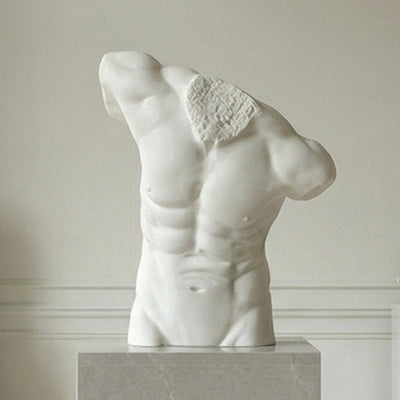
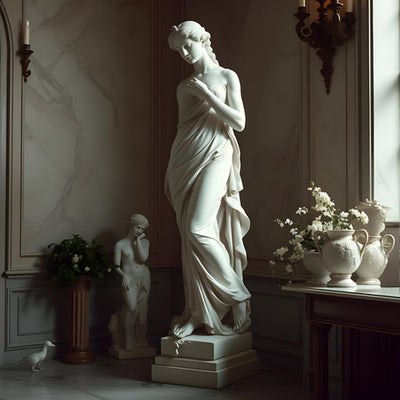
Figurative sculpture is any three-dimensional work that references the human form. A figure sculpture in the classical sense, say a draped marble woman in contrapposto, aims for anatomical truth. An abstract figure sculpture keeps the body as its starting point but treats anatomy as raw material: shoulders become planes, a ribcage becomes a curved shell, a stride becomes two tapering columns and a tilt.
The dividing line is intention. A classical figurative marble asks you to recognize a person. Abstraction asks you to recognize a presence. Both sit under the same umbrella, which is why browsing our bronze figures and statues alongside the abstract sculptures collection is the fastest way to calibrate your own taste before you commit to a commission.
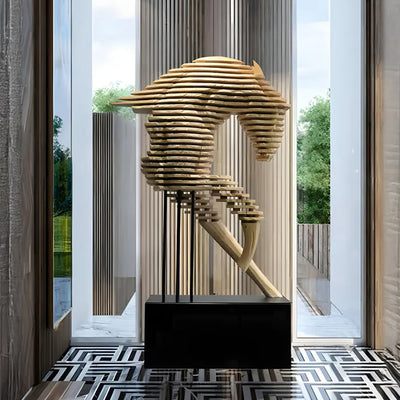
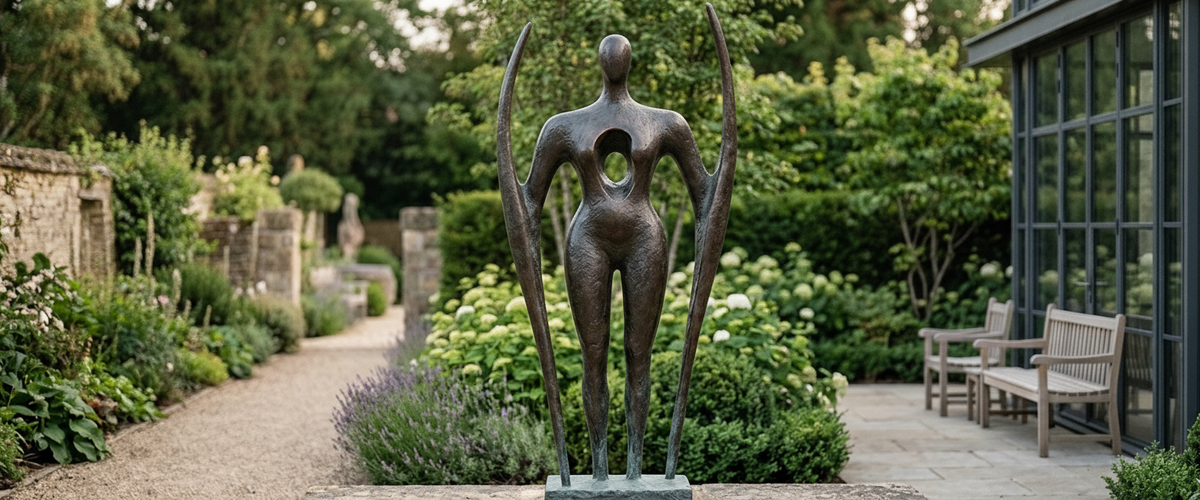
Anatomy compressed into a few strong volumes: the void reads as a chest cavity from one angle and a window from another.
Three Degrees of Abstraction, from Suggested Figure to Pure Mass
We find it useful to sort abstract figure sculptures into three bands.
1. The Suggested Figure
Proportions are recognizable, surface detail is smoothed away, faces are blank or barely indicated. Movement still reads. Paired dancing figures at around 220 cm (7 ft 3 in) sit here: you read bodies, rhythm and lift, but no one is looking for fingernails.
2. The Reduced Body
Anatomy is compressed into a few strong volumes. Limbs elongate, torsos hollow out, negative space starts doing structural and visual work. A monumental seated figure with a hollow torso is a good example: the void reads as a chest cavity from one angle and as a window onto the planting behind it from another.
3. Near-Pure Mass
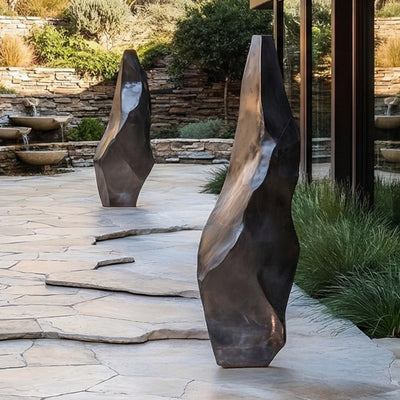
Only a stance, a head-tilt or a hip curve keeps the work tethered to the body. These pieces behave like architecture. They anchor a lawn or a courtyard and tolerate being seen from every side, which is why they suit roundabouts, plazas and broad open terraces better than tight garden rooms.
Why a Simplified Torso Holds at Thirty Paces
Human vision resolves contour far earlier than texture. At thirty paces a detailed figure flattens into a gray blur with a fuzzy edge; a reduced abstract figure sculpture keeps a crisp, readable profile and still delivers a change of information as you walk closer. That second layer matters. The best abstract work rewards approach with surface: sand-cast grain, hammer marks, the drag of a patina brush.
The practical rule we give clients: if your longest viewing line is over forty feet (12 m), buy for silhouette. If people will pass within arm's reach daily, buy for surface. If both are true, you want a piece that separates cleanly from its background at distance and carries visible making at close range.

Bronze, Wood and Composite Each Strip the Body Differently
For wider placement ideas, How to Buy a Large Abstract Stone Sculpture That Still Reads at Twenty Paces is useful companion reading before finalising the setting and sightlines.
Material is never neutral; it pushes the form of an abstract figure sculpture in a particular direction.
Bronze holds thin, cantilevered shapes that stone cannot. It lets a sculptor draw an ankle thinner than anatomy allows and still stand the piece outdoors for generations. Where a chest cavity opens straight through the mass, as it does on the Monumental Modern Seated Figure with Hollow Torso Bronze Sculpture - 220cm, the metal is carrying load across a void that carved stone would never survive. Patina then controls how hard the edges read. A dark brown-black patina sharpens silhouette; a green or verdigris finish softens the form into planting. Comparing finishes across the bronze abstract sculptures is the quickest way to see that difference. Outdoor bronze wants washing and periodic waxing rather than polishing, a point the American Institute for Conservation makes consistently in its guidance on outdoor metal sculpture.
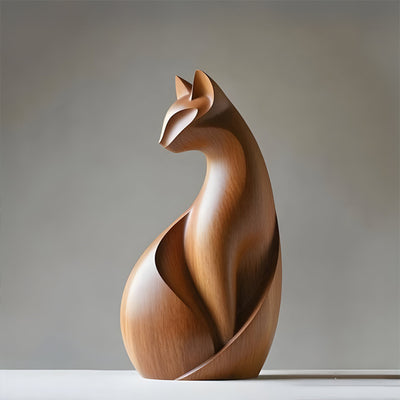
Carved wood strips the body by subtraction and by grain. A Japanese wood sculpture figure carved in the single-block ichiboku tradition, the kind held in collections like the Cleveland Museum of Art, shows how the log's own diameter dictates the pose: arms stay close, mass stays compact, the figure keeps the tree's logic. That restraint is why wood abstraction feels calm rather than dynamic.
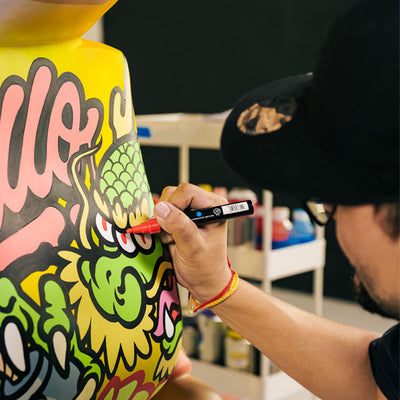
Composite and resin allow color as a primary decision. Something like the Eldcombe Red Figure Sculpture - 88–135cm works because saturated color does the job that detail would otherwise do; it separates the form from a green hedge instantly. For permanent exterior installations we still steer buyers toward bronze, stainless steel or stone, and reserve composite for interiors, short-run display or color-critical schemes.
Plinth height sets the eye line; the approach path decides which profile guests actually meet.
Plinth Height and Approach Angle: The Two Calls Buyers Reverse
Most people choose the sculpture, then think about the base. Reverse that order and the piece gets better. Plinth height sets the eye line, and the eye line sets the mood: a head slightly above standing height reads authoritative, at chest height reads companionable, at knee height reads like an object rather than a presence.
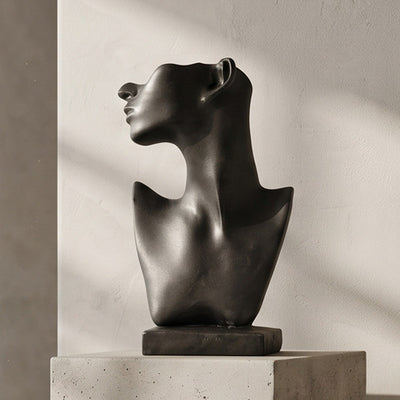
Approach angle is the second call. Abstract figure sculptures usually have one profile that is clearly the strongest, and one that collapses into a narrow edge. One client set a 100 cm (3 ft 3 in) piece, the Modern Abstract Female Figure Bronze Sculpture - 100cm, at the end of a gravel walk, then found that guests only ever met the thin side. Rotating the base roughly 40 degrees fixed it. Walk your actual route with a broom handle taped to a box before you finalize the position.
Seam Lines, Weak Ankles and the Pose That Dates Fast
Check the seams. Large bronzes are cast in sections and welded. On a smooth abstract surface, a poorly chased seam catches light along its whole length and never stops annoying you.
Interrogate the ankles. Slender contact points look elegant in a studio render and become a wind-load problem on an exposed coastal lawn. Ask how the piece bolts down and what the internal armature does.
Beware the over-clever pose. Extreme torsion and a gimmick gesture read as a date stamp within a decade. Quiet stances age better.
Test the background. Dark patina against mature evergreens vanishes. Check contrast in winter light, not just August.
Confirm the finish schedule. Know who washes and waxes it, and how often.

What We Ask Before Quoting an Abstract Figure Commission
A bespoke abstract figure sculpture is a set of engineering answers wearing an artistic surface. Before Giant Sculptures prices anything, we work through the same list:
Longest and shortest viewing distance, and the main approach path.
Finished height including plinth, plus any crane, gate or elevator restriction on site.
Interior or exterior, coastal or inland, and the freeze-thaw exposure.
How far you want the abstraction pushed, with reference images you like and dislike.
Foundation or fixing detail: existing slab, new pad, or internal floor loading.
Patina or finish direction, and whether the piece must tie to existing metalwork.
Edition status, and whether the design should stay unique to your site.
Budget follows from those answers. Material, scale, structural engineering, finishing hours and installation move the number far more than the design itself, so we quote against a defined brief rather than guessing at bands. If you are weighing a monumental two-figure group at 260 cm (around 8 ft 6 in) against something scaled for an entry hall, send us the site photographs first. It is a short conversation that saves months of second-guessing, and it is the one part of buying an abstract figure sculpture that nobody should rush.