





































































































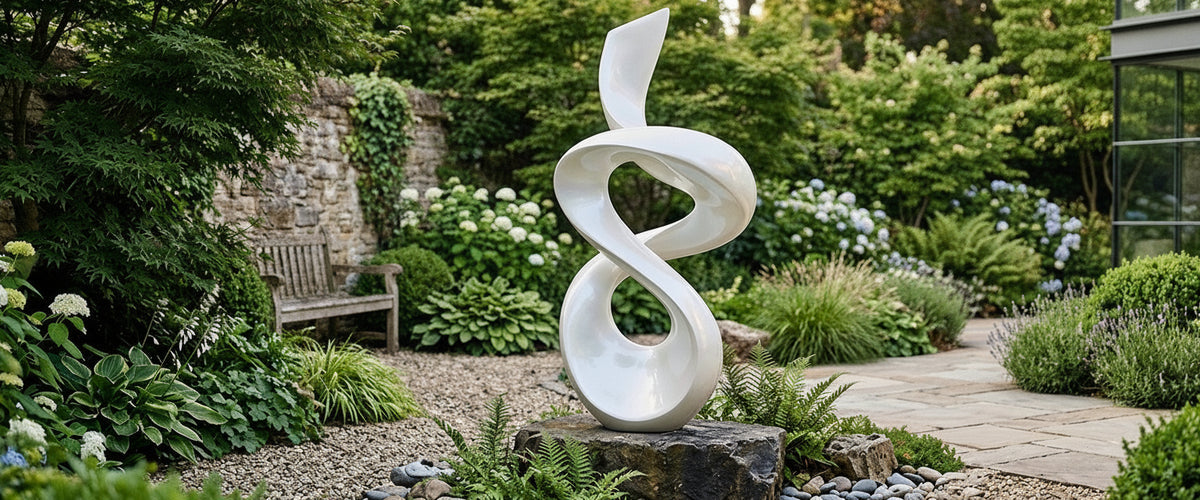

Resin garden sculptures win a lot of gardens on the first look and lose a few of them by the second summer. The lightweight body that makes a large piece easy to position is the same body that fades, chalks, or cracks when a cheap resin sits in full sun with no UV protection. So before you buy on price alone, it helps to know what good resin garden sculptures actually give you, where they struggle, and when a bronze or steel piece is the smarter long-term call.
Looking for the full range in this category? Browse our Resin Sculptures & Statues collection for every available finish, size, and configuration.
We ship large-scale and bespoke work worldwide, and plenty of clients arrive asking for resin garden sculptures because they saw the shape they wanted at a weight they could move. That's a fair instinct. The trick is matching the material to the site and the lifespan you expect.
A large abstract form reads best with open space around it.

Resin Garden Sculptures at a Glance
Best for: large forms at low weight, detailed figurative or abstract shapes, and pieces you may reposition seasonally.
Watch for: UV degradation, surface chalking, and hollow pieces that need weighting or anchoring in wind.
Finish matters most: a quality gelcoat or automotive-grade topcoat separates a short-lived piece from one that lasts.
Better alternatives when longevity is the priority: bronze, stainless steel, or Corten for outdoor permanence.
Budget: depends on scale, finish quality, engineering, and whether the piece is bespoke; ask for a tailored quote rather than trusting a flat catalog figure.

What Resin Garden Sculptures Actually Means
Most resin garden sculptures are not solid blocks of plastic. They are cast shells, usually a polyester or epoxy resin skin backed with fiberglass matting for strength. That construction is why a six-foot (1.8 m) figure can weigh a fraction of the same form in cast bronze. When people search for resin sculptures for the garden, they are usually after that combination of visual scale and manageable weight.
There is a spectrum of quality inside the word. An art resin sculpture made with a proper gelcoat and UV inhibitors behaves very differently from a bargain garden-center cast that starts to gray within two seasons. Epoxy resin for sculpture tends to hold detail and color better than basic polyester, which is one reason studio-grade casts cost more. If you are comparing two pieces that look identical online, the difference is almost always in the resin grade and the topcoat, not the shape.
These pieces suit buyers who want a specific silhouette, a lighter piece for a roof terrace or balcony where load matters, or a large statement form without the freight cost of solid metal. Resin garden sculptures also suit designers staging a space who may move the piece later. They are a weaker choice for a permanent landmark you expect to outlive you.

How to Compare Resin Garden Sculptures Before You Buy
Judge every candidate against a few honest questions rather than the render.
1. What grade of resin and topcoat is it?
Ask directly whether the piece uses UV-stabilized resin and a gelcoat or automotive clearcoat. Sunlight is the main enemy of any polymer outdoors, breaking down polymer chains through a process known as photodegradation, which is exactly what causes fading and surface chalking on unprotected casts. A topcoat is not cosmetic. It is the sacrificial layer doing the work.
2. Is it hollow, and how is it anchored?
Most large resin garden sculptures are hollow shells. That is fine, but a tall hollow form in an exposed Hamptons garden or an Aspen slope needs weighting or a proper ground fixing so wind does not walk it or tip it. Ask how the base is engineered before you fall for the shape.
A good faux-bronze finish holds up at conversation distance.
3. How well does the finish mimic the material it imitates?
A lot of resin work is finished to read as bronze, stone, or verdigris metal. Good faux-bronze resin holds up at conversation distance. Cheaper work reveals itself the moment you touch it. If you want the look of metal for a fraction of the freight weight, that is a legitimate reason to choose resin garden sculptures; just buy a finish that earns the illusion.
4. Can it be repaired?
Resin can be filled, re-glassed, and refinished, which is a genuine advantage over some materials. A chip is not the end of the piece. Ask whether the maker supplies touch-up guidance or offers refinishing.

Materials, Finishes, and Scale Decisions
Scale changes everything. A tabletop resin clay sculpture or a small cast decorative figure lives an easy life indoors or under cover. Push the same idea to garden scale and the engineering demands rise sharply: wall thickness, internal armature, base weight, and fixing all start to matter. This is the point where resin garden sculptures stop being simple decor.
This is where we often steer clients toward a frank conversation about material. If the piece is the centerpiece of a Napa courtyard or a corporate forecourt in NYC, and you want it to look right in twenty years, resin is rarely the honest answer. Cast bronze sculptures develop a living patina and shrug off weather that would exhaust a resin topcoat. For crisp contemporary forms, our stainless steel sculptures hold a mirror or brushed finish through decades of rain and frost. Corten steel gives you that warm rusted skin that actually protects the metal underneath.
None of that makes resin wrong. It makes resin a tool with a job. Choose resin garden sculptures when weight, portability, or a very specific cast form is the priority and you accept a shorter service life or a finish you will refresh. Choose metal or stone when the piece is meant to be permanent architecture in the garden.

Where to Place Resin Garden Sculptures for Impact
For wider placement ideas, Contemporary Metal Garden Sculptures: A Buyer's Guide to Material, Scale and Placement is useful companion reading before finalising the setting and sightlines.
Placement forgives a lot and exposes a lot. Because resin garden sculptures are light, you have freedom most heavy pieces don't; you can raise a form on a plinth, float it against planting, or sit it on a terrace without a crane.
Give a single strong piece room to breathe. A large abstract resin form reads best against a plain hedge, a rendered wall, or open lawn, not lost inside a busy border. Site it so the best profile faces the primary view: the terrace you sit on, the window you see it from at breakfast, the approach to a front door.
Keep resin garden sculptures out of the harshest, all-day sun where you can. A piece that gets morning light and afternoon shade will hold its finish far longer than one baking from noon to dusk. Near a pool or coastal garden, that same lightness helps, though you will want a fixing that copes with salt-laden wind. If you are torn between a resin faux-metal piece and the real thing for a headline spot, remember that the eye adjusts to a fake bronze quickly, but a genuine bronze keeps rewarding a closer look.

Budget, Commissioning, and Delivery
Pricing on garden sculpture is driven by material, scale, finish quality, engineering, and whether the piece is standard or bespoke. Resin's lower material and freight weight can reduce cost on a large form, which is a real advantage for tight logistics. But well-made, UV-stable, hand-finished resin garden sculptures are not a throwaway purchase, and a poorly made one is a false economy. Rather than trust a flat number online, ask for a quote tied to your exact size, finish, and site.
Delivery is where resin's low weight pays off. A large hollow piece is far cheaper to crate and ship than solid metal, and easier to place once it arrives. Confirm the crating standard, the fixing kit, and whether the piece needs assembly on site for bigger commissions.
Buyer Checklist
Confirm the resin grade and whether it carries UV inhibitors and a gelcoat or clearcoat.
Ask if the piece is hollow and how it is weighted or anchored.
Check the finish at close range, not just in photos.
Ask about repair and refinishing before you buy, not after.
Match the material to the lifespan: resin for flexible, movable, cost-aware placement; metal or stone for permanence.
Get a tailored quote covering material, scale, engineering, finishing, and delivery.
How Giant Sculptures Helps With Bespoke Projects
We work with buyers, interior and landscape designers, architects, and venue owners on large-scale and bespoke sculpture, and we are straight with clients about material. If resin garden sculptures are genuinely the right call for your weight, budget, or logistics, we will say so. If your site and timescale point toward bronze, stainless steel, or stone, we will tell you that too, because a piece that fails at year five helps no one.
On bespoke commissions we work from your reference, sketch, or 3D model, advise on scale against the actual site, and engineer the base and fixing for the conditions the piece will face. We have shipped headline resin garden sculptures and metal pieces to gardens and forecourts across the US and beyond, and the recurring lesson is simple: the clients happiest a decade later are the ones who matched the material to the job rather than the render. Send us the space, the sightlines, and the effect you're chasing, and we will help you choose well.